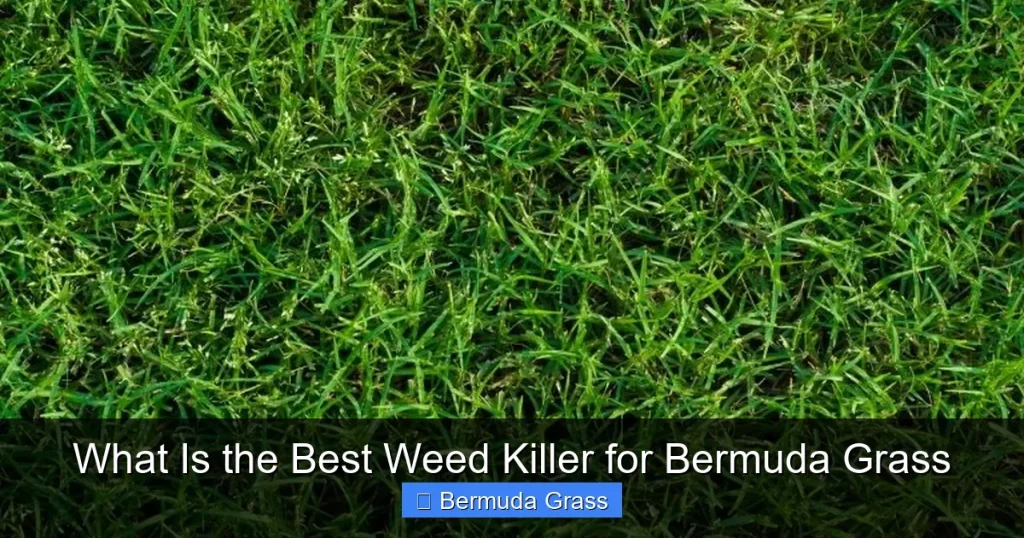
Choosing the best weed killer for Bermuda grass is crucial for a healthy, vibrant lawn. This guide breaks down how to identify common weeds and select the right pre-emergent or post-emergent herbicides that effectively eliminate unwanted plants without harming your tough Bermuda. Learn essential application techniques and ongoing lawn care tips for lasting weed control, ensuring your lawn stays green and weed-free all season long.
What Is the Best Weed Killer for Bermuda Grass?
Welcome to the ultimate guide on keeping your Bermuda grass lawn pristine and weed-free! If you’re looking for the best weed killer for Bermuda grass, you’ve come to the right place. Bermuda grass is a fantastic choice for many lawns, known for its resilience and beautiful green carpet. However, its aggressive growth can sometimes be a double-edged sword, and certain weeds can still muscle their way in.
In this guide, we’ll walk you through everything you need to know. We’ll help you identify common weeds that plague Bermuda lawns, understand the different types of weed killers available, and pick the perfect product for your specific problem. You’ll learn when and how to apply these solutions safely and effectively, ensuring your Bermuda grass thrives while unwanted invaders vanish. Let’s get started on cultivating the lush, weed-free lawn you’ve always wanted!
Key Takeaways
- Identify Your Weeds: Before choosing any product, correctly identify whether you’re dealing with broadleaf weeds, grassy weeds (other than Bermuda), or sedges. This dictates the active ingredient you’ll need.
- Pre-Emergents are Key for Prevention: For the best weed killer for Bermuda grass approach, apply pre-emergent herbicides in early spring and late fall to stop weed seeds from germinating. This is your first and most effective line of defense.
- Selectivity is Crucial for Post-Emergents: When weeds are already growing, choose selective post-emergent herbicides that target specific weeds (like broadleaf or sedges) without harming your Bermuda grass. Always read the label carefully.
- Read the Label Meticulously: Every weed killer product has specific instructions for application rates, timing, and safety precautions. Following these is paramount for effectiveness and to prevent damage to your lawn or yourself.
- Timing Matters: Apply weed killers when temperatures are within the recommended range and when weeds are actively growing (for post-emergents). Incorrect timing can lead to poor results or lawn damage.
- Combine with Good Lawn Care: No weed killer works in isolation. Maintain a healthy, dense Bermuda lawn through proper mowing, watering, and fertilization to naturally crowd out weeds and reduce their chances of establishment.
Understanding Bermuda Grass and Its Weeds
Bermuda grass is a warm-season grass known for its rapid growth, deep root system, and excellent heat and drought tolerance. It’s tough, but it’s not invincible against weeds. To choose the best weed killer for Bermuda grass, you first need to know your enemy – the specific weeds trying to invade your turf.
Characteristics of Bermuda Grass
Bermuda grass can be quite aggressive, often outcompeting many weeds when healthy. It spreads rapidly through stolons (above-ground runners) and rhizomes (underground runners), creating a dense turf. This density is a natural weed deterrent, but gaps or weakened areas can become inviting spaces for weeds to take hold.
Common Weeds in Bermuda Grass Lawns
Weeds fall into three main categories:
Broadleaf Weeds
These are plants with wider leaves and typically include a taproot or fibrous root system. They are generally easier to identify and target.
- Dandelion: Yellow flowers, deeply lobed leaves.
- Clover: Three-leaf clusters, often with white or pink flowers.
- Chickweed: Small, delicate leaves, tiny white flowers.
- Plantain: Broad, ribbed leaves, growing in a rosette pattern.
- Spurge: Low-growing, mat-forming, often with reddish stems.
Grassy Weeds
These weeds look similar to grass, making them harder to distinguish and treat without harming your Bermuda.
- Crabgrass: Light green, coarse blades, grows in clumps, very common.
- Dallisgrass: Coarse texture, grows in clumps, seed heads resemble crabgrass but are more elongated.
- Goosegrass: Flat stems, silvery-green leaves, grows in a mat.
- Foxtail: Long, bristly seed heads, resembles a fox’s tail.
Sedges
Sedges aren’t true grasses; they have triangular stems, unlike the round or flat stems of grasses.
- Nutsedge (Nutgrass): Bright green, grows faster than Bermuda grass, often identified by its triangular stem and tubers (“nuts”) underground.
Identifying the specific weeds in your lawn is the first, most critical step in finding the best weed killer for Bermuda grass.
Key Considerations Before Choosing a Weed Killer
Before you grab a bottle off the shelf, take a moment to consider these important factors. They will guide you to the most effective and safest choice for your Bermuda grass.
Identify Your Weeds
As mentioned, correct identification is paramount. A broadleaf weed killer won’t touch nutsedge, and a grassy weed killer might harm your Bermuda if not chosen carefully. Use a lawn weed identification guide or app if you’re unsure.
Pre-Emergent vs. Post-Emergent
This is a crucial distinction when selecting the best weed killer for Bermuda grass.
- Pre-Emergent Herbicides: These create a chemical barrier in the soil that prevents weed seeds from germinating. They don’t kill existing weeds. Think of them as preventative medicine for your lawn.
- Post-Emergent Herbicides: These are applied directly to actively growing weeds to kill them. They work by being absorbed through the leaves or roots of the weed.
Active Ingredients Matter
Different active ingredients target different weeds. Researching these will help you find the best weed killer for Bermuda grass that specifically addresses your problem.
- For broadleaf weeds: Look for products containing 2,4-D, MCPP (mecoprop), or dicamba. These are often combined in “3-way” herbicides.
- For grassy weeds (in Bermuda): This is tricky because Bermuda itself is a grass. Quinclorac is effective against crabgrass. Sethoxydim can be used for some grassy weeds, but always check the label for Bermuda grass safety.
- For sedges: Halosulfuron-methyl or sulfentrazone are the go-to ingredients.
Application Timing
Timing is everything.
- Pre-emergents: Apply in early spring before soil temperatures consistently reach 55°F, and again in late summer/early fall for cool-season weeds.
- Post-emergents: Apply when weeds are small and actively growing, and when temperatures are not too hot (usually between 60-85°F). Avoid applying during drought stress.
Product Form: Granular vs. Liquid
- Granular: Often applied with a spreader, good for large areas, provides slow release. Requires watering in after application.
- Liquid: Mixed with water and applied with a sprayer, offers precise application and faster absorption.
Safety First!
Always read and follow the product label’s safety instructions. Wear appropriate personal protective equipment (PPE) like gloves, eye protection, and long sleeves. Keep pets and children off treated areas until dry.
The Best Weed Killer for Bermuda Grass: Pre-Emergents
Pre-emergent herbicides are your best friend in the fight against weeds. They stop weeds before they even start, making them an essential part of any effective weed control program for Bermuda grass.
How Pre-Emergents Work
These products create a chemical barrier in the top layer of your soil. When weed seeds germinate and their root sprouts encounter this barrier, they absorb the herbicide and die. Your established Bermuda grass, with its deeper root system, is unaffected.
Recommended Active Ingredients for Bermuda Grass
For the best weed killer for Bermuda grass as a preventative measure, look for these active ingredients:
-
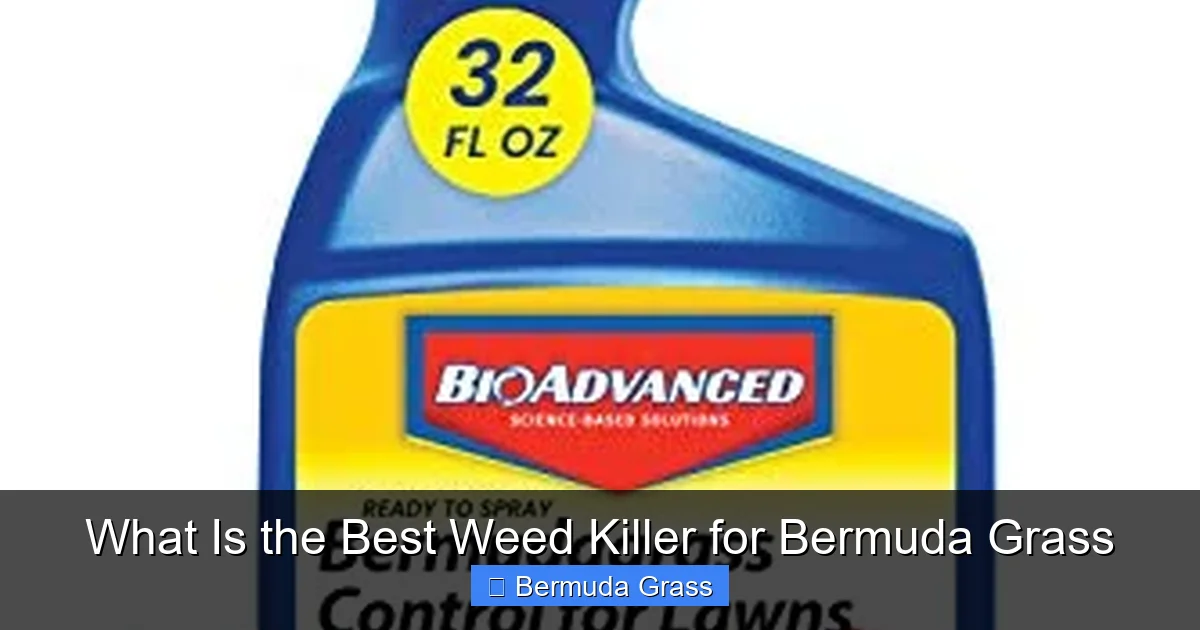
Prodiamine (e.g., Barricade):
This is a very popular and effective pre-emergent. It provides long-lasting control (often up to 6 months) against a wide range of grassy and broadleaf weeds, including crabgrass, goosegrass, and annual bluegrass. It’s safe for established Bermuda grass.
Visual guide about What Is the Best Weed Killer for Bermuda Grass
Image source: m.media-amazon.com
-
Pendimethalin (e.g., Prowl H2O):
Another excellent choice, pendimethalin offers similar broad-spectrum control to prodiamine. It’s commonly found in granular formulations and is safe for Bermuda grass when applied according to label directions.
-
Dithiopyr (e.g., Dimension):
Dithiopyr is unique because it offers both pre-emergent control and early post-emergent control for some grassy weeds like crabgrass. This means it can kill crabgrass that has already started to sprout, but only when it’s very young. It’s a versatile option for Bermuda grass.
Application Tips for Pre-Emergents
- Timing is Critical: Apply in early spring when soil temperatures are consistently around 55°F for several days, and again in late summer/early fall for cool-season weeds like annual bluegrass. Use a soil thermometer for accuracy.
- Water In: Most pre-emergents need to be watered into the soil within a few days of application to activate the chemical barrier. Check the label for specific instructions.
- Uniform Coverage: Use a broadcast spreader for granular products or a sprayer for liquid products to ensure even coverage across your lawn. Overlapping slightly can help prevent missed spots.
The Best Weed Killer for Bermuda Grass: Post-Emergents (Selective)
Sometimes, despite your best pre-emergent efforts, weeds break through. That’s when selective post-emergent herbicides come in. These products are designed to kill specific weeds without harming your Bermuda grass.
How Selective Post-Emergents Work
They are absorbed by the weed’s leaves or roots and then translocated throughout the plant, ultimately killing it. The “selective” part means they target biological differences between the weed and your Bermuda grass.
Targeting Broadleaf Weeds
For broadleaf weeds like dandelions, clover, or plantain, Bermuda grass is quite tolerant to many common selective herbicides.
-
3-Way Herbicides:
These products often contain a combination of 2,4-D, MCPP (mecoprop), and dicamba. This combination offers excellent control over a wide range of broadleaf weeds without harming Bermuda grass when applied correctly. Many popular “weed-and-feed” products for warm-season grasses contain these ingredients.
-
Carfentrazone:
Often included in newer formulations, carfentrazone provides rapid visual results for broadleaf weeds, causing them to wilt and die quickly.
Application Tip: Apply when weeds are small and actively growing. Avoid applying when temperatures exceed 85°F, as this can stress your Bermuda grass.
Targeting Grassy Weeds (Other Than Bermuda Grass)
This is the trickiest category. Remember, Bermuda is itself a grassy plant. Finding a product that kills another grassy weed without harming your Bermuda requires careful selection.
-
Quinclorac:
Considered one of the best weed killer for Bermuda grass when targeting crabgrass specifically. Quinclorac is very effective on both young and mature crabgrass. It’s generally safe for Bermuda grass but always follow label rates precisely.
-
Fenoxaprop (e.g., Acclaim Extra):
This product can control certain grassy weeds like goosegrass and some types of foxtail. Use with extreme caution on Bermuda grass, ensuring you follow the label strictly for application rates and timing to prevent injury.
-
Sethoxydim (e.g., Poast):
While effective on a range of grassy weeds, sethoxydim can be harder to use safely on Bermuda grass. It’s generally recommended for use in landscape beds or around desirable broadleaf plants, but if used on Bermuda, it requires very precise application and often a lower rate than for other turf types. Always check the label explicitly for Bermuda grass tolerance.
Important Note: For grassy weeds like dallisgrass or mature large crabgrass, complete eradication without damaging Bermuda grass can be very challenging. Sometimes, spot treatment with a non-selective herbicide (see below) or digging out individual clumps might be necessary.
Targeting Sedges (e.g., Nutsedge)
Nutsedge is a common, persistent weed with a distinctive triangular stem.
-
Halosulfuron-methyl (e.g., SedgeHammer+):
This is highly effective against various sedges, including yellow and purple nutsedge. It’s considered one of the best weed killer for Bermuda grass for sedge control. It’s absorbed by the leaves and moves throughout the plant, killing the nuts and preventing new growth.
-
Sulfentrazone (e.g., Dismiss):
Another excellent option for sedge control, sulfentrazone provides fast-acting results and also offers some broadleaf weed control. It’s safe for Bermuda grass when applied according to label directions.
Application Tip: Apply when nutsedge is actively growing and at least 3-6 inches tall. Multiple applications may be necessary for complete control, especially for established nutsedge populations.
Non-Selective Weed Killers: A Word of Caution
Non-selective herbicides, like those containing glyphosate (e.g., Roundup), kill almost any plant they come into contact with, including Bermuda grass.
When to Use (With Extreme Caution):
- Spot Treatment: For very isolated, stubborn weeds in Bermuda, you can carefully spot-treat with a non-selective herbicide. Use a paint brush or a shielded sprayer to apply only to the weed, avoiding any contact with your desired Bermuda grass.
- Lawn Renovation: If you’re completely clearing an area to reseed or re-sod with new Bermuda grass, glyphosate can be used to kill all existing vegetation.
NEVER apply a non-selective weed killer over your entire Bermuda grass lawn unless you intend to kill the entire lawn.
Applying Weed Killers Safely and Effectively
Proper application is key to getting the best weed killer for Bermuda grass results and ensuring safety.
Read the Label (Seriously!)
Every product label contains specific instructions for use, application rates, timing, safety precautions, and turfgrass tolerance. Ignoring these can lead to poor results, lawn damage, or harm to yourself.
Calibrate Your Equipment
Whether using a broadcast spreader or a sprayer, calibrate it to ensure you’re applying the correct amount of product. Over-application can damage your lawn; under-application can lead to ineffective weed control.
Mind the Weather
- Temperature: Most herbicides have an optimal temperature range (e.g., 60-85°F). Applying in extreme heat can harm your Bermuda grass.
- Wind: Avoid spraying on windy days to prevent drift onto desirable plants or areas.
- Rain: Check if the product needs to be watered in or if rain is expected too soon after application, which could wash it away.
Wear Protective Gear
Always wear gloves, eye protection, long pants, and long-sleeved shirts when handling and applying weed killers.
Follow-Up Applications
Some weeds, especially stubborn ones like nutsedge, may require multiple applications for complete control. Follow the label’s recommendations for reapplication intervals.
Troubleshooting Common Issues
Even with the best weed killer for Bermuda grass, you might encounter some problems.
Weeds Not Dying
- Incorrect Weed ID: Did you use the wrong product for the weed type?
- Wrong Timing: Was the weed too mature, or was it not actively growing?
- Incorrect Application Rate: Did you apply too little product?
- Environmental Stress: Weeds under drought or heat stress may not absorb the herbicide effectively.
Bermuda Grass Damage
- Over-Application: Too much product can burn your lawn.
- Incorrect Product: Did you use a non-selective herbicide or one not labeled for Bermuda grass?
- High Temperatures: Applying in extreme heat can cause herbicide activity to intensify, leading to damage.
- Equipment Malfunction: Uneven application can cause hot spots.
Weed Re-Infestation
Weeds have an amazing ability to return. This often points to the need for a stronger pre-emergent program or addressing underlying lawn health issues.
Beyond Weed Killers: Preventative Lawn Care
The best weed killer for Bermuda grass is just one part of a comprehensive strategy. A healthy, dense Bermuda lawn is naturally more resistant to weeds.
Proper Mowing Height
Mow Bermuda grass between 1-2 inches. Mowing too high can thin the lawn, while mowing too low can stress it. Regular mowing removes weed seed heads before they can spread.
Correct Watering
Water deeply and infrequently (1 inch per week). This encourages deep root growth in Bermuda grass and discourages shallow-rooted weeds.
Fertilization
Fertilize Bermuda grass according to soil test recommendations, typically during its active growing season (late spring through summer). Proper nutrients help Bermuda grow dense and strong, crowding out weeds.
Aeration
Compact soil can hinder Bermuda grass growth and create opportunities for weeds. Aerate your lawn annually to improve air, water, and nutrient penetration.
Conclusion
Achieving a beautiful, weed-free Bermuda grass lawn is totally within reach! By understanding your weeds, choosing the right pre-emergent and post-emergent solutions, and applying them correctly, you’ll be well on your way. Remember, the best weed killer for Bermuda grass is part of a larger plan that includes consistent, good lawn care practices. Stay vigilant, follow the labels, and enjoy your lush, green oasis!