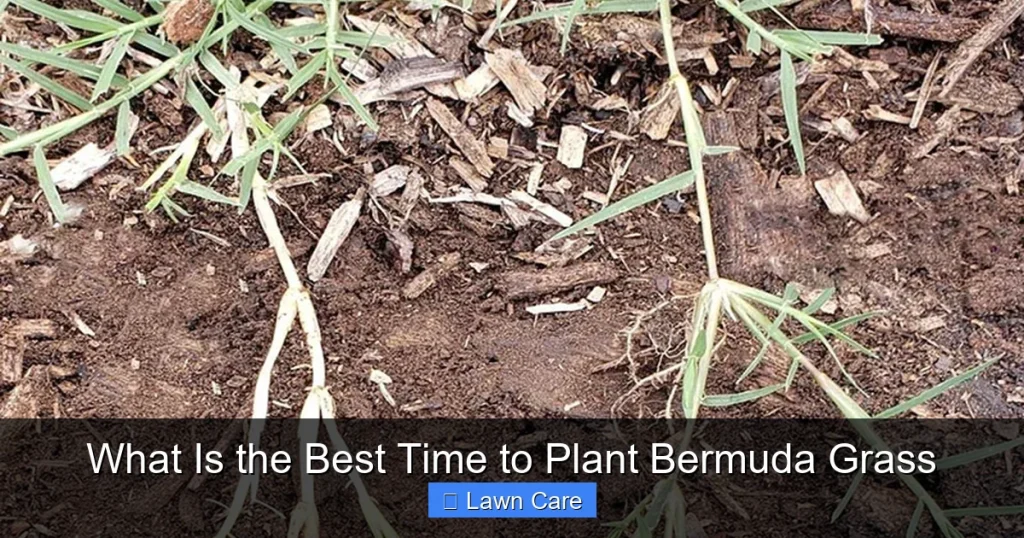
The best time to plant Bermuda grass is during the late spring and early summer, after the last frost and when soil temperatures consistently reach 65°F (18°C) or higher. This allows the warm-season grass to establish effectively in warm weather, leading to a healthy and robust lawn.
So, you’ve decided you want that beautiful, dense, and resilient Bermuda grass lawn. That’s fantastic! Bermuda grass is a popular choice for good reason – it’s incredibly tough, drought-tolerant once established, and can withstand heavy foot traffic. But, like any good thing, getting a lush Bermuda lawn takes a bit of planning, and a big part of that plan is knowing when to plant it.
Getting the timing right is absolutely critical for Bermuda grass success. It’s a warm-season grass, meaning it loves the heat and doesn’t do well in cold weather. Planting too early can mean your seeds or sod don’t germinate or establish before a sudden cold snap, essentially wasting your effort and money. Planting too late might not give the grass enough time to fully establish before winter arrives. So, let’s dive into what makes the best time to plant Bermuda grass.
## Understanding Bermuda Grass Needs
Before we talk about timing, it’s essential to understand what makes Bermuda grass tick. This grass type is native to warmer climates, and its entire life cycle is geared towards warm temperatures. It goes dormant and turns brown in the winter, but it’s a perennial, meaning it comes back strong in the spring. This growth cycle is the biggest clue to when it’s best to plant it.
### Warm-Season Growth: The Core Principle
Bermuda grass germinates and grows best when the air and soil temperatures are consistently warm. Think of it as a sun-worshipper! It needs a sustained period of heat to really get going. This is why you’ll see recommendations that focus on specific temperature ranges rather than just a calendar date.
### Temperature Thresholds for Germination and Growth
For Bermuda grass seed to germinate, soil temperatures need to be consistently between 70°F and 85°F (21°C to 29°C). While it can technically germinate at slightly lower temperatures, growth will be slow and erratic. For established seedlings or sod, temperatures above 65°F (18°C) are ideal for active growth. This tells us that planting should occur when these temperatures are not only reached but are expected to *stay* warm for a significant period.
### The Role of Frost
Frost is the enemy of young Bermuda grass. Even a light frost can damage or kill newly sprouted seedlings. Therefore, it’s crucial to plant after the danger of the last spring frost has completely passed in your region. This is a non-negotiable rule for success.
## The Prime Planting Windows
Now, let’s get to the nitty-gritty: when exactly should you get that Bermuda grass in the ground? The answer is generally centered around the warmer months.
### Late Spring to Early Summer: The Golden Period
For most regions where Bermuda grass is commonly grown (think southern United States and similar climates), the sweet spot for planting Bermuda grass is from **late spring through early summer**. This typically translates to May, June, and sometimes into early July.
* **Why this time?** By late spring, the soil has had ample time to warm up after winter. Overnight temperatures are consistently mild, and the days are getting longer and hotter. This provides the ideal environment for seed germination and rapid establishment of sod. You want to ensure that the initial growth phase occurs during peak warmth.
### Considering Your Specific Climate Zone
It’s vital to emphasize that “late spring” and “early summer” can vary significantly by location. A gardener in Florida will have a different planting window than someone in Arizona or even North Carolina.
* **Southern Regions:** In very warm climates, you might be able to start planting as early as April, provided the soil temperatures are consistently warm enough. However, late May and June are often considered the safest and most reliable months.
* **Transition Zones:** In areas with a more pronounced spring and a shorter summer, pushing the planting date too late into July might mean the grass doesn’t have enough time to establish a deep root system before cooler fall temperatures arrive. Therefore, aiming for May or early June is often best.
### Planting Seed vs. Sod: A Slight Difference
While the overall goal is the same – warm temperatures and no frost – there are slight differences in the ideal timing when comparing seed and sod.
* **Bermuda Grass Seed:** Seed is more vulnerable to environmental fluctuations. You need to wait for those consistently warm soil temperatures (above 65°F, ideally 70°F+) before sowing. This pushes the ideal planting time slightly later than sod in some cases, usually late May through June. You also need to be mindful of watering, as young seedlings can dry out quickly. We have more details on this in our article about [what is the best month to plant Bermuda grass seed](https://lawnhelpful.com/what-is-the-best-month-to-plant-bermuda-grass-seed/).
* **Bermuda Grass Sod:** Sod is essentially mature grass that is already established. It’s more forgiving than seed and can often be laid a bit earlier, as soon as the ground is workable and the risk of hard frost has passed, and soil temperatures are above 60°F (15.5°C). However, the ideal scenario still involves consistent warmth for rapid root establishment into the underlying soil. So, while you *can* lay sod a bit earlier, waiting until late spring to early summer often ensures quicker and more successful rooting.
## Factors Influencing Your Planting Decision
Beyond just the calendar and general temperature trends, a few other factors can help you fine-tune the best time to plant Bermuda grass.
### Soil Temperature Monitoring
This is perhaps the most scientifically accurate way to determine readiness. You can purchase a simple soil thermometer. Stick it about 2-3 inches into the soil in an area that gets good sun. Take readings consistently for a few days. If the soil temperature is staying above 65°F (18°C), and nighttime air temperatures are also reliably warm, you’re likely good to go.
### Weather Forecast: A Crucial Look Ahead
Once you’re approaching your target planting window, it’s wise to check the long-range weather forecast. Look for a sustained period of warm weather with no predicted frosts. A sudden cold snap after planting can be detrimental, especially for seed. If the forecast looks dicey, it might be worth waiting another week or two.
### Weed Pressure
Another consideration is existing weed pressure. Planting during the peak growing season for Bermuda grass also means peak growing season for many common weeds. Ensure you have a good weed control strategy in place *before* you plant. This might involve a pre-emergent herbicide (applied carefully according to label instructions and timing) or thorough manual removal. Dealing with weeds early saves you a lot of headaches later on. If you are trying to get ahead of weeds, understanding [what is the best time to apply crabgrass preventer](https://lawnhelpful.com/what-is-the-best-time-to-apply-crabgrass-preventer/) can be very useful.
## The Importance of Soil Preparation
No matter when you choose to plant, proper soil preparation is absolutely non-negotiable. This step significantly impacts the success of your new Bermuda grass lawn.
### Testing Your Soil
Before you do anything, get your soil tested. This will tell you about its pH, nutrient levels, and composition. Bermuda grass prefers slightly acidic to neutral soil (pH of 6.0 to 7.0). A soil test will guide you on whether you need to amend the soil with lime (to raise pH) or sulfur (to lower pH), and what fertilizers are needed.
### Improving Soil Structure
Bermuda grass can tolerate a variety of soil types, but it thrives in well-draining soil. If you have heavy clay soil, incorporating organic matter like compost can dramatically improve drainage and aeration. Loosening compacted soil with a tiller or aerator is also highly beneficial.
### Weed Removal
As mentioned, removing existing weeds thoroughly before planting is crucial. These competitors will steal water, nutrients, and sunlight from your new grass. For seeds, this means ensuring there are no weed seeds already present and viable in the soil surface.
## What Happens If You Plant at the Wrong Time?
Planting Bermuda grass outside of its optimal window can lead to several problems:
### Planting Too Early (Spring)
* **Poor Germination/Establishment:** Cold soil temperatures will significantly slow or halt germination. Young seedlings may not survive if temperatures drop drastically.
* **Increased Weed Competition:** Weeds might germinate and establish much faster than your slow-growing Bermuda grass, making it hard for the grass to catch up.
* **Wasted Effort and Money:** You might have to reseed or resod if the initial planting fails.
### Planting Too Late (Late Summer/Fall)
* **Incomplete Root Development:** The grass won’t have enough time to develop a deep, strong root system before cold weather sets in.
* **Winter Kill:** Young, weakly established grass is much more susceptible to winter damage and dying off completely.
* **Dormancy Issues:** The grass may enter dormancy before it’s truly established, leading to a patchy and thin lawn come spring. You might be better off waiting until the following spring in this scenario.
## Can You Plant Bermuda Grass in the Fall?
While the primary recommendation is late spring/early summer, some gardeners in very warm climates might consider late summer planting.
* **Late Summer Planting (August/Early September):** This is a gamble and only advisable in regions with very long, warm fall seasons where temperatures will remain suitable for growth well into October or November. The goal is to get the grass established before the first frost. However, it still carries risks compared to spring planting. The grass has a shorter window to establish before winter, and its resilience is tested more severely. Generally, [when is the best time to plant Bermuda grass](https://lawnhelpful.com/what-is-the-best-time-to-plant-bermuda-grass/) is not this late in the season.
## Maintaining Your New Bermuda Grass Lawn
Once you’ve planted at the ideal time and your grass is starting to grow, consistent care is essential.
### Watering
Proper watering is critical for establishment. Young Bermuda grass needs consistent moisture. Water deeply and regularly, but avoid waterlogging the soil. The best time to water is usually in the early morning to allow the grass to dry off during the day, which helps prevent fungal diseases. Check out our guide on [what is the best time of day to water grass](https://lawnhelpful.com/what-is-the-best-time-of-day-to-water-grass/). For Bermuda specifically, understanding [when is the best time to water Bermuda grass](https://lawnhelpful.com/when-is-the-best-time-to-water-bermuda-grass/) is key.
### Fertilizing
Once the grass shows signs of active growth, it will benefit from fertilization. Use a balanced fertilizer formulated for lawns. Avoid over-fertilizing, as this can lead to weak growth susceptible to disease. Fertilizing too early can encourage weed growth. For Bermuda, choosing the right fertilizer is important, so you might want to read up on [what is the best fertilizer for Bermuda grass](https://lawnhelpful.com/what-is-the-best-fertilizer-for-bermuda-grass/).
### Mowing
As the grass grows, begin mowing. The ideal height for Bermuda grass is relatively low. Start mowing when the grass reaches about 1/3 taller than your desired mowing height. Never remove more than one-third of the grass blade at a time. This helps promote dense growth and discourages weeds. Understanding [what is the best mowing height for Bermuda grass](https://lawnhelpful.com/what-is-the-best-mowing-height-for-bermuda-grass/) is crucial for its health. Also, knowing [what is the best time to mow your lawn for healthy growth](https://lawnhelpful.com/what-is-the-best-time-to-mow-your-lawn-for-healthy-growth/) can make a difference.
## Conclusion
In summary, the absolute best time to plant Bermuda grass is during the **late spring and early summer**, when both air and soil temperatures are consistently warm and the threat of frost has completely passed. Aim for soil temperatures around 65°F (18°C) and climbing. This timing provides the optimal conditions for germination (if planting seed) and rapid establishment, ensuring your Bermuda grass has the best chance to thrive and become the beautiful, resilient lawn you desire. Patience and careful observation of weather patterns are your best allies in achieving this goal. By planting at the right time and giving your new lawn the proper care, you’ll be well on your way to enjoying its many benefits for years to come.
Key Takeaways
- Ideal Planting Window: Late spring through early summer is generally the best time, ensuring warm soil and air temperatures.
- Soil Temperature is Crucial: Bermuda grass thrives in warm conditions; aim for soil temperatures consistently above 65°F (18°C).
- Frost is the Enemy: Avoid planting before the last expected frost, as cold snaps can kill young seedlings.
- Seed vs. Sod: Planting seed and sod have slightly different optimal times, with sod being more forgiving.
- Regional Variations: Planting times vary significantly based on your specific climate zone.
- Preparation is Key: Proper soil preparation and weed control before planting are vital for success.
- Ongoing Care: Once planted, consistent watering and proper maintenance are essential for establishment.
Quick Answers to Common Questions
When should I plant Bermuda grass seed?
Bermuda grass seed should be planted when soil temperatures are consistently between 70°F and 85°F (21°C to 29°C), typically in late spring or early summer after the last frost.
Can I plant Bermuda grass sod in the fall?
While possible in very warm climates, planting Bermuda grass sod in the fall is generally not recommended. It carries a higher risk of winter kill due to insufficient root establishment before cold weather arrives.
What is the minimum soil temperature for planting Bermuda grass?
For active growth and successful establishment, soil temperatures should ideally be consistently above 65°F (18°C). For seed germination, temperatures of 70°F to 85°F (21°C to 29°C) are best.
How soon after the last frost can I plant Bermuda grass?
It’s best to wait until soil temperatures have warmed significantly and are consistently above 65°F (18°C) after the last frost has passed. This usually means waiting a few weeks into late spring.
Does Bermuda grass need full sun to establish?
Yes, Bermuda grass thrives in full sun. Ensure the planting area receives at least 6-8 hours of direct sunlight daily for optimal growth and establishment.
Frequently Asked Questions
Is it too late to plant Bermuda grass if it’s June?
No, June is often an excellent time to plant Bermuda grass in many regions. As long as the soil temperatures are warm enough and the forecast predicts continued warm weather, it’s still within the prime planting window.
What happens if I plant Bermuda grass too early in the spring?
Planting too early means the soil and air temperatures might be too cold, leading to poor germination or death of young seedlings. It also gives weeds a head start.
How long does it take for Bermuda grass seed to germinate?
Bermuda grass seed typically takes anywhere from 7 to 30 days to germinate, depending heavily on soil temperature, moisture, and seed variety. Consistent warmth is key for faster germination.
Can I plant Bermuda grass in the shade?
Bermuda grass requires full sun to thrive. While it might survive in partial shade, its growth will be significantly reduced, and it will be less dense and more susceptible to problems.
What are the signs that my Bermuda grass is established?
Established Bermuda grass will appear dense, have a deep green color, and will recover quickly from foot traffic. You’ll notice less bare soil, and it will be more resistant to drought stress.
Should I use a pre-emergent before planting Bermuda grass seed?
It’s generally not recommended to use a pre-emergent herbicide immediately before or during the germination of Bermuda grass seed, as it can inhibit the seed’s ability to sprout. Focus on mechanical weed removal or use pre-emergents very carefully around planting times for established lawns.