
Curious what Bermuda grass looks like? This easy-to-follow guide will walk you through its defining characteristics, from its fine blades and dense growth to its aggressive runners. Learn to confidently identify Bermuda grass and understand its unique appearance, making it simple to distinguish from other lawn varieties.
What Is Bermuda Grass Look Like?
Ever wonder if the vibrant green lawn you’re admiring, or perhaps the stubborn weed invading your flower beds, is Bermuda grass? It’s a common question, and for good reason! Bermuda grass is one of the most widely used warm-season grasses, especially in southern climates. Its robust nature and beautiful appearance make it a popular choice for lawns, golf courses, and sports fields. However, its aggressive growth can also make it a challenging weed in unwanted areas.
Whether you’re trying to identify it in your own lawn, distinguish it from other grass types, or understand its characteristics for better lawn care, knowing “what Bermuda grass looks like” is the first crucial step. This comprehensive guide will walk you through all the identifying features of Bermuda grass, making you a confident identifier in no time. We’ll break down its appearance from the overall growth habit down to the tiniest details of its leaves and stems, and even compare it to common look-alikes. Let’s get started!
Key Takeaways
- Distinct Growth Habit: Bermuda grass is known for its aggressive, mat-forming growth, spreading rapidly through both above-ground runners (stolons) and below-ground runners (rhizomes).
- Fine-Textured Blades: Look for narrow, pointed leaf blades, typically ranging from a light green to a bluish-green color, giving the lawn a fine, soft texture.
- Key Identification Features: Pay close attention to the ligule (a fringe of hairs at the base of the leaf blade) and the absence of auricles, which are crucial for distinguishing it from similar grasses.
- Warm-Season Characteristics: Bermuda grass thrives in hot weather, staying green and vigorous during summer but turning dormant and brownish when temperatures drop in fall and winter.
- Comparison is Key: To correctly identify Bermuda grass, it’s essential to compare its features with common look-alikes like Zoysia grass, Fescue, or St. Augustine grass, noting specific differences in blade width, stolon thickness, and ligule/auricle structures.
- Dense, Durable Turf: Its robust root system and aggressive spreading contribute to a very dense, durable turf that can withstand high traffic and recover quickly from damage.
Step 1: Observe the Overall Growth Habit of Bermuda Grass
The first clue to identifying Bermuda grass is often its general appearance and how it grows. Bermuda grass is a low-growing, dense turf that forms a thick, carpet-like mat.
A Dense, Spreading Carpet
When you look at a lawn of healthy Bermuda grass, you’ll notice it creates a very dense, tightly woven surface. This density comes from its aggressive spreading nature. Bermuda grass spreads both above ground and below ground, forming a strong, interwoven network that makes it incredibly resilient and durable. It’s excellent for high-traffic areas because it can quickly repair itself.
Low-Growing and Horizontal
Bermuda grass tends to grow horizontally rather than vertically, especially when mowed regularly. This growth pattern contributes to its mat-like appearance. You’ll see runners creeping along the soil surface, sending down roots and new shoots as they go. This aggressive spreading allows it to quickly colonize open areas and outcompete many other types of vegetation.
Step 2: Examine the Leaves of Bermuda Grass
The individual leaf blades of Bermuda grass offer many key identification markers. Get down close to the grass and take a good look.
Visual guide about What Is Bermuda Grass Look Like
Image source: arenagrassfarms.com
Leaf Color and Texture
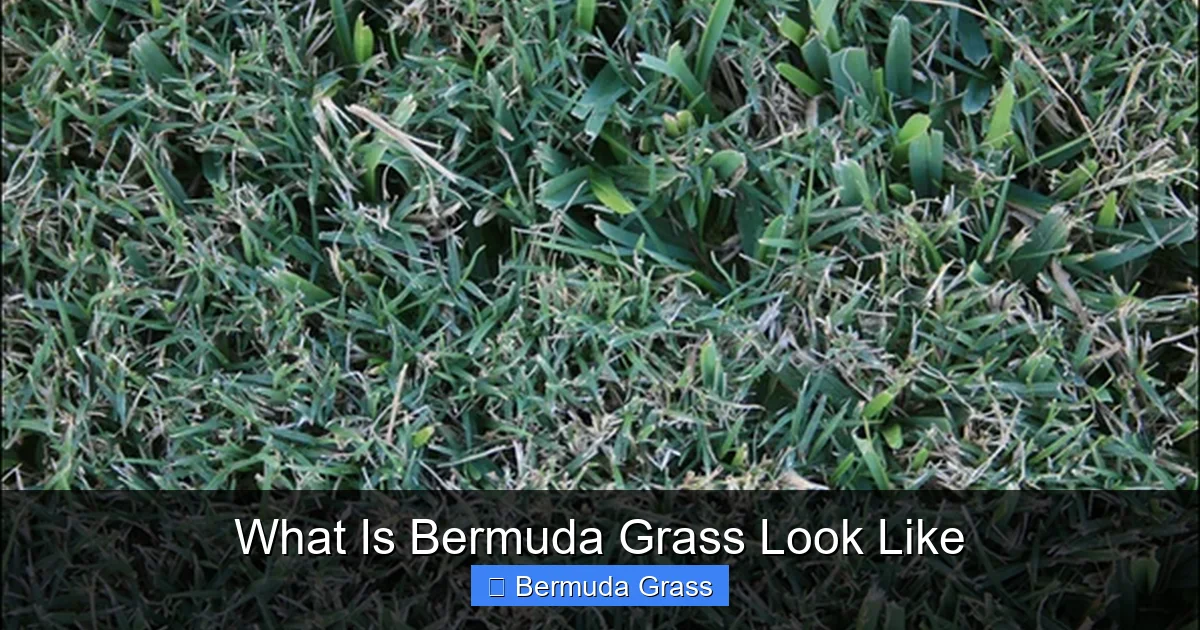
Bermuda grass typically has a beautiful, rich green color. Depending on the specific cultivar and environmental conditions, it can range from a light green to a dark, bluish-green. Some varieties might even have a slightly gray-green tint. The blades themselves are very fine-textured, giving the lawn a soft, smooth feel when you walk on it barefoot.
Leaf Blade Shape and Size
The leaf blades of Bermuda grass are relatively short, usually 1 to 6 inches long, and quite narrow, typically about 1/8 to 1/4 inch wide. They are flat and pointed at the tip, often with a slightly rough edge (scabrous) if you rub them between your fingers. When you pull a blade, you might notice a distinct crease or keel running down the center.
Arrangement on the Stem
Bermuda grass leaves are arranged alternately along the stem. Each leaf blade emerges from a sheath that wraps around the stem. This arrangement is typical of many grasses, but combined with other features, it helps narrow down your identification.
Step 3: Look at the Stems and Runners (Stolons and Rhizomes)
This is where Bermuda grass truly distinguishes itself from many other grasses. Its ability to spread extensively through both above-ground and below-ground runners is a hallmark feature.
Stolons: Above-Ground Runners
Bermuda grass has prominent stolons, which are above-ground horizontal stems that creep along the soil surface. These stolons are often purplish or reddish in color and are quite wiry and strong. As they grow, they root at the nodes (points where leaves and new shoots emerge), sending down roots into the soil and producing new upright shoots. This is why Bermuda grass spreads so quickly and can be difficult to eradicate from garden beds.
Rhizomes: Below-Ground Runners
In addition to stolons, Bermuda grass also produces rhizomes, which are underground horizontal stems. These rhizomes are typically lighter in color, often whitish or yellowish, and are thicker than the stolons. They also root at the nodes, sending up new shoots and creating an incredibly dense and resilient root system. You won’t see rhizomes unless you dig up a patch of grass, but their presence explains why Bermuda grass is so tough and comes back even after being heavily disturbed.
Step 4: Inspect the Ligule and Auricles – Tiny but Mighty Details
These small structures at the junction of the leaf blade and the leaf sheath are critical for accurate grass identification. You might need a magnifying glass for a clear view, but they are very telling.
The Ligule: A Fringe of Hairs
At the very base of the Bermuda grass leaf blade, where it meets the stem, you’ll find the ligule. For Bermuda grass, the ligule is a distinctive fringe of short, white hairs. It’s not a membrane or a collar, but rather a row of fine hairs. This hairy ligule is a consistent and important feature for identification.
The Absence of Auricles
Auricles are small, claw-like appendages that wrap around the stem at the base of the leaf blade. Bermuda grass does NOT have auricles. This absence is just as important as the presence of the hairy ligule when trying to tell it apart from other grasses that might have prominent auricles (like perennial ryegrass).
Step 5: Check for Seed Heads
When Bermuda grass goes to seed, its seed heads provide another identifiable feature.
Finger-Like Spikes
The seed heads of Bermuda grass typically appear as a cluster of three to seven slender, finger-like spikes (racemes) that radiate from a central point, much like a bird’s foot. These spikes are usually greenish or purplish. Each spike contains numerous small seeds. These seed heads are often noticeable when the grass is allowed to grow a bit taller between mowings, or in areas where it’s not regularly mowed.
Step 6: Consider the Root System
While not visible without digging, understanding the root system complements the above-ground observations.
Fibrous and Deep
Bermuda grass has a very extensive, fibrous root system. Thanks to its rhizomes, it can root deeply and broadly, allowing it to efficiently draw water and nutrients from the soil. This deep root system is one reason why Bermuda grass is so drought-tolerant and resilient in hot climates.
Step 7: Think About Its Preferred Environment and Dormancy
Observing when and where the grass thrives (or struggles) can provide additional clues.
Thrives in Heat and Sun
Bermuda grass is a warm-season grass, meaning it loves heat and full sun. It grows most vigorously when temperatures are consistently above 80°F (27°C) and it receives plenty of sunlight. It struggles and thins out in shaded areas.
Winter Dormancy
As a warm-season grass, Bermuda grass will go dormant and turn brown or straw-colored when soil temperatures drop below 55°F (13°C) for an extended period. This is a natural protective mechanism. It will green up again when temperatures rise in spring. If you see a vibrant green lawn in winter in a cold climate, it’s likely not Bermuda grass.
Step 8: Compare with Common Look-Alikes – The Ultimate Test
Often, the best way to confirm Bermuda grass identification is to compare it directly with other grasses that might look similar. Here are some common confusions:
Bermuda Grass vs. Zoysia Grass
- Bermuda Grass: Finer blades, faster spreading via stolons and rhizomes, often a lighter or bluish-green color, hairy ligule, no auricles.
- Zoysia Grass: Blades are generally wider and stiffer than Bermuda grass, but still fine-textured. Zoysia is slower spreading, has a more upright growth habit, and typically has a very short, membranous ligule (not hairy) and no auricles. It also forms a very dense turf, but feels much stiffer to the touch.
Bermuda Grass vs. Fescue Grass
- Bermuda Grass: Warm-season, fine-bladed, spreads via stolons/rhizomes, goes dormant in winter.
- Fescue Grass (Tall Fescue, Fine Fescue): Cool-season grass. Blades are generally wider (especially Tall Fescue) and often darker green. Fescue grows in clumps or bunches (bunch-type grass) rather than spreading with runners (except for creeping red fescue, which has rhizomes but a different blade structure). It stays green in winter and struggles in intense summer heat. Fescue has a membranous ligule and sometimes small auricles.
Bermuda Grass vs. St. Augustine Grass
- Bermuda Grass: Very fine-bladed, aggressive stolons, hairy ligule.
- St. Augustine Grass: Very wide, coarse blades (often described as “crabgrass-like”), forms thick, fleshy stolons (no rhizomes). St. Augustine grass has a membranous ligule and no auricles. Its overall texture is much coarser and more robust than Bermuda grass.
Bermuda Grass vs. Crabgrass (Large Crabgrass)
- Bermuda Grass: Fine blades, uniform mat, robust stolons/rhizomes, hairy ligule, no auricles. It’s a desirable turfgrass (usually).
- Crabgrass: Wider, coarser blades with a distinctive boat-shaped tip, grows in clumps or patches, often lighter green, has a prominent membranous ligule and sometimes auricles. Crabgrass has hairy leaves and sheaths, and it’s an annual weed that dies with the first frost.
Troubleshooting: What If I’m Still Not Sure?
Even with all this information, sometimes identifying grass can be tricky, especially with young plants or mixed lawns. Don’t worry if you’re still a bit puzzled. Here are some steps you can take:
Take Clear Photos
Get several close-up pictures from different angles. Focus on the blades, the base of the plant where the blade meets the stem, and any runners you can see. Good lighting is key.
Consult Local Experts
Your local university extension office is an invaluable resource. Many offer free or low-cost plant identification services. You can often send them photos or even a small sample of the grass. They are very knowledgeable about the specific grasses and weeds common in your region.
Ask a Professional
A local lawn care professional or landscaper can quickly identify the grass in your yard. They have hands-on experience and can provide tailored advice.
Observe Over Time
Sometimes, observing the grass through different seasons can provide more clues, especially regarding dormancy and growth habits in varying temperatures.
Conclusion
Identifying Bermuda grass doesn’t have to be a mystery. By systematically examining its key features—from its dense, spreading growth habit and fine-textured blades to its aggressive stolons and rhizomes—you can confidently determine if you’re looking at Bermuda grass. Remember to pay special attention to the hairy ligule and the absence of auricles, as these small details are often the most definitive. Now, armed with this detailed guide, you’re ready to step out into your lawn or garden with a new level of expertise and accurately answer the question: “What is Bermuda grass look like?” Happy identifying!