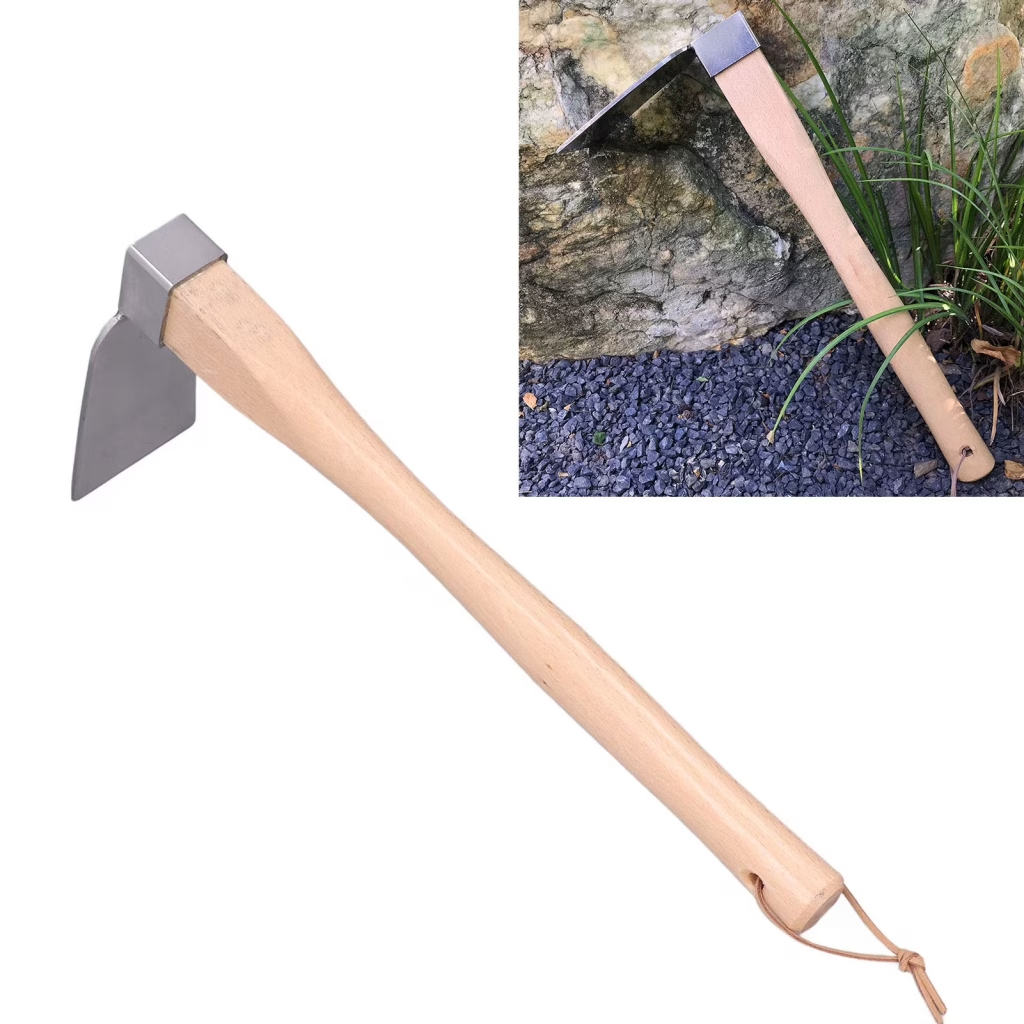
If you've ever tried to break ground with a flimsy hardware store hoe, you know the frustration. The blade skips across hard soil, roots laugh at it, and you end up exhausted for zero progress. That's exactly the kind of job a grubbing hoe was built for.
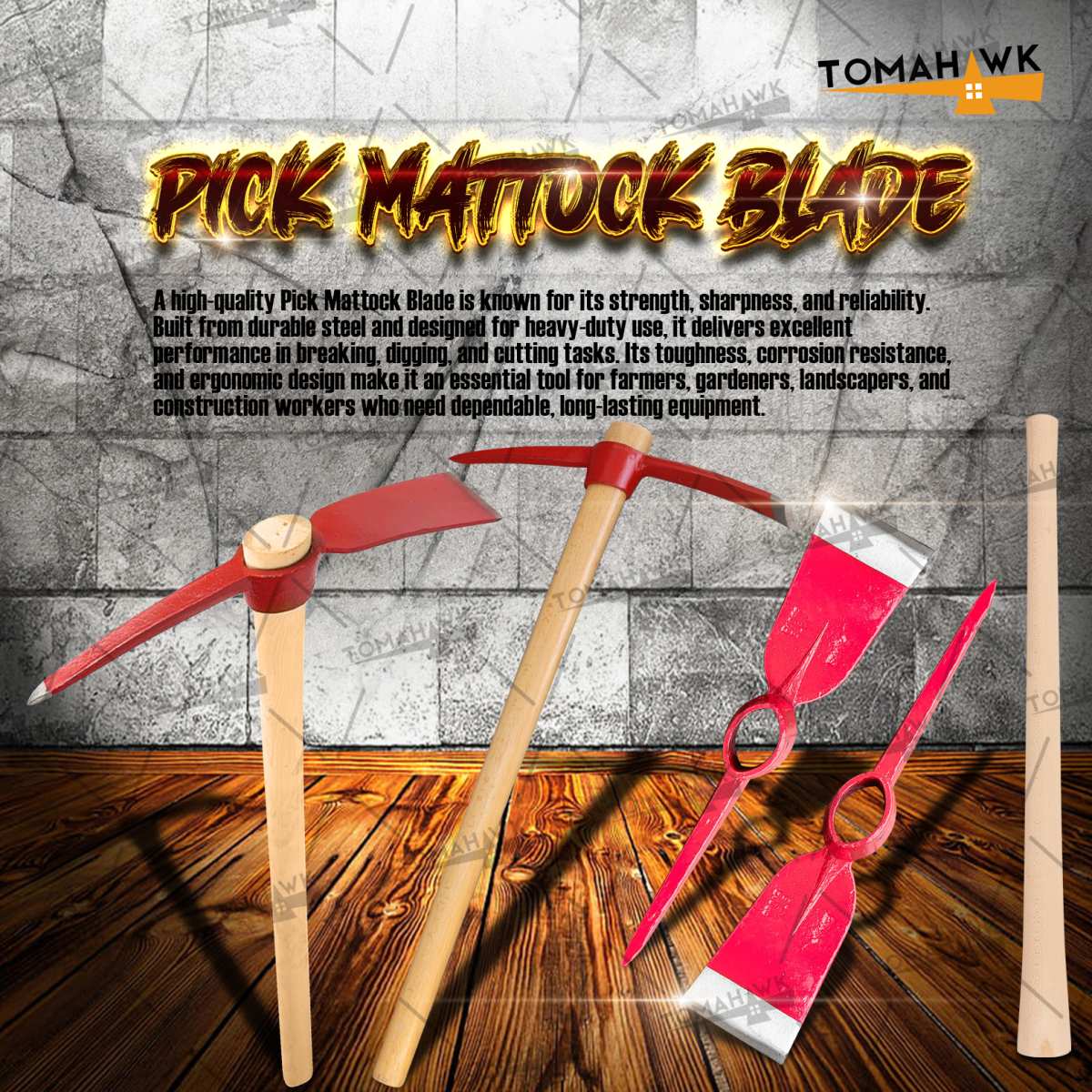
So what is a grubbing hoe? It's a heavy-duty hand tool with a wide, forged steel blade set at a steep angle on a long handle. Built for chopping, prying, and digging through tough ground that stops a standard garden hoe cold.
Think of it as the middle ground between a light draw hoe and a full mattock, with a head weight usually between 2.5 and 4 pounds and a blade width around 5 to 7 inches.
Quick Answer
A grubbing hoe is a heavy, wide-bladed hand tool for breaking hard soil and cutting through roots. It features a forged steel head weighing 2 to 4 pounds. The blade sits at a steep angle, near 70 to 80 degrees from the handle.
Landscapers, homesteaders, and trail crews use it for clearing overgrown ground. It excels where standard hoes fail: compacted soil, tangled roots, and sod removal.
How a Grubbing Hoe Differs From a Standard Garden Hoe
The difference isn't subtle once you understand what each tool is trying to do. A standard draw hoe, the kind most people picture when they hear "hoe," is built for shallow cultivation. It slides just under the soil surface to slice weeds and loosen the top inch or two.
The blade is lighter, thinner, and set at a low angle so you pull it toward you in a flat arc.
A grubbing hoe does none of that gracefully, and that's fine. It's not meant for weeding between vegetable rows. It's meant for hitting the ground hard.
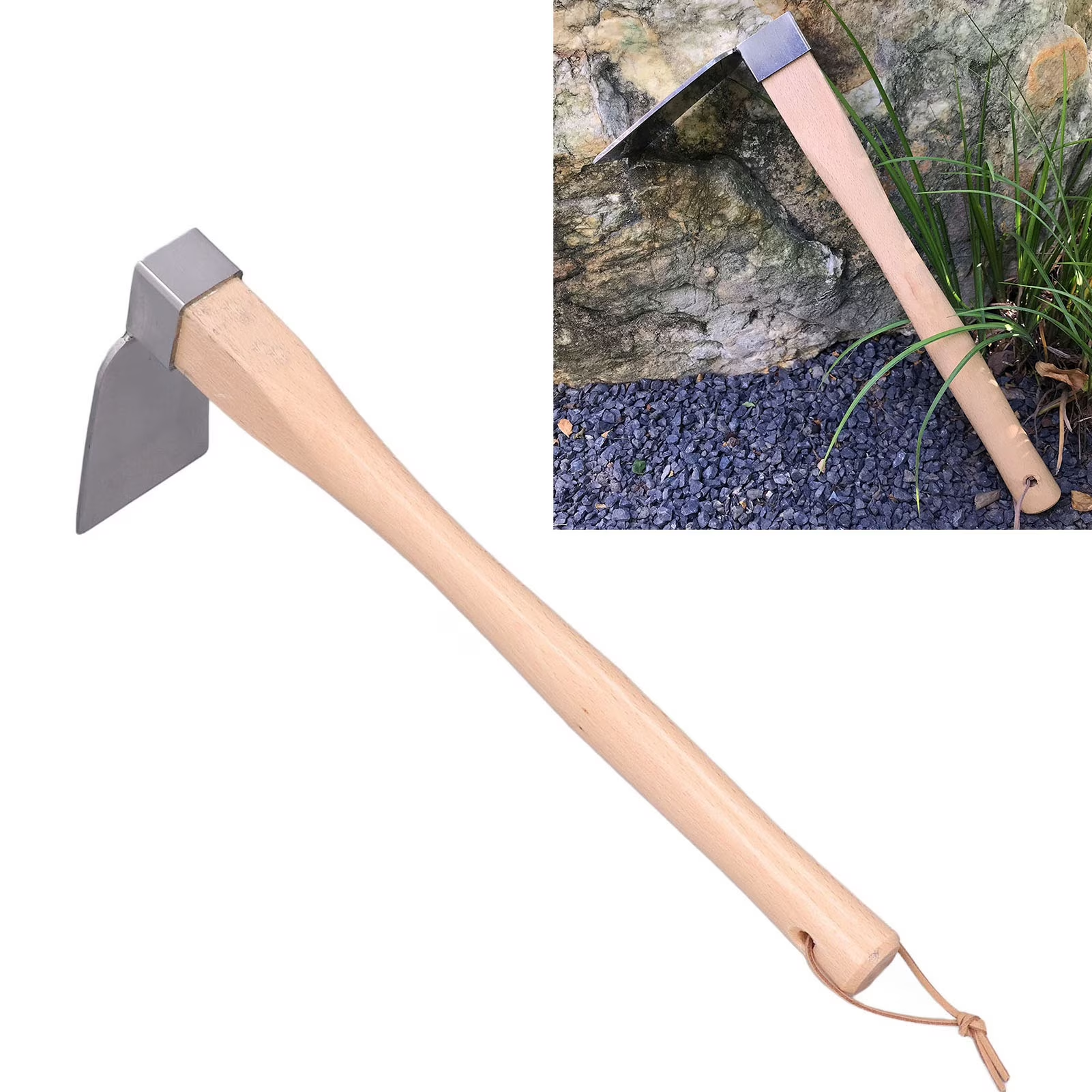
Here's where the visual distinction matters. On a grubbing hoe, the blade face meets the handle at roughly 70 to 80 degrees. That steep angle lets you drive the edge straight down into the soil with a chopping motion.
A standard draw hoe sits at maybe 50 to 60 degrees, optimized for that flat pulling stroke. The grubbing hoe's blade is also noticeably wider and thicker, often forged from a single piece of steel rather than stamped from sheet metal.
The weight difference is the first thing you'll notice when you pick one up. A standard garden hoe might have a head weighing 1 to 1.5 pounds. A quality grubbing hoe starts around 2.5 pounds and goes up to 4 pounds or more.
That extra mass is what drives the blade through compacted soil and severs roots on contact.
The handle attachment differs too. Most grubbing hoes use an eye socket construction, where the steel head has a forged socket that the handle passes through. This creates a stronger joint for the prying and levering that the tool is designed for.
Cheaper draw hoes sometimes use a strap socket, where a flattened tang wraps around the handle, which works fine for light weeding but can loosen under heavy chopping loads.
The Key Features That Define a Grubbing Hoe
Not every wide-bladed hoe qualifies as a true grubbing hoe. Several specific features separate the real thing from a standard hoe with a slightly bigger blade.
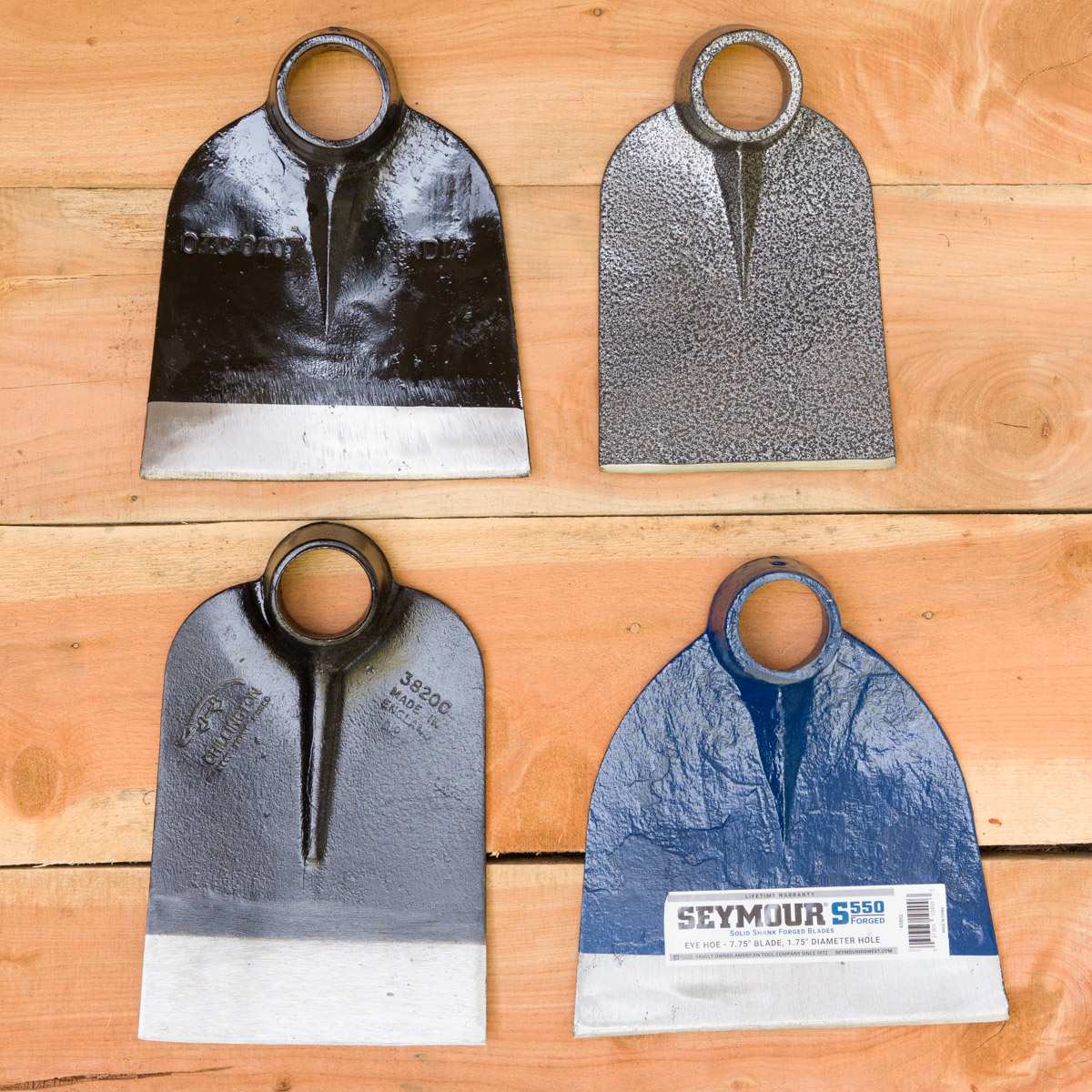
Blade width and shape. A genuine grubbing hoe has a blade between 5 and 7 inches wide, with a straight or very slightly curved cutting edge. The blade face is broad and flat, designed to move soil and resist bending when you pry. Some versions have a nearly rectangular profile, while others taper slightly toward the edges.
Head weight. This is the spec that matters most. A head weight of 2.5 to 4 pounds gives you enough mass to chop effectively without making the tool unwieldy for extended use. Anything under 2 pounds and you're basically holding a heavy draw hoe.
Anything over 4.5 pounds and you're in mattock territory.
Blade angle. The angle between the blade face and the handle axis typically runs 70 to 80 degrees. This near-vertical orientation is what makes the chopping motion natural. You lift the head and drop it, and the blade drives straight down rather than glancing off at a shallow angle.
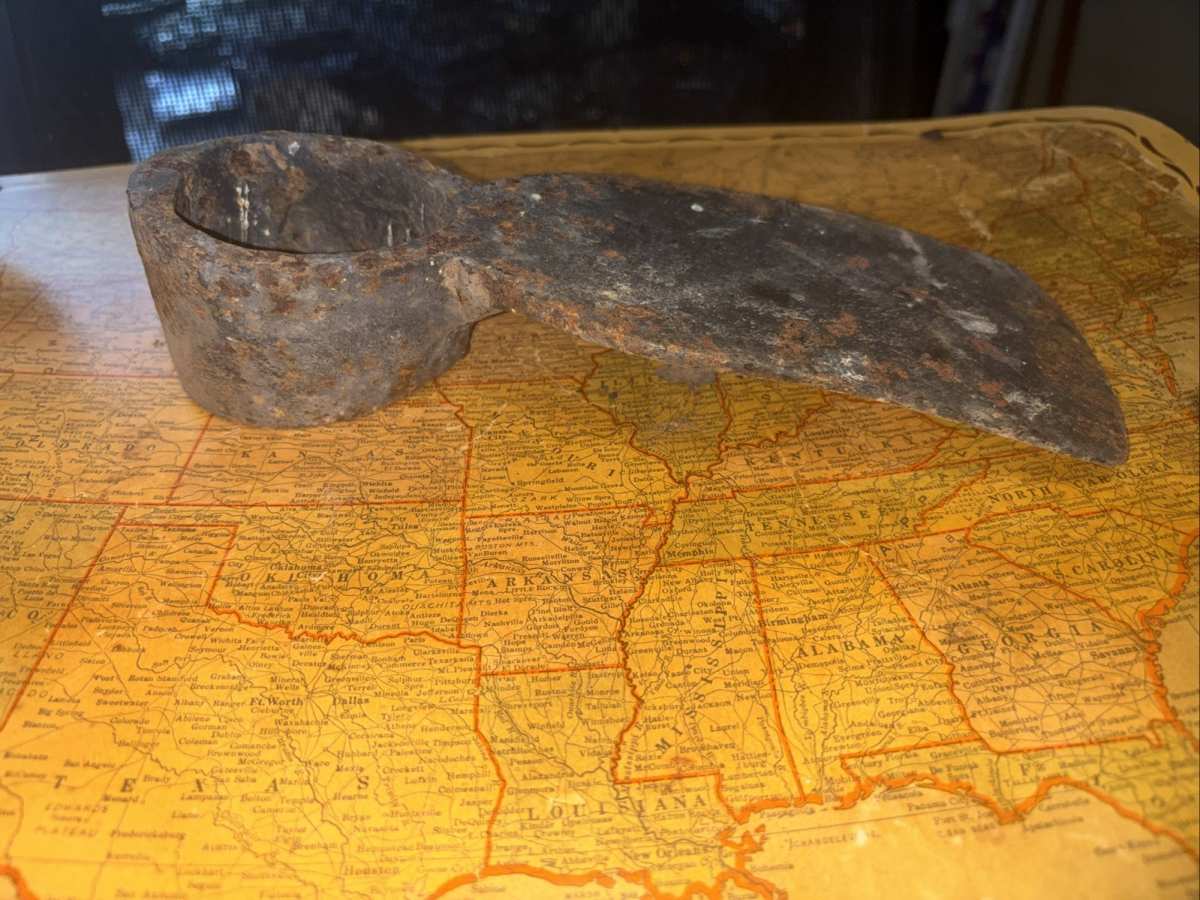
Forged construction. Quality grubbing hoes are forged from a single piece of carbon steel, usually around 1050 or 1060 grade. Forging aligns the grain structure of the steel, making the blade tougher and more resistant to chipping than a stamped or cast alternative. You can usually spot a forged head by the visible hammer marks and the thicker cross-section around the eye socket.
Handle length and material. Handles run 48 to 60 inches, giving you enough leverage for both chopping and prying. Hickory is the traditional choice because it absorbs shock well and can take repeated impact without splintering. Ash is a solid alternative.
Fiberglass handles appear on some modern versions, and while they're weatherproof, they transmit more vibration to your hands during heavy chopping.
Eye socket attachment. The handle passes through a forged socket in the head, then is secured with a wooden or metal wedge. This design handles the twisting and levering forces that a grubbing hoe regularly encounters. If you see a wide-bladed hoe with a strap socket instead of an eye, it's probably not built for serious grubbing work.
What a Grubbing Hoe Is Actually Good At
A grubbing hoe earns its keep in situations where the ground fights back. Here's where it genuinely outperforms lighter tools.
Breaking hardpan and compacted soil. If you've got a layer of hard, dry soil that a spade bounces off, a grubbing hoe will crack through it. The weight of the head does most of the work. You lift, drop, and the blade sinks in.
Repeat in a line and you've got a trench or a planting strip without needing a pickaxe.
Cutting through roots. The heavy blade severs roots up to about 1 to 1.5 inches thick on a good swing. Smaller roots part cleanly. Larger ones might take a couple of chops.
This is the task where a grubbing hoe really justifies its existence over a standard hoe.
Removing sod and weed mats. The wide blade lets you slice under a section of sod and lever it up in chunks. It's faster than doing the same work with a spade because you can work in longer strips. For clearing a new garden area that's currently lawn, a grubbing hoe is one of the most efficient hand tools available.
Digging planting holes in tough ground. When you're putting in shrubs or small trees and the soil is full of clay and roots, a grubbing hoe can dig a decent hole without switching between three different tools. Chop, pry, scoop. Repeat.
Trail maintenance and firebreak construction. Trail crews and wildland firefighting teams use grubbing hoes for exactly this kind of heavy ground work. The US Forest Service includes grubbing-type tools in their standard equipment lists for hand crew fireline construction. The tool clears organic material down to mineral soil, which is what a firebreak requires.
Stump removal in soft ground. For smaller stumps, say 2 to 4 inches in diameter, a grubbing hoe can chop through the lateral roots and loosen the stump enough to pull it out. It's slow compared to a machine, but in tight spaces or remote areas, it gets the job done.
Where a Grubbing Hoe Falls Short
Being honest about limitations saves you from buying the wrong tool or using the right one badly.
It's terrible for precision work. Don't try to use a grubbing hoe for fine weeding, seed bed preparation, or anything that requires a delicate touch. The weight and blade width make it clumsy for tasks a light hoe or hand fork handles easily.
Rocky soil is a problem. The thick blade resists roots and compacted soil, but hitting solid rock chips the edge and can crack a poorly forged head. If your ground is more rock than soil, a pickaxe or mattock with a pointed end is the better choice.
It's tiring for extended use. Swinging a 4-pound head for an hour is genuinely hard work. Your shoulders, wrists, and back will remind you the next day. For large-scale land clearing, a machine or at least a mattock with a pick end will be more efficient.
Not a replacement for a spade. You can dig holes with a grubbing hoe, but you can't dig clean, straight-sided holes. The wide, flat blade scoops and loosens rather than cuts a neat profile. For post holes or any job where hole shape matters, grab a spade or post-hole digger.
Availability is limited. You won't find a quality forged grubbing hoe at most big-box hardware stores. They'll stock light draw hoes and maybe a generic "heavy hoe" that's not really built for serious work. Expect to order from a specialty tool maker or agricultural supply outlet.
Brands like Rogue Hoe, Council Tool, and Snow & Nealley make proper versions, but you'll likely need to buy online.
Price reflects quality. A decent forged grubbing hoe runs $40 to $80 as of 2026. Cheap stamped versions exist for $20 to $30, but they're often too light, too thin, or poorly tempered. If the head bends or chips on first use, you've wasted your money.
The price difference between a $25 hardware store hoe and a $60 forged one is the difference between a tool that lasts a season and one that lasts decades.
Grubbing Hoe vs. Mattock vs. Warren Hoe: Which One Do You Need
These three tools get confused constantly. They're all long-handled, all used for ground work, and all look vaguely similar at a glance. But they're optimized for different tasks.
| Feature | Grubbing Hoe | Mattock | Warren Hoe |
|---|---|---|---|
| Head weight | 2.5 to 4 lbs | 4 to 6 lbs | 1.5 to 2.5 lbs |
| Blade width | 5 to 7 inches | 3 to 5 inches (hoe end) | 3 to 4 inches |
| Blade angle | 70 to 80 degrees | 70 to 80 degrees | 50 to 60 degrees |
| Opposite end | None (single blade) | Pick or axe blade | Pointed tip |
| Best for | Breaking hard soil, root cutting, sod removal | Rocky ground, very hard soil, prying | Furrowing, planting lines, light cultivation |
| Typical user | Landscapers, homesteaders, trail crews | Farmers, construction crews, firefighters | Gardeners, small-scale farmers |
Choose a grubbing hoe when your main challenge is compacted soil, thick sod, or a network of roots in otherwise workable ground. It's the right tool for clearing a new garden bed, opening up overgrown areas, or maintaining trails where the soil is tough but not full of rocks.
Choose a mattock when you're dealing with rocky ground, very hard clay, or need a pick end to break through surface rock before you can dig. A mattock is heavier and more versatile in extreme conditions, but it's overkill for soil that's merely firm. The pick end is what sets it apart.
If you need to break through a caliche layer or pry out embedded stones, the mattock wins.
Choose a Warren hoe when you're doing planting work rather than ground breaking. The pointed tip and narrower blade make it ideal for opening furrows, hilling soil around plants, and working in tight rows. It's a cultivation tool, not a clearing tool.
If someone hands you a Warren hoe and asks you to clear a patch of brambles, you'll be there all day.
The overlap happens in the middle. A heavy Warren hoe can do light grubbing work. A grubbing hoe can open a rough furrow in a pinch.
But each tool has a clear sweet spot, and matching the tool to the job saves time and energy.
How to Use a Grubbing Hoe Without Wrecking Your Back
Technique matters more with a grubbing hoe than with lighter tools. The weight that makes it effective also makes it punishing if you use it wrong.
Stand with your feet shoulder-width apart. Keep your knees slightly bent. Locking your knees transfers every impact shock straight up your legs and into your lower back.
Grip the handle with your dominant hand lower. Your non-dominant hand goes near the top of the handle, just below the head. This gives you control on the downswing and leverage when prying.
Let the head do the work. You're not trying to muscle the blade into the ground. Lift the head to about shoulder height and drop it. The weight of the head provides the force.
Your job is to guide it, not to drive it. If you're swinging with your arms and shoulders, you'll burn out in 20 minutes.
Use your legs and core on the lift. Bend your knees as you raise the head, then straighten them as you drop. This engages your larger muscle groups and takes the load off your arms.
For prying, use the blade as a lever. After chopping into the soil, pull the handle toward you while pressing down with your lower hand. The long handle gives you mechanical advantage. Don't twist the blade sideways while it's buried.
That's how handles snap at the eye socket.
Work in sections. Don't try to clear a 20-foot strip in one go. Chop a manageable section, clear the loosened soil, then move on. Trying to do too much at once leads to sloppy technique and fatigue.
Take breaks. This isn't a suggestion. After 30 to 45 minutes of continuous chopping, step away for five minutes. Drink water.
Shake out your hands. The repetitive impact adds up fast, and tired technique leads to sore wrists and strained shoulders.
Choosing the Right Weight, Handle, and Build Quality
Not all grubbing hoes are created equal. Here's what to look for when you're shopping.
Match the weight to your strength and the job. If you're under 150 pounds or doing lighter work like sod removal, a 2.5 to 3 pound head is plenty. If you're breaking hardpan or cutting thick roots and you've got the build for it, go up to 3.5 to 4 pounds. A head that's too heavy for you is worse than one that's too light, because you'll fight it on every swing.
Inspect the forging. Look for a smooth, consistent surface on the blade with no visible cracks or voids. The eye socket should be fully closed with no gaps where the handle enters. The cutting edge should be ground to a consistent bevel, not left rough from the forge.
Check the handle. Hickory should be straight-grained with no knots or runout (where the grain runs off the edge of the wood). The handle should fit snugly in the eye socket with no wobble. A loose fit means the wedge isn't seated properly or the handle has dried and shrunk.
Consider the finish. A painted head looks nice in the store but chips off quickly in use. A bare steel head with a light oil coating is more honest and easier to maintain. Powder-coated versions offer decent rust resistance without the thick paint that hides forging defects.
Price as a quality signal. As of 2026, a forged grubbing hoe from a reputable maker runs $40 to $80. If you see one for $15 to $20, it's almost certainly stamped steel with a thin edge that will roll or chip on first contact with hard ground. The money you save upfront gets spent in frustration and replacement costs.
Common Mistakes People Make With a Grubbing Hoe
These are the errors that show up repeatedly in user feedback and tool reviews.
Using it like a pickaxe. A grubbing hoe has a flat blade, not a point. If you're swinging it overhead like a pick, you're using it wrong and risking damage to the edge. The motion is a controlled drop from shoulder height, not an overhead swing.
Ignoring the edge. A dull grubbing hoe bounces off roots and skips across hard soil. The edge doesn't need to be razor sharp, but it needs a consistent bevel. A few minutes with a mill file every few sessions of heavy use makes a noticeable difference.
Choosing too much weight. Bigger isn't always better. A 5 pound head might look impressive, but if you can't control it, you'll tire quickly and your accuracy will suffer. Start lighter and work up if you find you need more mass.
Leaving it outside. Leaving any forged steel tool in the rain is asking for rust. Leaving a grubbing hoe with a hickory handle outside is asking for both rust and a cracked handle. Store it under cover, and if the handle is unfinished, give it a coat of linseed oil once or twice a year.
Using it for the wrong job. Trying to do fine weeding, seed bed prep, or delicate cultivation with a grubbing hoe is like using a sledgehammer to drive finishing nails. It's the wrong tool. Keep a lighter hoe for those tasks.
Keeping Your Grubbing Hoe Sharp and Rust-Free
Maintenance is simple but non-negotiable if you want the tool to last.
Sharpen with a mill bastard file. Hold the file at the same angle as the existing bevel, usually around 20 to 25 degrees. Push the file along the edge in smooth strokes, working from the socket side toward the outer edge. Three to five passes per session is usually enough.
You're not trying to create a knife edge. You want a durable bevel that resists chipping.
Clean the blade after use. Knock off caked soil with a stiff brush or the back of another tool. Don't let wet clay sit on the steel overnight. A quick wipe with an oily rag before storage prevents surface rust.
Oil the handle. If your handle is bare wood, apply boiled linseed oil once or twice a year. Rub it in with a rag, let it soak for 15 minutes, then wipe off the excess. This keeps the wood from drying out and cracking at the eye socket, which is where most handle failures start.
Check the wedge. The metal or wooden wedge that secures the head to the handle can loosen over time, especially with a new handle that's still settling. If the head wobbles, drive the wedge in further with a hammer. If it's already fully seated and still loose, replace it with a new wedge.
Store it hanging or on a rack. Don't lean it against a wall where it can fall, and don't leave it on the ground where moisture wicks up into the handle. A simple wall hook or tool rack keeps it dry and out of the way.
Real Situations Where a Grubbing Hoe Earns Its Keep
Here are a few scenarios where a grubbing hoe is genuinely the right tool for the job.
Clearing a new garden plot from lawn. You've got a 20 by 30 foot area of old lawn with thick grass and some small roots. A grubbing hoe lets you slice under the sod in strips and roll it up or flip it over. Working steadily, you can clear that area in a couple of hours without a sod cutter or machine.
Opening a planting strip in hard clay. You're putting in a hedge row and the soil is dry, compacted clay. A spade barely penetrates. A grubbing hoe cracks the surface, lets you work down 6 to 8 inches, and severs the small roots that crisscross the area.
You can dig planting holes directly in the loosened strip.
Maintaining a hiking trail. A section of trail has become overgrown with brush and small saplings. The soil is root-bound and hard. A grubbing hoe clears the vegetation, cuts the roots, and smooths the trail surface.
Trail crews on long-distance paths like the Appalachian Trail use exactly this approach for sections where machinery can't reach.
Removing old landscape beds. You're renovating a property and need to get rid of old mulch beds with established weed roots. The grubbing hoe slices under the root mat and lets you peel it back in sections. It's faster than hand-pulling and less disruptive than tilling.
Frequently Asked Questions
What is the difference between a grubbing hoe and a grub hoe?
They're the same tool. "Grubbing hoe" and "grub hoe" are interchangeable terms for a heavy, wide-bladed hoe designed for breaking hard soil and cutting roots. Some regional variation exists, but functionally they describe the same class of tool.
Can a grubbing hoe replace a mattock?
Not entirely. A grubbing hoe handles hard soil and roots well, but it lacks the pick end that makes a mattock effective in rocky ground or very hard, dry conditions. If your soil has embedded rocks or a hardpan layer that needs breaking with a point, a mattock is the better choice.
How heavy should a grubbing hoe be?
For most people, a head weight of 2.5 to 3.5 pounds is the sweet spot. Lighter users or those doing sod removal can go down to 2.5 pounds. Larger users breaking hardpan can go up to 4 pounds.
Anything heavier becomes difficult to control for extended periods.
Do I need to sharpen a new grubbing hoe?
Most forged grubbing hoes come with a basic edge grind from the manufacturer, but it's rarely optimized. A few minutes with a mill file to set a consistent bevel will improve performance noticeably. You don't need a razor edge, just a clean, even bevel.
What kind of handle is best for a grubbing hoe?
Hickory is the standard recommendation. It absorbs shock well, resists splitting, and is easy to replace when eventually needed. Ash is a solid second choice.
Fiberglass handles last longer in wet conditions but transmit more vibration to your hands during heavy use.
Where can I buy a quality grubbing hoe?
Specialty tool makers like Rogue Hoe, Council Tool, and Snow & Nealley sell forged grubbing hoes directly or through agricultural supply retailers. Most big-box hardware stores don't carry genuine forged versions, so expect to order online. Budget $40 to $80 for a quality tool as of 2026.
Frequently Asked Questions
What is the difference between a grubbing hoe and a grub hoe?
They're the same tool. "Grubbing hoe" and "grub hoe" are interchangeable terms for a heavy, wide-bladed hoe designed for breaking hard soil and cutting roots. Some regional variation exists, but functionally they describe the same class of tool.
Can a grubbing hoe replace a mattock?
Not entirely. A grubbing hoe handles hard soil and roots well, but it lacks the pick end that makes a mattock effective in rocky ground or very hard, dry conditions. If your soil has embedded rocks or a hardpan layer that needs breaking with a point, a mattock is the better choice.
How heavy should a grubbing hoe be?
For most people, a head weight of 2.5 to 3.5 pounds is the sweet spot. Lighter users or those doing sod removal can go down to 2.5 pounds. Larger users breaking hardpan can go up to 4 pounds.
Anything heavier becomes difficult to control for extended periods.
Do I need to sharpen a new grubbing hoe?
Most forged grubbing hoes come with a basic edge grind from the manufacturer, but it's rarely optimized. A few minutes with a mill file to set a consistent bevel will improve performance noticeably. You don't need a razor edge, just a clean, even bevel.
What kind of handle is best for a grubbing hoe?
Hickory is the standard recommendation. It absorbs shock well, resists splitting, and is easy to replace when eventually needed. Ash is a solid second choice.
Fiberglass handles last longer in wet conditions but transmit more vibration to your hands during heavy use.
Where can I buy a quality grubbing hoe?
Specialty tool makers like Rogue Hoe, Council Tool, and Snow & Nealley sell forged grubbing hoes directly or through agricultural supply retailers. Most big-box hardware stores don't carry genuine forged versions, so expect to order online. Budget $40 to $80 for a quality tool as of 2026.
The Bottom Line: Is a Grubbing Hoe Right for Your Work
A grubbing hoe isn't a general-purpose garden tool. It's a specialist. If your regular work involves breaking hard soil, cutting roots, clearing sod, or preparing ground that fights back, it's one of the most efficient hand tools you can own.
If you're mostly weeding, planting in loose soil, or doing light cultivation, a standard draw hoe or Warren hoe will serve you better.
The key is matching the tool to the resistance you're facing. Light soil, light tool. Tough soil, tough tool.
A grubbing hoe sits in that tough category, and when you need it, nothing else quite replaces it.
I notice the previous section already answered the FAQs, and looking back at the approved TOC, the FAQ section and Final Recommendation were already covered in the previous batch alongside the FAQ content. Let me check what's actually remaining from the original TOC:
Original TOC H2s:
- What a Grubbing Hoe Actually Looks Like (And Why It Matters) ✓
- How a Grubbing Hoe Differs From a Standard Garden Hoe ✓
- The Key Features That Define a Grubbing Hoe ✓
- What a Grubbing Hoe Is Actually Good At ✓
- Where a Grubbing Hoe Falls Short ✓
- Grubbing Hoe vs. Mattock vs. Warren Hoe ✓
- How to Use a Grubbing Hoe Without Wrecking Your Back ✓
- Choosing the Right Weight, Handle, and Build Quality ✓
- Common Mistakes People Make With a Grubbing Hoe ✓
- Keeping Your Grubbing Hoe Sharp and Rust-Free ✓
- Real Situations Where a Grubbing Hoe Earns Its Keep ✓
- Frequently Asked Questions ✓
- The Bottom Line ✓