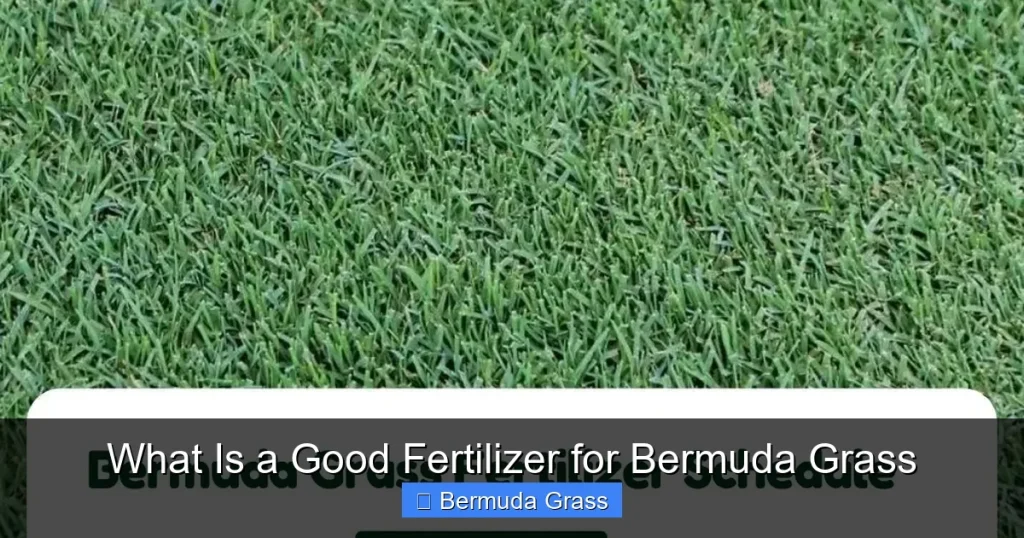
Achieving a beautiful Bermuda lawn starts with selecting a good fertilizer for Bermuda grass and applying it correctly. This guide will walk you through understanding your lawn’s nutritional needs, deciphering NPK ratios, and choosing between quick-release or slow-release options. By mastering timing and application techniques, you’ll ensure your Bermuda grass thrives, developing a dense, vibrant green carpet all season long.
What Is a Good Fertilizer for Bermuda Grass?
Welcome to the ultimate guide to nourishing your Bermuda grass! If you dream of a lush, vibrant, and resilient lawn, understanding how to properly fertilize is your secret weapon. Bermuda grass, known for its tough nature and beautiful appearance, thrives on a consistent diet of the right nutrients. But with so many options on the market, choosing a good fertilizer for Bermuda grass can feel overwhelming.
Don’t worry! This comprehensive guide will break down everything you need to know. We’ll cover what nutrients your lawn craves, how to read those tricky fertilizer labels, and when and how to apply fertilizer for the best results. By the end, you’ll be a confident lawn care pro, ready to transform your Bermuda turf into the envy of the neighborhood. Let’s dig in!
Key Takeaways
- Soil Testing is Crucial: Before buying any fertilizer, get a soil test. This tells you exactly what nutrients your Bermuda grass needs, preventing guesswork and wasted money.
- Understand NPK Ratios: Fertilizer bags show three numbers (N-P-K) representing Nitrogen, Phosphorus, and Potassium. Nitrogen promotes green growth, Phosphorus helps roots, and Potassium improves overall plant health and stress resistance.
- Choose Seasonally Appropriate Fertilizers: Bermuda grass has different needs throughout its growing season. High-nitrogen fertilizers are best for active summer growth, while a more balanced approach is good for spring green-up, and lower nitrogen for late fall if a final feeding is desired.
- Slow-Release vs. Quick-Release: Slow-release fertilizers provide a steady, consistent feed over weeks, reducing the risk of burn and promoting sustained growth. Quick-release fertilizers offer a rapid green-up but require more frequent application and careful monitoring.
- Application Method Matters: Use a broadcast or drop spreader for even application, preventing stripes and patchy growth. Always read fertilizer labels for specific spreader settings and coverage rates.
- Timing is Everything: Fertilize Bermuda grass when it’s actively growing, typically from late spring (after the last frost) through late summer/early fall. Avoid fertilizing when the grass is dormant or stressed.
- Watering After Application: Always water in granular fertilizers immediately after applying to help move the nutrients into the soil and prevent leaf burn.
Understanding Bermuda Grass Nutritional Needs
Before you even think about buying a bag of fertilizer, it’s essential to understand what makes Bermuda grass tick. Like any living thing, it requires specific nutrients to grow strong, green, and healthy.
The Big Three: N-P-K
Every fertilizer bag proudly displays three numbers, like 16-4-8 or 29-0-3. These represent the percentage by weight of the three primary macronutrients your grass needs: Nitrogen (N), Phosphorus (P), and Potassium (K).
- Nitrogen (N): This is the superstar for lush, green growth. Nitrogen promotes vigorous leaf and stem development, giving your Bermuda grass that deep, vibrant color we all love. It’s especially important during the active growing season.
- Phosphorus (P): Often associated with root development, flowering, and fruiting, phosphorus is crucial for establishing strong roots in new lawns or when overseeding. Established Bermuda grass usually needs less phosphorus, as most soils already have sufficient levels.
- Potassium (K): Known as the “stress reliever” nutrient, potassium helps your grass withstand various environmental challenges like drought, heat, cold, and disease. It strengthens cell walls, improves water regulation, and boosts overall plant health.
The Importance of Soil pH
Beyond N-P-K, soil pH is a critical factor. pH measures how acidic or alkaline your soil is, and it directly impacts how well your grass can absorb nutrients. Bermuda grass prefers a soil pH between 6.0 and 7.0, which is slightly acidic to neutral. If your soil pH is too high or too low, even the best fertilizer for Bermuda grass won’t be fully effective because the nutrients will be locked up and unavailable to the plant.
Bermuda Grass Growth Cycles
Bermuda grass is a warm-season grass, meaning it thrives in hot temperatures. It goes dormant in cooler months and greens up aggressively in late spring and summer. Your fertilization schedule should align with these growth cycles to maximize effectiveness and minimize waste.
Choosing the Right Fertilizer for Bermuda Grass
Now that you know the basics, let’s talk about how to select a good fertilizer for Bermuda grass from the myriad of choices available.
Deciphering N-P-K Ratios for Bermuda
The ideal N-P-K ratio for Bermuda grass changes throughout the season:
- Spring Green-Up (Late Spring/Early Summer): As Bermuda grass emerges from dormancy, it needs a balanced meal to kickstart growth. A good fertilizer for Bermuda grass at this stage might have a ratio like 4-1-2 or 3-1-2 (e.g., 16-4-8, 24-6-12). Nitrogen is still key, but some phosphorus helps with root recovery, and potassium boosts overall health.
- Active Summer Growth (Mid-Summer): This is when Bermuda grass is in its prime, demanding lots of nitrogen for vigorous growth and color. Look for fertilizers with a higher nitrogen content and lower phosphorus, such as 5-1-2 or even 7-1-2 (e.g., 20-4-8, 30-0-10, 21-0-0). This period often requires multiple applications throughout the summer.
- Late Summer/Early Fall: As temperatures begin to cool, the focus shifts to strengthening the grass for dormancy. A balanced fertilizer or one slightly higher in potassium can be beneficial, like a 1-1-1 or 2-1-3 ratio (e.g., 10-10-10, 15-5-10, or even just a potassium-heavy fertilizer like 0-0-25). Avoid heavy nitrogen applications late in the season, as this can stimulate tender new growth that will be vulnerable to early frosts.
Slow-Release vs. Quick-Release Fertilizers
This is a significant choice that impacts how your grass receives nutrients.
- Quick-Release Fertilizers: These provide nutrients immediately, giving your lawn a rapid green-up. They are often less expensive per pound of nutrient. However, they carry a higher risk of “burning” your lawn if applied too heavily, and their effects are short-lived, requiring more frequent applications. They are good for a quick boost or to correct a nutrient deficiency quickly.
- Slow-Release Fertilizers: These are designed to release nutrients gradually over several weeks or even months. They reduce the risk of burn, promote more consistent growth, and require fewer applications. While they might cost more upfront, they offer more sustained benefits and generally lead to healthier overall turf. Many good fertilizers for Bermuda grass combine both quick and slow-release nitrogen for immediate greening and long-term feeding.
Granular vs. Liquid Fertilizers
The form of fertilizer also plays a role in application and effectiveness.
- Granular Fertilizers: These are the most common type and are applied with a broadcast or drop spreader. They are generally easier to apply evenly and are ideal for slow-release formulations. Granular fertilizers need to be watered in after application.
- Liquid Fertilizers: These are diluted with water and applied with a sprayer. They offer very quick nutrient absorption through both leaves and roots. Liquid options are great for targeted applications or when you want a rapid response. However, achieving even coverage can sometimes be trickier, and they may require more frequent applications as they are often quick-release.
Organic vs. Synthetic Fertilizers
The choice between organic and synthetic often comes down to personal preference and environmental considerations.
- Synthetic Fertilizers: These are chemically manufactured, highly concentrated, and provide precise nutrient ratios. They offer predictable results and are often more readily available and less expensive. However, they can contribute to runoff if not applied properly and don’t contribute to soil health as much as organic options.
- Organic Fertilizers: Derived from natural sources like compost, bone meal, or manure, organic fertilizers improve soil structure and feed beneficial microbes over time. They release nutrients slowly and are less likely to burn your lawn. The downside is that they often have lower N-P-K ratios, may have a noticeable odor, and their results can be slower and less predictable. For long-term soil health, an organic approach can be a good fertilizer for Bermuda grass.
How to Fertilize Bermuda Grass Effectively
Choosing the right product is only half the battle. Proper application is key to getting the results you want.
Step 1: Get a Soil Test – This is Non-Negotiable!
Seriously, don’t skip this! A professional soil test (available through your local university extension office or private labs) will give you a detailed report on your soil’s pH, existing nutrient levels (including N-P-K and micronutrients), and recommendations for what amendments and fertilizers to use. This prevents over-fertilization, saves you money, and ensures you’re providing exactly what your Bermuda grass needs. Retest every 2-3 years.
Step 2: Measure Your Lawn Area
You can’t apply fertilizer accurately if you don’t know the size of your lawn.
Measure the length and width of each distinct lawn area and multiply them to get square footage. If you have irregular shapes, break them down into smaller rectangles or squares for easier measurement. Knowing your square footage is vital for calculating the correct amount of fertilizer.
Visual guide about What Is a Good Fertilizer for Bermuda Grass
Image source: howtowithdoc.com
Step 3: Read the Fertilizer Label Carefully
Every good fertilizer for Bermuda grass comes with detailed instructions. Pay attention to:
- Application Rate: This tells you how much product to apply per 1,000 square feet.
- Spreader Settings: Many labels provide recommended settings for common spreader types.
- Safety Precautions: Wear gloves and eye protection if recommended.
- Watering Instructions: Always follow these to activate the fertilizer and prevent burn.
Step 4: Calibrate and Load Your Spreader
Using the correct spreader is important for even application.
- Broadcast Spreaders: These are great for larger lawns, throwing granules in a wide arc. Overlapping slightly (usually by 50% on each pass) ensures full coverage.
- Drop Spreaders: These release granules directly beneath the spreader, offering more precision for smaller lawns or near garden beds. They require very precise, non-overlapping passes to avoid stripes.
Always calibrate your spreader according to the fertilizer label’s instructions. Load the spreader on a hard surface like a driveway or patio to easily clean up any spills. Never fill or stop your spreader while it’s in motion over the lawn to prevent dumping a large pile of fertilizer.
Step 5: Apply Evenly
Walk at a consistent pace to ensure uniform distribution. Fertilize the perimeter of your lawn first, then go back and forth in parallel lines. On subsequent passes, overlap your previous path slightly to avoid streaks. If using a broadcast spreader, aim to overlap by about 50% of the broadcast width. If using a drop spreader, make sure your wheels just touch the previous pass’s edge.
Step 6: Water In Granular Fertilizers
Immediately after applying granular fertilizer, water your lawn thoroughly. This helps wash the granules off the grass blades and into the soil, where they can start dissolving and feeding the roots. Watering also prevents the nitrogen from burning the leaf tissue, especially with quick-release products.
Timing is Everything for Bermuda Grass Fertilization
The “when” is just as important as the “what” when it comes to a good fertilizer for Bermuda grass.
First Application (Late Spring):
Wait until your Bermuda grass has fully emerged from dormancy and has been mowed 2-3 times. Soil temperatures should consistently be above 65°F. This usually falls between late April and early June, depending on your climate. Use a balanced or slightly higher nitrogen fertilizer (e.g., 4-1-2 ratio) to encourage healthy root and shoot development.
Mid-Season Applications (Summer):
Bermuda grass is a nitrogen-hungry beast during the heat of summer. Depending on your soil test results and the type of fertilizer (quick vs. slow release), you might apply fertilizer every 4-6 weeks from June through August. Focus on high-nitrogen fertilizers (e.g., 5-1-2 or higher nitrogen, lower P) to maintain vibrant color and dense growth. Always follow the specific application rates on your chosen product.
Final Application (Late Summer/Early Fall):
Around 4-6 weeks before the first expected frost, apply a final fertilizer with a balanced N-P-K or one higher in potassium. This helps the grass prepare for dormancy by strengthening its cell walls and improving cold tolerance. Avoid applying too much nitrogen at this time, as it can stimulate new, tender growth that will be damaged by freezing temperatures.
Troubleshooting Common Bermuda Grass Fertilization Issues
Even with the best intentions, things can go wrong. Here are some common problems and solutions.
Yellowing Grass After Fertilizing:
If your grass turns yellow shortly after applying fertilizer, it might be due to several reasons:
- Iron Deficiency: Bermuda grass sometimes needs extra iron, especially in alkaline soils, to maintain its deep green color. A soil test will confirm this. Apply an iron supplement (chelated iron) if needed.
- Too Little Nitrogen: You might not have applied enough nitrogen, or the fertilizer applied had too low an N content for Bermuda’s needs.
- Incorrect pH: If your soil pH is off, nutrients can become unavailable, leading to yellowing.
Brown or Burnt Patches:
This is usually a sign of “fertilizer burn,” which occurs when too much quick-release fertilizer is applied, or granular fertilizer isn’t watered in adequately. The salts in the fertilizer draw moisture out of the grass blades, causing them to dry out and turn brown.
- Solution: Water the affected areas heavily and deeply to leach out excess salts. For future applications, ensure you follow application rates precisely and water immediately after.
Uneven Growth or Streaks:
This typically indicates uneven fertilizer application. You might have missed spots, overlapped too much, or your spreader settings were off. The grass will be greener and thicker where more fertilizer was applied, and lighter where less was applied.
- Solution: Calibrate your spreader, walk at a consistent pace, and ensure even overlap on your passes. Consider getting a different type of spreader if your current one isn’t performing well.
Practical Tips for Best Results
Fertilizing is just one piece of the lawn care puzzle. For a truly outstanding Bermuda lawn, integrate it with other good practices.
- Mow Regularly: Bermuda grass loves to be mowed frequently and at a lower height (0.5 to 1.5 inches for a manicured look, up to 2.5 inches for general purpose). Regular mowing encourages dense growth.
- Water Deeply and Infrequently: Bermuda grass is drought-tolerant but performs best with deep watering, which encourages deep root growth. Aim for 1 inch of water per week, either from rain or irrigation.
- Control Weeds: Weeds compete with your Bermuda grass for nutrients, water, and sunlight. Apply pre-emergent herbicides in late winter/early spring and late summer/early fall to prevent weed seeds from germinating. Spot treat any existing weeds.
- Aerate Annually: Core aeration in the summer helps alleviate soil compaction, allowing water, air, and nutrients (including your good fertilizer for Bermuda grass) to reach the roots more effectively.
- Don’t Fertilize Dormant Grass: Applying fertilizer to dormant Bermuda grass is a waste of money and can even harm the lawn. Wait until it shows signs of actively growing.
Conclusion
Choosing and applying a good fertilizer for Bermuda grass isn’t a one-time event; it’s a thoughtful, seasonal process. By understanding your lawn’s specific needs through soil testing, deciphering NPK ratios, and choosing the right product for the right time, you’ll be well on your way to a stunning Bermuda lawn. Remember, consistency, proper application, and integrating fertilization with other good lawn care practices are the keys to success. Enjoy your beautiful, thriving turf!