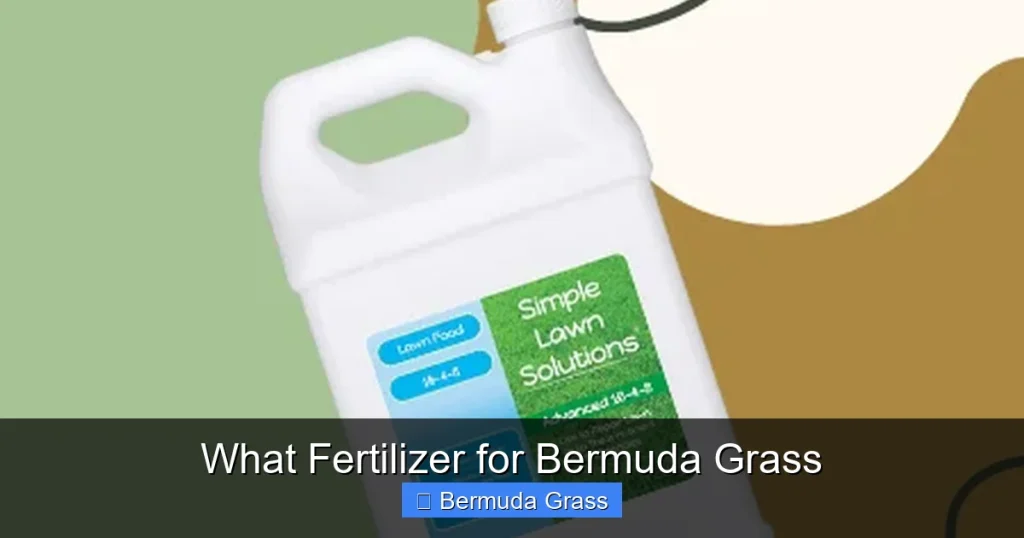
Achieving a vibrant Bermuda grass lawn requires understanding its specific nutritional needs. This guide will walk you through choosing the best fertilizer for Bermuda grass, emphasizing the importance of a soil test and the right N-P-K ratios. Learn when and how to apply fertilizer correctly to foster strong growth and a healthy, resilient turf throughout its growing season.
What Fertilizer for Bermuda Grass
Do you dream of a lush, vibrant, green Bermuda grass lawn? You’re in the right place! Bermuda grass is a beautiful, resilient warm-season turf, but it needs the right fuel to truly shine. Fertilizing your Bermuda grass correctly is one of the most important steps to achieving that dense, weed-resistant, and visually stunning turf.
But with so many options out there, how do you know what fertilizer for Bermuda grass is best? It can feel overwhelming, right? Don’t worry, this comprehensive guide will break down everything you need to know. We’ll cover how to understand your lawn’s specific needs, decode fertilizer labels, choose the best type of fertilizer, and apply it effectively throughout the growing season. By the end, you’ll feel confident in turning your Bermuda lawn into the envy of the neighborhood!
Key Takeaways
- Conduct a Soil Test First: Always start with a soil test to understand your Bermuda grass’s specific nutrient deficiencies and pH levels. This prevents guessing and ensures effective fertilization.
- Prioritize Nitrogen (N-P-K Ratios): Bermuda grass is a “nitrogen hog.” Look for fertilizers with a higher first number (Nitrogen) in ratios like 4-1-2 or 3-1-2 to promote lush, green blade growth.
- Timing is Crucial for Warm-Season Grass: Fertilize Bermuda grass when soil temperatures consistently reach 65°F in late spring. Continue monthly or bi-monthly during peak summer growth, and stop nitrogen applications by early fall.
- Choose the Right Fertilizer Type: Decide between granular (slow-release for sustained feeding, less burn risk) and liquid (quick green-up, good for micronutrients). Use “weed and feed” products with caution and proper timing.
- Apply Correctly and Safely: Measure your lawn area accurately, calibrate your spreader, and apply fertilizer in overlapping passes. Always water in granular fertilizers immediately after application to prevent burning your Bermuda lawn.
- Avoid Over-Fertilizing: Too much fertilizer, especially nitrogen, can burn your Bermuda grass, causing yellowing or browning. Follow application rates strictly and remember that more is not always better.
Step 1: Understand Your Bermuda Grass Needs – A Soil Test is Key
Before you even think about buying a bag of fertilizer, the absolute first step is to understand what your Bermuda grass truly needs. And for that, there’s no better tool than a soil test. Think of it like a doctor’s check-up for your lawn – it tells you exactly what’s going on under the surface.
Why a Soil Test is Essential
Guessing what fertilizer to use is like throwing darts in the dark. Without a soil test, you might be applying nutrients your Bermuda grass doesn’t need, or worse, missing vital ones. This can lead to wasted money, potential damage to your lawn, and continued frustration. A soil test will reveal:
- Soil pH: Bermuda grass thrives in slightly acidic to neutral soil, typically between 6.0 and 7.0. If your pH is too high or too low, nutrients won’t be absorbed effectively, no matter how much fertilizer you apply.
- Existing Nutrient Levels: It shows you how much Nitrogen (N), Phosphorus (P), and Potassium (K) – along with other micronutrients like iron or magnesium – are already present in your soil. This prevents over-application of nutrients that are already sufficient.
- Organic Matter Content: A good level of organic matter improves soil structure and nutrient retention.
How to Get a Soil Test
Getting a soil test is simpler than you might think. Your local university extension office is usually the best resource. They often provide affordable kits and detailed analysis. Here’s a basic overview:
- Purchase a Kit: Pick up a soil test kit from your extension office or a garden center.
- Collect Samples: Using a clean trowel or soil probe, collect small samples from 5-10 different spots across your lawn. Dig down about 4-6 inches. Avoid areas near structures, compost piles, or trees.
- Mix and Mail: Mix all the samples together in a clean bucket. Remove any grass, roots, or rocks. Place about 1 cup of this mixed soil into the provided bag or container. Fill out the form completely and mail it to the lab.
- Interpret Results: In a few weeks, you’ll receive a report with recommendations tailored to your lawn type (Bermuda grass). These reports usually tell you exactly what to add and how much.
Step 2: Decoding Fertilizer Numbers (N-P-K) for Bermuda Grass
Once you have your soil test results, it’s time to understand fertilizer labels. Every bag of fertilizer has three prominent numbers, like 16-4-8 or 10-10-10. These numbers represent the N-P-K ratio, which stands for Nitrogen (N), Phosphorus (P), and Potassium (K) – the three primary macronutrients your Bermuda grass needs.

Visual guide about What Fertilizer for Bermuda Grass
Image source: img.lazcdn.com
What Each Number Means
- Nitrogen (N) – The First Number: This is the superstar for Bermuda grass! Nitrogen promotes lush, green leaf growth and is responsible for that vibrant color you want. Bermuda grass is a “nitrogen hog” and uses a lot of it during its active growing season.
- Phosphorus (P) – The Second Number: Phosphorus is vital for strong root development, seedling growth, and overall plant maturity. It’s especially important for new Bermuda grass lawns or when overseeding. Established Bermuda lawns generally need less phosphorus unless your soil test indicates a deficiency.
- Potassium (K) – The Third Number: Potassium is like your Bermuda grass’s immune system. It helps the turf withstand stress from drought, heat, cold, and disease. It also plays a role in overall plant health and vigor.
Ideal N-P-K Ratios for Bermuda Grass
Based on your soil test, you’ll adjust these. However, as a general rule, Bermuda grass thrives on a higher nitrogen diet. Look for fertilizers with ratios such as:
- 4-1-2 (e.g., 16-4-8 or 32-8-16)
- 3-1-2 (e.g., 21-7-14)
These ratios provide plenty of nitrogen for top growth, adequate phosphorus for root health, and potassium for stress resistance. If your soil test shows a specific deficiency, you might temporarily use a different ratio to correct it. For example, if phosphorus is very low, you might use a more balanced fertilizer until levels are corrected, then return to a high-nitrogen blend.
Step 3: Choosing the Right Fertilizer Type
Beyond the N-P-K ratio, fertilizers come in different forms and release types. Understanding these options will help you pick the best product for your Bermuda grass and your lawn care style.
Granular vs. Liquid Fertilizers
-
Granular Fertilizers
These are dry pellets that you spread over your lawn. They are very common and generally easy to apply with a broadcast or drop spreader.
- Pros: Easy to store, typically more affordable per application, and often come in slow-release forms.
- Cons: Can be harder to apply evenly, requiring careful spreader calibration. If not watered in, they can “burn” the grass.
-
Liquid Fertilizers
These are concentrated liquids mixed with water and applied with a hose-end sprayer or pump sprayer. They are absorbed quickly by the leaves and roots.
- Pros: Provides a fast green-up, great for quick nutrient delivery, and can be easily combined with other liquid lawn treatments.
- Cons: Effects are often short-lived, requiring more frequent applications. Can be more expensive and precise application can be tricky for beginners.
Slow-Release vs. Quick-Release Fertilizers
-
Slow-Release Fertilizers (SRN – Slow Release Nitrogen)
Also known as “coated” or “controlled-release” fertilizers. The nutrients are encased in a polymer coating that slowly breaks down, releasing nutrients over several weeks or even months. Many granular fertilizers are slow-release.
- Pros: Provides a steady supply of nutrients, reducing the risk of burning your Bermuda grass, and requires fewer applications. Promotes more consistent growth.
- Cons: Slower initial green-up, and generally more expensive upfront.
-
Quick-Release Fertilizers (QRN – Quick Release Nitrogen)
These fertilizers make nutrients immediately available to your Bermuda grass. They are typically water-soluble.
- Pros: Offers a very fast green-up and can correct nutrient deficiencies quickly.
- Cons: High risk of burning your lawn if over-applied or not watered in properly. The effects are short-lived, requiring more frequent applications. Can lead to “growth spurts” followed by rapid decline if not managed.
Weed & Feed Products
These fertilizers combine nutrients with herbicides (weed killers). While convenient, they require careful timing. The weed killer component needs to be applied when weeds are actively growing, which might not always align perfectly with the best time to fertilize your Bermuda grass. Use with caution, read labels carefully, and consider separate applications of fertilizer and weed control for better results.
Organic Fertilizers
Made from natural sources like compost, manure, or bone meal, organic fertilizers improve soil health over time. They release nutrients slowly and are less likely to burn your lawn. However, they generally have lower N-P-K numbers and a slower impact compared to synthetic options. They are a great choice if you prioritize environmental friendliness and long-term soil building.
Step 4: Timing is Everything – When to Fertilize Bermuda Grass
Bermuda grass is a warm-season grass, meaning it thrives in hot weather and goes dormant in the cold. Fertilizing at the wrong time can be ineffective or even harmful. Here’s a general schedule:
Late Spring (First Application)
This is your kick-off point! Wait until your Bermuda grass has fully emerged from dormancy and soil temperatures consistently reach 65°F (usually late April to May, depending on your region). The grass should be actively growing and show signs of green-up. Your first application should be a balanced fertilizer with a good amount of nitrogen to wake up the lawn and encourage vigorous growth. Aim for about 1 lb of nitrogen per 1,000 square feet.
Summer Maintenance (Regular Applications)
During the peak summer months (June, July, August), your Bermuda grass will be growing fastest. This is when it needs the most nitrogen. Plan to fertilize every 4-6 weeks, depending on your chosen fertilizer type (slow-release needs fewer applications) and your lawn’s specific needs. Stick to a high-nitrogen formula, applying about 0.75-1 lb of nitrogen per 1,000 square feet per application. Monitor your grass – if it’s looking pale, it might need another boost.
Early Fall (Last Application)
As temperatures begin to cool (late August to mid-September), it’s time for your final fertilization before dormancy. For this application, you want to reduce nitrogen slightly and potentially increase potassium. Potassium helps prepare your Bermuda grass for winter stress. A fertilizer with a ratio like 5-1-2 or even higher in potassium (like a “winterizer” that’s not too heavy on N) can be beneficial. The goal is to strengthen the roots without promoting excessive new blade growth that will just die off in the cold.
Avoid Late Fall and Winter Fertilization
Once soil temperatures drop below 55°F, your Bermuda grass is heading into dormancy. Do not apply nitrogen fertilizer at this time. Applying nitrogen in late fall encourages tender new growth that will be killed by frost, weakening your lawn. Dormant grass cannot utilize the nutrients, leading to runoff and wasted product.
Step 5: How to Apply Fertilizer Correctly
You’ve got the right fertilizer and the right timing. Now, let’s ensure you apply it correctly to maximize benefits and avoid common pitfalls.
Safety First
Always wear gloves and follow all safety instructions on the fertilizer package. Some products can irritate skin or eyes.
Measure Your Lawn Area
Accurate application starts with knowing your square footage. Measure the length and width of your lawn areas and multiply to get the total square feet. This helps you apply the correct amount of product according to the bag’s instructions.
Calibrate Your Spreader
Whether you use a rotary (broadcast) spreader or a drop spreader, proper calibration is crucial. The fertilizer bag will provide settings for common spreader brands. Always use these recommended settings. If in doubt, start with a lower setting and make two passes over the lawn in different directions to ensure even coverage.
- Rotary Spreader: Broadcasts granules in a wide arc. Good for larger lawns. Remember to overlap your passes slightly to avoid streaks.
- Drop Spreader: Drops granules directly beneath the spreader in a precise width. Good for smaller lawns or near garden beds. Requires very precise, slightly overlapping passes to avoid “striping” your lawn.
Application Technique
- Edges First: Apply a header strip around the perimeter of your lawn. This gives you room to turn the spreader without missing spots or over-applying.
- Even Passes: Walk at a consistent pace. If using a rotary spreader, slightly overlap each pass to ensure even coverage and prevent missed strips. With a drop spreader, make sure your wheels align with the edge of the previous pass.
- Don’t Over-apply: Do not empty leftover fertilizer in one spot. This will cause severe burning.
Watering In
This step is critical, especially for granular fertilizers. Immediately after applying granular fertilizer, water your lawn thoroughly. This washes the granules off the grass blades and into the soil, where they can be absorbed by the roots. It also helps prevent chemical burn on the leaf blades. If you’ve used a slow-release fertilizer, watering helps activate the release mechanism.
Step 6: Common Mistakes and Troubleshooting
Even with the best intentions, things can sometimes go wrong. Here are some common problems when fertilizing Bermuda grass and how to fix them.
Over-Fertilizing (Fertilizer Burn)
Problem: Your Bermuda grass turns very dark green quickly, then yellow, then brown, often in streaks or patches. This is chemical burn.
Solution: If you notice this happening, immediately water the affected areas heavily and repeatedly for several days to leach the excess fertilizer out of the soil. Prevention is key: always follow application rates, calibrate your spreader, and avoid applying too much product in one spot.
Under-Fertilizing
Problem: Your Bermuda grass looks pale, thin, and isn’t growing vigorously, despite being in its active season.
Solution: Your lawn might not be getting enough nutrients. Review your soil test results and fertilization schedule. Increase the frequency or amount of fertilizer slightly, ensuring you’re using a product with enough nitrogen. A liquid feed can provide a quick boost if needed.
Uneven Application (Stripes or Patchiness)
Problem: Your lawn has distinct dark green and pale green stripes, or some areas are thriving while others are not.
Solution: This usually indicates improper spreader calibration or inconsistent application technique. Ensure your spreader is set correctly for your product. When applying, make sure to overlap passes consistently. If using a drop spreader, line up your wheel tracks. For rotary spreaders, slightly overlap the broadcast pattern. Two passes in perpendicular directions (e.g., north-south, then east-west) can also help ensure evenness.
Yellowing Grass Despite Fertilizing
Problem: Your Bermuda grass is green, but some areas are distinctly yellow, especially the younger blades, even after proper fertilization.
Solution: This could be an iron deficiency (chlorosis), especially common in alkaline soils (high pH). While fertilizer provides N-P-K, it doesn’t always contain enough iron. A soil test will confirm this. Apply a liquid iron supplement or a fertilizer with added iron. Adjusting your soil pH (if needed) will also help your grass better absorb existing iron.
Weeds Still Present After Fertilizing
Problem: You fertilized your Bermuda grass, but weeds are still a major problem.
Solution: Fertilizing promotes all plant growth, including weeds. Fertilizer alone won’t kill existing weeds. You need a separate weed control strategy. This includes applying a pre-emergent herbicide in early spring (before weeds germinate) and spot-treating actively growing weeds with a post-emergent herbicide labeled safe for Bermuda grass. If you used a “weed and feed,” check the specific weeds it targets and ensure you applied it at the correct temperature for the herbicide to be effective.
Conclusion
Fertilizing your Bermuda grass might seem complex at first, but by following these steps, you’ll be well on your way to a stunning lawn. Remember, the journey to a beautiful Bermuda lawn starts with a soil test, continues with understanding N-P-K ratios, and relies on proper timing and application techniques. Be patient, observe your lawn’s response, and make adjustments as needed.
A well-fed Bermuda grass lawn is more than just green; it’s healthier, more resilient, and better equipped to fight off weeds and diseases. So, roll up your sleeves, grab your spreader, and get ready to enjoy the vibrant, dense turf you’ve always wanted. Your Bermuda grass will thank you!