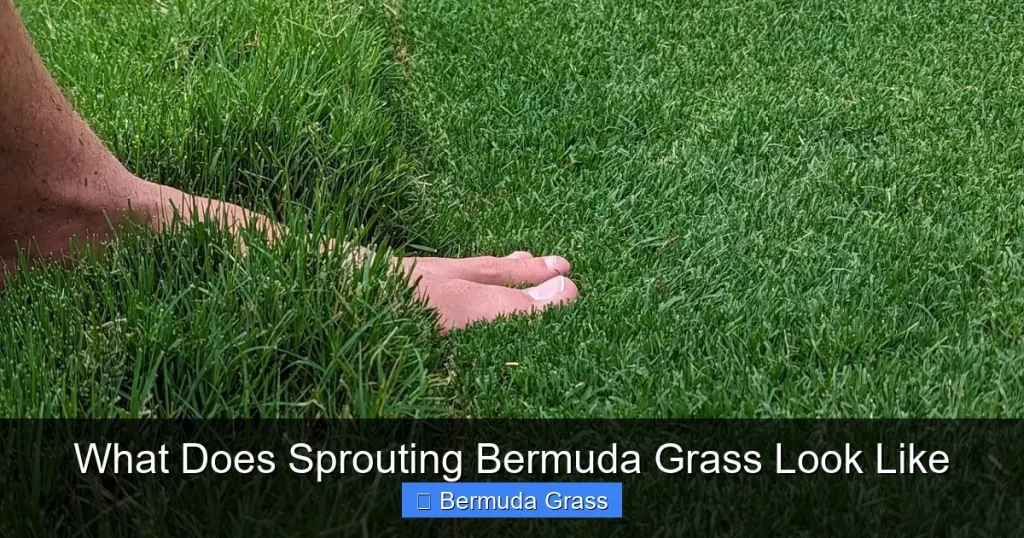
Understanding what sprouting Bermuda grass looks like is crucial for successful lawn establishment. This comprehensive guide walks you through each visual stage, from the first tiny root emergence to the development of young, identifiable blades. Learn how to recognize healthy sprouts and distinguish them from weeds to ensure your new Bermuda lawn thrives.
What Does Sprouting Bermuda Grass Look Like
Starting a new lawn or overseeding with Bermuda grass can be an exciting project. You’ve prepared the soil, spread the seeds, and now the waiting game begins. But once those first hints of green appear, how do you know if it’s your beautiful new lawn starting to sprout, or just an unwelcome weed? Recognizing what sprouting Bermuda grass looks like at each stage is key to nurturing your new turf and ensuring a successful, lush lawn.
This guide will walk you through the visual journey of Bermuda grass, from a tiny seed to a recognizable young seedling. We’ll cover everything from the first signs of life underground to the appearance of its distinctive blades above ground, helping you confidently identify your emerging lawn. Get ready to become an expert in spotting those precious little sprouts!
Key Takeaways
- Initial Sprouting Sign: The very first visible sign of sprouting Bermuda grass is a tiny, thread-like white root (the radicle) emerging from the seed.
- First Shoot Emergence: Shortly after the root, a single, slender, bright green shoot (the plumule) will push through the soil surface, often looking like a delicate blade of grass.
- Developing Seedling Appearance: Young sprouting Bermuda grass seedlings will develop a second leaf, maintaining their fine texture and bright green color, standing upright.
- Distinguishing from Weeds: Sprouting Bermuda grass blades are uniformly fine, narrow, and typically emerge singly or in small, consistent groups, unlike the varied shapes and often broader leaves of common weeds.
- Germination Timeline: Bermuda grass typically begins sprouting within 5-10 days under ideal conditions, but full establishment of young seedlings can take 2-3 weeks.
- Environmental Needs: Successful sprouting Bermuda grass requires consistent soil moisture, warm soil temperatures (65-80°F or 18-27°C), and ample sunlight from the moment sprouts emerge.
- Patience and Care: Nurturing young sprouting Bermuda grass with gentle, consistent watering and protection from disturbance is vital for a healthy, established lawn.
The Journey Begins: From Seed to Sprout
Bermuda grass (Cynodon dactylon) is a warm-season grass known for its aggressive growth and resilience, making it a popular choice for lawns in southern climates. Its germination process, while seemingly simple, involves several distinct stages that you can learn to identify.
Under ideal conditions—warm soil (between 65°F and 80°F, or 18°C and 27°C), consistent moisture, and good sunlight—Bermuda grass seeds typically begin to sprout within 5 to 10 days. However, the entire germination and establishment process can extend up to 21-30 days before you have a truly visible stand of young grass. Patience is a virtue when waiting for your sprouting Bermuda grass!
Step 1: Preparing for Sprouting

Visual guide about What Does Sprouting Bermuda Grass Look Like
Image source: plantscraze.com
Before you can observe what sprouting Bermuda grass looks like, you need to set the stage for successful germination. Proper preparation significantly impacts the speed and uniformity of sprouting.
Choosing the Right Seeds
Start with high-quality, fresh Bermuda grass seeds. Coated seeds often have better germination rates and may be easier to spread. Ensure your seeds are suitable for your specific climate zone.
Soil Preparation
Loose, well-draining soil is essential. Clear the area of weeds, rocks, and debris. Rake the top inch or two of soil to create a fine, crumbly seedbed. This allows the small Bermuda grass seeds to make good contact with the soil and receive the necessary moisture and warmth.
Planting Depth
Bermuda grass seeds are tiny and should be planted very shallowly. Broadcast them evenly and then lightly rake them in, or use a lawn roller to ensure good seed-to-soil contact. Ideally, seeds should be no deeper than 1/8 to 1/4 inch. If planted too deep, the emerging sprouts will struggle to reach the surface.
Watering
This is perhaps the most critical factor for successful sprouting Bermuda grass. The soil surface must remain consistently moist, but not waterlogged, until germination is complete and the seedlings are established. Light, frequent watering (2-4 times a day) is usually necessary to keep the top inch of soil damp. A fine mist or sprinkler head that doesn’t wash away seeds is ideal.
Step 2: The First Signs of Life (Days 5-10)
This is where the excitement truly begins! You’ve provided the perfect conditions, and now your Bermuda grass seeds are working hard beneath the surface.
Initial Swelling and Root Emergence
Inside the seed, water absorption triggers the embryo to swell. The very first visible sign that your Bermuda grass seed is actively sprouting, though it occurs underground, is the emergence of a tiny, white root called the “radicle.” This thread-like root grows downwards, anchoring the seed and beginning to absorb water and nutrients. You won’t see this directly without digging, but it’s the precursor to what you’ll see above ground.
The Radicle Appears
About 3-5 days after planting, especially if the soil is warm, you might notice small white filaments if you gently disturb the very top layer of soil. These are the radicles. They are extremely delicate, so avoid disturbing them too much. This initial root growth is vital for anchoring the future plant.
The Shoot Emerges
Following the radicle’s emergence, the “plumule”—the embryonic shoot—starts to grow upwards towards the light. This is what you’ll typically see as the first visible sign of sprouting Bermuda grass. Within 5-10 days, depending on conditions, you’ll start to notice tiny, hair-thin, bright green shoots poking through the soil surface.
These first sprouts are incredibly delicate. They often appear as single, very fine blades, almost like a miniature piece of grass. They are typically light green, sometimes with a slightly yellowish tint initially, as they are still drawing energy from the seed. At this stage, they are very uniform in appearance.
Step 3: Recognizing the Young Seedling (Days 10-21)
Once the initial shoots have emerged, your sprouting Bermuda grass starts to develop into recognizable seedlings. This stage is crucial for visual identification and care.
The First True Leaf
After the initial shoot emerges, it quickly develops into the first true leaf. This leaf will be very slender, bright to medium green, and upright. It won’t look exactly like a mature Bermuda grass blade yet, but it will have that characteristic fine texture. At this point, the seedling is still small, perhaps only 1/4 to 1/2 inch tall, and very fragile. You’ll see thousands of these tiny, single blades if your seeding was successful.
Development of a Second Leaf
As the seedling matures over the next few days (usually between days 10-15), a second leaf will emerge from the base of the first. These leaves will grow slightly longer and stronger. The seedling will still maintain its fine, almost thread-like appearance, but it will start to look more substantial. The color should be a healthy green. If you see patches of these small, slender green shoots consistently across your seeded area, you’re looking at healthy sprouting Bermuda grass.
Emergence of Stolons/Rhizomes (Early Stages)
Bermuda grass is known for its aggressive spreading habit through stolons (above-ground runners) and rhizomes (below-ground runners). While full stolon development takes time, in the later stages of seedling establishment (around 3-4 weeks), you might start to see very subtle indications. The young plants will begin to branch out slightly at the base, and you might notice small nodes forming from which new roots or shoots will eventually develop. This characteristic spreading growth is a key identifier of Bermuda grass as it matures.
Step 4: Distinguishing Sprouting Bermuda Grass from Weeds
This is perhaps one of the most important aspects for new lawn growers. Many common weeds germinate around the same time as Bermuda grass, and distinguishing them early can save you a lot of work later.
Leaf Shape and Color
* Sprouting Bermuda Grass: Look for very fine, narrow, almost needle-like blades. They are typically bright to medium green and emerge singly or in very consistent, uniform patches. The texture is delicate and soft.
* Weeds (Common Examples):
* Crabgrass: Often one of the biggest culprits. Crabgrass seedlings typically have wider, coarser blades, often with a reddish or purplish tint at the base. Their blades are usually flatter and more substantial than delicate Bermuda. They also tend to grow in clumps.
* Broadleaf Weeds (e.g., Clover, Dandelion): These are generally easier to distinguish. They will have two distinct, often rounded or oval-shaped leaves (cotyledons) first, followed by “true” leaves that are much broader than any grass blade.
* Annual Ryegrass (if mixed in): Has wider, flatter blades than Bermuda, and a more robust, upright growth habit.
Growth Habit
* Sprouting Bermuda Grass: Initially grows upright with very slender blades. As it matures, it starts to develop a low-growing, spreading habit, with runners extending horizontally.
* Weeds: Many weeds have a more upright, clumping, or rosette growth habit. Crabgrass, while spreading, starts off much more robust and “leafy” than Bermuda grass.
Root System
While harder to observe without digging, the roots of young sprouting Bermuda grass are fine and fibrous. Weeds like crabgrass can develop more substantial, often reddish, root crowns quickly.
If you are unsure, try to wait a few more days. Healthy sprouting Bermuda grass will continue to show uniform, delicate blade growth across the seeded area. Weeds might grow faster or have a noticeably different appearance.
Step 5: Nurturing Your Young Bermuda Grass
Once you’ve identified your beautiful sprouting Bermuda grass, the next step is to ensure it thrives and matures into a dense, healthy lawn.
Consistent Moisture
Continue to keep the top inch of soil consistently moist for the first 2-3 weeks after germination. As the seedlings grow, you can gradually reduce the frequency of watering but increase the duration. This encourages the roots to grow deeper. Avoid overwatering, which can lead to fungal diseases or wash away tiny seedlings.
Sunlight Requirements
Bermuda grass needs full sun to thrive. Ensure your newly sprouted areas receive at least 6-8 hours of direct sunlight per day. Shade can severely hinder its development.
Fertilization (Lightly, if at all)
Most experts recommend waiting until your Bermuda grass seedlings are about 3-4 weeks old and have been mowed at least once before applying any fertilizer. If you do fertilize, use a starter fertilizer specifically designed for new lawns, which is high in phosphorus, and apply it lightly according to package directions. Too much nitrogen too early can burn delicate sprouts.
Weed Control
This is where early identification pays off. If you spot broadleaf weeds, carefully hand-pull them, taking care not to disturb the surrounding Bermuda grass sprouts. For grassy weeds like crabgrass, it’s tougher. Avoid using pre-emergent herbicides on new grass as they prevent germination. Post-emergent herbicides are generally too harsh for very young Bermuda grass. Your best bet is diligent hand-pulling or waiting until the grass is established and has been mowed several times before considering chemical controls.
Mowing
Wait until your new Bermuda grass is at least 2-3 inches tall before its first mowing. Set your mower to its highest setting (around 2 inches). Ensure the blades are very sharp to avoid tearing the delicate young grass. Only remove the top 1/3 of the blade length.
Troubleshooting Common Sprouting Issues
Even with the best preparation, sometimes things don’t go as planned. Here are some common issues and what they might mean for your sprouting Bermuda grass.
No Germination
* Cause:
* Lack of moisture: The most common reason. Seeds need continuous moisture to sprout.
* Too cold: Soil temperatures below 65°F (18°C) will prevent or severely delay germination.
* Seeds planted too deep: The sprouts can’t reach the surface.
* Old or poor-quality seeds: Check the germination rate on the package.
* Birds/pests: Seeds might have been eaten.
* Solution: Check soil moisture and temperature. If conditions are right, you might need to reseed, ensuring proper depth.
Patchy Sprouting
* Cause:
* Uneven seeding: Seeds weren’t spread uniformly.
* Inconsistent watering: Some areas dried out.
* Soil compaction: Hard spots prevented root penetration.
* Localized pest activity: Insects or birds ate seeds in specific areas.
* Solution: Identify the cause. For small patches, lightly reseed and focus on consistent watering. Aerate compacted areas before reseeding.
Slow Growth
* Cause:
* Insufficient sunlight: Bermuda grass loves full sun.
* Low soil nutrients: The soil might be poor.
* Too much or too little water: Both extremes stress young plants.
* Cool temperatures: Growth slows significantly when it’s cool.
* Solution: Ensure adequate sunlight. Test your soil for nutrient deficiencies, but avoid heavy fertilization on very young grass. Adjust watering schedule.
Yellowing Seedlings
* Cause:
* Overwatering: Leads to root rot and nutrient lockout.
* Nutrient deficiency: Especially nitrogen.
* Fungal disease: Damp, warm conditions can foster diseases like damping-off.
* Underwatering: Stressed plants can turn yellow.
* Solution: Check soil moisture; let it dry slightly between waterings if overwatered. Ensure good drainage. If disease is suspected, improve air circulation and reduce humidity. A very light application of starter fertilizer might help if it’s a nutrient issue, but be cautious.
Conclusion
Understanding what sprouting Bermuda grass looks like is a vital skill for anyone establishing a new lawn. From the initial delicate root emerging underground to the fine, slender green blades pushing through the soil, each stage tells a story of growth and potential. By carefully observing your seedbed, identifying those tiny sprouts, and distinguishing them from weeds, you’re taking crucial steps towards a successful and beautiful Bermuda grass lawn. Remember to provide consistent moisture, ample sunlight, and gentle care, and you’ll soon be enjoying a lush, vibrant turf that will be the envy of the neighborhood. Happy sprouting!