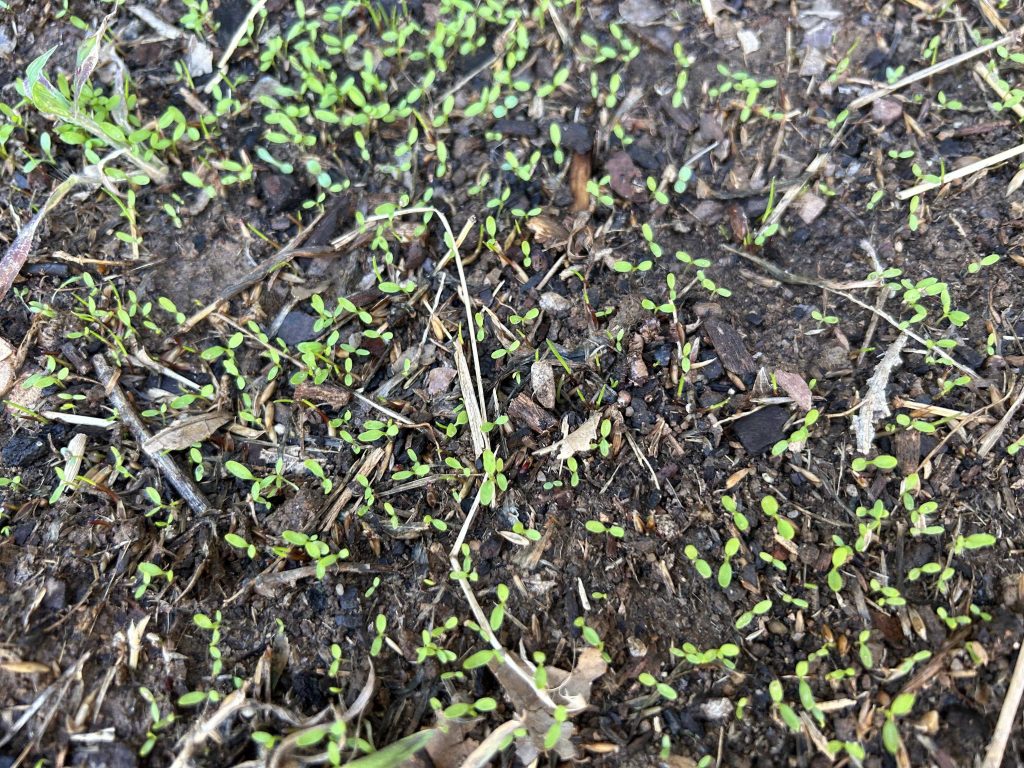
Bermuda grass sprouts resemble tiny green threads that quickly spread across the soil, transforming bare patches into lush turf. When it first emerges, it’s a subtle but vibrant sign of new growth, often mistaken for weeds but essential for a healthy lawn.
In short, Bermuda grass sprouts look like thin, bright green shoots that emerge from the soil surface, usually in clusters. They start as delicate, thread-like blades that soon develop into the thicker, more robust grass you want in your yard. Recognizing these early sprouts helps you care for your lawn properly, ensuring healthy growth and a vibrant green carpet.
If you’re wondering what Bermuda grass looks like when it first sprouts, picture tiny, slender green threads gently pushing through the soil. These sprouts are delicate and light in color, often seeming almost translucent at first. As they grow, they quickly become more noticeable, forming dense patches that will soon fill out to create that classic lush Bermuda turf. Early identification is key to maintaining a healthy, beautiful lawn, especially after planting or overseeding.

What Does Bermuda Grass Look Like When It Sprouts
Introduction to Bermuda Grass Sprouts
Bermuda grass is a popular warm-season turfgrass known for its durability and lush appearance. When it begins to sprout, it has distinctive features that help identify it early in its growth cycle. Recognizing what Bermuda grass looks like when it sprouts is important for lawn care, especially if you want to promote healthy growth and manage weeds effectively.
The First Signs of Germination
Bermuda grass seeds typically take a few days to a week to germinate after planting in warm soil. The initial sprout emerges as a tiny shoot pushing through the soil surface. These sprouts are small but noticeable once they break through the ground. They are usually colored a vibrant green, indicating healthy growth.
Appearance of Bermuda Grass Seeds and Sprouts
- Seed Size and Shape: Bermuda grass seeds are small, oval-shaped, and about 1/16 inch long. They are light brown or tan with a smooth surface.
- Sprout Shape: The initial sprout resembles a tiny, delicate shoot with a pointed tip, called the coleoptile, which protects the emerging young leaves.
- Color: Bright green to light green, signaling active growth. Sometimes, seedlings may appear slightly yellowish if they’re stressed.
The Early Growth Stages of Bermuda Grass
Stage 1: Seedling Emergence
In this stage, the sprout’s coleoptile pushes through the soil, followed by the first true leaves. These leaves are narrow, blade-like, and folded initially, unfolding as they grow. The seedling is small but vigorous, adapting to its environment.
Stage 2: Leaf Development
Once the true leaves are fully unrolled, the seedling begins to develop more blades. These blades are thin, flat, and range from 1 to 2 inches long. They start to form a dense, turf-like appearance as more seedlings emerge.
Identifying Young Bermuda Grass Plants
Distinctive Leaf Characteristics
Bermuda grass leaves are fine-textured, with a smooth surface and a slight arch. When young, the leaves are bright green and have a shiny appearance. The blades are about 1/8 inch wide and grow in clusters.
Growth Pattern and Density
Early Bermuda grass grows in clumps with each seedling forming a small bunch. Over time, these clusters spread through stolons and rhizomes, filling in patches quickly. The dense spreading helps the lawn resist weeds.
Growth Environment and Factors Affecting Sprouts
Ideal Soil Conditions
Bermuda grass sprouts best in well-draining, sandy soils with a pH between 5.5 and 7.0. Proper soil preparation helps seeds germinate faster and promotes stronger seedlings.
Temperature and Light Requirements
Warm soil temperatures between 65°F and 75°F are optimal for germination. Full sunlight encourages vigorous growth, so planting in a sunny area is essential for healthy sprouting.
Common Challenges During Sprouting
Poor Germination Rates
Inadequate soil moisture, insufficient warmth, or poor seed quality can lead to low germination. Ensuring proper watering and seed placement improves success rates.
Weed Competition
Young Bermuda grass seedlings are vulnerable to weeds that outcompete them for nutrients and light. Mulching and early weed control help provide a healthy environment for sprouting.
Tips for Healthy Bermuda Grass Sprouts
- Plant seeds at the recommended depth, usually about 1/4 inch deep.
- Keep soil evenly moist until seedlings are well-established.
- Avoid heavy foot traffic on newly sprouted areas to prevent disturbing young roots.
- Apply starter fertilizer to encourage rapid growth and strong roots.
- Control weeds early to prevent competition with young Bermuda grass.
Visual Comparison: Bermuda Grass vs Other Grasses
| Feature | Bermuda Grass When Sprouting | Other Common Grasses |
|---|---|---|
| Seed Shape | Small, oval, light brown | Varies; crabgrass has spiny seedheads, fescue seed is larger and darker |
| Sprout Appearance | Thin, bright green blades emerging in clumps | Varied; ryegrass and fescue have broader, darker blades |
| Growth Rate | Fast, within 7 to 14 days under ideal conditions | Variable; some grasses sprout slower or require cooler temperatures |
Recognizing how Bermuda grass looks when it sprouts can help you manage your lawn or planting project effectively. From the tiny green shoots emerging from the soil to the development of slender blades, each stage is crucial for establishing a healthy turf. Early care, proper soil conditions, and understanding its growth pattern set you up for a lush, resilient Bermuda grass lawn that thrives in warm climates.
Seeding Bermuda Lawns and Zoysia Lawns
Frequently Asked Questions
What are the initial signs of bermuda grass starting to grow?
When bermuda grass begins to sprout, small green shoots emerge from the soil, often appearing as fine, thin blades. These sprouts are typically bright green and may create a sparse, patchy appearance initially. They usually appear within a few days to a week after planting or seeding, signaling healthy germination.
How can I identify bermuda grass sprouts in the early stages?
Bermuda grass sprouts are characterized by their slender, upright blades that are light to medium green in color. They tend to grow close to the ground and form a soft, fine texture. During the early stages, these sprouts are distinct from weeds or other grasses because of their uniform green hue and the way they cluster tightly together as they develop.
What growth patterns should I expect during the first few weeks?
In the initial weeks, bermuda grass sprouts grow rapidly, with blades spreading outward and increasing in density. The grass develops a dense, mat-like appearance, and individual shoots become more defined. During this period, the sprouts grow vertically before spreading horizontally to fill in the area thoroughly.
At what stage do bermuda grass seedlings develop their characteristic texture?
After the first few weeks, bermuda grass seedlings start developing a more robust and turf-like texture. The blades become thicker and more numerous, creating a dense mat that is soft to walk on. This stage marks the transition from tiny sprouts to a recognizable lawn grass with a smooth, even appearance.
Final Thoughts
Bermuda grass begins as small, thin, bright green shoots that quickly spread across the soil. When it sprouts, it shows fine blades with a dense, carpet-like appearance. The new growth is often soft and delicate but soon thickens as it matures. Understanding what Bermuda grass looks like when it sprouts helps you identify it early and promote healthy growth.