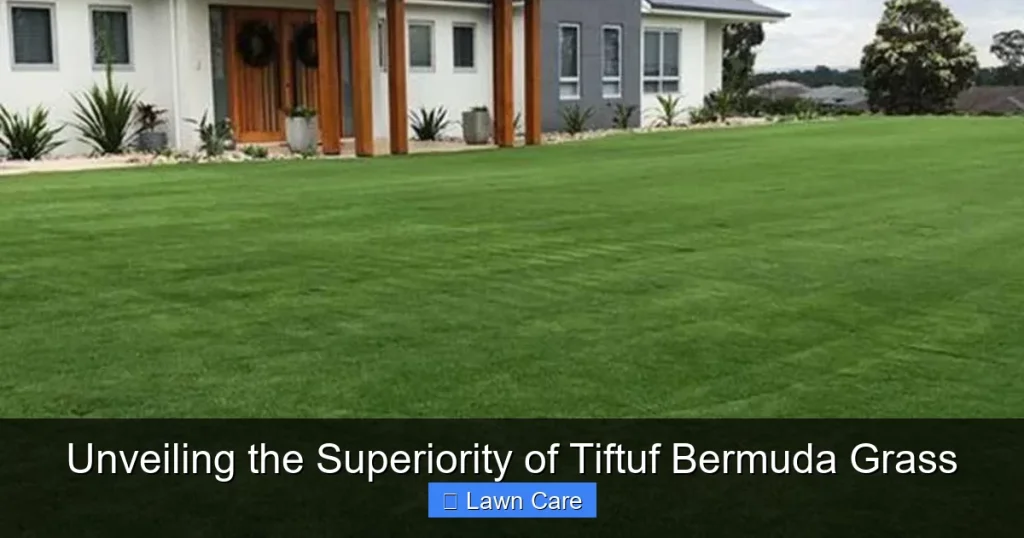
Tiftuf Bermuda grass stands out as a truly superior turfgrass option for homeowners seeking resilience and beauty. Its exceptional drought tolerance, incredible wear resistance, and robust disease resistance make it a standout choice for creating a lush, healthy, and low-maintenance lawn that thrives in challenging conditions.
Are you dreaming of a lush, green lawn that can withstand the rigors of daily life, scorching heat, and the occasional forgotten watering day? If so, it’s time to get acquainted with Tiftuf Bermuda grass. While there are many grass varieties out there, Tiftuf is emerging as a clear frontrunner, consistently proving its superiority in a variety of challenging conditions. This isn’t just another grass; it’s a revolution in home lawn care, offering unparalleled resilience and beauty with surprising ease.
Many homeowners struggle with lawn maintenance. You might find yourself constantly battling weeds, overwatering to keep the grass alive during dry spells, or watching your lawn turn brown and patchy after a season of heavy use. It’s a cycle that can be frustrating and expensive. But what if there was a grass that required less fuss and delivered more in return? That’s where Tiftuf Bermuda grass shines, offering a solution that’s both practical and aesthetically pleasing. Let’s dive into why Tiftuf is quickly becoming the go-to choice for discerning lawn enthusiasts.
## The Reigning Champion of Drought Tolerance
One of the most significant advantages of Tiftuf Bermuda grass is its incredible ability to thrive with minimal water. In an era where water conservation is paramount, this trait alone makes Tiftuf a standout performer. Many traditional Bermuda grass varieties require consistent watering, especially during hot, dry summers. However, Tiftuf was specifically bred to exhibit exceptional drought tolerance, thanks to its deeper root system and efficient water usage.
### Surviving the Dry Spells
Tiftuf’s advanced genetic makeup allows its roots to penetrate deeper into the soil. This means it can access moisture from much further down, reducing its reliance on frequent surface watering. Even when the topsoil is parched, Tiftuf can often stay green and healthy. This is a game-changer for homeowners in drought-prone regions or those who simply want to reduce their water bill and environmental impact. You’ll find yourself watering less frequently, saving time and resources. When considering how much water your lawn needs, remember that Tiftuf significantly lessens that burden.
### Practical Tips for Water-Wise Lawns
Even with Tiftuf’s superior drought tolerance, proper watering practices are still essential, especially during establishment. Water deeply but infrequently to encourage that deep root growth. Aim to water early in the morning, as this minimizes evaporation and allows the grass blades to dry before nightfall, helping to prevent fungal diseases. Understanding what is the best time of day to water grass will maximize your efforts, regardless of the grass type.
## Unbeatable Wear and Tear Resistance
Do you have active kids, pets, or frequently host outdoor gatherings? If your lawn sees a lot of foot traffic, you need a grass that can bounce back. Tiftuf Bermuda grass excels in this area, offering some of the best wear tolerance among warm-season grasses. Its dense growth habit and strong rhizomes (underground stems) create a resilient turf that can withstand heavy use and recover quickly from damage.
### Bounce Back Stronger
Unlike some grasses that become thin and bare in high-traffic areas, Tiftuf’s robust structure helps it resist damage. When foot traffic or play compacts the soil or bends the grass blades, Tiftuf’s vigorous growth allows it to repair itself rapidly. This means fewer bare patches and a consistently beautiful lawn, even with active use. For families, this means less worry about lawn damage and more time enjoying their outdoor space.
### Keeping Bermuda Grass in Check
While Tiftuf’s spreading nature is a benefit for lawn density, it’s also important to manage its growth. If you have Tiftuf in areas you want to keep it out of, like garden beds, you’ll need a strategy. Learning how to keep Bermuda grass out of flower beds is crucial for maintaining a well-defined landscape.
## A Fortress Against Pests and Diseases
Lawn care often involves a constant battle against unwanted invaders – diseases and pests. Fortunately, Tiftuf Bermuda grass is naturally resistant to many common lawn problems, significantly reducing the need for chemical treatments. This makes it a healthier choice for your family, pets, and the environment.
### Natural Defense Mechanisms
Tiftuf exhibits strong resistance to a wide range of fungal diseases, such as dollar spot and brown patch, which can plague other turfgrasses. It also shows good tolerance to certain insect pests. This inherent resilience means your lawn is less likely to suffer from unsightly damage and less likely to require costly and potentially harmful treatments. This is a major advantage for homeowners who prefer a more organic approach to lawn care or those who simply want to minimize their use of pesticides and fungicides.
### Identifying Lawn Troubles
Even with Tiftuf’s resistance, it’s good practice to be aware of potential issues. Understanding the difference between healthy Bermuda grass and problems like crabgrass is key. It’s important to know that Bermuda grass is not the same as crabgrass, and proper identification helps in choosing the right solutions if a problem arises.
## Stunning Aesthetics: Color, Texture, and Density
Beyond its performance, Tiftuf Bermuda grass is a visually stunning choice. It boasts a deep, rich green color that remains vibrant throughout the growing season. Its fine texture creates a smooth, luxurious feel underfoot, and its dense growth habit fills in any gaps, providing a uniform and manicured appearance.
### The “Wow” Factor
A well-maintained Tiftuf lawn has that undeniable curb appeal that makes a home stand out. The consistent, deep green color is highly desirable, and the fine blades create a soft, plush carpet. This aesthetic quality makes Tiftuf a favorite for both residential lawns and professional landscaping projects. Whether you’re looking for a picture-perfect lawn for your family or an impressive landscape for clients, Tiftuf delivers.
### Achieving Peak Green
To maintain this vibrant color and density, proper feeding is important. Choosing the right fertilizer at the right time can make a significant difference. Many homeowners ask, “What is the best fertilizer for Bermuda grass?” Researching options like those found in articles about what is the best fertilizer for Bermuda grass can help you keep your Tiftuf looking its best.
## Adaptability and Ease of Care
One of the most appealing aspects of Tiftuf Bermuda grass is its adaptability and relatively low maintenance requirements once established. It thrives in full sun, requiring at least 6-8 hours of direct sunlight daily, which is typical for most lawns. While it prefers well-drained soil, it’s generally forgiving of various soil types.
### Less Work, More Enjoyment
Compared to many other grass varieties, Tiftuf needs less frequent mowing once it’s mature. Its growth habit is dense but manageable. Due to its disease and drought resistance, you’ll also spend less time and money on treatments and watering. This means more time to actually enjoy your lawn, rather than constantly working on it. It’s a true low-maintenance champion.
### Establishment Considerations
While Tiftuf is known for its hardiness, proper establishment is key to unlocking its full potential. It’s often established from sod or plugs rather than seed for quicker results. Understanding when is the best time to plant Bermuda grass, whether it’s sod, seed, or plugs, will ensure a strong start. For Tiftuf, planting during its active growing season is crucial for successful establishment.
## Tiftuf vs. Other Bermuda Varieties
It’s natural to wonder how Tiftuf stacks up against other popular Bermuda grass types. While many Bermuda varieties share some desirable traits, Tiftuf consistently outperforms them in key areas. For instance, compared to common staples like common Bermuda or even some other hybrid varieties, Tiftuf often demonstrates superior drought tolerance and disease resistance. It was developed with specific goals in mind: to be exceptionally tough and beautiful. This targeted breeding makes it a more reliable choice for challenging environments.
### A Superior Hybrid
Tiftuf was developed by the University of Georgia and is a specific cultivar of Bermuda grass that exhibits enhanced characteristics. It’s not just an improvement; it’s a leap forward. Its resilience in drought and wear situations is significantly better than many older varieties, offering a more forgiving and sustainable lawn solution.
### When Might Other Grasses Be Considered?
While Tiftuf is exceptional, very specific situations might call for alternatives. For instance, if you have extremely shaded areas, no warm-season grass, including Tiftuf, will perform optimally. In such cases, you might explore shade-tolerant cool-season grasses or accept that those areas may not be lush turf. However, for most sunny lawn areas, Tiftuf’s benefits are hard to beat.
## Conclusion: Embrace the Tiftuf Advantage
If you’re looking for a lawn that offers exceptional resilience, stunning beauty, and requires less maintenance, Tiftuf Bermuda grass is undoubtedly the superior choice. Its remarkable drought tolerance means less watering, its incredible wear resistance handles active lifestyles, and its natural resistance to pests and diseases simplifies lawn care. Add to this its beautiful deep green color and fine texture, and you have a turfgrass that truly has it all.
Investing in Tiftuf Bermuda grass is an investment in a beautiful, durable, and more sustainable lawn. It’s the grass that keeps on giving, providing years of enjoyment with fewer headaches. Say goodbye to constant watering worries, frequent pest control, and lawn damage from everyday life. Say hello to the effortless perfection of Tiftuf.
Key Takeaways
- Exceptional Drought Tolerance: Tiftuf Bermuda grass requires significantly less water than many other turf varieties, making it ideal for arid climates and water-conscious homeowners.
- Superior Wear Resistance: Its dense growth and strong rhizomes allow it to recover quickly from foot traffic and heavy use, perfect for family yards and recreational areas.
- Outstanding Disease and Pest Resistance: Tiftuf boasts a remarkable ability to fend off common lawn diseases and pests, reducing the need for chemical treatments.
- Deep Green Color and Fine Texture: It offers a visually appealing, dense turf with a vibrant green hue that enhances curb appeal.
- Adaptability to Various Conditions: While it loves full sun, Tiftuf Bermuda grass can tolerate a range of soil types and growing conditions, making it versatile.
- Low Maintenance Requirements: Once established, Tiftuf Bermuda grass is surprisingly easy to care for, demanding less mowing, watering, and pest control than many alternatives.
- Rapid Establishment: Compared to some other Bermuda varieties, Tiftuf can establish more quickly, providing a beautiful lawn sooner.
Quick Answers to Common Questions
What makes Tiftuf Bermuda grass drought tolerant?
Tiftuf Bermuda grass has a genetically enhanced, deeper root system that allows it to access moisture further down in the soil, reducing its need for frequent watering.
Can Tiftuf Bermuda grass handle a lot of foot traffic?
Yes, Tiftuf Bermuda grass is known for its superior wear resistance. Its dense growth and strong rhizomes allow it to recover quickly from heavy foot traffic and play.
Does Tiftuf Bermuda grass get diseases easily?
No, Tiftuf Bermuda grass is highly resistant to many common lawn diseases, such as dollar spot and brown patch, which significantly reduces the need for chemical treatments.
How much sun does Tiftuf Bermuda grass need?
Tiftuf Bermuda grass thrives in full sun, requiring at least 6 to 8 hours of direct sunlight per day to achieve its best growth and appearance.
Is Tiftuf Bermuda grass difficult to maintain?
Once established, Tiftuf Bermuda grass is surprisingly low-maintenance due to its drought and disease resistance, requiring less watering, mowing, and pest control than many other grass types.
Frequently Asked Questions
What is the best time to plant Tiftuf Bermuda grass?
Tiftuf Bermuda grass is a warm-season grass, so the best time to plant it is during its active growing season, which is late spring through summer. This provides optimal conditions for establishment.
How often should I water Tiftuf Bermuda grass?
While Tiftuf is drought tolerant, it still needs water, especially when establishing. Water deeply but infrequently, allowing the soil to dry out slightly between waterings. Check local recommendations and weather conditions for precise schedules.
Will Tiftuf Bermuda grass turn brown in the winter?
Yes, like most Bermuda grass varieties, Tiftuf will go dormant and turn brown during cooler months or when temperatures consistently drop below 65°F. It will green up again in the spring as temperatures rise.
Can Tiftuf Bermuda grass be grown from seed?
Tiftuf Bermuda grass is typically established from sod or plugs for faster and more reliable results, as seed availability and germination can be less predictable for specific cultivars like Tiftuf.
How should I fertilize Tiftuf Bermuda grass?
Fertilize Tiftuf Bermuda grass during its active growing season (late spring through early fall). Using a balanced fertilizer with adequate nitrogen is generally recommended. It’s wise to consult resources on what’s the best fertilizer for Bermuda grass for specific nutrient needs.
How much does Tiftuf Bermuda grass cost?
The cost of Tiftuf Bermuda grass can vary depending on whether you’re purchasing sod, plugs, or potentially seed if available. Sod is generally more expensive upfront but provides instant results. Factors like location and supplier will influence pricing.