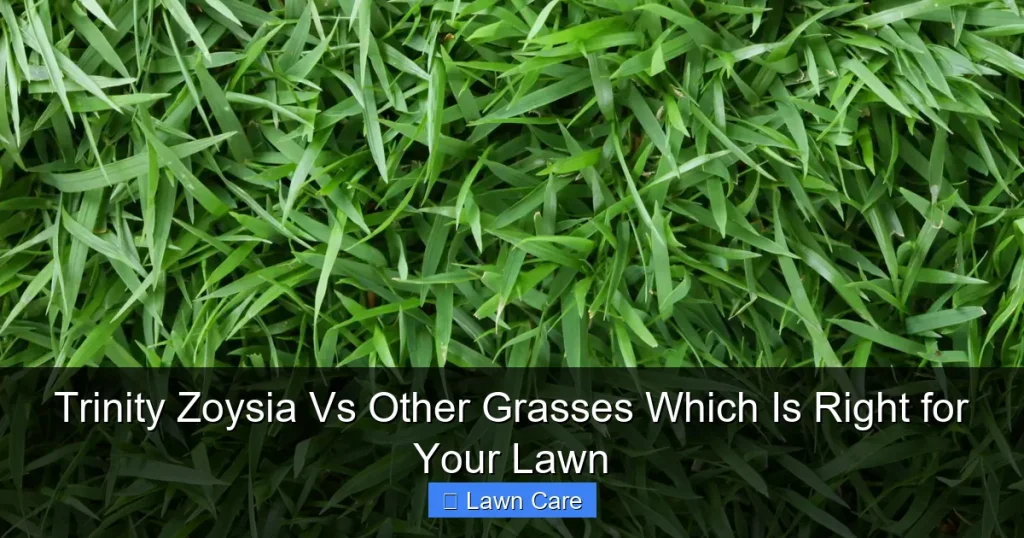
Choosing the right grass is key to a beautiful, healthy lawn. Trinity Zoysia offers impressive benefits like heat tolerance and weed resistance, but how does it stack up against other popular turf types? This guide will help you compare Trinity Zoysia with other common grasses to make the best decision for your specific needs and climate.
Choosing the right grass for your lawn can feel like a big decision. It’s the foundation of your outdoor space, influencing everything from its appearance to its resilience. You want a lawn that looks great, feels good underfoot, and doesn’t demand more work than you’re willing to give. In the world of turfgrass, there are many options, each with its own set of pros and cons. One name that often comes up for homeowners looking for a premium, low-maintenance lawn is Trinity Zoysia. But how does it compare to the other grasses out there?
This guide is here to help you navigate the choices. We’ll dive deep into Trinity Zoysia and then compare it to other popular grass types. We’ll look at what makes each grass unique, where they perform best, and what kind of care they need. By the end, you’ll have a clearer picture of which grass is the perfect match for your yard, your climate, and your lifestyle. Understanding the different types of grass and choosing the right one is the first step towards a truly spectacular lawn.
## Understanding Trinity Zoysia
Trinity Zoysia is a relatively new, yet highly regarded, cultivar of Zoysia grass. It’s a warm-season grass, meaning it loves the heat and performs best in warmer climates. What sets Trinity Zoysia apart is its incredibly fine texture, giving it a luxurious, carpet-like appearance. It forms a dense, interwoven sod that is not only beautiful but also incredibly tough. This density is a major advantage for homeowners.
### Key Characteristics of Trinity Zoysia
Trinity Zoysia boasts a range of impressive qualities that make it a top contender for many lawns. Let’s break down what makes it special:
* **Fine Texture:** Unlike some other Zoysia varieties that can feel a bit coarse, Trinity Zoysia has a very fine blade, giving it a soft, premium feel. This makes it very pleasant for bare feet and adds a touch of elegance to your yard.
* **Excellent Heat and Drought Tolerance:** As a warm-season grass, Trinity Zoysia is built to withstand high temperatures and periods of little rainfall. Its deep root system allows it to seek out moisture even in dry spells, making it a water-wise choice for many regions. This is a significant benefit in areas prone to summer heatwaves.
* **Superior Weed and Pest Resistance:** The dense growth habit of Trinity Zoysia is its secret weapon against weeds. It grows so tightly that it leaves little room for unwanted plants to take root and thrive. This means less time spent on weed control and a more uniform, attractive lawn. It also tends to be resistant to many common turf diseases and insect pests, reducing the need for chemical treatments.
* **Good Wear Tolerance:** While not as tough as some coarser Zoysias, Trinity Zoysia can still handle a good amount of foot traffic. This makes it a suitable option for family lawns where kids and pets play.
* **Slow to Establish:** One of the trade-offs for its superior qualities is that Zoysia grasses, including Trinity, can be slower to establish from seed or sod compared to some other varieties. It requires patience during the initial growth phase.
* **Dormancy in Cooler Temperatures:** Being a warm-season grass, Trinity Zoysia will naturally go dormant and turn brown when temperatures consistently drop in the fall and winter. It will green up again in the spring as temperatures rise. This is a natural cycle for warm-season grasses.
## Trinity Zoysia vs. Other Zoysia Varieties
Before we compare Trinity Zoysia to entirely different grass families, it’s helpful to see how it stacks up against its Zoysia relatives. Zoysia grass, in general, is known for its density, drought tolerance, and weed suppression. However, cultivars like Trinity offer specific improvements.
### Fine vs. Coarse Texture
Many older Zoysia varieties, such as Meyer Zoysia, have a slightly coarser texture. While this contributes to their toughness, it might not offer the same luxurious feel as Trinity. If a softer, finer lawn is a priority, Trinity has an edge.
### Establishment Speed
While all Zoysias can be slow to establish, some cultivars might establish marginally faster than others. However, the long-term benefits of Trinity often outweigh the initial patience required.
### Disease and Pest Resistance
Trinity Zoysia has been bred for enhanced resistance to common Zoysia issues. While most Zoysias are relatively tough, Trinity often offers that extra layer of resilience, meaning fewer potential headaches down the line.
## Trinity Zoysia vs. Cool-Season Grasses
Now, let’s broaden the comparison to include cool-season grasses, which are popular in regions with colder winters and milder summers. These grasses have different growth cycles and characteristics.
### Kentucky Bluegrass (Poa pratensis)
Kentucky Bluegrass is a favorite in cooler climates for its beautiful blue-green color and soft texture.
* **Climate:** Thrives in cool, northern climates. It will struggle and go dormant in extreme heat and drought.
* **Texture:** Fine to medium texture.
* **Density & Weed Control:** Forms a dense sod, but can be susceptible to thinning in very hot weather, potentially allowing weeds to creep in. Trinity Zoysia generally offers superior weed suppression.
* **Maintenance:** Requires regular watering, fertilization, and mowing. It can be prone to grubs and some diseases.
* **Dormancy:** Will go dormant during hot, dry periods, turning brown. Trinity Zoysia also goes dormant but is better adapted to handle the heat.
* **Establishment:** Can establish moderately quickly from seed.
### Fine Fescue (Festuca spp.)
Fine fescues (like Creeping Red, Chewings, and Hard Fescue) are known for their shade tolerance and low-maintenance needs.
* **Climate:** Best in cooler climates, with some varieties tolerating moderate heat better than others.
* **Texture:** Very fine texture, giving a soft feel.
* **Density & Weed Control:** Can form a decent sod but is generally less dense than Zoysia, making it more susceptible to weed invasion, especially in full sun.
* **Maintenance:** Relatively low-maintenance, tolerating less water and fertilizer. Shade tolerance is a key advantage.
* **Dormancy:** Can go dormant in extreme heat and drought, but generally recovers well.
* **Establishment:** Moderately fast establishment from seed.
### Perennial Ryegrass (Lolium perenne)
Perennial ryegrass is known for its quick germination and establishment, often used for overseeding or in athletic fields.
* **Climate:** Primarily a cool-season grass but has some intermediate tolerance to heat.
* **Texture:** Medium texture.
* **Density & Weed Control:** Forms a good sod but can thin out in heat and wear, allowing weeds to establish. Trinity Zoysia’s dense growth is a significant advantage here.
* **Maintenance:** Moderate to high maintenance, requiring regular watering and fertilization.
* **Dormancy:** Can go dormant in extreme heat.
* **Establishment:** Very fast germination and establishment.
Comparison Summary (Cool-Season vs. Trinity Zoysia): If you live in a region with hot summers and potentially dry conditions, Trinity Zoysia is likely a much better long-term choice than cool-season grasses. While cool-season grasses excel in milder climates and cooler temperatures, they often struggle to maintain density and health during peak summer heat. Trinity’s heat and drought tolerance, coupled with its superior weed suppression, make it a more resilient and potentially lower-maintenance option for many homeowners. For those in cooler climates, however, cool-season grasses remain the top choice.
## Trinity Zoysia vs. Other Warm-Season Grasses
Trinity Zoysia is a member of the warm-season grass family. Let’s compare it to other popular warm-season contenders.
### Bermuda Grass (Cynodon spp.)
Bermuda grass is a very popular warm-season grass known for its aggressive growth and excellent heat tolerance.
* **Climate:** Thrives in hot, sunny climates. It does not tolerate shade well and will go dormant in cooler temperatures.
* **Texture:** Varies by cultivar, but generally medium to fine texture. Some premium hybrids are very fine.
* **Density & Weed Control:** Forms a very dense sod and is an excellent weed suppressor. Trinity Zoysia is also a strong contender in this area.
* **Maintenance:** Can be a higher-maintenance grass, requiring frequent mowing (often at lower heights), regular fertilization, and can be susceptible to certain pests and diseases. Bermuda grass is known for its aggressive spreading.
* **Dormancy:** Will go dormant and turn brown in cool temperatures.
* **Wear Tolerance:** Excellent wear tolerance, making it a choice for sports fields.
### St. Augustine Grass (Stenotaphrum secundatum)
St. Augustine grass is known for its broad leaves and shade tolerance, making it popular in warmer, humid regions.
* **Climate:** Prefers warm, humid climates. It has moderate drought tolerance but less than Zoysia or Bermuda.
* **Texture:** Broad leaves, coarser texture than Zoysia.
* **Density & Weed Control:** Forms a relatively dense sod but is not as effective at weed suppression as Zoysia or Bermuda. It’s more susceptible to chinch bugs and some diseases.
* **Maintenance:** Moderate maintenance. It prefers slightly higher mowing heights than Bermuda or Zoysia.
* **Dormancy:** Will go dormant in cooler temperatures.
* **Shade Tolerance:** Significantly better shade tolerance than Trinity Zoysia or Bermuda grass.
### Centipede Grass (Eremochloa ophiuroides)
Centipede grass is a low-maintenance, slow-growing grass popular in the southeastern United States.
* **Climate:** Prefers warm, humid climates.
* **Texture:** Medium texture, fairly coarse compared to Trinity.
* **Density & Weed Control:** Forms a fairly dense sod, offering moderate weed control. It’s not as aggressive a spreader as Zoysia or Bermuda.
* **Maintenance:** Very low-maintenance, requiring less water, fertilizer, and mowing. It prefers acidic soil.
* **Dormancy:** Will go dormant in cooler temperatures.
* **Shade Tolerance:** Moderate shade tolerance.
Comparison Summary (Other Warm-Season vs. Trinity Zoysia): Trinity Zoysia offers a superior fine texture and often better disease and pest resistance than many other warm-season grasses. Its drought tolerance is on par with or better than many Bermuda varieties and superior to St. Augustine and Centipede. While Bermuda grass might have a slight edge in aggressive spreading and wear tolerance for high-traffic areas, Trinity provides a more refined aesthetic and excellent weed control with potentially less aggressive spreading than some Bermuda types. If shade is a significant factor in your yard, St. Augustine might be a better choice, but for full sun and a beautiful, resilient lawn, Trinity Zoysia is a standout.
## Factors to Consider When Choosing Your Grass
Selecting the right grass isn’t just about comparing names; it’s about understanding your specific situation. Here are the crucial factors to weigh:
### Climate
This is arguably the most important factor. Are you in a region with hot summers and mild winters (warm-season grasses like Trinity Zoysia)? Or do you experience cold winters and moderate summers (cool-season grasses)? Planting the wrong type of grass for your climate will lead to a struggling lawn. You can learn more about understanding the different types of grass and choosing the right one for your lawn here.
### Sunlight and Shade
Does your lawn get full sun all day, or are there significant shaded areas? Zoysia and Bermuda grasses prefer full sun. Fescues and St. Augustine grass have better shade tolerance. If you have a mix, you might need to consider different grass types for different areas or choose a more shade-tolerant option like a shade-tolerant fescue blend or certain St. Augustine cultivars.
### Soil Type and Drainage
Different grasses have different soil preferences. Zoysia, for example, prefers well-drained soil. If you have heavy clay soil, you might need to amend it or consider aeration. Addressing soil drainage is crucial for healthy root development for any grass type. If your soil is too acidic, you may need to adjust its pH.
### Maintenance Commitment
Be honest about how much time and effort you’re willing to put into your lawn. Some grasses, like Centipede, are very low-maintenance. Others, like Bermuda, can be more demanding, requiring frequent mowing and fertilization. Trinity Zoysia strikes a good balance, offering beautiful results with moderate maintenance once established.
### Intended Use
Will your lawn be a decorative showpiece, or will it be a play area for kids and pets? If it’s a high-traffic area, you’ll need a grass with good wear tolerance. Trinity Zoysia offers a good balance of beauty and durability. For extremely high-traffic areas, some Bermuda cultivars might be a better fit. If your lawn is primarily for aesthetics and low foot traffic, a fine-textured grass like Trinity Zoysia is an excellent choice.
## Care and Maintenance of Trinity Zoysia
Once you’ve chosen Trinity Zoysia, understanding its care needs will help you maximize its potential.
### Mowing
Trinity Zoysia should be mowed regularly during its active growing season (spring and summer). The ideal mowing height is typically between 0.5 and 1.5 inches. It’s important to mow often enough so that you’re never removing more than one-third of the grass blade at a time. Consider the best time to mow your lawn for optimal health. What is the best time to mow your lawn for healthy growth? Early morning is often recommended.
### Watering
While Trinity Zoysia is drought-tolerant, it still needs water to thrive, especially when it’s young or during prolonged dry spells. Water deeply and infrequently to encourage deep root growth. Allow the soil to dry out slightly between waterings.
### Fertilization
Trinity Zoysia benefits from fertilization during its active growing season. Typically, one or two applications of a slow-release nitrogen fertilizer in late spring or early summer are sufficient. Using the right type of fertilizer is key; for warm-season grasses, a fertilizer formulated for their needs is best.
### Aeration and Dethatching
Over time, thatch can build up, and soil can become compacted. Core aeration is a great way to help manage this. For Trinity Zoysia, aeration is typically done in the late spring or early summer when the grass is actively growing and can recover quickly. Understanding if you need aeration vs. dethatching is essential for lawn health.
## Conclusion
Choosing the right grass is a foundational step towards achieving your dream lawn. Trinity Zoysia stands out as a premium option for homeowners in warmer climates who desire a beautiful, dense, and resilient turf with relatively low maintenance. Its fine texture, exceptional heat and drought tolerance, and superior weed and pest resistance make it a compelling choice.
When you weigh Trinity Zoysia against other grasses, the decision often comes down to your specific climate, sunlight conditions, and desired level of upkeep. While cool-season grasses are ideal for colder regions, and other warm-season grasses like Bermuda might suit high-traffic areas, Trinity Zoysia offers a fantastic balance of aesthetic appeal and practical benefits for many suburban landscapes. By carefully considering your lawn’s unique environment and your personal preferences, you can confidently select the grass that will bring you years of enjoyment.
- Trinity Zoysia is a premium turfgrass known for its fine texture, excellent heat and drought tolerance, and resistance to pests and diseases.
- When comparing Trinity Zoysia to other grasses, consider your climate, soil type, desired maintenance level, and intended use of the lawn.
- Cool-season grasses like Kentucky Bluegrass and Fescue are best suited for colder climates, while warm-season grasses like Zoysia thrive in heat.
- Trinity Zoysia’s dense growth habit helps it outcompete weeds, reducing the need for herbicides.
- While offering many advantages, Trinity Zoysia can be slower to establish and may go dormant in cooler temperatures, turning brown.
- Understanding the specific needs of each grass type, such as watering, mowing, and fertilization, is crucial for long-term lawn health.
Quick Answers to Common Questions
What is the main advantage of Trinity Zoysia?
The main advantage of Trinity Zoysia is its combination of a very fine texture for a premium look and feel, along with excellent heat and drought tolerance and superior weed resistance.
Is Trinity Zoysia suitable for shady areas?
No, Trinity Zoysia is a sun-loving grass and does not perform well in shaded areas. It requires full sun to thrive.
How often should I mow Trinity Zoysia?
You should mow Trinity Zoysia regularly during its active growing season, typically every 5-7 days, ensuring you never remove more than one-third of the blade length at a time.
Will Trinity Zoysia stay green all year?
No, as a warm-season grass, Trinity Zoysia will go dormant and turn brown during cooler fall and winter months. It will green up again in the spring.
Is Trinity Zoysia good for pet owners?
Yes, Trinity Zoysia is generally good for pets and kids. Its dense growth habit makes it relatively durable, and its fine texture is soft underfoot.
Frequently Asked Questions
Is Trinity Zoysia difficult to establish?
Trinity Zoysia, like other Zoysia grasses, can be slower to establish from seed or sod compared to some other turf types. It requires patience and proper care during its establishment phase to develop a dense root system.
How does Trinity Zoysia compare to Bermuda grass in terms of maintenance?
While both are warm-season grasses that love sun and heat, Bermuda grass can sometimes require more frequent mowing and fertilization to maintain its best appearance, especially if kept at a very low mowing height. Trinity Zoysia generally offers a good balance of beautiful results with moderate maintenance needs.
Can I overseed Trinity Zoysia with a cool-season grass for winter color?
It is generally not recommended to overseed Zoysia grass with cool-season grasses for winter color. The cool-season grass can compete with and potentially damage the Zoysia as it begins to wake up in the spring, and it’s better to let the Zoysia go through its natural dormancy cycle.
What are the signs that my Trinity Zoysia lawn needs more water?
Signs that your Trinity Zoysia lawn needs water include a bluish-gray tint to the grass blades, wilting or curling of the leaves, and footprints that remain visible long after you’ve walked on the lawn. When these signs appear, it’s time for a deep watering.
Is Trinity Zoysia a good choice for regions with high humidity?
Yes, Trinity Zoysia generally performs well in humid climates, especially in the warmer regions where it is suited. Its resistance to many common turf diseases helps it cope with moist conditions.
How can I tell if my lawn has Trinity Zoysia?
Trinity Zoysia has a very fine leaf blade and forms a dense, interlocking sod. If you are unsure about your grass type, consulting a local lawn care professional or your local extension office can provide identification assistance.