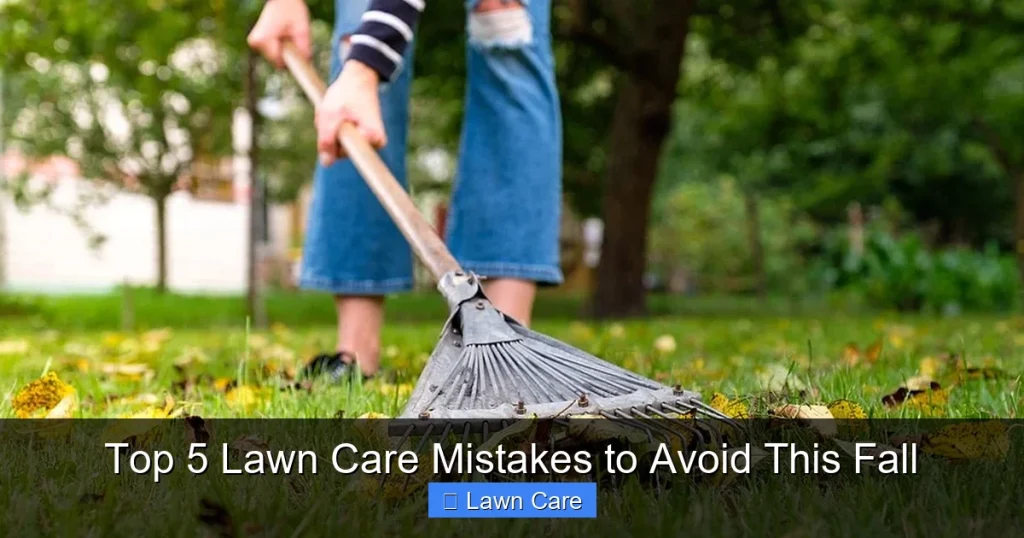
Fall is a crucial time for lawn preparation, and avoiding common mistakes is key to a healthy yard next spring. This guide outlines the top 5 lawn care blunders to steer clear of, ensuring your turf is robust and ready for winter. By following these tips, you can prevent damage and promote long-term lawn health.
Ah, fall. The crisp air, the changing leaves, the cozy sweaters. It’s a beautiful season, and for many of us, it signals a shift in our outdoor activities. While we might be packing away the summer grills and pulling out the pumpkin spice everything, our lawns are also entering a critical phase. What you do in the fall directly impacts how your lawn will look and perform next spring. It’s a time for preparation, for giving your turf the nourishment and care it needs to survive the winter and emerge strong.
Many homeowners, however, make common lawn care mistakes during this transitional period. They might think their job is done once the summer heat subsides, or they might not realize the unique needs of their lawn in autumn. These missteps can lead to a weakened lawn, increased susceptibility to disease and pests, and a disappointing spring recovery. But don’t worry! With a little knowledge and proactive care, you can ensure your lawn not only survives the fall and winter but thrives.
This article is all about helping you avoid those common pitfalls. We’re going to dive into the top 5 lawn care mistakes people often make in the fall and, more importantly, how you can easily prevent them. By focusing on these key areas, you’ll be setting your lawn up for success and enjoying a greener, healthier yard come springtime. Let’s get your lawn ready for its best fall yet!
- Overlooking Leaf Cleanup: Letting leaves accumulate smothers grass, blocks sunlight, and promotes disease. Regular raking or mulching is essential.
- Skipping Fall Fertilization: Fall feeding provides vital nutrients for root development and winter resilience, making it a critical step.
- Mowing Too Short: Cutting grass too low in the fall weakens it, making it susceptible to winter damage and weeds.
- Neglecting Aeration and Overseeding: These practices improve soil health, drainage, and density, preparing the lawn for the stresses of winter and promoting new growth.
- Delaying Weed Control: Fall is an ideal time to tackle perennial weeds before they go dormant, preventing their return in spring.
- Ignoring Soil Testing: Understanding your soil’s pH and nutrient levels allows for targeted amendments, ensuring optimal lawn health.
Quick Answers to Common Questions
Why is raking leaves important in the fall?
Raking leaves is important because accumulated leaves can smother grass, block sunlight, and create a moist environment perfect for diseases like snow mold.
When is the best time to fertilize your lawn in the fall?
The best time to fertilize in the fall depends on grass type, but generally it’s in early to mid-fall for cool-season grasses and earlier for warm-season grasses, before the ground freezes.
Should I mow my lawn shorter in the fall?
No, you should avoid mowing your lawn too short in the fall. A slightly longer blade (around 3-3.5 inches for cool-season grasses) provides better insulation and protection.
What is the benefit of aerating your lawn in the fall?
Aerating in the fall helps alleviate soil compaction, allowing air, water, and nutrients to reach the grass roots more effectively, promoting healthier growth.
Is fall a good time to control weeds?
Yes, fall is an excellent time to control perennial weeds because they are actively sending nutrients to their roots, making them more susceptible to herbicides.
📑 Table of Contents
Mistake 1: Letting Leaves Pile Up
One of the most visible signs of fall is the falling leaves. And while a picturesque carpet of red, orange, and yellow can be beautiful, letting those leaves sit on your lawn is a big mistake. Think of it as suffocating your grass. When leaves accumulate, they create a dense layer that blocks sunlight, prevents air circulation, and traps moisture. This damp, dark environment is a breeding ground for lawn diseases like snow mold, which can cause unsightly patches and weaken your grass.
The Smothering Effect
When leaves pile up, they form a thick thatch layer. This thatch prevents essential elements like sunlight and air from reaching the grass blades and the soil. Grass needs sunlight for photosynthesis, its primary food source. Without it, the grass begins to weaken and can even die. Furthermore, the trapped moisture creates the perfect conditions for fungal growth. Many fungal diseases thrive in cool, moist, and dark environments, making an unraked lawn an ideal host.
Why Mulching is Better
So, what’s the solution? Instead of bagging all those leaves for disposal, consider mulching them. Most modern lawnmowers have a mulching function. By going over the leaves a few times, you can break them down into tiny pieces that will quickly decompose and return valuable nutrients to your soil. This process is often referred to as “leaf mulching.” It’s a fantastic way to fertilize your lawn naturally and reduce waste. Just make sure you’re not mulching a layer that’s too thick; you don’t want to smother the grass, even in small pieces.
If you have a very heavy leaf fall, you might need to rake or blow them off the lawn first, and then you can mulch what’s left. You can also compost the collected leaves, creating valuable organic matter for your garden. Avoiding common lawn waste disposal mistakes is part of good fall preparation.
When and How to Rake/Mulch
The key is regularity. Don’t wait until all the leaves have fallen to tackle the job. As leaves begin to fall, aim to mulch or rake them at least once a week, or more often if you have a heavy drop. If you choose to rake, bag the leaves and consider composting them. If you use a mulching mower, make sure the leaf pieces are small and don’t form a dense mat. A good rule of thumb is that you shouldn’t be able to see much grass underneath the mulched leaves.
Mistake 2: Skipping Fall Fertilization
Many people think of fertilizing as a spring or summer activity. While feeding your lawn during the growing season is important, fall fertilization is arguably even more critical. This is when your grass is storing up energy reserves for the harsh winter months and beginning to prepare for new growth in the spring. A well-timed fall feeding provides the necessary nutrients for robust root development and helps the turf withstand winter stress.
The Importance of Fall Feeding
Think of fall fertilization as a lifeline for your lawn. As the weather cools, grass continues to grow roots even as the top growth slows down. This root growth is vital for the grass to anchor itself, access water and nutrients, and survive freezing temperatures. A fall fertilizer, particularly one rich in potassium, helps to strengthen the grass blades and roots, making them more resistant to cold and disease. This is especially true for cool-season grasses which are actively growing in the fall.

Visual guide about Top 5 Lawn Care Mistakes to Avoid This Fall
Image source: cohfh.org
Choosing the Right Fertilizer
For fall fertilization, look for a fertilizer that’s specifically formulated for autumn use. These often have a higher percentage of potassium (the last number in the N-P-K ratio) and a moderate amount of nitrogen. Nitrogen helps with greening and growth, but too much in the fall can encourage tender new growth that’s susceptible to frost. Potassium is essential for winter hardiness and disease resistance. It helps regulate water within the plant cells, making them less likely to freeze.
For those with Kentucky Bluegrass, exploring top 5 best winter fertilizers can be particularly beneficial. Always read the fertilizer label carefully and follow the recommended application rates to avoid over-fertilizing, which can damage your lawn and the environment.
When to Fertilize
The ideal time to apply your fall fertilizer depends on your grass type and climate. For cool-season grasses (like fescues, ryegrass, and Kentucky bluegrass), the best time is typically in early to mid-fall, after the intense heat of summer has passed but before the ground freezes. This allows the grass to absorb the nutrients and store them for winter. For warm-season grasses (like Bermuda grass and Zoysia), you’ll want to fertilize earlier in the fall, before their growth significantly slows down.
Mistake 3: Mowing the Lawn Too Short
As the grass growth slows down in the fall, it’s tempting to lower your mower’s deck and give your lawn a final, close cut. However, this can be detrimental. Mowing your lawn too short in the fall weakens the grass, making it more vulnerable to winter damage, frost, and the invasion of winter weeds. A slightly longer blade of grass provides better insulation for the crown of the plant and helps prevent soil erosion.
The Dangers of Scalping
When you cut the grass too short, you’re essentially removing too much of the blade. This reduces the grass’s ability to photosynthesize and store energy. The crown of the grass plant, which is just above the soil surface, becomes exposed and is more susceptible to damage from cold temperatures and desiccation (drying out). This is a scenario where you want to avoid lawn scalping in summer, and the same principle applies to fall in terms of weakening the grass.
The Ideal Fall Mowing Height
For most cool-season grasses, it’s recommended to maintain a slightly higher mowing height in the fall, typically around 3 to 3.5 inches. This longer grass provides better protection against the elements and helps to shade out potential weed seedlings. It also promotes stronger root development, as the longer blades capture more sunlight. For warm-season grasses, the ideal height might be slightly lower, but still avoid cutting it too close to the ground.
The Final Cut of the Season
Your last mowing of the year is important. Instead of cutting it as short as possible, aim for that slightly longer, ideal height. This will ensure your lawn enters winter in a healthier state. You’ll also want to make sure your mower blades are sharp. Dull blades tear the grass, leaving ragged edges that are more prone to disease and browning. A clean cut is always best for lawn health.
Mistake 4: Neglecting Aeration and Overseeding
Fall is the prime time for two essential lawn care practices: aeration and overseeding. Aeration involves creating small holes in the soil, allowing air, water, and nutrients to penetrate more deeply to the grass roots. Overseeding is the process of spreading grass seed over an existing lawn to fill in thin spots and improve density. Many homeowners skip these steps, missing out on significant benefits for their lawn’s health and appearance.
Why Aeration is Crucial
Over time, soil can become compacted due to foot traffic, heavy equipment, and even the natural decomposition of organic matter. Compacted soil restricts root growth, reduces water infiltration, and can lead to drainage problems. Aeration alleviates this compaction by pulling out small plugs of soil. This creates channels for essential elements to reach the roots, promoting healthier, more vigorous growth. If you’re in a cold climate and wonder when to aerate, remember that fall is generally the best time for frost-prone areas.
Skipping aeration can lead to a shallow root system, making your lawn more vulnerable to drought and heat stress in the future. It’s one of the most impactful lawn care mistakes beginners make if overlooked.
The Power of Overseeding
Even the healthiest lawns can develop thin patches over time. Overseeding helps to thicken your lawn, making it more resilient to pests, diseases, and foot traffic. Fall is the ideal time to overseed because the cooler temperatures and increased moisture provide optimal conditions for germination and establishment. The grass seedlings can establish a strong root system before winter sets in, giving them a head start in the spring.
Combining Aeration and Overseeding
The benefits of aeration and overseeding are magnified when done together. The holes created by aeration provide an excellent bed for the new grass seed to settle into, ensuring good seed-to-soil contact. This significantly increases the germination rate and the success of your overseeding efforts. After aerating, you can then spread your chosen grass seed. Following up with a light layer of compost, known as topdressing, can further enhance the success of these combined practices. Learning what to top dress a lawn with after aeration can be very helpful.
If you’re looking to start a lawn care routine, incorporating aeration and overseeding in the fall is a fantastic place to begin. For a comprehensive approach, consider how to combine lawn aeration with overseeding and top dressing for maximum impact.
Mistake 5: Waiting Too Long for Weed Control
While you might be focused on making your lawn greener or thicker, don’t forget about weeds. Many people associate weed control with spring and summer efforts. However, fall is actually a prime time to tackle perennial weeds. These are the weeds that live for more than two years, often spreading through their root systems. By treating them in the fall, you can significantly reduce their presence next spring.
Fall’s Advantage for Weed Control
Perennial weeds, like dandelions and clover, are actively sending nutrients down to their root systems in the fall. This makes them particularly susceptible to systemic herbicides, which are absorbed by the plant and travel down to the roots, killing the entire plant. Applying weed control in the fall ensures that these weeds are eliminated before they can go dormant for the winter and then re-emerge with full force in the spring. This proactive approach can save you a lot of effort later on.
Types of Fall Weed Control
There are several ways to approach fall weed control. For existing, mature perennial weeds, a selective herbicide can be effective. Look for products specifically designed for fall application. These herbicides are formulated to target broadleaf weeds while leaving your grass unharmed. Always follow the product instructions carefully and wear appropriate protective gear.
For broader weed prevention, especially in areas where weeds are a persistent problem, some pre-emergent herbicides can also be applied in the fall to prevent the germination of winter annual weeds, which can sprout in the cooler months and make your lawn look unsightly. Understanding how to treat your lawn for grubs in fall is also important, as some pests can weaken your turf making it more susceptible to weed invasion.
Integrated Weed Management
Remember that weed control is most effective when integrated with good overall lawn care practices. A dense, healthy lawn is the best defense against weeds. By properly fertilizing, mowing at the correct height, and keeping your lawn aerated and overseeded, you create an environment where grass can outcompete weeds. This holistic approach to lawn care is often part of creating a lawn care schedule for year-round maintenance.
Bonus Tip: Don’t Forget Soil Testing!
While not one of the top 5, a crucial step many overlook is testing their soil. Fall is an excellent time to test your soil’s pH and nutrient levels. Knowing what your soil needs allows you to make targeted amendments, such as adding lime to raise pH or sulfur to lower it, or applying specific nutrients. This ensures your lawn has the ideal environment to thrive, not just for the upcoming season but for years to come. This goes hand-in-hand with creating a lawn care schedule on a budget, as you’re only adding what your lawn truly needs. Check out how to test soil pH for lawn care to get started.
Conclusion
Fall is more than just a beautiful season; it’s a critical period for setting your lawn up for success. By actively avoiding these common lawn care mistakes, you’re investing in the long-term health and vitality of your turf. Remember to diligently clean up fallen leaves, provide essential fall fertilization, maintain the proper mowing height, consider aeration and overseeding, and address any weed issues proactively.
Making these adjustments to your fall lawn care routine will pay dividends come spring. You’ll have a denser, greener, and more resilient lawn that can better withstand the stresses of winter and emerge strong and vibrant. So, embrace the crisp air and the changing leaves, and give your lawn the attention it deserves this autumn. Your future self, enjoying a beautiful lawn in the spring, will thank you!
Frequently Asked Questions
What happens if I don’t rake my leaves in the fall?
If you don’t rake your leaves, they can smother your grass by blocking sunlight and air, trap moisture leading to fungal diseases, and weaken the turf, making it susceptible to winter damage.
What type of fertilizer should I use in the fall?
For fall, it’s best to use a fertilizer formulated for autumn use, typically with a higher percentage of potassium (K) to promote winter hardiness and root development, along with moderate nitrogen (N).
How high should I cut my grass for the last mow of the season?
For the last mow of the season, it’s advisable to cut your grass at a slightly higher height, typically around 3 to 3.5 inches for cool-season grasses, to protect the crown and provide insulation.
Can I aerate and overseed my lawn in the same day?
Yes, aerating and overseeding on the same day is highly recommended. Aeration creates the ideal conditions for seed-to-soil contact, significantly improving germination rates.
Are there specific weeds that are best treated in the fall?
Yes, perennial weeds are best treated in the fall. Their active nutrient transport to the roots makes them highly vulnerable to systemic herbicides applied during this time.
Why is soil testing important for fall lawn care?
Soil testing in the fall helps you understand your soil’s pH and nutrient levels, allowing you to make targeted amendments. This ensures your lawn has the optimal conditions to thrive throughout the winter and into the next growing season.