Tall fescue is the most widely planted cool-season grass for residential lawns across the U.S., prized for its drought tolerance, shade adaptability, and low-maintenance nature. But even this hardy grass thrives only when paired with the right fertilization strategy. The choice between slow-release and quick-release fertilizer is one of the most common debates among tall fescue homeowners, and the “superior” option depends entirely on your lawn’s current condition, your maintenance schedule, and the season.
Quick-release fertilizers deliver an immediate nutrient boost, while slow-release options feed grass gradually over weeks or months. Both have distinct advantages and drawbacks for tall fescue, which has a unique growth pattern tied to cool spring and fall temperatures. This guide breaks down the core differences, best use cases, and application tips to help you choose the right fertilizer for a lush, healthy lawn. For more on this, see our guide on how to kill tall fescue in kentucky bluegrass.
What Are Slow-Release and Quick-Release Fertilizers for Tall Fescue?
Quick-Release (Water-Soluble) Fertilizers
Quick-release fertilizers, also called water-soluble or fast-acting fertilizers, use nitrogen sources like urea, ammonium sulfate, or ammonium nitrate that dissolve rapidly in soil water. Nutrients become available to tall fescue roots within 24 to 72 hours of application, delivering a visible green-up in as little as 3 to 5 days.
These fertilizers are ideal for short-term results, but their high solubility comes with tradeoffs. They carry a high risk of leaf burn if applied above label rates or when temperatures exceed 85°F (29°C), and heavy rain can wash unabsorbed nitrogen out of the soil profile before grass can use it, leading to nutrient runoff and wasted product. For tall fescue, quick-release fertilizers typically deliver results for 4 to 6 weeks per application. For more on this, see our guide on how tall will kentucky bluegrass grow.
Slow-Release (Controlled-Release) Fertilizers
Slow-release fertilizers coat individual nitrogen particles in polymer, sulfur, or other protective materials that break down gradually in response to soil heat, moisture, and microbial activity. Release timelines range from 8 weeks to 6 months, depending on the coating thickness and type.
For tall fescue, which grows most actively in 60–75°F (15–24°C) spring and fall temperatures, slow-release fertilizers align perfectly with its natural growth cycles. They release nutrients at a steady rate that matches the grass’s ability to absorb them, reducing waste and minimizing burn risk. Most slow-release turf fertilizers for tall fescue have an initial 10–20% of nitrogen available immediately for quick green-up, with the remainder releasing over 2 to 4 months. For more on this, see our guide on how tall can kentucky bluegrass grow.
Head-to-Head Comparison for Tall Fescue Lawns
To make the choice clearer, here’s a side-by-side look at how the two fertilizer types perform for tall fescue:
| Feature | Quick-Release Fertilizer | Slow-Release Fertilizer |
|---|---|---|
| Initial nutrient availability | 1–3 days | 7–14 days |
| Total release timeline | 4–6 weeks | 8 weeks to 6 months (depending on coating) |
| Application frequency (active growing season) | Every 4–6 weeks | 2–4 times per year |
| Burn risk | High if overapplied or applied in hot, dry conditions | Very low, even with slight overapplication |
| Nutrient leaching risk | High during heavy rain events | Low, nutrients stay bound in soil until released |
| Upfront cost per 5,000 sq ft coverage | $15–$25 | $25–$45 |
| Best for tall fescue use cases | New establishment, stress recovery, pre-event green-up | Long-term maintenance, low-labor care, summer stress prevention |
| Ideal application timing | Early spring, early fall, post-drought recovery | Early spring, early fall, late fall (for cool-season grasses) |
Best Use Cases for Each Fertilizer Type for Tall Fescue
When Quick-Release Fertilizer is the Right Choice
Quick-release fertilizer is not the best option for routine maintenance, but it shines in specific scenarios for tall fescue:
- New seed or sod establishment: When you first plant tall fescue, a light application of quick-release fertilizer gives new seedlings an immediate nutrient boost to support root growth and green-up before weeds can take hold. According to evidence-based lawn fertilization guidance from the University of Minnesota Extension, new tall fescue lawns benefit from a single 1-pound nitrogen per 1,000 square feet application of quick-release fertilizer at planting.
- Post-stress recovery: If your lawn has been damaged by drought, heavy foot traffic, pest infestation, or winter kill, a quick-release fertilizer will green up damaged areas within a week, supporting recovery before the next growing cycle.
- Pre-event green-up: If you’re hosting a gathering, party, or event in 1–2 weeks and need your lawn to look its best, a quick-release application will deliver a visible color boost faster than slow-release options.
If you use quick-release fertilizer for tall fescue, only apply when temperatures are below 80°F (27°C) and the grass is actively growing (spring or fall). Avoid summer applications, as dormant or semi-dormant tall fescue cannot absorb the nutrients efficiently, leading to burn and waste.
When Slow-Release Fertilizer is the Right Choice
For most established tall fescue lawns, slow-release fertilizer is the superior long-term choice:
- Routine low-maintenance feeding: Slow-release fertilizers only need to be applied 2 to 3 times per year for established tall fescue, eliminating the need for monthly fertilizing. In practice, most homeowners see more consistent green growth and fewer burn incidents with slow-release products than with frequent quick-release applications.
- Sloped or runoff-prone lawns: Slow-release nutrients stay bound in the soil until they are absorbed by grass roots, reducing the risk of nutrient runoff into storm drains, lawns, or waterways. This makes it a more environmentally friendly choice for hilly properties.
- Summer stress prevention: A late spring slow-release application feeds tall fescue gradually during hot, dry summer periods when the grass grows slowly. The steady nutrient supply supports root health and drought resistance without the burn risk of quick-release products applied in high heat.
For tall fescue, opt for a slow-release turf fertilizer with an NPK ratio of 25-5-10 or 28-0-0: the high nitrogen content supports lush green growth, while moderate phosphorus and potassium support root development and heat/drought tolerance. For more on this, see our guide on self propelled lawn mower maintenance.
Practical Application Tips for Tall Fescue
Proper application is just as important as choosing the right fertilizer type. Follow these rules to avoid common mistakes:
General Application Guidelines for Both Fertilizer Types
- Calibrate your spreader first: Uneven distribution is the top cause of fertilizer burn and patchy lawn growth. Use a broadcast spreader designed for granular lawn products to ensure even coverage across large areas. You can find recommendations for reliable spreaders in our guide to even nutrient coverage tools.
- Apply during active growth: Tall fescue is a cool-season grass, so it only actively absorbs nutrients when soil temperatures are between 55°F (13°C) and 75°F (24°C). For most U.S. regions, this means early spring (March–April) and early fall (September–October). Avoid applying fertilizer in midsummer when the grass is dormant.
- Water in after application: For quick-release fertilizers, water lightly (¼ inch of water) within 24 hours to move nutrients into the soil and prevent leaf burn. For slow-release granular fertilizers, water lightly to activate the protective coating, but avoid overwatering, which can cause nutrient leaching before the coating breaks down.
- Stick to label rates: Tall fescue requires 1 to 1.5 pounds of nitrogen per 1,000 square feet per growing season. Overapplication is the most common cause of lawn damage, so always measure your lawn area and follow the product’s coverage guidelines exactly.
Hybrid Fertilizing for Optimal Results
Many lawn care professionals use a hybrid approach for tall fescue: apply a slow-release fertilizer as the base feeding 2 to 3 times per year, and use a quick-release topdressing 1 to 2 times per year for fast green-up or stress recovery. This combines the long-term benefits of slow-release feeding with the immediate results of quick-release products when you need them.
Pair fertilization with proper mowing (keep tall fescue at 3–4 inches high, and never cut more than ⅓ of the grass blade at a time) to maximize nutrient efficiency and reduce lawn stress. For more tips on keeping your tall fescue lush year-round, build a consistent lawn care routine that includes aeration, overseeding, and weed control, and pair it with effective tall fescue upkeep to keep your mower and equipment in good condition. For more on this, see our guide on self propelled lawn mower troubleshooting.
Evaluating Common Fertilizer Products for Tall Fescue
Many all-purpose fertilizers on the market are not formulated specifically for turfgrass, so it’s important to match the product to your lawn’s needs. Below is an honest review of common fertilizer options, including the products featured in this guide:
 Formulated specifically for turfgrass, this 25-5-10 slow-release blend delivers 65% of its nitrogen over 8-12 weeks, making it ideal for established tall fescue lawns requiring low-maintenance feeding.
This is the only product in this lineup explicitly designed for turfgrass, with a 25-5-10 NPK ratio that prioritizes nitrogen for lush green growth, plus moderate phosphorus for root development and potassium for drought resistance. The 65% slow-release coating means 35% of the nitrogen is available immediately for quick green-up, while the rest releases gradually over 2 to 3 months. For a 5,000 sq ft tall fescue lawn, one 22lb bag covers 2 to 3 applications per year, making it a cost-effective low-labor option. The main downside is that it requires consistent soil moisture to activate the coating, so it’s less ideal for areas with strict watering restrictions.
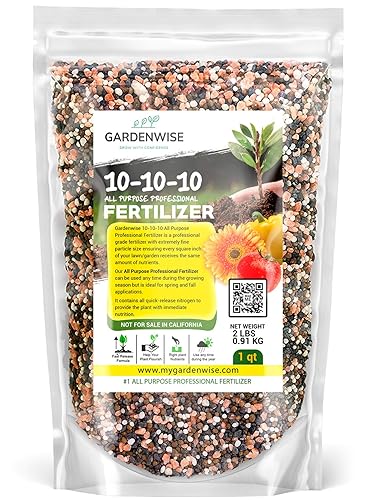
 This balanced 10-10-10 quick-release formula works for general garden use, but is not optimized for turfgrass nutrient requirements.
This 10-10-10 quick-release formula delivers immediate nutrients, but it’s formulated for general garden plants, not turfgrass. Tall fescue requires higher nitrogen ratios for optimal green growth, so this product is better suited for flower beds or vegetable gardens than dedicated lawns. If you do use it for your tall fescue, dilute the application rate by 25% to reduce burn risk, and only apply during active growth periods. The main advantage is its low cost and versatility, but it’s not the best choice for consistent lawn greening.
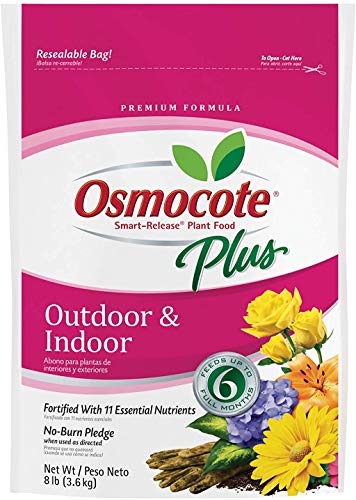 Osmocote's smart-release technology is designed for container and garden plants, not large turf areas.
Osmocote’s 11-nutrient smart-release formula is designed for container plants, flower beds, and vegetable gardens, not large turf areas like tall fescue lawns. The small particle size and low nitrogen content (relative to turf fertilizers) make it inefficient for covering large lawn spaces, and it’s significantly more expensive per square foot than dedicated lawn fertilizers. It’s a good choice for small accent areas of tall fescue near garden beds, but not for full lawn coverage.
 This compact 2lb Osmocote blend is designed for small garden spaces and houseplants, not full lawns.
This smaller 2lb version of the Osmocote smart-release formula is intended for small garden spaces, container plants, and houseplants. Like the 8lb version, it’s not cost-effective or effective for full tall fescue lawn coverage, but it works well for fertilizing small patches of fescue in rock gardens or near patios.
 This organic slow-release formula is designed for houseplants and succulent gardens, not turfgrass.
This organic, all-purpose slow-release fertilizer is formulated for potted plants, succulents, and small garden features, not large tall fescue lawns. Its low nutrient concentration means you would need to apply massive amounts to cover a standard lawn, making it cost-prohibitive. It’s a good choice for small patches of tall fescue in container gardens or rock beds, but not for full lawn use.
 This all-purpose slow-release formula is designed for garden plants, not turfgrass.
This all-purpose slow-release fertilizer is formulated for flowers, vegetables, and houseplants, not tall fescue lawns. Its balanced NPK ratio is too low in nitrogen to support the rapid green growth that turfgrass requires. It’s a good option for fertilizing tall fescue growing in container gardens or mixed flower beds, but not for full lawn coverage.
 This bloom-specific slow-release formula is designed for flowering plants, not turfgrass.
This bloom-boosting slow-release fertilizer is formulated specifically for flowering plants to promote bud growth, not for turfgrass. Its high phosphorus content is unnecessary for tall fescue, and excess phosphorus can runoff into waterways, causing environmental harm. It’s not recommended for lawn use.
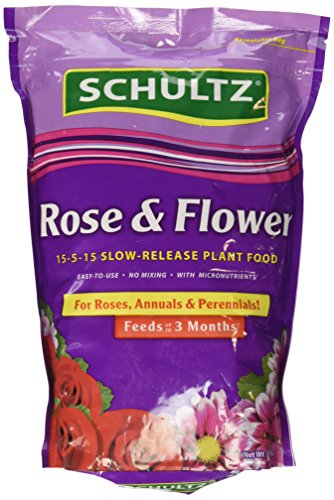 This rose and flower-specific slow-release formula is not suitable for turfgrass applications.
This slow-release formula is designed for roses and flowering perennials, not tall fescue lawns. Its NPK ratio is optimized for bloom production, not the high nitrogen needs of turfgrass. Using it on your lawn will result in poor greening and wasted product.
Frequently Asked Questions
What Are Slow-release Fertilizers?
Slow-release fertilizers gradually release nutrients over time, providing a steady supply of nourishment to plants. They help prevent nutrient leaching and reduce the risk of over-fertilization. For tall fescue, they are ideal for long-term plant health, as they match the grass’s slow, steady growth pattern in cool seasons.
How Do Quick-release Fertilizers Work?
Quick-release fertilizers deliver nutrients immediately upon application, dissolving rapidly and being easily absorbed by plants. This type is beneficial for quick growth and immediate greening, but they require more frequent applications and carry a higher burn risk if misapplied.
Which Fertilizer Is Best For Tall Fescue?
For most established tall fescue lawns, slow-release fertilizer is the better long-term choice for consistent growth and low maintenance. Quick-release fertilizer is best reserved for specific use cases like new lawn establishment, stress recovery, or pre-event green-up.
Can I Use Both Types Of Fertilizers Together?
Yes, combining both types is a common best practice for tall fescue. Use a slow-release fertilizer as your base feeding 2–3 times per year, and add a small quick-release application for fast green-up when needed. Always monitor your lawn’s response to avoid over-fertilization.
How Often Should I Fertilize Tall Fescue?
If using slow-release fertilizer, apply 2–3 times per year (early spring, early fall, and optional late fall application for cold climates). If using quick-release fertilizer, apply every 4–6 weeks during the active growing season (spring and fall only, avoid summer applications).
Are Organic Fertilizers Effective For Tall Fescue?
Organic slow-release fertilizers improve soil health over time by boosting microbial activity, but they have lower nutrient concentrations than synthetic options. For consistent green growth in tall fescue, synthetic slow-release fertilizers are more reliable, but blending organic compost with synthetic fertilizer can support long-term soil health.
Conclusion
There is no universal “superior” fertilizer for tall fescue: the right choice depends on your lawn’s current needs, your maintenance preferences, and the season. For most homeowners with established tall fescue lawns, slow-release fertilizer is the better long-term option, offering consistent nutrition, low burn risk, and minimal maintenance with just 2 to 3 applications per year. Quick-release fertilizer is a valuable tool for specific use cases like new lawn establishment, stress recovery, or pre-event green-up, but it requires more frequent applications and careful timing to avoid damage.
A common mistake is relying solely on quick-release fertilizer for year-round lawn care, which leads to inconsistent growth, higher risk of burn, and nutrient runoff. For the healthiest, most low-maintenance tall fescue lawn, start with a slow-release base feeding in early spring and early fall, and use a small amount of quick-release fertilizer only when you need a fast color boost or are addressing stress damage.
If you’re struggling with a thin, discolored lawn, check out reviving stressed turf for step-by-step guidance to bring your grass back to health. If you’re overseeding to fill in bare patches, follow fast germination results to get a full lawn in as little as 7 days. For a full year-round care plan that pairs fertilization with proper mowing, aeration, and weed control, build a consistent lawn care routine tailored to tall fescue’s unique needs. If you want to achieve a vibrant, show-worthy lawn, explore tips for rapid lawn greening to maximize the impact of your fertilization efforts.