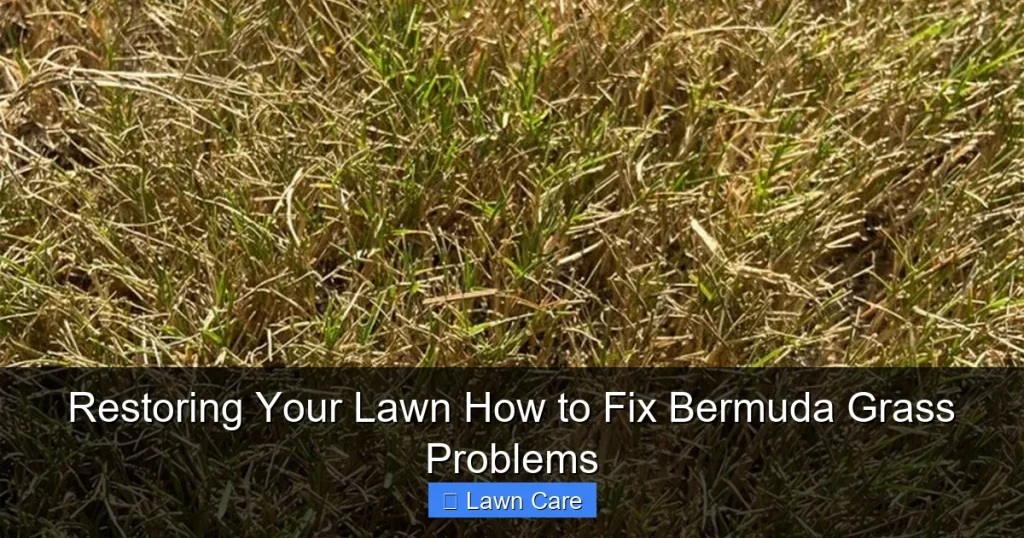
Don’t let Bermuda grass problems bring down your lawn’s beauty. This guide covers common issues like bare spots, thatch, pests, and diseases, offering practical solutions. Learn how to identify problems, treat them effectively, and implement preventative care to restore your Bermuda grass to its full, lush potential.
Is your beautiful Bermuda grass lawn looking a little… less than beautiful? You’re not alone! Bermuda grass is a fantastic choice for many homeowners, known for its heat tolerance and ability to recover. However, like any living thing, it can face its share of challenges. From unsightly bare patches to annoying weeds and potential diseases, a struggling Bermuda lawn can be a real disappointment. But don’t worry, restoring your Bermuda grass to its former glory is entirely achievable with the right knowledge and a little elbow grease.
This guide is your go-to resource for identifying and tackling common Bermuda grass problems. We’ll walk you through the most frequent issues, explain why they happen, and, most importantly, provide you with actionable steps to fix them. Whether you’re dealing with dull, patchy areas, an overgrowth of thatch, or unwelcome guests like pests and diseases, we’ve got you covered. Let’s get your lawn back to being the lush, green carpet you love.
## Understanding Common Bermuda Grass Problems
Bermuda grass, while tough, has its Achilles’ heels. The most common issues tend to arise from environmental stress, improper care, or the presence of pests and diseases. Understanding the root cause is the first step to effective treatment. Many of these problems are interconnected; for example, a lawn suffering from drought stress is more susceptible to pest infestations.
### Bare Spots and Thinning Patches
Seeing those frustrating bare spots or areas where your Bermuda grass has thinned out is a common headache for homeowners. These patches can appear suddenly or develop gradually. Several factors contribute to this, including heavy foot traffic, insect damage, disease, or simply the grass going dormant due to cold temperatures or drought.
* Wear and Tear: High-traffic areas, like pathways across the lawn or where children frequently play, can lead to compacted soil and stressed grass. This stress can cause the grass to thin and eventually die.
* Dormancy: Bermuda grass is a warm-season grass. When temperatures drop significantly, it will naturally go dormant and turn brown. While this is normal, prolonged or uneven dormancy can make areas appear bare. Similarly, severe drought can induce dormancy or even death in patches.
* Pest and Disease Damage: As we’ll discuss later, certain pests and diseases can decimate Bermuda grass, leaving behind noticeable bare patches.
* Improper Mowing: Mowing too low, especially during stressful periods, can scalp the lawn and damage the grass crowns, leading to bare areas.
### Thatch Buildup
Thatch is a layer of dead and living plant material that accumulates between the green grass blades and the soil surface. A thin layer of thatch is actually beneficial, acting as a natural mulch and insulator. However, when this layer becomes too thick (more than half an inch), it can create a spongy surface that repels water, prevents nutrients from reaching the roots, and provides a perfect hiding place for pests and diseases.
Bermuda grass is known for producing a significant amount of thatch due to its rapid growth rate. This is why regular dethatching is a crucial part of Bermuda grass maintenance.
### Weed Infestation
Weeds are the unwanted guests in any lawn, and Bermuda grass is no exception. They compete with your grass for water, nutrients, and sunlight, weakening your turf and making it more susceptible to other problems. Common weeds found in Bermuda lawns include crabgrass, nutsedge, and broadleaf weeds like dandelions.
The best defense against weeds is a healthy, dense lawn. When your Bermuda grass is thriving, it naturally crowds out most weeds. However, even a healthy lawn can be infiltrated, especially during periods of stress or when the grass is less active.
### Pests and Diseases
Bermuda grass can fall victim to various insect pests and fungal diseases. These can cause significant damage, from yellowing and wilting to complete die-off. Early detection and appropriate treatment are key to preventing widespread damage.
* Pests: Common culprits include grubs (which feed on grass roots), chinch bugs (which suck the sap from grass blades), and armyworms (which chew the grass blades).
* Diseases: Brown patch, dollar spot, and pythium blight are common fungal diseases that can affect Bermuda grass, especially in humid or overly wet conditions.
## Tackling Bare Spots and Thinning Patches
Bare spots and thinning areas are perhaps the most disheartening Bermuda grass problems. The good news is that Bermuda grass has incredible regenerative capabilities. With the right approach, you can encourage it to fill in these gaps. If you’re looking for a comprehensive guide on how to repair your Bermuda grass lawn, this is a great place to start.
### Aeration and Dethatching
Before you try to fill in bare spots, it’s essential to address any underlying issues like soil compaction or excessive thatch. Aeration involves creating small holes in the soil, allowing air, water, and nutrients to penetrate to the root zone. Dethatching, as we’ve discussed, removes the thick layer of organic matter that can suffocate your grass.
* When to Aerate and Dethatch: The best time to perform these tasks on Bermuda grass is during its active growing season, typically late spring through summer. Avoid doing this when the grass is dormant or stressed.
* How to Aerate: You can rent a core aerator from a garden supply store. This machine pulls out plugs of soil, which then break down naturally.
* How to Dethatch: A power rake or a dethatching blade on a mower can be used. Be careful not to overdo it, as aggressive dethatching can stress the lawn. For a deeper dive, consider resources on how to dethatch your lawn for stronger grass growth.
### Overseeding for Bare Spots
Once the soil is aerated and any thatch is managed, you can focus on filling in those bare patches. For Bermuda grass, overseeding is a common and effective method, especially if the bare spots are not too extensive.
* Choosing the Right Seed: While Bermuda grass is a single species, different cultivars exist. For overseeding, you’ll want to use a high-quality Bermuda grass seed that matches your existing lawn as closely as possible. This is especially important if you’re aiming for a uniform look.
* Preparation: Loosen the soil in the bare areas with a rake. This helps the seed make good contact with the soil.
* Seeding: Spread the Bermuda grass seed evenly over the bare areas. Follow the seeding rate recommendations on the seed bag.
* Watering: Keep the seeded areas consistently moist, but not waterlogged, until the new grass germinates and is established. This usually requires frequent, light watering.
* Follow-up Care: Once the new grass has emerged, gradually reduce watering frequency but increase the amount of water each time. Continue to mow carefully, ensuring your mower blades are sharp. If you’re struggling with bare spots, learning how to get Bermuda grass to fill in bare spots can provide more specific tips.
### Sodding for Larger Areas
For very large bare patches or areas with severe damage, sodding might be a more practical solution than overseeding. Sodding involves laying down pieces of pre-grown grass turf.
* Preparation: Ensure the area is properly graded and the soil is prepared as you would for overseeding.
* Laying Sod: Lay the sod pieces tightly together, ensuring good soil-to-soil contact. Stagger the seams like bricks.
* Watering: Water the new sod immediately and thoroughly. Keep it consistently moist until it has rooted into the soil, which usually takes a couple of weeks. You can gently tug on a piece to see if it’s rooted.
* Care: Avoid heavy traffic on the new sod until it’s well-established.
### Addressing Dormancy and Drought
If bare spots are due to dormancy from cold or drought, the primary action is to wait for favorable conditions to return and ensure the grass has enough water. Once the weather warms up and rainfall is sufficient, dormant Bermuda grass will typically green up on its own. If drought is a persistent issue, consider implementing a more robust watering schedule during dry spells. Sometimes, a lawn can look uneven due to different grass types growing together. Learning how to fix a lawn with different types of grass can be helpful in these situations.
## Combating Thatch Buildup
A thick thatch layer is a silent killer of healthy lawns. It’s a problem that requires proactive management for Bermuda grass. The key is to address it during its active growing season when the grass can recover most effectively.
### Dethatching Techniques
Dethatching involves physically removing the accumulated thatch layer. There are a few ways to do this:
* Power Rake (Dethatcher): This is a mechanical tool that uses rotating tines or blades to pull thatch to the surface. You’ll typically need to make several passes in different directions to effectively remove the thatch.
* Scarifier: Similar to a power rake but often more aggressive, a scarifier cuts into the soil to remove thatch and can also help with aeration.
* Dethatching Blade on a Mower: Some lawnmowers can be fitted with a dethatching blade. This is generally less aggressive than a dedicated dethatching machine.
### When and How Often to Dethatch
The ideal time to dethatch Bermuda grass is when it’s actively growing and has good soil moisture. This is usually from late spring through summer. You’ll likely only need to dethatch once a year, but if you notice the thatch layer is more than half an inch thick, you might need to do it more frequently. Be prepared for your lawn to look a bit messy and stressed immediately after dethatching. This is normal, and with proper care, it will recover. Understanding how to dethatch your lawn for stronger grass growth can offer further insights.
### Post-Dethatching Care
After dethatching, it’s crucial to provide your lawn with the care it needs to recover.
* Watering: Water thoroughly to help settle the soil and provide moisture to the exposed grass roots.
* Fertilizing: A light application of a balanced fertilizer can help stimulate new growth.
* Mowing: Continue with your regular mowing schedule, ensuring your mower blades are sharp to avoid further stressing the grass.
* Clean Up: Rake up and remove the loosened thatch. You can compost these clippings if you wish, as detailed in guides on how to compost grass clippings from your lawn.
## Managing Pests and Diseases
Pests and diseases can turn a healthy Bermuda grass lawn into a battleground. Early identification is critical to prevent widespread damage.
### Identifying Common Pests
* Grubs: These C-shaped larvae feed on grass roots, causing irregular brown patches that may lift up easily like a carpet. You might also see increased activity from birds and moles digging for them.
* Chinch Bugs: These small, winged insects suck the sap from grass blades, causing irregular yellow or brown patches that can expand rapidly. They often congregate in hot, dry areas, especially near sidewalks and driveways.
* Armyworms: These caterpillars chew the blades of grass, leaving behind a ragged appearance. Large infestations can defoliate entire sections of the lawn quickly.
### Treating Pests
* For Grubs: Look for grub control products in your local garden center. Apply them according to the label instructions, usually in late summer or early fall for best results, though curative treatments are available.
* For Chinch Bugs: You’ll often see damage in sunny, drought-stressed areas. Insecticides are effective. Ensure the product you choose is specifically labeled for chinch bugs. Water the lawn thoroughly after application to help carry the insecticide down to the insects.
* For Armyworms: If you spot armyworms, you’ll want to act quickly. Insecticides are available for these pests, and timely application can save your lawn from severe damage.
### Recognizing and Treating Diseases
* Brown Patch: This fungal disease causes circular or irregular brown patches with a distinctive dark, reddish-brown border. It’s more common in hot, humid weather.
* Dollar Spot: This disease creates small, straw-colored or bleached spots about the size of a silver dollar. These spots can merge to form larger affected areas.
* Pythium Blight: Often called “grease spot” or “cottony blight,” this disease appears as greasy, dark, water-soaked patches, especially in the early morning, often with white, cottony growth. It thrives in wet, humid conditions and can spread rapidly.
### Disease Management Strategies
* Proper Watering: Avoid overhead watering in the evening, which keeps the grass wet overnight and promotes fungal growth. Water in the morning so the grass can dry throughout the day.
* Improve Air Circulation: Dethatching and proper mowing can help improve airflow. Pruning nearby trees and shrubs can also help.
* Fungicides: If diseases are a recurring problem, you may need to use a fungicide. Choose a product that targets the specific disease you’re dealing with and follow the application instructions carefully. Always read and follow pesticide labels carefully.
## Controlling Weeds in Your Bermuda Grass Lawn
Weeds are a constant challenge, but a well-maintained Bermuda grass lawn can significantly reduce their impact.
### Prevention is Key
The best way to control weeds is to prevent them from establishing in the first place.
* Healthy Turf: A dense, healthy stand of Bermuda grass is the most effective weed barrier. This means proper mowing, watering, and fertilization.
* Proper Mowing Height: Mowing your Bermuda grass at the recommended height (usually between 1 to 2 inches, depending on the cultivar and your preference) helps shade out weed seeds and prevents them from germinating. Learn how to mow your lawn like a baseball field for inspiration on proper height.
* Watering Wisely: Deep, infrequent watering encourages deep root growth in your Bermuda grass, making it more resilient and better able to outcompete shallow-rooted weeds.
### Identifying and Treating Weeds
* Pre-emergent Herbicides: These herbicides are applied *before* weeds germinate, preventing them from sprouting. They are particularly effective against annual weeds like crabgrass and are typically applied in early spring before soil temperatures reach 55°F.
* Post-emergent Herbicides: These are applied to actively growing weeds. There are selective herbicides (which target specific types of weeds, like broadleaf weeds, while leaving grass unharmed) and non-selective herbicides (which kill all vegetation). Choose the right herbicide for the weeds you have and apply it carefully according to the product instructions.
* Manual Removal: For smaller infestations or for specific stubborn weeds like nutsedge, hand-pulling can be effective, especially after a rain when the soil is soft. Make sure to get the entire root system. If you have Bermuda grass encroaching into areas where you don’t want it, you might be interested in how to get rid of Bermuda grass in your lawn.
## Maintaining a Healthy Bermuda Grass Lawn
The most effective way to fix Bermuda grass problems is through consistent, proper maintenance. A proactive approach prevents many issues from arising in the first place.
### Mowing Practices
* Mowing Height: As mentioned, maintaining the correct mowing height is crucial. For Bermuda grass, this is typically between 1 and 2 inches. Mowing too low can scalp the grass and lead to damage. Always use a sharp mower blade to ensure a clean cut, which helps prevent disease. Resources on how often you are supposed to mow your lawn can help establish a good routine.
* Mowing Frequency: Bermuda grass grows quickly during its active season. You’ll likely need to mow more often than you might think, possibly every 3-5 days. Remember the one-third rule: never remove more than one-third of the grass blade length at a time.
### Watering and Fertilization
* Watering: Bermuda grass is drought-tolerant once established, but it performs best with adequate water. Water deeply and infrequently to encourage deep root growth. Aim for about 1 to 1.5 inches of water per week, adjusting for rainfall and temperature.
* Fertilization: Bermuda grass is a heavy feeder during its growing season. Fertilize regularly with a balanced nitrogen fertilizer. Start in late spring when the grass begins to green up and continue through the summer. Avoid fertilizing when the grass is dormant or stressed. Soil testing can help you determine specific nutrient needs. For more on its care, consult guides on how to take care of Bermuda grass lawn.
### Aeration and Dethatching (Preventative)
Regularly aerating and dethatching (as needed, typically annually) will help keep your soil healthy and prevent thatch buildup from becoming a major problem.
By addressing these common issues head-on and maintaining a consistent care regimen, you can restore your Bermuda grass lawn to its full, vibrant potential. A healthy lawn is a resilient lawn, better equipped to withstand the challenges that come its way.
- Bermuda grass is a resilient but sometimes challenging turfgrass. Understanding its needs is key to addressing common problems.
- Bare spots are a frequent issue, often caused by dormancy, wear, or pests. Proper aeration, overseeding, and pest control are crucial for recovery.
- Thatch buildup can suffocate Bermuda grass. Regular dethatching during its active growing season is essential for healthy growth.
- Pests like grubs and chinch bugs can wreak havoc. Identification and targeted treatment are necessary to protect your lawn.
- Fungal diseases, especially in humid conditions, can cause brown patches. Proper watering, air circulation, and fungicides can combat these.
- Weed competition is a constant battle. Regular mowing, fertilization, and selective herbicides are vital for maintaining a weed-free Bermuda lawn.
- Consistent care, including proper mowing, watering, and fertilization, is the best defense against most Bermuda grass problems and promotes overall lawn health.
Quick Answers to Common Questions
What is the most common reason for bare spots in Bermuda grass?
The most common reasons for bare spots in Bermuda grass include wear and tear from heavy traffic, insect damage, fungal diseases, or simply the grass going dormant due to cold temperatures or drought.
How often should I dethatch my Bermuda grass lawn?
You should dethatch your Bermuda grass lawn when the thatch layer is thicker than half an inch. This typically needs to be done once a year during its active growing season (late spring through summer).
Can I overseed my Bermuda grass lawn in the fall?
No, it’s generally not recommended to overseed Bermuda grass in the fall. Bermuda grass is a warm-season grass, and it needs warm soil temperatures to germinate and establish. Overseeding is best done in late spring or early summer.
What should I do if I suspect grubs are damaging my Bermuda grass?
If you suspect grubs, look for tell-tale signs like irregular brown patches that lift easily. You can test by lifting a section of turf; if you see more than 5-10 grubs per square foot, treatment is likely necessary. Use a grub control product labeled for your region and apply according to the product’s instructions.
Is it normal for Bermuda grass to turn brown in the winter?
Yes, it is perfectly normal for Bermuda grass to turn brown and go dormant during the winter months. As a warm-season grass, it cannot tolerate freezing temperatures and will shut down its growth until warmer weather returns in the spring.
Frequently Asked Questions
How do I know if my Bermuda grass has a pest problem?
Signs of pest problems include yellowing or browning grass, thinning patches, visible insects on the grass blades or in the soil, or areas of turf that lift easily like a carpet due to root damage.
What is the best time of year to treat fungal diseases in Bermuda grass?
Fungal diseases are most active during warm, humid weather. The best time to treat them is when you first notice symptoms, typically in the summer months. Preventative applications might be needed if you’ve had issues in the past.
Can I mix different types of Bermuda grass seed when overseeding?
While you can technically mix them, it’s generally best to use a seed that closely matches your existing Bermuda grass to ensure a uniform color and texture. Mixing different cultivars can lead to an inconsistent appearance.
What is the difference between aeration and dethatching?
Aeration involves making holes in the soil to improve air, water, and nutrient penetration. Dethatching removes the layer of dead and living organic matter that accumulates on the soil surface, allowing better access to the soil.
How can I prevent weeds from taking over my Bermuda grass lawn?
The best prevention is a healthy, dense Bermuda grass lawn achieved through proper mowing, watering, and fertilization. Using pre-emergent herbicides in the spring can also significantly reduce weed germination.
My Bermuda grass is thin and weak, what can I do?
Thin and weak Bermuda grass can be a result of poor soil health, lack of nutrients, insufficient water, or too much shade. Ensure you are fertilizing appropriately, watering deeply, aerating, and dethatching as needed. If shade is an issue, consider pruning nearby trees or shrubs.