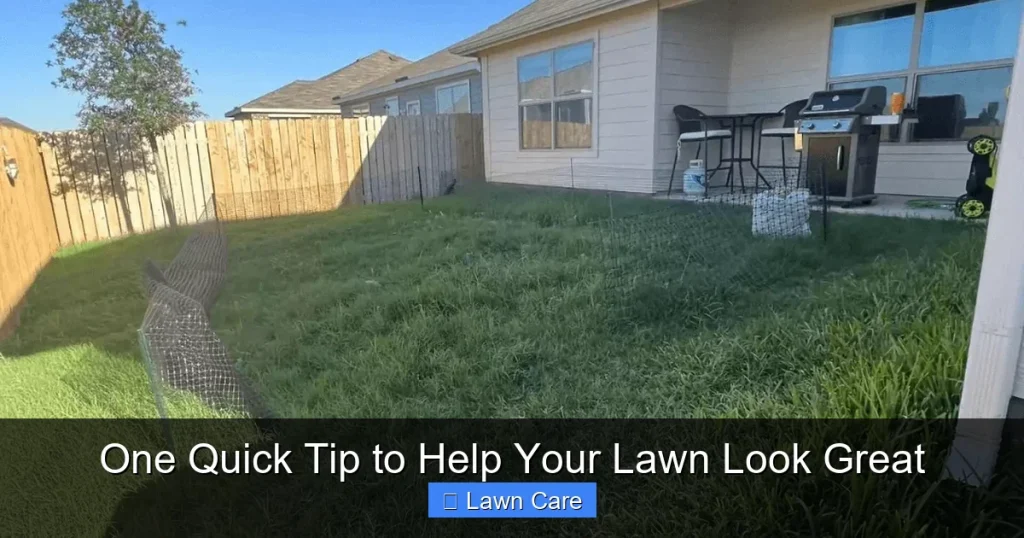
Want a lawn that truly pops? The single most impactful thing you can do is to master your mowing technique. By following a few key principles, like proper height and sharp blades, you can transform your lawn from average to absolutely stunning with minimal effort.
## The Secret to a Lawn That Wows: It’s Simpler Than You Think!
We all dream of that perfectly manicured lawn – the kind that makes your neighbors stop and stare, the kind that feels like walking on a plush carpet. You might think achieving this requires a secret formula, expensive treatments, or hours of back-breaking labor. But what if I told you there’s one quick tip that can dramatically improve your lawn’s appearance, and it’s probably something you’re already doing, just maybe not *quite* right?
It’s true! While a comprehensive lawn care routine involves many elements, from proper watering and fertilization to weed and pest control, there’s one area that often gets overlooked or done without much thought, yet it has a profound impact. This single, simple change can elevate your lawn from good to absolutely gorgeous. Ready to find out what it is? It’s all about mastering the art of mowing.
Now, before you roll your eyes and think, “Mowing? Really?” hear me out. We often see mowing as a chore, a necessary evil to keep the grass from taking over. But when approached with a little knowledge and care, mowing becomes one of the most powerful tools in your arsenal for achieving that coveted emerald green carpet. This isn’t just about cutting grass; it’s about nurturing it.
## The Power of the Perfect Cut: Why Mowing Matters So Much
Think of your lawn as a living organism. Like any living thing, it responds to how you treat it. When you mow correctly, you’re not just trimming the grass; you’re encouraging healthy growth, reducing stress, and even helping to prevent problems before they start. Conversely, improper mowing can weaken your grass, make it susceptible to diseases, and create an uneven, unappealing look.
The difference between a ragged, brown-tipped lawn and a vibrant, uniformly green one often comes down to the details of your mowing practices. It’s about making clean cuts that allow the grass to heal quickly, promoting dense growth, and ensuring the plant has the resources it needs to thrive. Let’s dive into the specific aspects of mowing that make the biggest difference.
### Sharp Blades: The Unsung Heroes of a Healthy Lawn
This is, without a doubt, the single most critical element of proper mowing. Dull mower blades don’t cut grass; they tear it. Imagine ripping a piece of paper versus cutting it cleanly with scissors. The ripped edge looks ragged and is more prone to damage. The same applies to your grass.
When your mower blades are dull, they shred the grass tips. This tearing action exposes the inner tissue of the grass blade, which dries out, turns brown, and gives your lawn a sickly, yellowish or brownish cast. It looks terrible, but it’s also a serious stressor for the grass. These ragged tears are also entry points for diseases and pests, making your lawn more vulnerable.
#### How to Tell If Your Blades Are Dull
* **Ragged, brown tips:** If you notice the tips of your grass blades looking frayed and brown after mowing, your blades are dull.
* **Tearing, not cutting:** The sound of your mower might change, sounding strained as it struggles to cut.
* **Uneven cut:** You might see streaks of unevenly cut grass.
#### Keeping Blades Sharp
The good news is that sharpening your lawn mower blades is a relatively straightforward task, and it’s a game-changer. You can do it yourself with a file and some basic tools, or you can have it done professionally. Aim to sharpen your blades at least once a year, preferably before the mowing season begins, and consider a second sharpening mid-season if you have a large lawn or mow frequently. For those who want to tackle it themselves, learning how to sharpen your own lawn mower blades can be a rewarding skill. Even just ensuring your blades are properly sharpened can improve your lawn mower’s overall performance.
### The Golden Rule: Mow at the Right Height
This is where many homeowners make a common mistake. They either cut the grass too short, thinking it means less frequent mowing (which can backfire), or they let it get too long and then scalp it. The ideal mowing height for most cool-season grasses (like fescue, bluegrass, and ryegrass) is generally between 2.5 and 3.5 inches. For warm-season grasses (like Bermuda, Zoysia, and St. Augustine), it might be slightly shorter, around 1 to 2 inches.
#### Why Height Matters
* **Weed Suppression:** Taller grass shades the soil. This makes it harder for weed seeds to germinate and grow because they don’t get enough sunlight. Short grass allows sunlight to reach the soil, creating an ideal environment for weeds.
* **Moisture Retention:** The shade provided by taller grass also helps keep the soil cooler and reduces moisture evaporation, meaning your lawn will need watering less frequently.
* **Root Development:** Grass plants with deeper roots are more resilient to drought and stress. Mowing at the correct height encourages deeper root growth. Cutting too short stresses the plant, forcing it to put energy into blade growth rather than root development.
* **Disease Prevention:** Shorter grass can be more susceptible to certain fungal diseases, especially in humid conditions.
#### The One-Third Rule: Your Guiding Principle
A crucial principle to remember is the “one-third rule.” This means you should never remove more than one-third of the grass blade’s height in a single mowing. If your grass is growing at 4 inches, and your desired height is 3 inches, you should cut it when it reaches about 4 inches, removing just 1 inch. If you let it grow to 6 inches and then want to cut it back to 3 inches, you’re removing two-thirds, which severely stresses the grass. You’d need to mow it down to 4 inches first, wait a few days, and then cut it down to 3 inches. This is why consistent mowing is important.
### Vary Your Mowing Pattern: A Subtle but Significant Change
Do you always mow in the same direction? Back and forth, in straight lines, year after year? While this gets the job done, it can lead to compacted soil and grass blades that permanently lean in that direction. This creates a somewhat flattened, less vibrant look.
#### The Benefits of Changing Direction
* **Reduces Soil Compaction:** Mowing in different directions, such as alternating between north-south and east-west patterns, helps distribute the weight of the mower and foot traffic more evenly, preventing the soil from becoming overly compacted in one area.
* **Encourages Upright Growth:** Grass blades tend to bend in the direction of the mower. By changing your pattern, you force the grass to stand up straighter, leading to a denser, more uniform appearance.
* **Prevents “Ruts”:** Especially with heavier mowers, consistently mowing the same path can wear down the turf and create ruts. Varying the pattern helps avoid this.
#### Creative Patterns (Optional but Fun!)
While simply alternating directions is effective, you can get creative. Many people enjoy mowing in stripes, which is achieved by mowing in alternating directions with slightly different blade angles. You can even try diagonal patterns or, for the truly ambitious, a checkerboard effect. Learning how to mow your lawn in a checkerboard pattern can add a professional touch. The key is to avoid monotony.
### Mow When the Grass is Dry: A Simple Habit for Better Results
This might seem obvious, but it’s worth emphasizing. Mowing wet grass is generally not a good idea.
#### Why Dry is Best
* **Cleaner Cut:** Dry grass cuts cleanly. Wet grass can bend and tear, leading to that ragged look we discussed.
* **Prevents Clumping:** Wet clippings tend to clump together. These clumps can smother the grass underneath, blocking sunlight and air, and potentially leading to rot or disease.
* **Mower Performance:** Wet grass can clog your mower deck, making it harder to push and potentially damaging the mower’s engine over time. It also doesn’t bag or mulch as effectively.
* **Safety:** Walking on wet grass can be slippery.
#### When to Mow
The best time to mow is generally in the late morning or early afternoon, after the dew has evaporated. Avoid mowing in the heat of the midday sun, as this can stress the grass. Early evening is also an option, but make sure you give the grass enough time to dry before any nighttime dew settles. Understanding how early is it acceptable to mow your lawn, or how often you should be mowing, are also related considerations for timing.
### The Magic of Mulching Your Clippings
Most modern lawn mowers have a mulching option. If yours does, use it! Instead of bagging your grass clippings, the mulching function chops them into tiny pieces and returns them to your lawn.
#### Benefits of Mulching
* **Natural Fertilization:** Grass clippings are packed with nitrogen, potassium, and phosphorus – essential nutrients for your lawn. As they decompose, they release these nutrients back into the soil, acting as a free, organic fertilizer. This is a key component of improving soil health.
* **Moisture Retention:** The fine layer of clippings acts as a light mulch, helping to retain soil moisture and suppress weeds.
* **Reduced Waste:** You’re not filling up bags with clippings to take to the landfill.
#### When NOT to Mulch
* **Very Long Grass:** If you’ve let the grass grow excessively long, the clippings can be too large and thick to decompose properly, creating a thatch layer that can harm your lawn. In this case, bag them or use them as compost.
* **Diseased Grass:** If your lawn has a fungal disease, you don’t want to spread it by mulching the infected clippings.
### Don’t Forget the Lawn Edger!
While not strictly a mowing technique, keeping your lawn edges crisp and clean is a crucial part of that professional, put-together look. A sharp edge along sidewalks, driveways, and garden beds makes a huge difference. If you’ve mastered mowing, the next step for that polished appearance is often how to edge your lawn for a professional look.
## The Cumulative Effect: Why One Tip Can Make Such a Difference
It’s easy to dismiss mowing as just a chore, but when you focus on these key aspects – sharp blades, proper height, varied patterns, dry conditions, and mulching – you’re not just cutting grass; you’re actively contributing to its health and vitality. These practices work together to create a lawn that is:
* **Greener and More Vibrant:** Healthy grass blades reflect light better, appearing richer in color.
* **Denser and Thicker:** Proper mowing encourages tillering (the production of new shoots from the base of the plant), leading to a fuller lawn.
* **More Resilient:** Stronger root systems and healthier blades mean your lawn can better withstand drought, heat, and foot traffic.
* **Less Prone to Weeds and Diseases:** A well-maintained lawn outcompetes weeds and is less susceptible to pest and disease problems.
Taking the time to implement these simple mowing strategies is a quick win for your lawn. It’s an investment of a little extra attention that pays off handsomely in curb appeal and the sheer enjoyment of a beautiful outdoor space. So, the next time you head out to mow, remember this one quick tip: treat your mowing like the vital lawn care practice it is, and your lawn will thank you for it with a stunning, healthy appearance.
Key Takeaways
- Sharpen Your Blades Regularly: Dull blades tear grass, leading to brown tips and increased disease risk. Sharp blades make clean cuts for a healthier, greener appearance.
- Mow at the Right Height: Taller grass shades the soil, preventing weeds and retaining moisture. Never cut more than one-third of the grass blade at a time.
- Vary Your Mowing Pattern: Changing the direction you mow prevents soil compaction and encourages upright grass growth, leading to a more uniform look.
- Mow When the Grass is Dry: Wet grass clumps, can clog your mower, and doesn’t cut cleanly. Dry grass allows for a smoother, more even cut.
- Keep Your Mower Well-Maintained: A clean, well-oiled mower with sharp blades is essential for optimal performance and lawn health.
- Consider Mulching Your Clippings: Grass clippings are a natural fertilizer, returning valuable nutrients to your soil and helping to retain moisture.
Quick Answers to Common Questions
What is the single most important aspect of mowing for lawn health?
The single most important aspect is ensuring your mower blades are sharp. Dull blades tear grass, leading to browning and disease, while sharp blades make clean cuts that promote healthy growth.
How often should I sharpen my lawn mower blades?
It’s generally recommended to sharpen your blades at least once a year, ideally before the mowing season starts. Consider a mid-season sharpening if you have a large lawn or mow frequently.
What’s the best height to mow my lawn?
For most cool-season grasses, aim for 2.5 to 3.5 inches. For warm-season grasses, 1 to 2 inches is usually appropriate. Always follow the one-third rule.
Why is it important to vary my mowing pattern?
Varying your mowing pattern helps prevent soil compaction and encourages grass to grow upright, resulting in a denser, more uniform, and healthier-looking lawn.
Should I mulch my grass clippings?
Yes, mulching your grass clippings is highly beneficial. They act as a natural fertilizer, returning essential nutrients to the soil and helping to retain moisture.
Frequently Asked Questions
What happens if I mow my lawn too short?
Mowing your lawn too short, also known as scalping, severely stresses the grass. It forces the plant to expend energy on blade regrowth instead of root development, making it more vulnerable to drought, weeds, and diseases.
Can I mow my lawn when it’s wet?
It’s best to avoid mowing wet grass. Wet grass doesn’t cut cleanly, tends to clump and smother the lawn, and can clog your mower, making the job harder and potentially damaging the equipment.
How do I know if my lawn needs water?
Your lawn will typically show signs of thirst by looking duller and less vibrant. The blades may start to curl or fold inward, and footprints may remain visible long after you’ve walked on it. You can also do a simple “screwdriver test” by trying to push a screwdriver into the soil; if it’s difficult, the soil is dry.
What is the “one-third rule” in mowing?
The one-third rule states that you should never remove more than one-third of the grass blade’s height in a single mowing session. This prevents excessive stress on the grass and promotes healthier growth.
How does mowing affect weed growth?
Mowing at the correct height is crucial for weed control. Taller grass shades the soil, preventing weed seeds from germinating. Cutting the grass too short allows sunlight to reach the soil, encouraging weed growth.
What should I do with grass clippings?
Ideally, you should mulch your grass clippings. They act as a natural fertilizer, returning valuable nutrients to the soil. If the clippings are very long or if your lawn has a disease, it’s better to bag them or compost them.