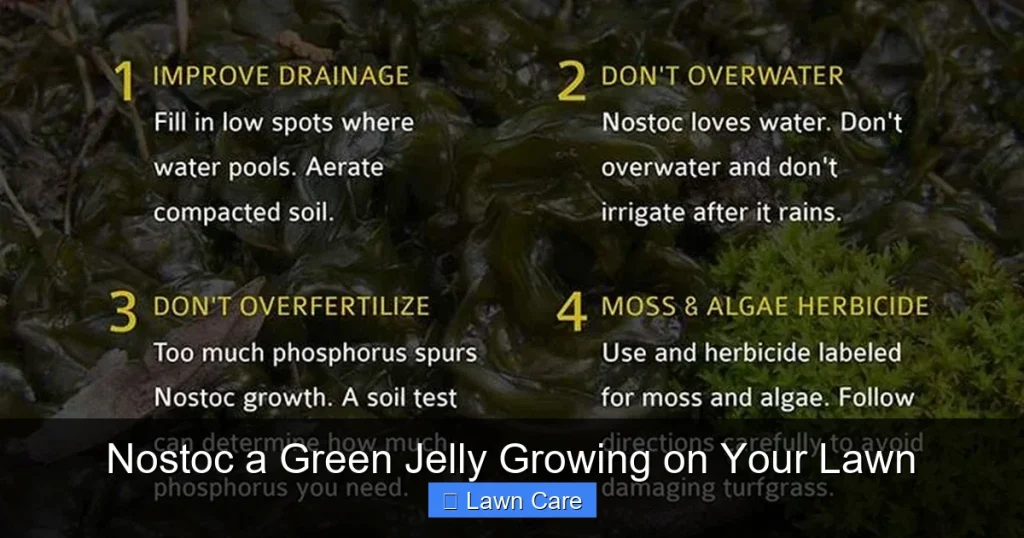
Nostoc, often appearing as a green jelly on lawns, is a type of cyanobacteria. While generally harmless, its presence can indicate specific soil conditions, often related to moisture. Understanding Nostoc is key to managing its appearance and ensuring your lawn’s overall health.
## Nostoc: A Green Jelly Growing on Your Lawn
Ever stepped out onto your lawn after a good rain and noticed patches of strange, green, jelly-like material clinging to the grass blades or scattered across the soil? If you’ve been wondering what this peculiar substance is and if it’s a sign of trouble, you’re not alone. This often surprising visitor is commonly known as Nostoc, and while its appearance might be a bit startling, it’s usually a straightforward, albeit sometimes telling, lawn phenomenon.
This green jelly is a fascinating organism that plays a role in the natural world, and understanding it can help you maintain a healthier, more vibrant lawn. It’s not a fungus, it’s not a typical weed, and it’s not something you typically find on a list of common lawn diseases. Instead, Nostoc is a type of cyanobacteria, a group of microorganisms that are essentially ancient bacteria with plant-like characteristics, including the ability to perform photosynthesis. Their presence on your lawn is often linked to specific environmental conditions, and recognizing these signs is the first step to addressing them.
### What Exactly Is Nostoc?
Nostoc is a genus of cyanobacteria that, under the right conditions, forms colonies. These colonies often appear as gelatinous, stringy, or even disc-shaped masses. The color can range from a dull green to a more vibrant, almost bluish-green, depending on the species and light exposure. People sometimes refer to it by more whimsical names like “star jelly,” “witch’s butter,” or even “frog spawn” due to its translucent, jelly-like texture.
These tiny organisms are incredibly resilient and have been around for billions of years. They can survive in a wide range of environments, from arid deserts to freshwater lakes, and yes, even on your lawn. The key to their appearance on your grass is moisture. When Nostoc colonies are dry, they can appear as dark, shriveled flakes. However, when exposed to water – like after a rain shower, heavy dew, or irrigation – they absorb moisture and swell up, transforming into that distinctive gelatinous blob. This ability to rehydrate is one of their survival superpowers.
### Why Is Nostoc Appearing on My Lawn?
The appearance of Nostoc on your lawn is rarely random. It’s usually a signal that your lawn’s environment is particularly favorable for these cyanobacteria to thrive. The primary factor is moisture, but it’s often moisture combined with other soil conditions.
#### The Moisture Connection
As mentioned, Nostoc loves water. If you’ve had a recent period of heavy rainfall, or if your lawn retains a lot of moisture due to its soil composition or grading, you’re more likely to see Nostoc emerge. This can also happen if you’re watering your lawn frequently or for extended periods, especially if the water isn’t draining away efficiently. Understanding how to reduce water usage while maintaining a green lawn is a good first step.
#### Soil Compaction and Poor Drainage
This is where Nostoc becomes a more significant indicator of potential lawn problems. When soil becomes compacted, it loses its structure. This means air pockets are reduced, and water struggles to penetrate and drain away. Compacted soil can lead to a persistent moist surface layer, creating the ideal environment for Nostoc. Poor drainage, whether due to soil type (like heavy clay) or issues with the lawn’s grading, exacerbates this. If water sits on the surface for too long, Nostoc will happily colonize. Fixing drainage issues is crucial, and for sloped lawns, learning how to fix drainage on a sloped lawn can be a great solution. In severe cases, you might even consider how to install a dry well in your lawn to manage excess water.
#### Low Fertility or Nutrient Imbalance
Sometimes, Nostoc can appear in areas where the grass is struggling due to low soil fertility or an imbalance of nutrients. When grass isn’t growing vigorously, it leaves more bare patches or thinner areas of turf, giving cyanobacteria an opportunity to colonize exposed soil. Healthy, dense grass is the best competition against these organisms.
#### Over-Cultivation or Soil Disturbance
If you’ve recently aerated your lawn, dethatched it heavily, or otherwise disturbed the soil surface, you might temporarily create conditions favorable for Nostoc to colonize the exposed soil, especially if conditions are moist. This is usually a temporary issue that resolves as the grass recovers.
### Is Nostoc Harmful to My Lawn?
Here’s the good news: Nostoc itself is generally not harmful to your lawn, your pets, or your family. It doesn’t parasitize grass roots or spread diseases to plants. In fact, as a photosynthetic organism, it contributes to oxygen production.
However, its presence is often a *symptom* of underlying issues that *can* harm your lawn. The very conditions that allow Nostoc to flourish – compacted soil, poor drainage, and prolonged surface moisture – can stress your grass. This stress can make your lawn more susceptible to diseases, pest infestations, and drought damage. So, while the jelly isn’t the villain, it’s a flashing red light pointing to potential problems you’ll want to address for the long-term health of your turf.
### How to Manage and Prevent Nostoc
Since Nostoc isn’t directly harmful, the goal isn’t to eradicate it with harsh chemicals. Instead, the focus should be on improving your lawn’s overall health and environmental conditions to make it less hospitable to cyanobacteria.
#### Improving Soil Aeration and Drainage
This is the most critical step. Compacted soil prevents water from draining effectively.
- Aeration: Regular core aeration can break up compacted soil, allowing for better water infiltration and air circulation. Aim to aerate your lawn once a year, or more often if you notice significant compaction. It’s important to know if there is a bad time to aerate your lawn to maximize benefits. During drought, careful aeration is still possible, as discussed in how to aerate your lawn during a drought without damaging it.
- Topdressing: After aerating, applying a thin layer of compost or other organic matter can further improve soil structure over time. Explore what are the benefits of using compost on your lawn.
- Addressing Low Spots: If your lawn has low-lying areas where water consistently pools, you might need to consider adding soil to level these areas or implement a more substantial drainage solution, like grading or a French drain, depending on the severity.
#### Adjusting Watering Practices
Overwatering is a common culprit.
- Water Deeply, Less Often: Encourage deep root growth by watering thoroughly but less frequently. This helps grass establish a stronger root system and reduces surface moisture.
- Timing is Key: Water early in the morning. This allows the grass to dry off during the day, reducing the time moisture sits on the surface. Avoid watering in the evening, as this can leave the lawn wet overnight. Consider resources like how to keep your lawn green without overwatering.
- Use Smart Irrigation: If you use sprinklers, ensure they are set correctly and not applying excessive water. Soaker hoses can be a gentler option for certain areas.
#### Maintaining Healthy Grass
A dense, healthy lawn is your best defense.
- Proper Mowing: Don’t cut your grass too short. Taller grass shades the soil, keeping it cooler and moister, which paradoxically helps prevent surface sogginess and outcompetes weeds and cyanobacteria. Aim for a mowing height of around 3 inches for most cool-season grasses. Learning how to mow your lawn like a baseball field or even what role does mowing pattern play in managing water retention on a lawn can contribute to overall lawn health. Always ensure your mower blade is sharp to avoid tearing the grass.
- Fertilization: Feed your lawn with appropriate fertilizers at the right times of year. This promotes vigorous growth. However, be cautious about fertilizing during extreme heat or drought.
- Overseeding: In the fall, consider overseeding thin areas of your lawn to thicken the turf and fill in bare spots.
#### Manual Removal (If Necessary)
If you have a small patch of Nostoc and want it gone immediately for aesthetic reasons, you can carefully rake or scrape it away. Be gentle, as it can be quite slippery. Dispose of the material in your compost or yard waste bin. After removal, consider the underlying cause and implement the steps mentioned above to prevent its return.
### When to Be Concerned
While Nostoc is usually benign, its persistent and widespread appearance could indicate more serious drainage or soil structure issues that are impacting your lawn’s overall health. If you’re struggling with standing water, consistently waterlogged soil, or if your grass is frequently stressed despite your best efforts, it might be time to consult with a local landscaping or turf management professional. They can help diagnose deeper soil problems and recommend tailored solutions. For lawns that struggle to stay green, especially during dry spells, resources on how to keep your lawn green during a drought are invaluable.
### Conclusion
Encountering Nostoc, that peculiar green jelly on your lawn, can be a bit of a surprise. But by understanding what it is – a resilient cyanobacteria – and why it appears – primarily due to excess moisture and poor soil conditions – you can take proactive steps to manage it. Focus on improving your lawn’s drainage, adopting smart watering habits, and fostering healthy, dense grass. By addressing the root causes, you’ll not only prevent the return of the green jelly but also cultivate a more robust, beautiful, and resilient lawn that can withstand the challenges of the season.
- Nostoc is a type of cyanobacteria, sometimes called “star jelly” or “frog spawn,” forming a gelatinous green mass on lawns.
- It thrives in moist conditions and can appear after rain or periods of high humidity, often indicating poor drainage.
- Nostoc itself is not harmful to lawns or people, but its presence can signal underlying issues like compaction or poor soil structure.
- Management focuses on improving lawn conditions rather than direct eradication, such as addressing drainage and soil health.
- Aeration, proper mowing height, and avoiding overwatering are key strategies to deter Nostoc growth.
- Healthy grass is the best defense; maintaining a robust lawn can naturally outcompete cyanobacteria.
Quick Answers to Common Questions
What is the green jelly on my lawn?
The green jelly on your lawn is a type of cyanobacteria called Nostoc. It forms gelatinous colonies that swell up when exposed to moisture.
Is Nostoc harmful to my grass?
Nostoc itself is not directly harmful to your grass. However, its presence often indicates underlying issues like soil compaction and poor drainage, which can stress your lawn and make it more vulnerable.
Why does Nostoc appear after it rains?
Nostoc thrives in moist conditions. Rain provides the necessary water for the dormant cyanobacteria to absorb and swell, making them visible as the green jelly you see.
How can I get rid of Nostoc permanently?
You can’t permanently “get rid of” Nostoc, as it’s a natural organism. The best approach is to manage the conditions that allow it to thrive by improving soil drainage and health, and maintaining a dense, healthy lawn.
Should I be worried if I see Nostoc on my lawn?
Generally, no. While it’s a visual cue, it’s not an immediate threat. It’s more important to address the underlying soil and moisture issues it signals to ensure your lawn’s long-term health.
Frequently Asked Questions
What are other common names for Nostoc on a lawn?
Besides Nostoc, this green jelly is sometimes called “star jelly,” “frog spawn,” or “witch’s butter” due to its appearance and texture.
Does Nostoc mean my lawn has a disease?
No, Nostoc is not a disease. It’s a type of bacteria. However, the conditions that promote Nostoc growth, like waterlogged soil, can also make your lawn more susceptible to actual diseases.
Can pets or children play on a lawn with Nostoc?
Yes, Nostoc is considered safe for pets and children. It’s not toxic, though it can be slippery when wet.
How often should I aerate my lawn if Nostoc is present?
If Nostoc is a recurring issue, consider aerating your lawn at least once a year. If soil compaction is severe, you might need more frequent aeration.
What if my lawn is constantly wet, even without rain?
If your lawn remains wet for extended periods, it suggests a significant drainage problem. You may need to investigate grading issues, soil compaction, or consider professional solutions for water management.
Can mowing patterns affect Nostoc growth?
While mowing patterns themselves don’t directly cause Nostoc, certain patterns can influence soil compaction and water retention. Proper mowing techniques that encourage healthy turf growth are beneficial.