
You pull the starter cord on your Mantis tiller, and nothing happens. Or maybe it cranks but won't fire up. Either way, you're stuck staring at a machine that worked fine last season.
This is one of the most common small-engine complaints, and the good news is that most no-start issues come down to just a few causes you can diagnose yourself with basic tools.
In our research, the majority of Mantis tiller starting problems trace back to stale fuel, a fouled spark plug, or a carburetor that's gummed up from sitting. Manufacturer specifications indicate that gasoline begins degrading in as little as 30 days, and ethanol-blended fuel accelerates that process. Knowing how the starting system works will help you zero in on the real problem fast.

Image source: Pixabay / Kassandra5 (Pixabay Content License)
Quick Answer
A Mantis tiller that won't start is most often caused by old fuel, a bad spark plug, or a clogged carburetor. Start by checking for spark at the plug. Then confirm fuel is flowing to the carburetor.
If both are good, inspect the air filter and compression. Most no-start issues are fixable at home with basic hand tools.
How a Mantis Tiller Engine Actually Starts (So You Know What to Check)
Every Mantis tiller, whether it runs a 2-cycle or 4-cycle engine, needs the same four things to start: spark, fuel, air, and compression. If any one of those is missing or weak, the engine won't fire. Understanding this framework keeps you from randomly swapping parts and wasting money.
When you pull the starter cord, the flywheel spins past the ignition coil and generates an electrical pulse. That pulse travels to the spark plug and creates a spark inside the cylinder. At the same time, the piston's movement draws fuel and air through the carburetor into the combustion chamber.
The spark ignites the mixture, and the engine runs.
On 2-cycle Mantis models, you're mixing oil into the gas at a 50:1 ratio. The 4-cycle models have a separate oil fill and run on straight gasoline. Getting this wrong is a surprisingly common reason for starting trouble, so double-check your model before you do anything else.
The choke and primer bulb are your starting aids. The choke restricts airflow to enrich the fuel mixture for a cold start. The primer bulb pushes a small amount of fuel directly into the carburetor throat.
If either of these isn't working right, the engine will be hard to start or won't start at all.
The #1 Reason Mantis Tillers Won't Start After Winter
If your Mantis tiller sat in the garage all winter and now refuses to start, stale fuel is almost certainly the culprit. Gasoline with ethanol absorbs moisture over time, and the volatile compounds that help it ignite evaporate. What's left is a varnish-like residue that clogs the tiny passages inside the carburetor.
This is the single most common cause of no-start complaints on small engines, and Mantis tillers are no exception. The carburetor on a Mantis uses very small jets and passages, so even a thin layer of varnish can block fuel flow completely.
Here's what stale fuel does inside your tiller:
- Gums up the carburetor jets, starving the engine of fuel
- Swells and cracks the carburetor diaphragm, preventing proper fuel pumping
- Leaves deposits on the spark plug, weakening or killing the spark
- Clogs the fuel filter and fuel line, blocking flow to the carburetor
The fix is to drain the old fuel, clean or rebuild the carburetor, and refill with fresh gasoline. If you added a fuel stabilizer before storage, you may have dodged this entirely. Going forward, either run the engine dry before storing or use a stabilizer rated for at least 24 months of protection.
No Click, No Crank — When the Pull Start Does Nothing
If you pull the cord and the engine doesn't turn over at all, you're dealing with a mechanical issue, not a fuel or spark problem. The starter mechanism itself is the first thing to inspect.
On most Mantis tillers, the recoil starter uses a rope-and-pawl system. When you pull the cord, the pawls engage the flywheel and spin the engine. If the rope is broken, frayed, or has come off the pulley, you'll feel no resistance.
If the pawls are worn or stuck, the cord may pull freely without engaging anything.
Here's a quick diagnostic checklist for a dead pull start:
- Remove the starter housing (usually three to four bolts on top of the engine)
- Inspect the rope for fraying, breakage, or detachment from the pulley
- Check the recoil spring, it should retract the rope when you let go
- Look at the pawls and springs, they should pop outward when the pulley spins
- Manually rotate the flywheel by hand to make sure the engine isn't seized
If the engine is seized, you'll feel solid resistance when trying to turn the flywheel. That usually means internal damage, like a scored cylinder or a thrown connecting rod, and it's a job for a repair shop. But in most cases, a new rope or a cleaned pawl assembly gets you back up and running.
It Cranks But Won't Fire — Spark, Fuel, and Air Problems
This is the scenario most people face. The engine turns over fine, but it just won't catch. Now you need to systematically check the three things that make combustion happen.
Check the Kill Switch and Safety Interlocks First
Before you dig into the engine, make sure the kill switch is in the "run" position. Some Mantis models have a safety interlock on the handle that must be engaged. It sounds obvious, but it's easy to overlook, especially if someone else used the tiller last.
Test for Spark — The Fastest Way to Narrow It Down
Pull the spark plug wire off the plug. Hold the wire about a quarter-inch from the engine's metal body. Pull the starter cord and look for a bright blue spark.
No spark means the ignition coil, kill switch wiring, or spark plug is the problem.
A weak orange spark can also cause a no-start. If the spark looks thin or yellowish, replace the plug first. A new Champion CJ8 or equivalent plug costs a few dollars and solves more starting problems than any other single fix.
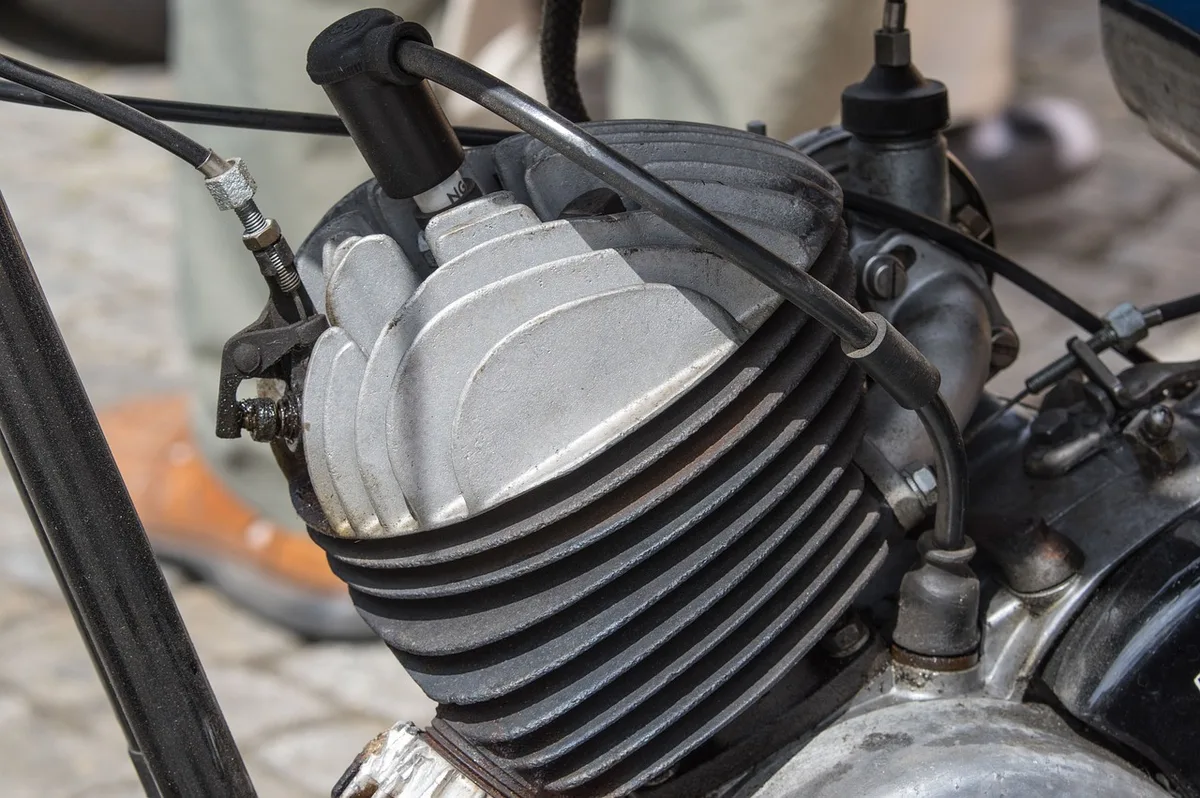
Image source: Pixabay / emkanicepic (Pixabay Content License)
To test the plug properly, remove it and reconnect it to the wire. Lay the plug's metal body against the engine head so it's grounded. Pull the cord and watch the electrode gap.
A strong, snapping blue spark means your ignition system is fine and you can move on to fuel.
Is Fuel Actually Reaching the Carburetor?
If you've confirmed spark, the next question is whether fuel is getting to the combustion chamber. Disconnect the fuel line from the carburetor and see if gas flows freely when you prime the bulb. No flow means a clogged fuel filter, a pinched fuel line, or a blocked tank vent.
The fuel filter is a small cylindrical piece inside the fuel tank, attached to the end of the fuel line. If it's dark brown or black, replace it. They're cheap and available at any small-engine parts dealer.
Also check the fuel line itself for cracks or kinks that could restrict flow.
The tank vent is another sneaky culprit. Most Mantis tillers have a small vent in the fuel cap or a separate vent line. If it's blocked, a vacuum forms inside the tank and fuel can't flow out.
Try loosening the fuel cap slightly and pulling the cord. If the engine fires, you've found your problem.
When the Choke and Primer Bulb Are the Culprit
If the choke lever is stuck open on a cold engine, the fuel mixture will be too lean to ignite. Make sure the choke is fully closed when starting a cold tiller. Once the engine warms up, you'll open it back up.
The primer bulb should feel firm and push fuel through when you press it. If it's soft and doesn't resist, the internal check valves may be shot, or there's a crack in the bulb itself. A cracked primer bulb lets air into the fuel system, which prevents the carburetor from drawing fuel properly.
Replacement bulbs are inexpensive and usually just snap into place.
Compression and Flywheel Key — The Hidden Causes
If you've confirmed spark, fuel, and air are all present, the next thing to check is compression. A healthy Mantis tiller engine should produce at least 90 PSI when you pull the starter cord with a compression gauge threaded into the spark plug hole. Anything significantly below that means the piston rings, cylinder wall, or head gasket are worn or damaged.
Low compression is harder to fix at home. Worn piston rings or a scored cylinder usually means a rebuild or a replacement engine. But before you go down that road, check the flywheel key first.
It's a small metal piece that locks the flywheel to the crankshaft at the correct timing position.
If the tines hit a rock or root hard enough, the flywheel key can shear. The flywheel shifts slightly on the crankshaft, and the ignition timing goes off. The engine might crank and even sputter, but it won't run properly.
Removing the flywheel nut and inspecting the key is straightforward on most Mantis models. A replacement key costs under two dollars.
Carburetor Cleaning and Rebuild — When It's Actually Needed
If stale fuel was sitting in your carburetor for months, a simple drain-and-refill won't cut it. The internal jets and passages need to be cleaned or the engine will keep starving for fuel. Most Mantis tillers use a diaphragm carburetor, which has fewer moving parts than a float-style unit but is just as prone to gumming up.
Start by removing the carburetor from the engine. It's usually held on by two bolts and connected to the fuel line and the throttle linkage. Take photos before you disconnect anything so you can reassemble it correctly.
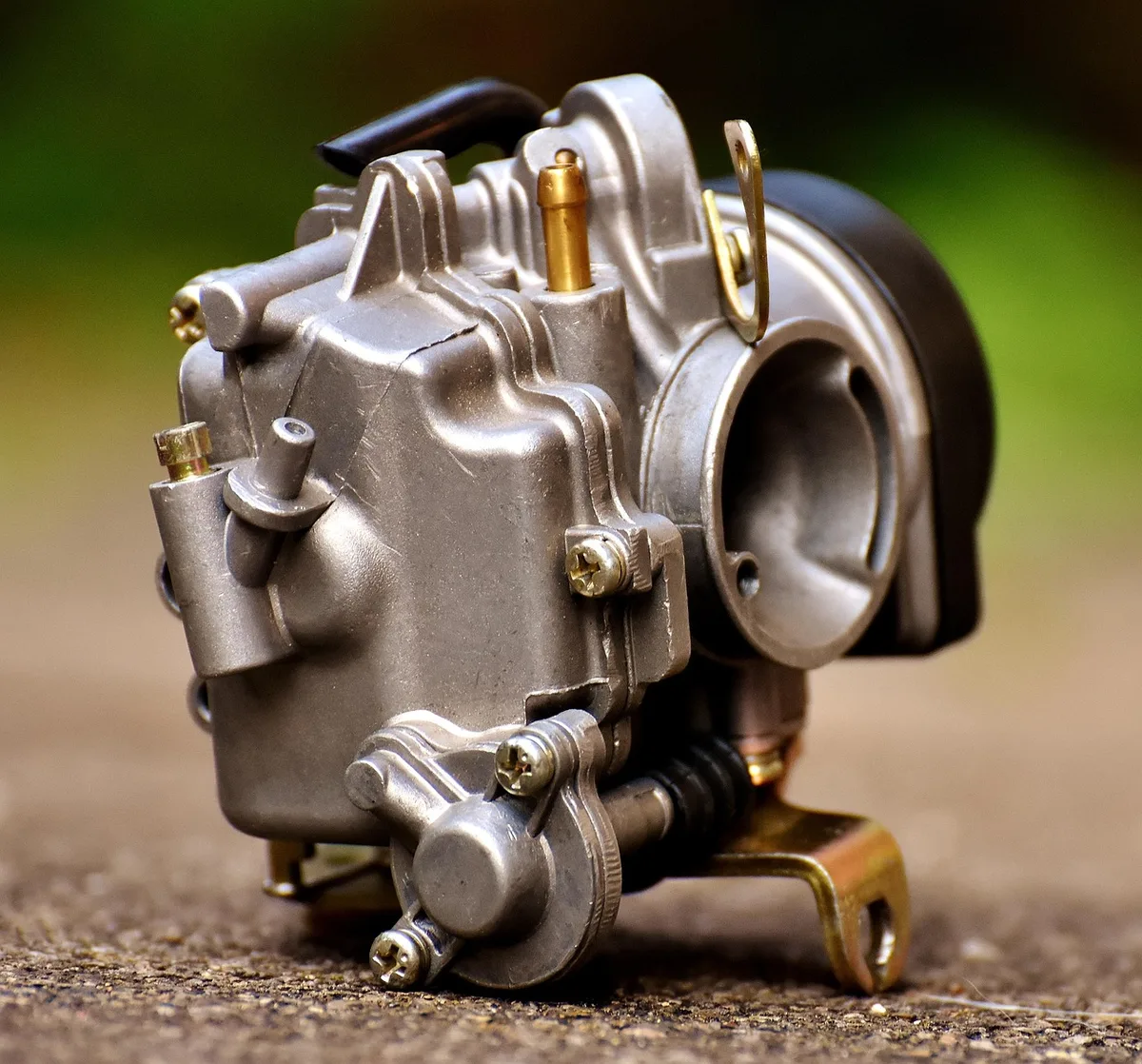
Image source: Pixabay / Alexas_Fotos (Pixabay Content License)
Once it's off, disassemble it carefully. Remove the diaphragm cover, the diaphragm itself, and the metering needle. Clean every passage with carburetor cleaner spray and compressed air.
Don't use a wire or drill bit to clear jets, you'll enlarge them and throw off the fuel mixture.
If the diaphragm is stiff, cracked, or has visible damage, replace it. A full carburetor rebuild kit for a Mantis tiller typically runs between eight and fifteen dollars and includes the diaphragm, gaskets, and a new needle valve. It's worth the investment over trying to clean a damaged diaphragm.
Spark Plug Replacement — The $5 Fix That Solves Most Problems
A fouled spark plug is the single easiest fix on this list, and it solves more no-start issues than anything else. If your plug is black and sooty, coated in oil, or the electrode is worn down, just replace it. Don't bother cleaning and reusing a bad plug.
For most Mantis 2-cycle models, the correct plug is a Champion CJ8 or equivalent, gapped at 0.025 inches. Check your owner's manual for the exact part number on your model. Some 4-cycle Mantis tillers use a different plug, so don't assume.
When you install the new plug, hand-thread it first to avoid cross-threading the aluminum cylinder head. Then tighten it with a spark plug wrench to about 10 to 15 foot-pounds. Over-tightening can crack the head, so don't muscle it.
If the new plug fouls again after a short run, that points to a deeper problem. It could be a rich fuel mixture from a misadjusted carburetor, or it could be oil getting past worn piston rings on a 2-cycle engine. Either way, the plug is telling you something.
Fuel System Deep Clean — Lines, Filter, and Tank
If you've been chasing a no-start for a while and the carburetor and plug are both fresh, the fuel system itself might still be contaminated. Old fuel leaves residue in the tank, the fuel line, and the fuel filter that keeps recirculating through the carburetor.
Start by draining the tank completely. If you see water droplets or dark sludge in the old fuel, the tank needs a rinse. Use a small amount of fresh gasoline to swish around and flush it out.
Let it dry fully before refilling.
Image source: Openverse / Digital Rail Artist
Next, pull the fuel line off and inspect it. If it's stiff, cracked, or discolored, replace it. Fuel line is cheap and sold by the foot at any hardware store.
Make sure you use the correct inner diameter for your Mantis model, usually 3/32 or 1/8 inch.
The fuel filter sits inside the tank on the end of the fuel line. If it's dark or clogged, pull it out and put in a new one. They're a couple of dollars and should be replaced at least once a season.
While you're at it, check the fuel cap vent. A blocked vent creates a vacuum that stops fuel from flowing. If the engine starts when you loosen the cap, that's your answer.
Common Mistakes That Make a No-Start Worse
The biggest mistake people make is over-choking the engine. If you've pulled the cord six or seven times with the choke fully closed, you've probably flooded it. Gasoline fills the combustion chamber and wets the spark plug, making it impossible to fire.
To clear a flood, turn the choke fully open and pull the cord several times with the spark plug removed. This pushes excess fuel out of the cylinder. Dry off the plug or swap in a fresh one, then try starting again with the choke halfway closed.
Another common error is using old mixed fuel from a previous season. That gas-oil mixture sitting in a jug in your garage has already started separating and degrading. Always mix fresh fuel, and only make what you'll use within 30 days.
Skipping the air filter is another oversight. A clogged air filter chokes the engine and creates an overly rich mixture that fouls the plug. Tap the filter clean or replace it if it's visibly dirty.
On most Mantis models, the air filter is a foam element that you can wash with soap and water, let dry, and reinstall.
Cold Weather and Altitude Starting Tips
Cold weather thickens the oil inside the engine and makes the fuel harder to vaporize. If you're trying to start a Mantis tiller when it's below 40 degrees Fahrenheit, give the primer bulb extra presses, sometimes eight to ten instead of the usual three or four. Keep the choke fully closed until the engine catches, then ease it open gradually.
At altitudes above 5,000 feet, the thinner air leans out the fuel mixture. If your tiller starts but runs rough or dies at elevation, the carburetor may need a slight adjustment. Some Mantis models have an adjustable high-speed jet.
Turning it clockwise a quarter-turn richens the mixture and can compensate for the altitude.
How to Winterize Your Mantis Tiller So It Starts Next Spring
The best way to avoid a no-start next season is proper winterization. Add a fuel stabilizer to a full tank of fresh gas and run the engine for five minutes to circulate it through the carburetor. Then either run the engine until it stalls to empty the carburetor, or close the fuel shutoff and let it idle until it dies on its own.
Pull the spark plug and squirt a teaspoon of clean 2-cycle oil into the cylinder. Pull the cord slowly a few times to coat the cylinder walls, then reinstall the plug. Store the tiller in a dry location off the concrete floor if possible.
A little prep in the fall saves a lot of frustration in the spring.
When to Call a Pro vs. Fix It Yourself
If you've worked through the troubleshooting steps and the engine still won't start, it's time to consider professional help. A sheared flywheel key, a cracked carburetor body, or low compression from internal wear are all fixable, but they require more specialized tools and experience.
A small-engine repair shop typically charges between 50 and 100 dollars for a diagnostic. If the repair estimate exceeds half the cost of a new tiller, it might make more sense to replace the unit. Mantis tillers are well-built, but at a certain point the math stops working in your favor.
Frequently Asked Questions
What is the most common reason a Mantis tiller won't start?
Stale fuel is the number one cause. Gasoline degrades within 30 days and leaves varnish inside the carburetor. Drain the old fuel, clean the carburetor, and refill with fresh gas mixed at the correct ratio for your model.
How do I know if my Mantis tiller spark plug is bad?
Remove the plug and check the electrode. If it's black and sooty, oil-fouled, or the gap is worn wider than 0.030 inches, replace it. A new plug costs a few dollars and eliminates one of the most common no-start causes.
Can bad fuel damage my Mantis tiller permanently?
Not permanently, but it can gum up the carburetor badly enough that a simple cleaning won't fix it. If old fuel sat for more than six months, you'll likely need a full carburetor rebuild with a new diaphragm and gaskets.
Why does my Mantis tiller start but die right away?
This usually means fuel isn't flowing steadily to the carburetor. Check the fuel filter, fuel line, and tank vent. A clogged filter or blocked vent will let the engine fire on the fuel already in the carb bowl, then starve and die.
Should I use ethanol-free gas in my Mantis tiller?
Ethanol-free fuel is ideal for small engines. Ethanol attracts moisture and accelerates fuel degradation. If ethanol-free gas isn't available, use a fuel stabilizer and don't store mixed fuel for more than 30 days.