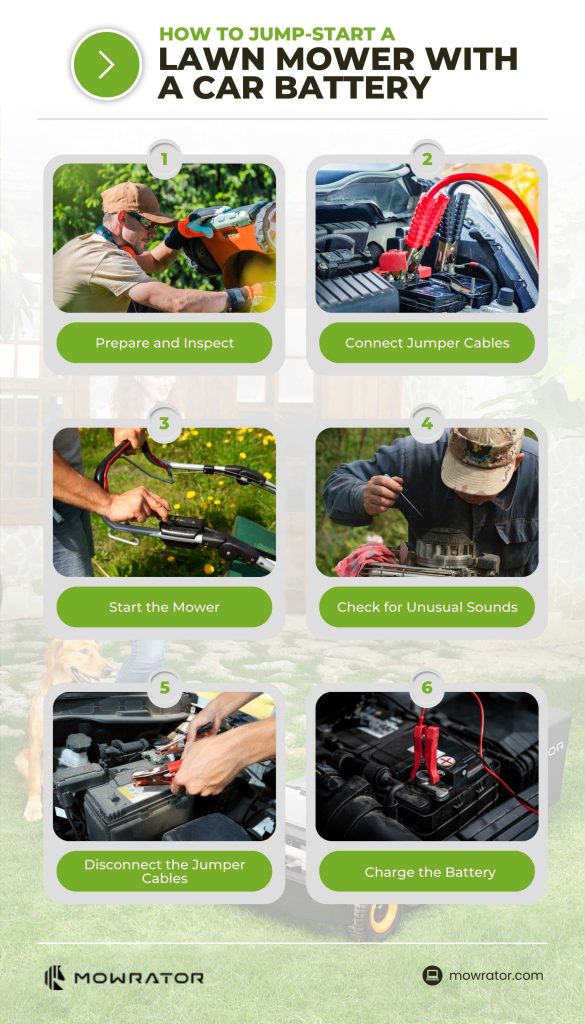
Quick answer: Jump-start your lawn mower using jumper cables connected to a portable battery or a car battery. Alternatively, replace the dead battery if possible, or try charging it fully before attempting to start the mower again.
If your lawn mower’s battery has died, don’t despair—there’s often a simple fix. The key is to find a way to give the dead battery the boost it needs to fire up again. You can do this by jump-starting it with another power source, like a car, or using a portable jump starter. Another option is to remove the battery and charge it separately or swap it out if you have a spare. In this article, we’ll walk through the quick and safe steps to get your mower running smoothly without a fuss, saving you time and money. Let’s get your yard work back on track!

How to Start a Lawn Mower with a Dead Battery
Starting a lawn mower with a dead battery can seem tricky, but it is possible with some simple steps. Whether your mower’s battery is completely drained or just low on power, there are ways to get it running again. Understanding these methods helps you save time and avoid costly repairs.
Understanding Your Lawn Mower’s Battery
The battery in your lawn mower supplies the electrical power needed to start the engine. It typically stores electrical energy that ignites the spark plug and powers other electrical components. A dead battery means it cannot produce enough voltage to turn the engine over.
Most modern riding mowers and some push mowers have 12-volt batteries. Knowing your battery type helps determine the best starting method. Regular maintenance, including keeping the terminals clean and charged, extends battery life.
Signs of a Dead or Weak Battery
- The engine doesn’t turn over when you turn the key or press the start button
- Clicking sounds when starting
- Lights or dashboard indicators are dim or not working
- Battery terminals appear corroded or loose
If these signs are present, your battery might need a charge or replacement before starting your mower.
Preparation Before Jump-Starting Your Lawn Mower
Gather Necessary Equipment
- Jump-start cables or portable jump starter
- Another working vehicle with a functioning battery (if using jumper cables)
- Protective gloves and safety glasses
- Clean cloth or brush to clear corrosion
Inspect Your Battery and Cables
Ensure the battery terminals are free from corrosion and tightly connected. Clean any corrosion with a mixture of baking soda and water, then dry thoroughly. Check for any visible damage or leaks, and replace if necessary.
Jump-Starting Your Lawn Mower
Using Jumper Cables and Another Vehicle
- Park the donor vehicle close to the mower, ensuring both are turned off.
- Connect one red clamp to the positive terminal of the working vehicle’s battery.
- Attach the other red clamp to the positive terminal of the mower’s dead battery.
- Connect one black clamp to the negative terminal of the donor vehicle’s battery.
- Attach the last black clamp to an unpainted metal surface on the mower’s engine block (away from the battery).
- Start the donor vehicle and let it run for a few minutes.
- Attempt to start the mower. If it starts, keep both engines running for a few minutes to charge the battery.
- Remove the cables in reverse order: black clamp from mower, black clamp from donor vehicle, red clamp from mower, red clamp from donor vehicle.
Using a Portable Jump Starter
If you have a portable jump starter, follow the device’s instructions. Usually, you connect the clamps to the mower’s battery terminals, turn on the device, and try starting the engine. Portable jump starters are convenient, especially when no vehicle is available.
Charging the Battery Manually
Using a Battery Charger
If you prefer to avoid jump-starting, use a battery charger. Disconnect the battery from the mower if possible. Connect the charger clamps to the battery terminals, set the charger to a slow or maintenance charge, and let it charge for several hours. This method provides a steady charge that extends battery life.
Safety Tips During Charging
- Wear safety glasses and gloves
- Ensure the charger is rated for your battery’s voltage
- Keep metal objects away to prevent sparks
- Follow manufacturer instructions carefully
Alternative Methods When Battery Replacement Is Needed
Jump-Starting Without a Vehicle
If you don’t have access to another vehicle, a portable jump starter is your best option. They are easy to use and quickly provide power to your mower.
Replacing the Battery
If your battery is old or damaged, replacing it is the most reliable solution. Purchase a compatible battery and installation instructions from your mower’s manual. Proper installation ensures optimal performance and safety.
Additional Tips for Maintaining a Healthy Lawn Mower Battery
- Store batteries in a cool, dry place during off-season periods
- Charge the battery periodically during storage, especially in winter
- Inspect terminals regularly and clean any corrosion
- Replace batteries every 2-3 years or as recommended by the manufacturer
Common Troubleshooting for Dead Batteries
Why Won’t My Mower Start Even After Jump-Starting?
This could indicate a faulty battery, bad cables, or an electrical problem within the mower. Test the battery with a voltmeter to ensure it holds a charge. If voltage is low, replacing the battery may be necessary.
When To Seek Professional Help
If you’re unsure about handling electrical components or the mower still won’t start after troubleshooting, consult a professional technician. They can diagnose issues such as faulty alternators or wiring problems efficiently.
Starting a lawn mower with a dead battery is manageable with patience and the right tools. Jump-starting or charging the battery can get your mower running again, saving you time and money. Regular maintenance and timely replacements keep your mower operating smoothly, preventing future dead batteries. Remember, safety precautions and proper handling are key to successfully reviving your mower’s power supply. With these methods, you’ll be well-equipped to handle a dead battery situation and keep your lawn tidy throughout the season.
How To Start A Lawnmower (DEAD BATTERY)
Frequently Asked Questions
What tools can I use to jump-start a lawn mower with a dead battery?
To jump-start your lawn mower, use jumper cables and a vehicle with a functioning battery. Connect the red clamp to the positive terminal of the working battery and the other end to the mower’s positive terminal. Then, connect the black clamp to the vehicle’s negative terminal and the other end to a grounded metal part on the mower, away from the battery. Start the vehicle and then attempt to start your mower. Always follow safety guidelines when handling batteries and electrical connections.
Can I manually push-start my lawn mower if the battery is dead?
Most lawn mowers with electric start systems cannot be push-started because they rely on the battery for ignition. However, if your mower has a pull-start option, you can try starting it manually by pulling the starter cord. Ensure the mower is in neutral, and that the spark plug is in good condition. If your mower only has an electric start, you will need to use alternative methods like jump-starting or charging the battery.
How long should I charge my lawn mower’s battery before attempting to start it?
Charge the battery until it reaches a full charge, which usually takes about 1 to 4 hours depending on the charger and the battery’s condition. Use a compatible charger with the correct voltage and current settings. Avoid overcharging, as this may damage the battery. Once fully charged, try starting the mower to see if it operates smoothly.
Are there any safety precautions I should follow when trying to start a mower with a dead battery?
Yes, always wear protective gloves and eye protection when working with batteries and electrical components. Make sure the mower is on a flat, stable surface and the ignition is turned off before connecting any jumper cables or charging. Keep sparks, flames, and smoking materials away from the battery to prevent accidents. Follow the manufacturer’s instructions carefully to avoid damage or injury.
Is it better to replace the dead battery or attempt to recharge it?
If the battery is old or shows signs of damage, replacing it might be the best option for reliable operation. However, if the battery is relatively new and just discharged, recharging may suffice. Check the battery’s condition and capacity before deciding. If recharging doesn’t restore full power, replacing the battery ensures your mower starts consistently and operates efficiently.
Final Thoughts
To start a lawn mower with a dead battery, first check the battery connections and ensure they are clean and tight. Use jumper cables and connect the mower to a functioning vehicle or another charged battery. Start the vehicle or source first, then attempt to start the mower.
Always follow safety procedures to avoid accidents. Once the mower starts, let it run for a few minutes to recharge the battery. Knowing how to start a lawn mower with a dead battery helps you avoid delays and keeps your lawn well-maintained.