Eastern redbuds are gorgeous native trees, but buying them from a nursery adds up fast if you want several. Learning how to propagate eastern redbud at home saves money and lets you clone a tree you already love. The catch is that the right method depends on what you're working with and what you're trying to achieve.
There are three reliable ways to do it: seed, softwood cuttings, and grafting. Each one has different timelines, success rates, and skill requirements. As of 2026, university extension programs across the eastern U.S. still recommend cold-moist stratification for seed propagation, with a standard 30-to-60-day treatment at 34 to 41°F before sowing.
Let's walk through each method so you can pick the one that fits your situation.
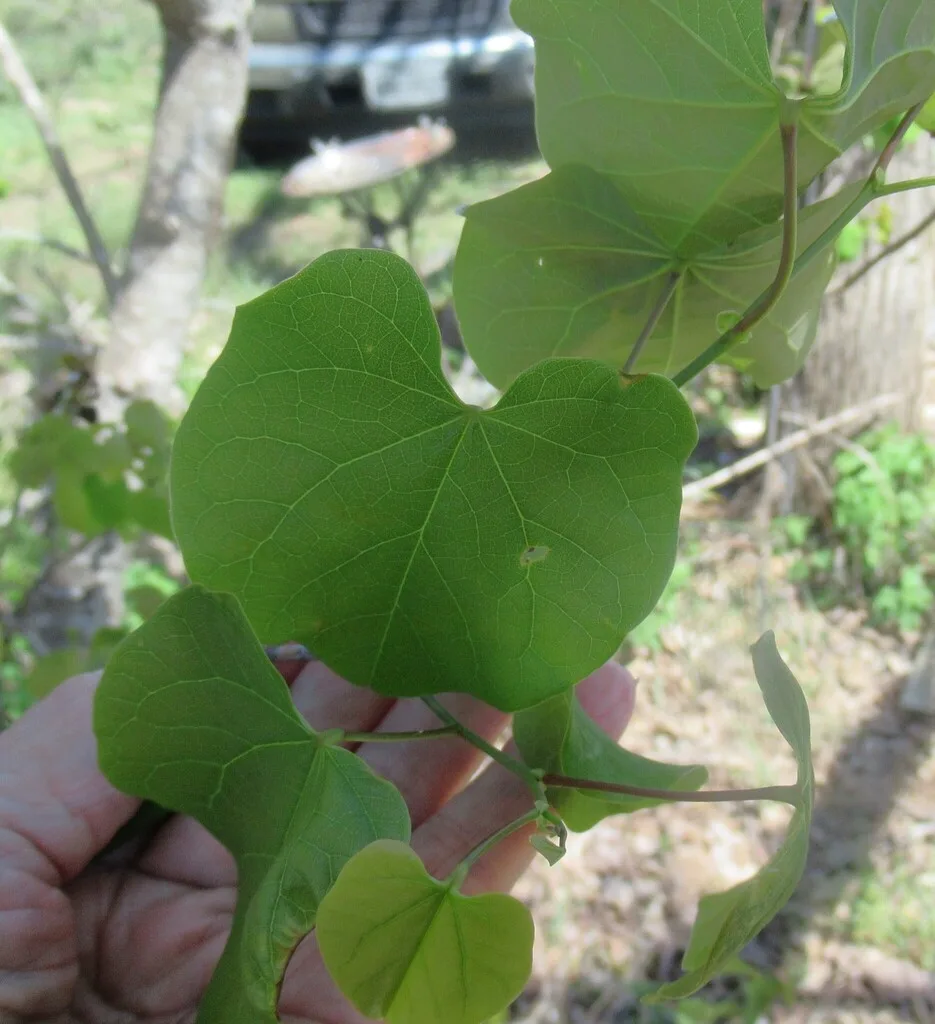
Image source: iNaturalist / Linda Jo Conn (CC BY)
Quick Answer
You can propagate eastern redbud from seed, softwood cuttings, or grafting. Seeds need 30 to 60 days of cold stratification at 34 to 41°F. Softwood cuttings root in 4 to 8 weeks with rooting hormone and bottom heat.
Grafting works best for named cultivars like 'Forest Pansy' or 'Ruby Falls'.
The Three Propagation Methods and When Each Makes Sense
Not every method works for every gardener. Your choice comes down to three things: what plant material you have access to, how quickly you want a viable plant, and whether you need an exact clone of a specific tree.
Here's a quick breakdown of each approach.
Seed Propagation: Best for Patience and Volume
Growing from seed is the most affordable route. You can collect hundreds of seeds from a single mature tree in fall. The tradeoff is time.
Seed-grown redbuds take 6 to 12 months before they're sturdy enough to transplant outdoors, and named cultivars won't come true from seed. That means a 'Forest Pansy' seedling will produce pink flowers, but the foliage color may differ from the parent.
Seed propagation makes sense when you're planting for conservation, filling a large landscape area on a budget, or growing rootstock for future grafting.
Softwood Cuttings: Best for Cloning a Specific Tree
Softwood cuttings let you produce a genetic copy of the parent tree. You take a 4-to-6-inch tip from new growth in early to mid-summer, treat it with rooting hormone, and keep it under high humidity until roots form. Expect a 4-to-8-week rooting window with proper care.
This method works well when you have access to a healthy redbud you want to duplicate and you're comfortable managing humidity, temperature, and moisture levels in a propagation setup.
Grafting: Best for Named Cultivars and Faster Results
Grafting attaches a piece of a desired cultivar (the scion) onto a seedling rootstock. It's the standard commercial method for producing named cultivars like 'Ruby Falls' or 'Columbus'. Whip-and-tongue grafts work in late winter using dormant scion wood.
T-budding is a summer option that's faster to learn but slightly less reliable.
Grafting requires more skill and timing precision. It's the right choice when you need a specific cultivar on a vigorous rootstock and want a plant that's closer to transplant-ready than a seedling.
How to Choose the Right Method for Your Situation
Before you start, think through what you actually have to work with. The best method isn't universal. It depends on your starting material, your timeline, and your goals.
Decision Flow: What Are You Working With?
Ask yourself these questions:
- Do you have access to a specific tree you want to clone? Softwood cuttings or grafting will preserve its traits.
- Are you starting from scratch with no parent tree nearby? Seed propagation is your most accessible option.
- Do you need a named cultivar like 'Forest Pansy'? Grafting is the only reliable way to get an exact copy.
- Are you propagating for a large-scale planting project? Seed is the most cost-effective at volume.
- Do you want a transplant-ready plant within one growing season? Grafting gives you the fastest result.
Matching Method to Your Goals, Timeline, and Skill Level
| Method | Time to Transplant-Ready | Skill Level | Cost | Trait Fidelity |
|---|---|---|---|---|
| Seed | 6–12 months | Beginner | Low | Variable (won't match parent) |
| Softwood cuttings | 3–6 months | Intermediate | Low to moderate | Exact clone of parent |
| Grafting | 1–2 seasons | Advanced | Moderate | Exact clone of scion cultivar |
If you're a beginner with no special equipment, start with seeds. If you've got a mist system or humidity dome and some experience with cuttings, softwood propagation gives you a clone in a single season. If you're comfortable with sharp knives and precise timing, grafting opens up every named cultivar available.
Propagating Eastern Redbud from Seed: Step by Step
Seed propagation is the most forgiving entry point. You don't need special tools, and the process mirrors what nature does over winter. The key step most people skip is cold stratification, and that's exactly why so many seed batches fail.
Collecting and Preparing Seeds
Eastern redbud seeds develop in flat, brown pods that ripen in late summer through early fall. Collect pods once they've turned brown and dry but before they split open and scatter seeds. Remove the pod debris and discard any seeds that look shriveled or damaged.
Redbud seeds have a hard seed coat that resists water absorption. Scarification improves germination rates significantly. You can nick each seed with a file or soak them in hot water (around 180°F) for 24 hours.
The hot water method is easier when you're handling larger quantities.
Image source: Pixabay / Nennieinszweidrei (Pixabay Content License)
Cold Stratification: The Step Most People Skip
After scarification, the seeds need a cold-moist period to break dormancy. Mix the seeds with damp sand, peat moss, or vermiculite in a sealed plastic bag. The medium should be moist but not dripping.
Place the bag in a refrigerator at 34 to 41°F for 30 to 60 days.
Check the bag every week or two. If the medium is drying out, add a small amount of water. If you see any mold, rinse the seeds and replace the medium.
Northern ecotypes may benefit from the full 60-day treatment, while southern varieties sometimes respond well to 30 days.
Sowing and Germination Timeline
Once stratification is complete, sow the seeds about 1/4 to 1/2 inch deep in a well-drained seed-starting mix. Keep the soil temperature between 65 and 75°F. Germination typically takes 2 to 4 weeks after sowing.
Keep the soil consistently moist but not waterlogged. A clear plastic cover over the tray helps maintain humidity. Remove it as soon as seedlings emerge to prevent damping-off disease.
Seedlings need bright, indirect light. Direct sun through a window is usually sufficient if you don't have grow lights.
Transplant seedlings into individual pots once they've developed two to three sets of true leaves. Harden them off gradually before moving them outdoors, especially if your last frost date hasn't passed yet.
Rooting Eastern Redbud from Softwood Cuttings
Softwood cuttings give you an exact genetic copy of the parent tree in a single growing season. The technique demands more attention than seed propagation, but the payoff is a plant that's identical to the one you took the cutting from.
When and How to Take Cuttings
The best window for softwood cuttings is early to mid-summer, when new growth is still flexible but has firmed up slightly. In USDA Zones 5 and 6, that's typically late June through July. In warmer zones like 7 and 8, you'll want to take cuttings in late May or June.
Choose healthy, vigorous shoots from the current season's growth. Cut a 4-to-6-inch section just below a leaf node. Remove the leaves from the lower half of the cutting.
Leave two to four leaves at the top, and cut those remaining leaves in half to reduce water loss.
Preparing Cuttings and Using Rooting Hormone
Wound the base of each cutting by scraping a thin strip of bark off one side, exposing the cambium layer. This encourages root formation at the wounded area. Dip the cut end into rooting hormone powder or gel containing IBA (indole-3-butyric acid) at a concentration of 1,000 to 3,000 ppm for softwood cuttings.
Tap off the excess hormone. Too much can actually inhibit rooting. Insert the cutting into a moist propagation medium like perlite, a peat-perlite mix, or coarse sand.
Firm the medium around the cutting so it makes good contact.

Image source: Pixabay / NoblePrime (Pixabay Content License)
Creating the Right Environment for Root Development
Softwood cuttings need high humidity, warm soil, and moderate light. A propagation tray on a heat mat set to 70 to 75°F provides the bottom heat that accelerates root initiation. Cover the tray with a humidity dome or clear plastic to keep relative humidity between 80 and 95 percent.
If you're using a mist system, set it to mist for 5 to 10 seconds every 10 to 15 minutes during daylight hours. Without mist, you'll need to ventilate the dome briefly once or twice a day to prevent fungal buildup, then reseal it.
Rooting takes 4 to 8 weeks. Check for roots by giving the cutting a gentle tug. If you feel resistance, roots have formed.
Once roots are an inch or two long, begin hardening off the cuttings by gradually reducing humidity over 7 to 10 days before transplanting into individual pots.
Grafting Eastern Redbud: Whip-and-Tongue and T-Budding
Grafting is how nurseries produce named redbud cultivars with consistency. It's the most skill-intensive method, but it gives you a plant that's true to type and often reaches transplant size faster than seed-grown stock.
When Grafting Makes Sense
If you want a specific cultivar like 'Forest Pansy', 'Ruby Falls', or 'Hearts of Gold', grafting is the only reliable way to get an exact replica. Seeds from these cultivars produce variable offspring. Cuttings work for cloning, but grafting onto a seedling rootstock gives you a stronger root system and a plant that establishes faster after transplanting.
Grafting also lets you take advantage of regional rootstock adaptations. Using seedling rootstock from local redbuds can improve drought tolerance and disease resistance in your area.
Scion Wood Selection and Timing
For whip-and-tongue grafts, collect scion wood in late winter while the tree is still dormant. Choose healthy, pencil-thick twigs from the previous season's growth. Cut them into 4-to-6-inch sections with two to three buds each.
Wrap the scion wood in damp paper towels, seal it in a plastic bag, and store it in the refrigerator at 34 to 40°F until grafting time.
T-budding uses a single bud instead of a scion stick. You'll collect bud sticks in mid to late summer from the current season's growth. Remove the leaves but leave the petioles intact as handles.
Use the buds the same day if possible, or store them briefly in a cool, damp cloth.
Image source: Pixabay / omerfaruk24 (Pixabay Content License)
Aftercare for Successful Grafts
After making the graft, wrap the union tightly with grafting tape or rubber bands to hold the cambium layers in contact. Seal the exposed surfaces with grafting wax to prevent drying out. Keep the grafted plant in a sheltered location with consistent moisture.
New growth from the scion should appear within 2 to 4 weeks if the graft took. Remove any shoots that emerge below the graft union, as these come from the rootstock and will overtake the desired cultivar. Gradually remove the grafting tape once the union is secure to prevent girdling.
Side-by-Side Comparison: Seed vs. Cutting vs. Grafting
Each method has a place depending on your goals. Here's how they stack up across the factors that matter most.
| Factor | Seed | Softwood Cuttings | Grafting |
|---|---|---|---|
| Cost | Lowest | Low to moderate | Moderate |
| Skill level | Beginner | Intermediate | Advanced |
| Time to transplant-ready | 6–12 months | 3–6 months | 1–2 seasons |
| Trait fidelity | Variable | Exact clone | Exact clone of scion |
| Best for | Conservation, rootstock production | Cloning a known tree | Named cultivars |
| Equipment needed | Refrigerator, seed trays | Heat mat, humidity dome, rooting hormone | Grafting knife, tape, wax |
| Success rate | 20–60% (improves with stratification) | 50–80% with proper conditions | 70–90% with proper technique |
If you're just starting out, seed propagation teaches you the basics without much investment. If you've got a specific tree you love and want more of it, softwood cuttings are the sweet spot between effort and reward. If you need a named cultivar and want professional-quality results, grafting is worth the learning curve.
Common Mistakes That Kill Redbud Propagation Projects
Even experienced gardeners run into problems with redbud propagation. Here are the most common issues and how to avoid them.
- Skipping stratification. Redbud seeds won't germinate reliably without a cold-moist period. Sowing unstratified seeds wastes months of waiting.
- Overwatering cuttings. Constantly waterlogged medium causes stem rot before roots can form. The medium should be moist, not saturated.
- Taking cuttings at the wrong time. Softwood cuttings taken too early collapse from lack of structure. Cuttings taken too late won't root readily.
- Poor cambium alignment in grafts. If the cambium layers of the scion and rootstock don't make contact, the graft fails. Take your time with the cuts.
- Letting humidity drop. Cuttings lose moisture fast. Even a few hours of low humidity can set rooting back by days.
- Planting seeds too deep. Redbud seeds need light to germinate. Sowing deeper than 1/2 inch reduces emergence significantly.
- Ignoring air circulation. Stagnant, humid air encourages fungal diseases like damping-off. Brief daily ventilation under a dome makes a big difference.
Costs, Timelines, and Expected Success Rates
Propagation costs are low across all three methods, but the timelines vary significantly.
Seed propagation costs almost nothing if you're collecting your own seed. A bag of seed-starting mix and a few seed trays are the only supplies. Expect 20 to 60 percent germination without stratification, rising to 60 to 80 percent with proper cold treatment.
Plan on 6 to 12 months before seedlings are large enough to plant outdoors.
Softwood cuttings require a rooting hormone (around $8 to $15), a propagation tray with a humidity dome ($10 to $25), and optionally a heat mat ($20 to $40). Success rates range from 50 to 80 percent when conditions are managed well. Rooted cuttings are typically ready to pot up within 4 to 8 weeks and can go into the ground the following spring.
Grafting requires a quality grafting knife ($15 to $30), grafting tape or rubber bands ($5 to $10), and grafting wax ($5 to $10). You'll also need seedling rootstock, which you can grow from seed or purchase inexpensively. Graft take rates of 70 to 90 percent are achievable with practice.
Grafted trees are usually ready for transplant within one to two growing seasons.
Regional and Seasonal Timing Adjustments by USDA Zone
Timing matters more than most people realize. Eastern redbud propagation schedules shift depending on your climate zone.
| USDA Zone | Softwood Cutting Window | Seed Sowing (post-stratification) | Grafting (whip-and-tongue) |
|---|---|---|---|
| 4–5 | Late June to mid-July | Mid to late April | Late March to early April |
| 6 | Late June to early July | Early to mid-April | Mid to late March |
| 7 | Late May to late June | Late March to early April | Early to mid-March |
| 8 | Late May to early June | Late February to March | Late February to early March |
In colder zones, softwood cuttings may not be ready until mid-summer. In warmer zones, you'll need to move faster because new growth hardens off earlier. Seed stratification timing is more flexible since it happens in the refrigerator, but outdoor sowing should wait until after your last frost date.
Southern ecotypes, like Cercis canadensis var. texensis, often have slightly different dormancy requirements. Seeds from Texas redbuds may need shorter stratification periods, around 30 days instead of 60. Northern ecotypes benefit from the full cold treatment.
Troubleshooting: Why Your Propagation Didn't Take
When things go wrong, the cause is usually one of a few common problems.
Seeds won't germinate. The most likely culprit is insufficient stratification. Try extending the cold treatment to 60 days. Also check that your scarification was effective.
Seeds that haven't absorbed water won't sprout.
Cuttings wilt within days. This usually means humidity is too low or the cutting was taken from stressed, drought-affected growth. Always take cuttings from well-watered trees in the early morning. Increase mist frequency or seal the dome more tightly.
Cuttings turn black at the base. This is stem rot from overwatering or contaminated medium. Use fresh, sterile propagation mix. Reduce watering frequency.
Improve air circulation by venting the dome briefly each day.
Graft union fails to callus. Check your cambium alignment. If the cuts were uneven or the scion and rootstock are different diameters, contact is poor. Also make sure the graft wasn't allowed to dry out before wrapping.
Seedlings dampen off and collapse. This fungal disease thrives in stagnant, overly wet conditions. Thin seedlings for better airflow. Water from below rather than overhead.
A light dusting of cinnamon on the soil surface can act as a natural fungicide.
Frequently Asked Questions
Can you propagate eastern redbud from hardwood cuttings?
Hardwood cuttings have very low success rates with eastern redbud, typically under 10 percent. Softwood and semi-hardwood cuttings are far more reliable. If you want to try hardwood, take them in late fall and use higher IBA concentrations around 8,000 ppm.
How long do redbud seeds take to germinate after stratification?
Once stratified seeds are sown at 65 to 75°F, germination usually occurs within 2 to 4 weeks. Some seeds may take up to 6 weeks. If nothing has appeared by week 8, the seeds were likely non-viable or stratification was insufficient.
Do you need to use rooting hormone for redbud cuttings?
You can try without it, but success rates drop significantly. IBA at 1,000 to 3,000 ppm increases rooting from around 30 percent to 50 to 80 percent. It's a small investment for a meaningful improvement.
Can you graft any redbud cultivar onto any rootstock?
Grafting works best within the Cercis genus. Eastern redbud cultivars graft reliably onto eastern redbud seedling rootstock. Cross-grafting onto other Cercis species is possible but compatibility varies.
Always use the same species as rootstock for the best results.
When is the best time to collect redbud seeds?
Collect pods in late summer to early fall, once they've turned brown and dry but before they split open. In most regions, that's August through October. Seeds collected too early may not be mature enough to germinate.
How do you store redbud seeds if you can't stratify right away?
Store cleaned, dry seeds in a sealed container in the refrigerator at 34 to 40°F. They'll remain viable for 1 to 2 years under cold storage. At room temperature, viability drops sharply within a few months.
Don't freeze them, as that can damage the embryo.
Final Recommendation: A Practical Decision Guide
Start with the method that matches your situation right now. If you've got seed access and patience, stratify and sow. If you've got a parent tree you love and some basic supplies, take softwood cuttings in early summer.
If you need a named cultivar, learn grafting on cheap seedling rootstock first.
No matter which path you choose, timing and sanitation are what separate success from failure. Sterilize your tools. Follow the calendar for your zone.
Check your setup daily. Redbud propagation isn't complicated, but it does reward attention to detail. Start small, learn from what doesn't take, and scale up once you've got the rhythm down.