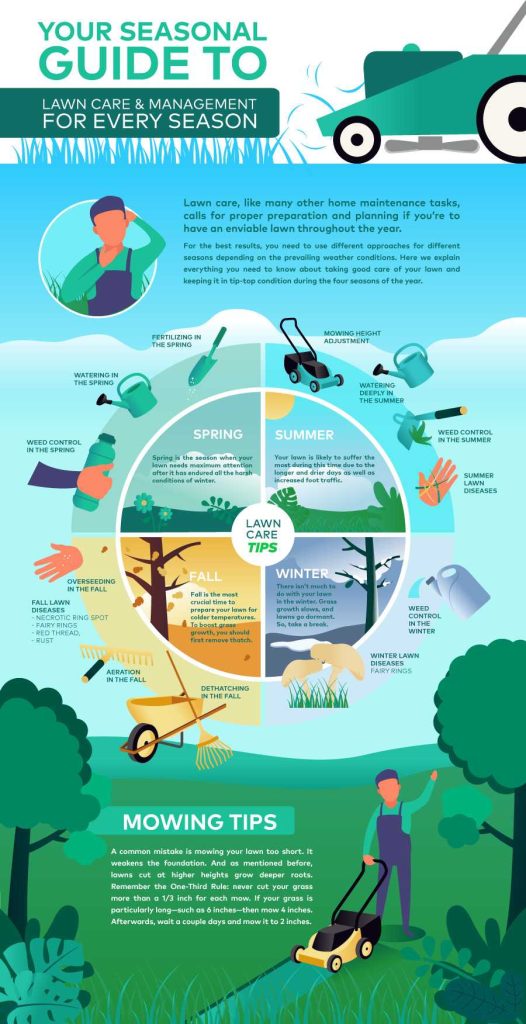
To keep your lawn lush and healthy year-round, it’s essential to tailor your care to each season. Start by understanding the specific needs of your grass during winter, spring, summer, and fall, then adjust watering, fertilizing, and mowing routines accordingly. Proper seasonal preparation ensures a vibrant, resilient lawn regardless of the weather challenges.
Preparing your lawn for each season involves different strategies: in spring, it’s about cleaning up debris and fertilizing; summer requires watering and pest control; fall focuses on aeration and overseeding; and winter calls for protection against cold damage. With a bit of planning and seasonal adjustments, you can enjoy a beautiful, green yard all year round.
Getting your lawn ready for each season might seem overwhelming, but it’s simpler than you think when you know what to do. By adjusting your lawn care practices according to seasonal changes, you can promote healthy growth, prevent damage, and keep your yard looking its best no matter the time of year. This article will guide you through easy, effective steps to prepare your lawn for every season, helping you achieve a perfect outdoor space year-round.

How to prepare lawn for each season
Understanding Your Lawn’s Seasonal Needs
Every season brings different conditions that affect your lawn. Knowing these needs helps you plan the best care routine. Proper preparation can keep your lawn healthy, green, and lush year-round.
Spring Lawn Preparation
Spring is a time of renewal for your lawn. As the weather warms, your grass begins to grow actively. This is the perfect time to repair winter damage and get your lawn ready for the busy growing season.
Cleaning Up Debris
Start by removing fallen leaves, twigs, and any dead grass. Use a rake to gather debris and clear the surface. This prevents disease and allows sunlight and air to reach the roots.
Aeration and Dethatching
Aeration involves poking small holes in the soil to improve air circulation and water absorption. Dethatching removes thick layers of thatch that block nutrients from reaching the soil. Use a dethatching rake or machine for this step.
Soil Testing and Fertilization
Test your soil to check pH and nutrient levels. Based on the results, apply a balanced fertilizer to promote healthy growth. Spring fertilization supplies nutrients after winter dormancy.
Seeding and Overseeding
If your lawn has bare patches or thin areas, seed them in early spring. Use a seed mix suitable for your grass type. Lightly rake the soil after seeding and water thoroughly.
Adjust Watering Schedule
As temperatures rise, water your lawn deeply once or twice weekly. Proper watering encourages strong roots and reduces drought stress. Avoid overwatering to prevent disease.
Summer Lawn Care Tips
Summer brings heat, longer days, and often dry conditions. Your goal is to keep your lawn hydrated, healthy, and resistant to stress from heat and drought.
Watering Deeply and Less Frequently
Deep watering encourages roots to grow deeper into the soil. Water at the early morning or late evening to minimize evaporation. Ensure that water penetrates at least six inches into the soil.
Mowing Properly
Set your mower blades higher, around three inches, to shade the soil and reduce evaporation. Regular mowing prevents the grass from becoming tall and stressed.
Managing Heat Stress
Avoid mowing during the hottest part of the day. Keep your grass healthy by trimming only when necessary. Raising mowing height and watering deeply help your lawn withstand the heat.
Controlling Pests and Diseases
Summer is prime time for lawn pests and diseases. Apply appropriate treatments at the first sign of trouble. Use organic options when possible to protect beneficial insects.
Applying Fertilizer
Use a slow-release fertilizer specifically formulated for summer. This provides steady nutrients and avoids the risk of burning your grass. Avoid fertilizing during drought conditions.
Autumn Lawn Preparation
Fall is the ideal time to prepare your lawn for winter. Cooler weather and increased rainfall create perfect conditions for recovery and strengthening.
Raking and Cleanup
Remove leaves and debris regularly to prevent suffocation and disease. A clean lawn allows for better air circulation and prepares the soil for winter.
Overseeding and Reseeding
This is a good time to thin out patches or establish new grass. Cover the soil with seed, then lightly water. Fall seeding promotes healthy roots before winter.
Fertilization for Fall
Use a fertilizer high in potassium to strengthen roots and improve frost tolerance. Apply in late autumn, avoiding excess nitrogen which promotes top growth.
Soil Testing and Aeration
Test your soil again to adjust nutrient levels for winter. Aerate the lawn to reduce compaction and improve drainage. These steps help prevent mold and disease.
Reducing Watering
Gradually decrease watering as temperatures cool. By late fall, your lawn needs less moisture, helping it prepare for dormancy.
Winter Lawn Care Strategies
Winter is a dormant period for most grasses, but proper preparation can prevent damage. Focus on protecting the roots and minimizing stress caused by cold weather.
Minimizing Foot Traffic
Avoid walking on icy or frozen grass to prevent damage. Keep off your lawn during snow and ice to allow it to recover naturally.
Applying Winter Fertilizer
A winterizer fertilizer with potassium helps roots survive the cold. Apply in late fall before the first hard frost. This strengthens the grass for the winter months.
Protecting from Snow and Ice
Use a light layer of straw or mulch over your lawn if heavy snow or ice is expected. Avoid piling snow directly on the grass to prevent suffocation.
Dealing with Thaw and Freeze Cycles
Avoid walking on frozen grass to prevent damage. If your lawn develops ice patches, try to remove excess snow carefully. This reduces the risk of mold and disease.
Early Spring Preparations
Once the snow melts, inspect your lawn for damage. Reseed and repair as needed, and start preparing for the active growing season ahead.
Additional Tips for Year-Round Lawn Care
Maintaining a healthy lawn requires ongoing attention. Regular mowing, watering, and fertilization tailored to each season help keep your yard attractive.
Monitoring Lawn Health
Regularly check for signs of disease, pests, or nutritional deficiencies. Early detection allows for prompt treatment and recovery.
Adjusting Based on Weather
Adapt your lawn care routines to changing weather patterns. For example, increase watering during dry spells and reduce it during rainy seasons.
Using Proper Equipment and Techniques
Always use sharp mower blades and proper tools. Correct techniques, such as mowing at the right height and watering deeply, yield better results.
Protecting Your Lawn from Common Problems
Implement preventive measures against weeds and pests. Follow best practices for aeration, fertilization, and watering to minimize issues.
Conclusion
Preparing your lawn for each season involves understanding its changing needs and adjusting your care routine accordingly. Consistent, season-specific efforts keep your grass healthy and vibrant throughout the year. By following these detailed steps, you can enjoy a beautiful lawn that withstands weather challenges and remains inviting, no matter the season.
Frequently Asked Questions
What steps should I take to prepare my lawn for spring?
To prepare your lawn for spring, start by removing any debris, leaves, or dead grass left over from winter. Aerate the soil to alleviate compaction and improve nutrient absorption. Reseed any bare patches and apply a balanced fertilizer to promote healthy growth. Finally, start regular watering schedules to ensure consistent moisture for new growth.
How can I get my lawn ready for summer heat?
Preparing your lawn for summer involves deep watering early in the morning to maintain moisture during hot days. Mow at a higher setting to promote deeper roots and reduce stress. Apply a summer-specific fertilizer that supports drought tolerance, and prune any overgrown branches that might shade the grass. Keep an eye out for pests and diseases, treating them promptly to prevent damage.
What maintenance does my lawn need as fall approaches?
As fall approaches, focus on cleaning up fallen leaves and debris to prevent fungal growth. Reduce watering frequency as rainfall increases, and aerate the soil to improve air flow to the roots. Reseed or overseed areas where grass has thinned and apply a fall fertilizer rich in potassium to strengthen the grass for winter. Consider dethatching if necessary to remove excess thatch buildup.
How should I prepare my lawn for winter?
Preparing your lawn for winter involves gradually reducing watering and cutting grass slightly shorter to prevent snow mold. Clean up any remaining leaves and debris to prevent disease. Apply a winterizer fertilizer to provide nutrients through the dormant season. Consider overseeding with hardy grass varieties if your lawn has thin patches, and avoid foot traffic on frozen or snow-covered grass to prevent damage.
Final Thoughts
To prepare lawn for each season, start by adjusting your mowing height to suit the changing weather. In spring, aerate and fertilize to promote healthy growth. During summer, water deeply and avoid cutting the grass too short to prevent drought stress. In fall, rake leaves regularly and overseed to fill in bare patches. Winterize your lawn with proper fertilization and protective measures. These steps ensure your lawn stays healthy year-round and thriving through every season.