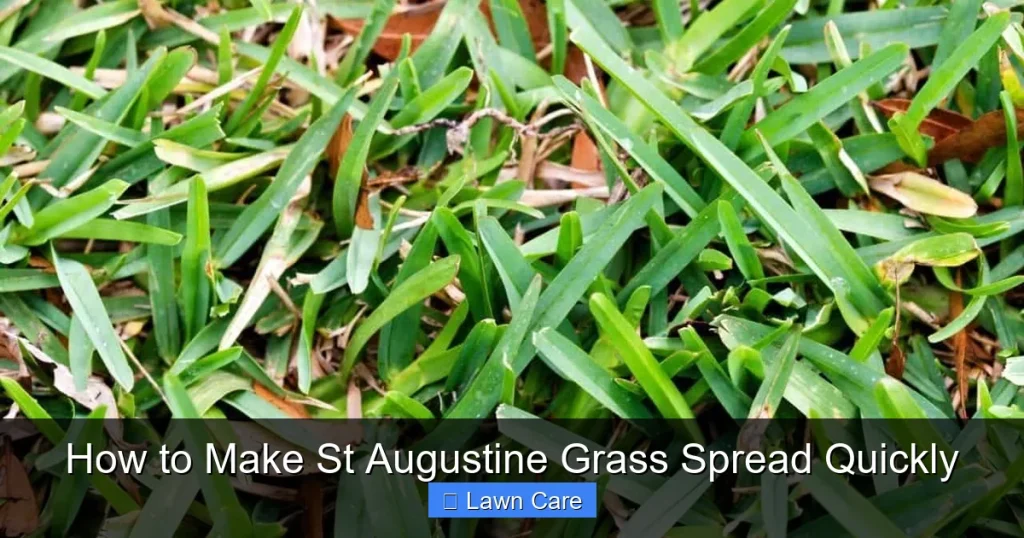
St Augustine grass can take time to fill in bare spots and spread across your lawn, but with the right care, you can speed up the process. This guide covers essential steps like proper fertilization, correct mowing height, frequent watering, and pest control to encourage rapid St Augustine grass spread. By following these proven strategies, you’ll transform thin patches into a lush, green carpet in no time.
If you’re dreaming of a thick, green lawn but your St Augustine grass is struggling to spread, you’re not alone. This warm-season grass is popular in sunny climates for its shade tolerance and soft texture—but it spreads slowly compared to other grasses like Bermuda. The good news? With the right techniques, you can make St Augustine grass spread quickly and achieve that lush, uniform look you want.
This guide walks you through practical, science-backed steps to boost runner growth, encourage root development, and transform thin or patchy areas into a dense carpet. Whether you’re starting from scratch or repairing an existing lawn, these tips will help you get faster results.
Key Takeaways
- Fertilize regularly with nitrogen-rich fertilizer: Feeding your St Augustine grass every 6–8 weeks promotes strong runners and faster spreading.
- Maintain a 3–4 inch mowing height: Taller grass supports deeper roots and encourages horizontal growth through stolons.
- Water deeply and frequently: Deep watering 2–3 times per week keeps soil moist and stimulates root and runner development.
- Control weeds and pests: Weeds and chinch bugs compete for nutrients and can stunt growth—treat them early for best results.
- Use sod or plugs for patching: Filling bare spots quickly gives your grass a head start in spreading across the lawn.
- Apply a pre-emergent in spring: This prevents weed competition that can slow down your St Augustine grass expansion.
- Avoid over-fertilizing or overwatering: Excess nitrogen or water can cause weak growth or disease, counteracting your efforts.
Why Does St Augustine Grass Spread So Slowly?
St Augustine grass spreads through stolons—horizontal stems that grow along the soil surface and send down roots where they touch the ground. Unlike Bermuda grass, which spreads aggressively, St Augustine is more moderate. Several factors slow its expansion:
– Insufficient nutrients: Without proper fertilization, runners won’t develop strong enough to cover new ground.
– Improper watering: Shallow or infrequent watering stresses the grass and limits root growth.
– Over-mowing: Cutting too short stresses the plant and reduces energy for spreading.
– Weeds and pests: Competing weeds and pests like chinch bugs steal nutrients and damage grass.
– Poor soil conditions: Compact or nutrient-poor soil restricts root and runner development.
Understanding these barriers helps you target the right solutions. Let’s dive into the steps that make a real difference.
Step 1: Choose the Right Time to Encourage Spreading

Visual guide about How to Make St Augustine Grass Spread Quickly
Image source: lawnaffection.com
St Augustine grass grows most actively during warm months—typically late spring through early fall. This is when temperatures stay between 75°F and 90°F, and daylight hours are long. For fastest spreading, focus your efforts between May and September.
Avoid encouraging rapid growth during winter or extreme heat (above 95°F), as stress can damage the grass. Early summer is ideal because it’s warm but not scorching, giving your lawn the energy it needs to send out runners.
Pro Tip:
If you live in a region with mild winters, you may be able to lightly encourage growth into late fall—but avoid fertilizing after Labor Day unless you’re in a frost-free zone.
Step 2: Fertilize with Nitrogen-Rich Feedings
Fertilization is one of the most effective ways to make St Augustine grass spread quickly. Nitrogen fuels leaf and runner growth, so aim for a balanced fertilizer with a higher nitrogen ratio—like 16-4-8 or 21-5-10.
Apply fertilizer every 6–8 weeks during the growing season. Use a spreader for even coverage and follow package instructions for rates. Over-fertilizing is worse than under-fertilizing—excess nitrogen can burn roots and promote disease.
Fertilizer Schedule Example:
- Early May: Apply first feeding with nitrogen-rich fertilizer.
- Early July: Second feeding to boost runner development.
- Mid-September: Final feeding to prepare grass for winter dormancy.
For best results, use a slow-release fertilizer to provide steady nutrients over time. This reduces the risk of burning and supports consistent growth.
Step 3: Water Deeply and Frequently
Visual guide about How to Make St Augustine Grass Spread Quickly
Image source: growyouryard.com
Watering plays a crucial role in encouraging St Augustine grass to spread. This grass thrives in moist soil but doesn’t like to sit in waterlogged conditions.
Water 2–3 times per week, applying about 1 inch of water each time. Use a rain gauge or empty tuna can to measure. Deep watering encourages roots to grow downward and stolons to spread horizontally.
Avoid frequent shallow watering, which keeps the surface wet but doesn’t reach deep roots. Morning is the best time to water—it reduces fungal issues and gives the grass time to dry before nightfall.
Signs You’re Watering Right:
- Soil feels damp 2–3 inches below the surface.
- Grass blades are green and upright.
- No wilting or yellowing between waterings.
If your lawn shows signs of drought stress (browning, wilting), increase frequency slightly—but always check soil moisture first.
Step 4: Mow at the Correct Height
Mowing height directly affects how fast St Augustine grass spreads. Cutting too short stresses the plant and limits its ability to produce runners.
Set your mower to 3–4 inches during the growing season. This height allows more leaf surface for photosynthesis, giving the grass energy to grow runners. Use a mulching mower to return clippings to the lawn—they act as a natural fertilizer.
When to Mow:
- Mow when grass reaches 4–5 inches.
- Never remove more than one-third of the blade length.
- Keep mower blades sharp to avoid tearing.
If your lawn is patchy, consider raising the mowing height even more temporarily to shade out weeds and reduce stress.
Step 5: Control Weeds and Pests
Weeds compete with St Augustine grass for water, nutrients, and sunlight—slowing its spread. Common weeds include crabgrass, nutsedge, and clover. Use a pre-emergent herbicide in early spring (around February or March) to prevent crabgrass from germinating.
For existing weeds, spot-treat with a post-emergent herbicide labeled for use on St Augustine grass. Be careful not to apply during hot weather or when grass is stressed.
Pests like chinch bugs can also stunt growth. If you notice yellowing or stippling on grass blades, inspect for bugs and treat with an insecticide if needed.
Natural Weed Control Tips:
- Pull weeds by hand when soil is moist.
- Apply corn gluten meal as a pre-emergent in early spring.
- Maintain thick grass to naturally suppress weeds.
A healthy, dense lawn outcompetes weeds, so focus on promoting thick growth through proper care.
Step 6: Use Sod or Plugs to Fill Bare Spots
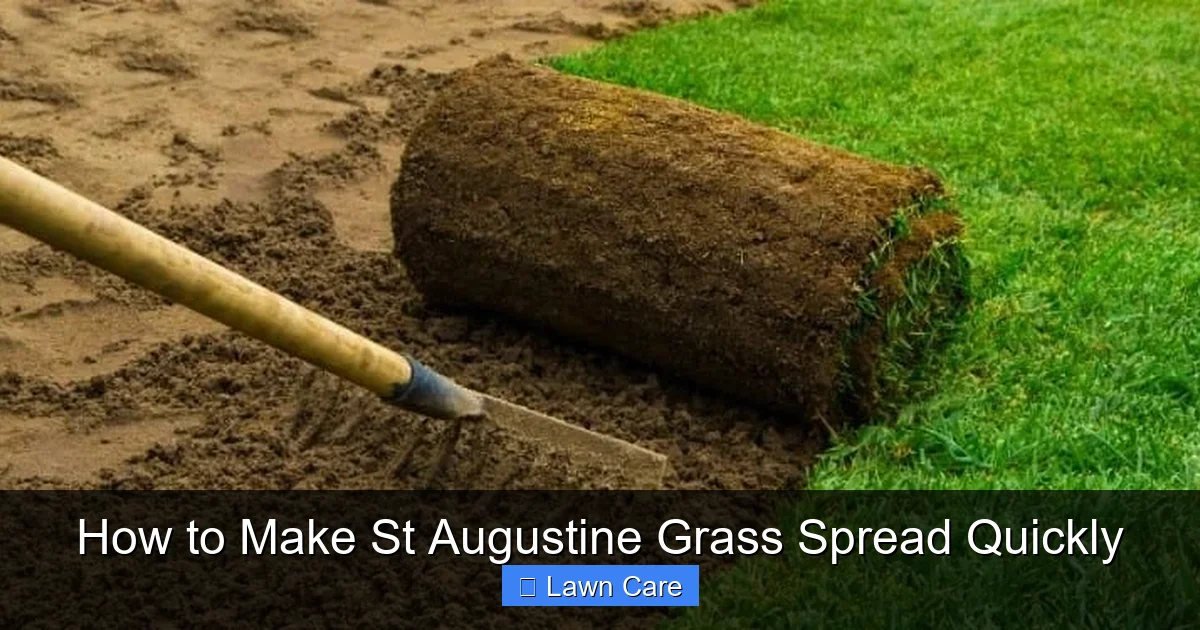
If your lawn has thin or bare areas, using sod or plugs is one of the fastest ways to get St Augustine grass spreading. Sod provides instant coverage, while plugs grow in and connect with existing grass over time.
Plant sod in early summer or late spring when soil is warm. Lay it tightly with no gaps, and water immediately. For plugs, space them 12–18 inches apart and water daily for the first week.
Why This Works:
- Sod establishes quickly and starts producing runners within weeks.
- Plugs fill in gradually and blend seamlessly with surrounding grass.
- Bare soil invites weeds—covering it gives your grass a head start.
For best results, aerate the soil before planting to improve root and runner penetration.
Step 7: Aerate Your Lawn Annually
Soil compaction limits air, water, and nutrient movement—hindering runner growth. Aerating once a year (in late spring or early summer) opens up soil and allows stolons to spread more freely.
Use a core aerator to remove small plugs of soil. This reduces compaction and encourages deeper root and runner development. After aerating, apply a light layer of compost to improve soil structure.
Aeration Benefits:
- Improves water and nutrient absorption.
- Reduces thatch buildup (keep under ½ inch).
- Promotes stronger, healthier grass overall.
If your lawn is heavily compacted, consider aerating twice a year.
Troubleshooting: Why Isn’t My St Augustine Grass Spreading?
Even with proper care, you might see slow spreading. Here’s how to diagnose and fix common issues:
- Grass is yellowing or thinning: Likely a nutrient or watering issue. Test soil pH (ideal is 5.5–6.5). Adjust with lime or sulfur if needed.
- Runners are weak or sparse: May be due to over-mowing or lack of nitrogen. Raise mowing height and fertilize more.
- Weeds are taking over: Apply pre-emergent in spring and maintain thick grass to prevent invasion.
- Grass isn’t growing in shaded areas: St Augustine struggles in deep shade. Trim trees or consider planting a shade-tolerant variety like Floratam.
- Fungus or disease present: Improve air circulation, reduce watering frequency, and avoid overhead watering.
If problems persist, consider consulting a local extension service or lawn care professional.
Conclusion: Be Patient, But Consistent
Making St Augustine grass spread quickly takes time, effort, and consistency. While it won’t fill in overnight, following these steps will significantly speed up the process. Focus on proper fertilization, correct mowing height, deep watering, weed control, and patching bare spots.
Remember, healthy St Augustine grass is thick grass. The more runners you encourage, the faster your lawn will fill in. Stick with your care routine, and soon you’ll enjoy a lush, green lawn that’s the envy of the neighborhood.
For more tips on lawn care, check out our guides on how to make St Augustine grass grow faster or how to overseed St Augustine grass. And if you’re dealing with damaged areas, learn how to repair damaged St Augustine grass for faster recovery.
With dedication, your dream lawn is within reach.