
Choosing the right mower engine for big yards is essential for efficiency and performance. A powerful, reliable engine ensures your mower can handle thick grass, slopes, and long mowing sessions without overheating. Don’t settle for less—pick the engine that matches your yard’s demands.
Mowing a big yard isn’t just about cutting grass—it’s about choosing the right tool for the job. If your lawn stretches beyond 1 acre or features uneven terrain, thick growth, or frequent mowing needs, the engine powering your mower becomes the most critical factor. A weak or mismatched engine can leave you stranded mid-job, overheat after 20 minutes, or struggle with tall grass. On the other hand, a well-chosen engine delivers consistent power, reduces fatigue, and keeps your lawn looking sharp all season.
When you’re shopping for a new mower, it’s easy to focus on blade size, cutting width, or ride comfort. But the engine is the heart of the machine. Think of it like choosing a car engine—you wouldn’t put a small four-cylinder in a pickup truck, right? The same logic applies to lawn mowers. For big yards, you need an engine built for endurance, not just short bursts of power.
Let’s break down everything you need to know about selecting the right mower engine so you can spend less time mowing and more time enjoying your lawn.
Key Takeaways
- Engine Displacement Matters: For big yards, aim for engines with 20–25 HP or more to handle tough terrain and dense grass.
- Fuel Type Affects Performance: Gasoline engines offer more power, while electric models are eco-friendly but best for smaller areas.
- Consider Runtime and Fuel Efficiency: Larger fuel tanks and fuel-injected systems help you mow longer without refueling.
- Cooling Systems Prevent Overheating: Look for air-cooled engines with proper airflow design for sustained performance.
- Durability and Maintenance: Choose engines with easy-access oil filters, robust crankshafts, and reliable ignition systems.
- Noise and Emissions: Modern engines often meet EPA standards and offer quieter operation without sacrificing power.
- Brand Reputation Counts: Trusted brands like Honda, Briggs & Stratton, and Kohler offer proven reliability for large properties.
Quick Answers to Common Questions
What size engine do I need for a 1-acre yard?
For a 1-acre yard, a 18–22 HP engine is ideal. This power range handles riding mowers and zero-turn models efficiently, even with thick grass or slight slopes.
Can I use a battery mower on a 2-acre property?
Most battery mowers are limited to 1 acre per charge. For 2 acres, you’d need multiple charges or a gas engine. Consider a gas mower for larger properties.
Are four-stroke engines better than two-stroke?
Yes, four-stroke engines are more durable, fuel-efficient, and reliable. They’re the standard for big-yard mowers.
How often should I service my mower engine?
Service after every 25–50 hours of use. Change oil, clean the air filter, and check spark plugs. Follow the manufacturer’s schedule.
Do I need a commercial-grade engine for a big yard?
Not always. Many residential engines (like Honda GX or Briggs Vanguard) are built for heavy use and last longer than cheaper models.
📑 Table of Contents
Understanding Engine Power and Horsepower
The first thing to consider is horsepower (HP). This number tells you how much work your engine can do. For small lawns under 1/3 acre, 5–8 HP is usually enough. But when you’re dealing with a large yard—especially one with slopes, thick grass, or frequent mowing—you’ll want an engine with 15 HP or more.
But horsepower isn’t the whole story. It’s not just about raw power; it’s about how that power is delivered. For example, a 20 HP engine with poor torque will struggle uphill, while a slightly less powerful engine with strong low-end torque can handle hills like a champ. Look for engines with high torque ratings, especially if your yard has elevation changes.
Also, consider the type of mower you’re using. Riding mowers need more HP than push mowers because they’re heavier and cover more ground per pass. A typical riding mower for a 1–2 acre yard should have at least 18–22 HP. For larger properties, 25 HP or more is ideal.
Horsepower Recommendations by Yard Size
- Under 1/3 acre: 5–8 HP (electric or small gas)
- 1/3 to 1 acre: 10–15 HP (gasoline, rear-engine riding mowers)
- 1–2 acres: 18–22 HP (riding mowers, zero-turn models)
- Over 2 acres: 25+ HP (commercial-grade engines, high-performance riding mowers)
Keep in mind that terrain and grass type also influence your needs. A flat, manicured lawn may get by with less power, but a yard with woods, slopes, or thick weeds demands more.
Fuel Types: Gas vs. Electric vs. Battery
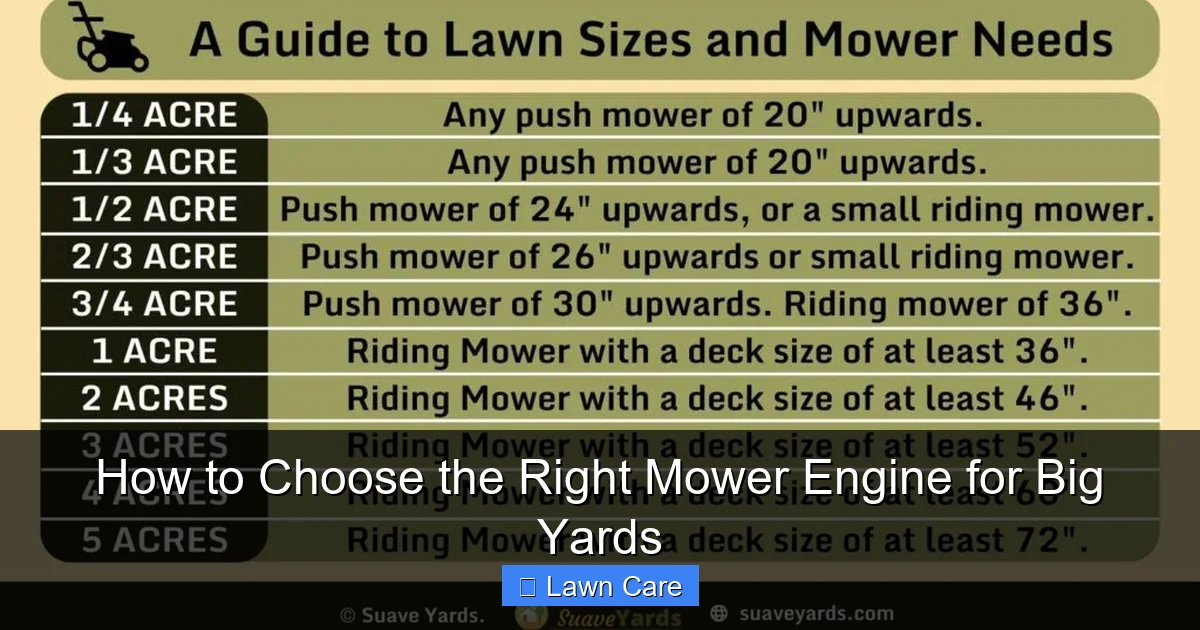
Visual guide about How to Choose the Right Mower Engine for Big Yards
Image source: suaveyards.com
The fuel type you choose affects performance, runtime, and maintenance. Let’s compare the three main options:
Gasoline Engines
Gas engines are the traditional workhorses of large lawn care. They offer the most power, longest runtime, and best performance on tough terrain. Most big-yard mowers use either a two-stroke or four-stroke gasoline engine.
– Four-stroke engines are more reliable, durable, and fuel-efficient. They’re ideal for frequent mowing and heavy use.
– Two-stroke engines are lighter and cheaper but require oil mixed with gas and produce more emissions.
For big yards, go with a four-stroke engine. Brands like Honda and Kohler are known for their quiet, efficient, and long-lasting four-stroke engines.
Electric Corded Mowers
These are only practical for small to medium yards. The cord limits mobility, and you’ll need an extension cord long enough to reach across your lawn—which is often impractical for large properties. Even the most powerful corded mowers struggle with thick grass or long passes.
Battery-Powered Mowers
Battery mowers are growing in popularity due to advancements in lithium-ion technology. Modern batteries (like those from Tesla or LG) can power a 20–25 HP-equivalent motor for up to 60–90 minutes on a single charge.
While they’re quieter and emit zero fumes, battery mowers still have limitations:
– Limited runtime on large yards
– Longer recharge times
– Higher upfront cost
That said, if you have an acre or less and want eco-friendly operation, a high-capacity battery mower like the EGO or Ryobi 80V can be a great choice. For bigger yards, though, gas remains the gold standard.
Engine Cooling and Overheating Prevention
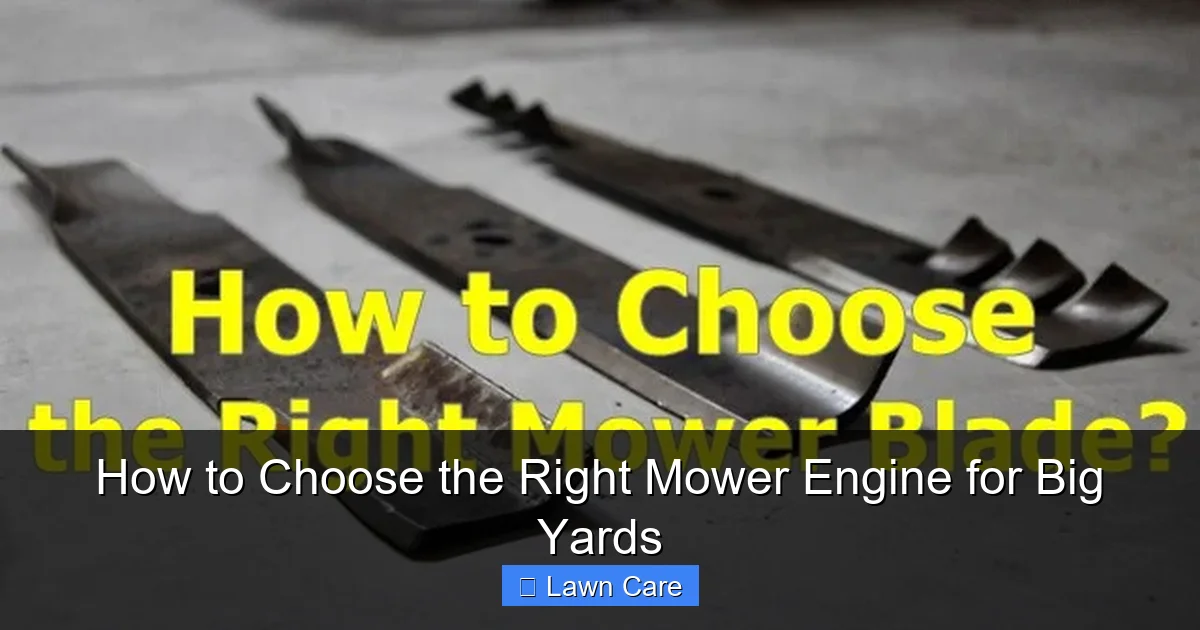
Visual guide about How to Choose the Right Mower Engine for Big Yards
Image source: rexgarden.com
One of the biggest complaints with mower engines is overheating. When an engine gets too hot, it loses power and can shut down mid-job. For big yards, this is a major inconvenience.
Most residential mower engines are air-cooled, meaning they rely on airflow to keep cool. The key is proper ventilation and regular maintenance.
Look for engines with:
– Large air intakes to pull in cool air
– Fan blades that direct airflow across the cylinder
– Heat shields to protect nearby components
– Adequate clearance around the engine to prevent heat buildup
Also, avoid mowing in extreme heat. If it’s 90°F or hotter, mow early in the morning or late in the evening. Keep the engine clean—clogged air filters and debris block airflow and increase engine temperature.
For commercial use, some mowers feature liquid-cooled engines, which are more efficient at managing heat. These are rare in residential models but worth considering if you mow daily or have very large, challenging yards.
Engine Reliability and Maintenance
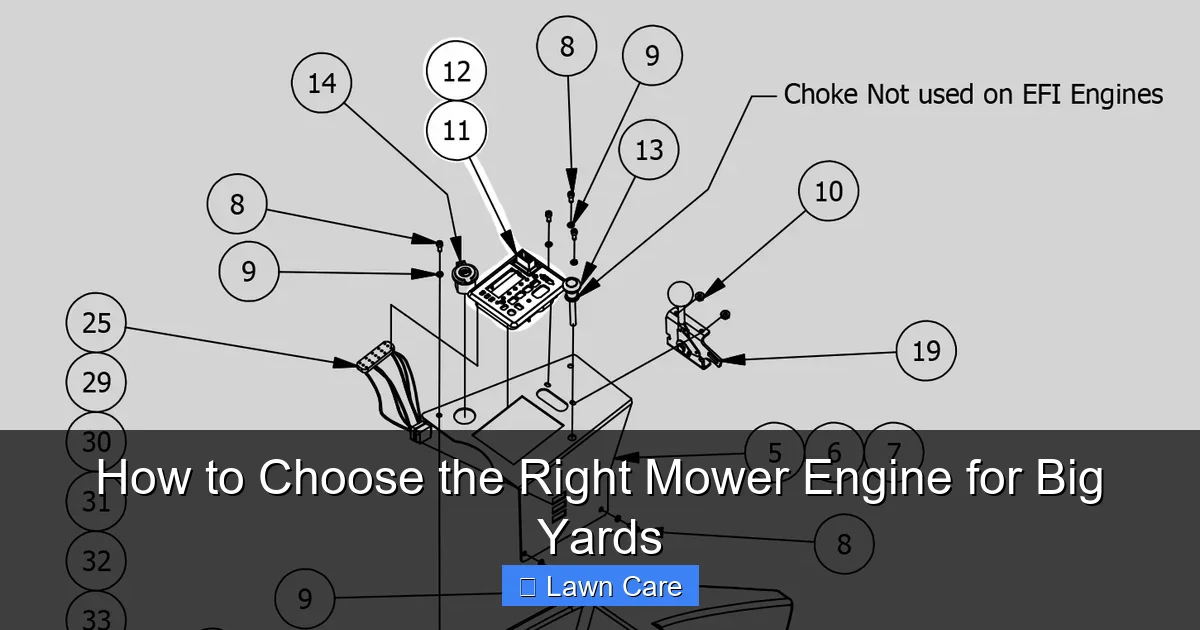
Visual guide about How to Choose the Right Mower Engine for Big Yards
Image source: cdn.shopify.com
A powerful engine is useless if it breaks down often. For big yards, reliability is everything. You need an engine that starts every time, runs smoothly, and doesn’t need constant repairs.
Key Features for Low Maintenance
- Easy-access oil filter: Makes oil changes simple and quick.
- Cast iron cylinder sleeve: Adds durability and extends engine life.
- Automatic choke: Ensures easy cold starts.
- Spark arrestor: Prevents fire hazards and meets safety codes.
- Warranty coverage: Look for brands offering 3–5 year warranties on engines.
Brands like Honda and Briggs & Stratton are known for building engines that last 50+ years with proper care. Read reviews and ask for recommendations from landscapers or neighbors with similar yards.
Also, consider how easy it is to service the engine. Some mowers require tools to remove panels, while others have tool-free access. For big yards, you don’t want to spend hours servicing your mower.
Noise Levels and Emissions Standards
Modern engines are getting quieter and cleaner. Many new models meet EPA Tier 4 Final emissions standards, which limit harmful pollutants. These engines use advanced fuel injection and catalytic converters to reduce emissions without sacrificing power.
Noise is another factor. Gas engines can be loud—often 90+ decibels. If you have neighbors close by, look for models with noise-reducing mufflers or consider battery mowers, which are significantly quieter.
Some brands offer low-emission, low-noise engines designed for residential areas. For example, Honda’s GX series engines are known for being quiet and clean-burning.
Choosing the Right Engine for Your Specific Yard
Every yard is different. To pick the best engine, assess your lawn’s unique challenges.
Example 1: Rolling Hills and Thick Grass
If your yard has slopes and tall, coarse grass, you’ll need an engine with strong torque and durability. A 22 HP Briggs & Stratton Vanguard engine or a 25 HP Kohler Courage is ideal. These engines handle heavy loads and maintain power uphill.
Example 2: Flat, Open Acreage
For a large, flat lawn with regular mowing, a 18–20 HP engine is sufficient. A zero-turn mower with a 20 HP Kohler or Honda engine will cut fast and efficiently.
Example 3: Eco-Conscious Homeowner
If you want to reduce your carbon footprint and don’t mind shorter runtime, a high-end battery mower like the EGO 80V or Ryobi 80V can handle up to 1 acre per charge. Just plan for multiple charges or a smaller yard.
Ultimately, match the engine to your yard’s size, terrain, and usage frequency. Don’t overspend on a commercial engine if you only mow weekly. But also don’t skimp—cheap engines wear out fast and leave you stranded.
Final Tips for Engine Selection
Here are a few last-minute tips to help you decide:
– Test start the engine: If it doesn’t start easily, it won’t last long.
– Check fuel capacity: Larger tanks mean fewer refuels.
– Read the manual: Know the maintenance schedule.
– Buy from a dealer: You’ll get better service and support.
– Consider resale value: High-quality engines keep their value.
Remember, the right engine makes mowing faster, easier, and more enjoyable. It’s not just about getting the job done—it’s about doing it right.
Frequently Asked Questions
How do I know if my mower engine is too weak?
Signs include stalling on hills, difficulty cutting thick grass, overheating after 10 minutes, or frequent restarts. Upgrade to a higher HP engine if you see these issues.
Can I upgrade my mower engine?
Not easily. Most mower engines are custom-fit. It’s usually better to replace the entire mower with one that has a stronger engine.
What’s the difference between air-cooled and liquid-cooled engines?
Air-cooled engines use airflow to cool, while liquid-cooled use coolant and radiators. Liquid cooling is more efficient but rare in residential mowers.
How long do mower engines last?
With proper care, high-quality engines last 10–20 years or more. Regular oil changes, clean filters, and proper storage extend lifespan.
Are electric mowers powerful enough for big yards?
Only for small to medium yards. Battery life and power output limit electric mowers on large properties. Gas engines are still best for big yards.
What brand of engine is most reliable?
Honda, Briggs & Stratton, and Kohler are top choices. They’re known for durability, performance, and long warranties.