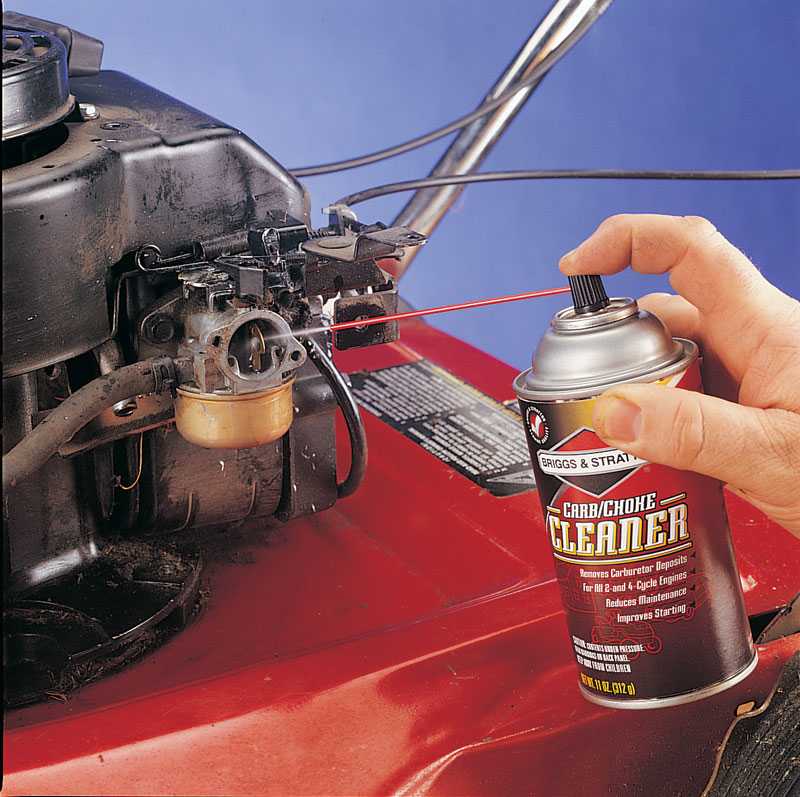
To quickly adjust the carburetor on your Briggs and Stratton lawn mower, start by locating the adjustment screws—usually labeled as “L” (low speed), “H” (high speed), and “T” or “S” (idle). Turn these screws gently to fine-tune your mower’s engine, ensuring smooth operation and optimal power. If your mower runs rough or stalls, adjusting the carburetor can often resolve the issue without needing a full repair.
In short, adjusting the carburetor involves setting the screws for idle and mixture to achieve a steady, smooth engine run. First, clean the air filter and ensure the engine is cool. Then, turn the screws gradually to find the right balance between too lean (rough running) and too rich (fuel spilling). Regular tuning keeps your mower running efficiently and prolongs its lifespan.
If your Briggs and Stratton lawn mower isn’t performing well—stalling, sputtering, or running unevenly—adjusting the carburetor can make a noticeable difference. The process is straightforward, requiring only basic tools and patience. By understanding the purpose of each screw and making gradual adjustments, you’ll restore your mower’s power and ensure a clean cut every time. Don’t forget to perform these tweaks in a well-ventilated area, and always follow safety precautions. With a little practice, maintaining your mower’s carburetor will become a simple part of your lawn care routine.

How to Adjust Carburetor on Briggs and Stratton Lawn Mower
Adjusting the carburetor on your Briggs and Stratton lawn mower can seem tricky, but with the right steps, it becomes straightforward. Proper adjustment ensures your mower runs smoothly, saves fuel, and prevents engine problems. This guide will walk you through the entire process in simple, easy-to-understand language.
Understanding the Carburetor and Its Role
The carburetor mixes air and fuel for the engine to run effectively. If it’s not set correctly, your mower may sputter, stall, or have trouble starting. Knowing how the carburetor works helps you understand why adjustments are necessary.
Most Briggs and Stratton mowers have a similar type of carburetor, featuring adjustment screws and a throttle lever. Familiarizing yourself with these parts will make the adjustment process easier.
Tools You Will Need
- Flat-head screwdriver
- Phillips-head screwdriver (if applicable)
- Screwdriver with flat and Phillips heads
- Clean rag or cloth
- Carburetor cleaner spray
- Protective gloves
Having these tools ready before starting makes the process smoother and quicker.
Preparation Before Adjustment
Ensure your lawn mower is on a flat surface and is turned off. Allow the engine to cool down if it has been running. Check the oil and fuel levels to make sure they are adequate.
It’s a good idea to remove any debris or dirt around the carburetor area to keep your work clean and safe. This step prevents dirt from entering the engine during adjustment.
Locating the Carburetor Adjustment Screws
On Briggs and Stratton mowers, the carburetor generally has two main adjustment screws: the Low-Speed screw (L) and the High-Speed screw (H). There may also be a Idle Speed screw.
These screws are usually accessible from outside the carburetor body, often under a small cover or cap. Consult your lawn mower’s manual to identify their exact location.
Performing Basic Carburetor Adjustments
Starting the Engine
Start the mower and let it warm up for a few minutes. The engine runs best when it’s warm, making it easier to find the correct adjustments.
Adjusting the Idle Speed
Locate the idle speed screw, usually marked as “IDLE” or “SLOPE.” Turn this screw clockwise to increase engine speed or counter-clockwise to decrease. Adjust it until the engine runs smoothly without stalling.
Ensure the blades are disengaged or the mower is on a stable surface during this step for safety.
Adjusting the Low-Speed Screw
This screw controls the air-fuel mixture at low RPMs. Turn it slowly clockwise to tighten or counter-clockwise to loosen. Find the position where the engine runs smoothly at a low speed.
Listen for changes in engine tone or idle quality. A well-adjusted screw results in a steady, smooth engine idle.
Adjusting the High-Speed Screw
This controls the mixture at high RPMs. Slowly turn it clockwise to make the mixture leaner or counter-clockwise to make it richer.
Adjust it until the engine reaches maximum RPM without sputtering or loud backfires. This setting improves power and efficiency during mowing.
Testing and Fine-Tuning
After initial adjustments, test the mower by engaging the throttle and running it at various speeds. Observe how it responds and make small tweaks to the screws if needed.
If the engine stalls at high speeds, the mixture might be too lean. If it sputters or backfires, it could be too rich. Fine-tuning ensures optimal performance.
Cleaning and Maintenance Tips
- Regularly clean the carburetor to prevent dirt build-up.
- Use carburetor cleaner spray to clear clogged jets and passages.
- Change the fuel filter and use fresh fuel for easier starting and better operation.
- Check and replace the air filter often to keep the carburetor free from debris.
A well-maintained carburetor requires fewer adjustments and keeps your mower running smoothly longer.
Common Issues and Troubleshooting
Engine Runs Rough or Stalls
This might indicate a carburetor that needs cleaning or adjustment. Make sure the screws are correctly set and the jets are clear of dirt.
Hard Starting or No Start
Check the fuel supply, air filter, and spark plug. If these are all okay, then carburetor adjustment or cleaning is likely needed.
Engine Sputters at High Speed
This suggests too rich a mixture at high RPMs. Slightly turn the high-speed screw clockwise to lean the mixture.
Safety Precautions During Adjustment
Always wear protective gloves and eye protection when working on your mower. Keep your hands and tools away from moving parts.
Work in a well-ventilated area to avoid inhaling fumes from fuel or carburetor cleaner spray.
Make adjustments carefully, turning screws in small increments—about a quarter turn at a time—to avoid overcorrecting.
Summary of Adjustment Steps
| Step | Action |
|---|---|
| 1 | Start the mower and allow it to warm up. |
| 2 | Adjust the idle speed screw for smooth idle. |
| 3 | Tweak the low-speed screw for steady low RPM performance. |
| 4 | Adjust the high-speed screw for maximum RPM without sputtering. |
| 5 | Test the mower at different speeds and fine-tune as needed. |
| 6 | Perform regular maintenance to keep the carburetor clean and functioning well. |
Follow these steps closely to ensure your Briggs and Stratton mower runs efficiently and reliably. Proper adjustments can extend the lifespan of your engine and improve your mowing experience.
HOW-TO ADJUST THE ENGINE RPMS ON A BRIGGS AND STRATTON LAWNMOWER
Frequently Asked Questions
What are the signs that indicate I need to adjust my Briggs and Stratton lawn mower’s carburetor?
If your lawn mower experiences difficulty starting, runs rough, stalls frequently, or has inconsistent engine performance, these signs suggest that the carburetor may need adjustment. Additionally, excessive fuel consumption or black smoke from the exhaust can also point to carburetor issues.
What tools do I need to properly adjust the carburetor on my Briggs and Stratton mower?
You will need a flat-head screwdriver, a Phillips-head screwdriver, and possibly a carburetor adjustment tool. It’s also helpful to have a clean cloth, safety gloves, and a flat work surface to perform adjustments safely and effectively.
How do I adjust the idle speed on my Briggs and Stratton lawn mower’s carburetor?
Locate the idle speed screw on the carburetor. Turn the screw clockwise to increase the engine’s idle speed, ensuring the mower maintains a steady rpm without stalling. Turn it counterclockwise to decrease idle speed. Adjust gradually and test the mower after each adjustment to achieve smooth operation.
What is the correct way to set the mixture screws on the carburetor?
First, turn both the high-speed and low-speed mixture screws clockwise until they lightly seat, then back them out 1 to 2 turns as a baseline. Adjust the low-speed screw to achieve smooth idling and good throttle response. Next, adjust the high-speed screw to optimize power and engine RPM, ensuring the engine runs smoothly at full throttle without hesitation or bogging.
How often should I perform carburetor adjustments on my Briggs and Stratton lawn mower?
Check and adjust the carburetor when you notice performance issues like difficulty starting, irregular idling, or poor acceleration. Regular maintenance, including cleaning the carburetor annually or after storing the mower for extended periods, helps prevent the need for frequent adjustments. Always follow the manufacturer’s recommendations for maintenance intervals.
Final Thoughts
In conclusion, to adjust carburetor on briggs and stratton lawn mower, start by locating the adjustment screws. Turn the screws gradually to improve engine performance, ensuring it runs smoothly without sputtering. Make small adjustments and test the mower after each change. Proper tuning keeps your mower efficient and reliable.