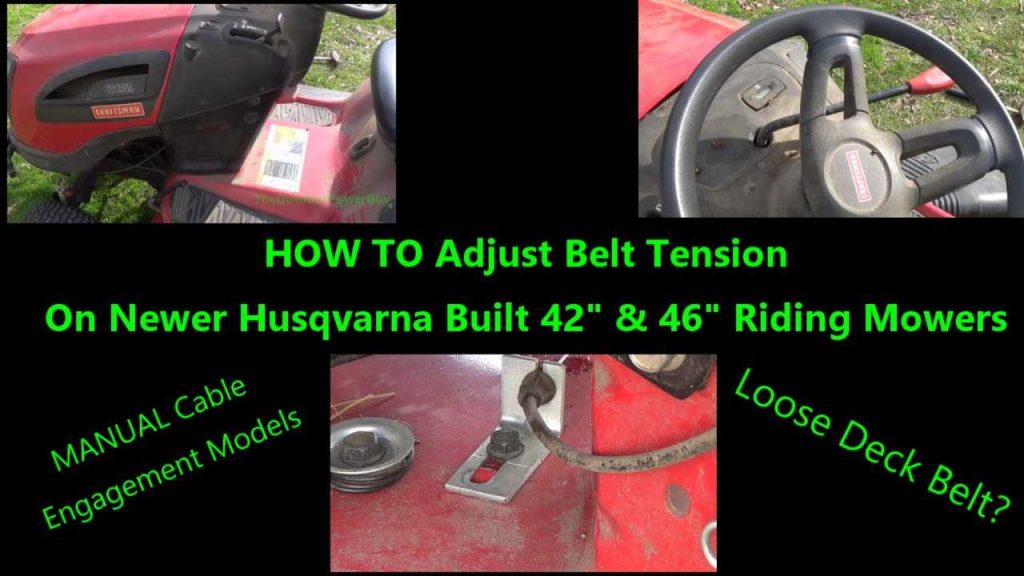
To quickly adjust the belt tension on your Husqvarna riding lawn mower, loosen the pulley bolt, move the tensioner to tighten or loosen the belt, then retighten the bolt. Regular checks and adjustments ensure smooth operation and prolong the mower’s lifespan. If your mower isn’t cutting evenly or the belt slips, it’s time to tweak the tension for optimal performance.
Adjusting the belt on your Husqvarna riding mower might seem tricky, but it’s a straightforward task that keeps your machine running efficiently. The key is to ensure the belt has the right tension—not too tight, not too loose—so that belts don’t slip and your blades cut evenly. Over time, belts can stretch or wear out, making adjustments necessary. By correctly tensioning the belt, you’ll prevent unnecessary wear, reduce noise, and keep your mower in top shape. This guide will walk you through the simple steps to get your belt tension just right, so you can enjoy a beautifully cut lawn without any hassle.

How to Adjust Belt Tension on Husqvarna Riding Lawn Mower
Proper belt tension is essential for the smooth operation of your Husqvarna riding lawn mower. If the belt is too loose, it may slip or come off, reducing cutting efficiency. If it is too tight, it can put strain on the pulleys and bearings, leading to premature wear. Learning how to correctly adjust belt tension helps keep your mower running efficiently and extends its lifespan.
Understanding the Belt System in Your Husqvarna Mower
Before adjusting the belt, it is important to understand how the belt system works. Your Husqvarna riding mower uses multiple belts to drive the blades, the transmission, and other accessories. These belts are mounted around pulleys that transfer power from the engine.
The main belt in a Husqvarna mower is often called the **deck belt** or **drive belt**. This belt connects the engine pulley to the blade pulleys and sometimes to auxiliary components like the deck lift mechanism. Proper tension ensures that power is transmitted without slipping or excessive strain.
Signs That the Belt Tension Needs Adjustment
Knowing when to adjust the belt can save you time and prevent damage. Look for these signs indicating the tension might be off:
- The blades do not spin at the expected speed
- The belt makes slipping noises or squeals during operation
- The belt appears to be slipping or has visible signs of wear
- The mower struggles to cut evenly or leaves uncut grass
- The belt has become loose or has slipped off the pulleys
If you notice any of these issues, it is time to check and adjust the belt tension.
Tools and Materials Needed for Belt Adjustment
Adjusting the belt tension in your Husqvarna mower requires a few basic tools:
- Socket wrench set
- Flat-head screwdriver or pry bar (if necessary)
- Replacement belt (if the current belt is worn or damaged)
- Protective gloves
- Owner’s manual specific to your mower model
Having these ready before starting will make the process smoother and safer.
Step-by-Step Guide to Adjusting Belt Tension
Follow these steps carefully to properly adjust the belt tension:
1. Prepare Your Workspace
Park your mower on a flat surface and turn off the engine. Remove the key and wait for all moving parts to stop completely. Engage the parking brake for added safety.
2. Access the Belt Area
Lift the mower deck using the deck lift lever or foot pedals as instructed in your manual. Use the appropriate tools to remove any covers or guards that protect the belt and pulleys.
3. Inspect the Belt
Examine the belt for signs of wear, cracks, or damage. If the belt shows significant wear, replace it before proceeding with tension adjustment to avoid future problems.
4. Locate the Tension Adjustment Point
Find the tensioning pulley or idler pulley that maintains belt tension. On many Husqvarna mowers, the tensioner is a spring-loaded pulley that can be adjusted or secured with a bolt.
5. Loosen the Tensioner
Use a socket wrench to loosen the bolt or nut securing the tensioner or pulley. This will free the pulley allowing you to adjust the tension.
6. Adjust the Belt Tension
Gently move the pulley or belt to increase or decrease tension. To tighten the belt, pull or rotate the pulley to add slack and then tighten it. For loosening, ease the tension slightly.
7. Check the Tension
Proper belt tension should allow the belt to be pressed down in the middle with about 1/2 inch (1.27 cm) of deflection. The belt should be firm but not overly tight.
8. Secure the Tensioner
Once the correct tension is achieved, tighten the bolt or nut that secures the tensioner or pulley. Confirm that the pulley moves smoothly and stays in place.
9. Reassemble and Test
Replace any cover or guards you removed. Lower the mower deck to its normal position, start the engine, and observe the belt operation. Ensure the belt runs smoothly without squealing or slipping.
Tips for Maintaining Proper Belt Tension
Maintaining the right belt tension is an ongoing process. Here are some tips:
- Regularly inspect belts for signs of wear or slackness.
- Check belt tension after every 20 hours of mowing or at least once per season.
- Replace belts that are cracked, frayed, or glazed.
- Keep pulleys and belts clean and free of debris for optimal performance.
- Ensure pulleys spin freely and are not seized or damaged.
Common Problems and Solutions Related to Belt Tension in Husqvarna Mowers
| Problem | Possible Cause | Solution |
|---|---|---|
| Belt slips during operation | Belt is too loose or worn | Tighten or replace the belt |
| Belt keeps coming off | Misaligned pulleys or tensioner | Realign pulleys and adjust tension properly |
| Excessive squealing | Belt too tight or pulley bearing issue | Loosen belt tension or inspect pulley bearings |
| Uneven cutting or blades not spinning | Belt slipping or improper tension | Adjust tension to manufacturer specifications |
Additional Tips for Optimal Belt Performance
To get the best out of your Husqvarna riding mower:
- Always follow the tension guidelines provided in your model’s manual.
- Use genuine or high-quality replacement belts to avoid premature wear.
- Lubricate pulleys and moving parts as recommended to prevent seizing.
- Keep belts clean from mud, grass, and debris that can cause slipping or wear.
- Perform routine maintenance checks to catch issues early.
When to Seek Professional Help
If you find the belt system complicated or if problems persist after adjustments, it’s wise to consult a professional repair service. A trained technician can diagnose issues accurately, replacing pulleys or belts as necessary. This prevents further damage and keeps your mower operating at peak performance.
Keeping your Husqvarna riding lawn mower’s belt properly tensioned not only improves cutting quality but also extends the life of critical parts. Regular inspections and adjustments ensure your mower remains in top shape for every mowing season.
Adjust Mower Deck Belt
Frequently Asked Questions
How can I tell if the belt on my Husqvarna riding mower needs tightening?
Inspect the belt regularly for signs of looseness, such as slipping or reduced mower performance. If the belt appears to be sagging, has cracks, or if you hear squealing noises during operation, it’s time to tighten it. Additionally, if the mower’s blades or other attached components do not spin properly, the belt might be too loose and require adjustment.
What tools are necessary to adjust the belt tension on a Husqvarna riding mower?
You typically need a socket set or wrench to loosen and tighten the bolts securing the pulley or tensioner. Some models might also require a screwdriver to remove covers or panels. Always consult your mower’s manual for specific tools required for your model to ensure safe and effective adjustment.
What are the steps to properly tighten the belt on my Husqvarna riding mower?
Start by turning off the mower and disconnecting the spark plug to prevent accidental starting. Remove any covers or panels to access the belt area. Loosen the tensioner or pulley bolts and adjust the belt by tightening or loosening the tensioner until the belt has the correct tension—typically, it should have about 1/4 to 1/2 inch of slack when pressed in the middle. Reassemble the covers and test the mower to confirm the belt runs smoothly without slipping.
How can I ensure the belt tension remains correct after adjustment?
After adjusting the belt tension, run the mower for a few minutes and observe the belt’s operation. Check for any slipping, noise, or uneven movement. Regularly inspect the belt during routine maintenance to ensure it maintains proper tension. If the belt begins to slip or shows signs of wear, recheck the tension and adjust as needed to maintain optimal performance.
Are there any precautions I should take when adjusting the belt tension on my Husqvarna mower?
Always disconnect the spark plug and remove the key before working on the mower to prevent accidental starting. Use proper tools and follow safety guidelines in your manual. Be cautious of sharp edges and moving parts. If you’re unsure about the adjustment process, consider consulting a professional technician to avoid damaging your mower or causing injury.
Final Thoughts
To adjust belt tension on husqvarna riding lawn mower, first locate the adjustment bolt or tensioner pulley. Loosen the bolt slightly and move the pulley to increase or decrease tension. Ensure the belt has the right tightness by checking that it can be pushed in about one inch.
Once you set the tension properly, tighten the adjustment bolt to secure the pulley in place. Regularly inspecting the belt helps maintain optimal performance and prevent slipping.
In conclusion, how to adjust belt tension on husqvarna riding lawn mower involves adjusting the tensioner pulley and tightening the bolt. Proper tension ensures efficient mowing and prolongs belt life.