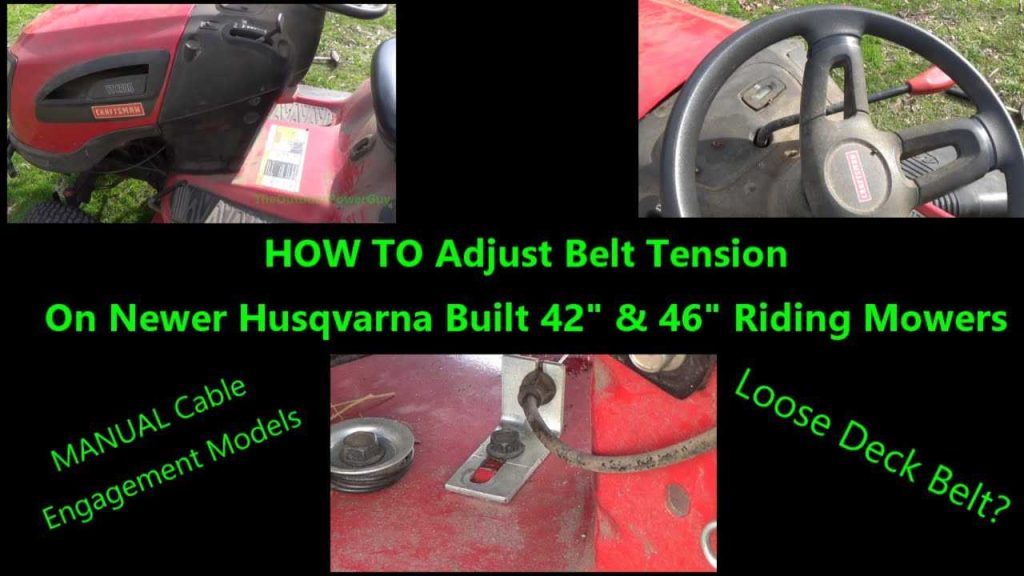
To quickly adjust the belt tension on your Husqvarna riding lawn mower, loosen the belt tensioner, slide the belt into proper position, and then tighten the tensioner securely. Regularly checking and adjusting belt tension ensures your mower operates smoothly and prolongs the life of the belt and other components.
If you notice the mower isn’t cutting evenly, or if the blades are slipping, it’s time to check the belt tension. Adjusting it involves loosening the tensioner pulley, repositioning the belt properly, and then tightening everything back up. It’s a straightforward process that can be done with basic tools and can save you money on repairs. Proper belt tension keeps your mower running efficiently, ensures even cutting, and prevents unnecessary wear. Now, let’s walk through the steps to get your Husqvarna riding mower back in top shape with the right belt tension.

How to adjust belt tension on Husqvarna riding lawn mower
Having the correct belt tension on your Husqvarna riding lawn mower is essential for optimal performance and longevity. A properly tensioned belt ensures smooth operation of the mower deck and prevents parts from wearing out prematurely. In this guide, we will walk you through the detailed steps to adjust belt tension accurately, helping your mower run efficiently season after season.
Understanding the importance of belt tension in Husqvarna mowers
Proper belt tension affects the mower’s ability to cut grass evenly and efficiently. If the belt is too loose, it may slip, causing uneven cuts and strain on the engine. Conversely, if the belt is too tight, it can lead to excessive wear on pulleys and other components. Striking the right balance keeps your mower running smoothly and extends its lifespan.
Tools needed for belt tension adjustment
Before starting, gather these tools:
- Socket wrench set
- Screwdrivers (flathead and Phillips)
- Belt tension gauge (optional but recommended)
- Rubber mallet
- Gloves for safety
Having these tools ready will make the process quicker and safer.
Identifying the belt type and location on your Husqvarna mower
Different Husqvarna models may have slightly varied belt configurations. Typically, the deck belt runs around pulleys beneath the mower deck, connecting to the engine pulley. Side belts drive accessories or transmission components.
To locate the belt:
- Park the mower on a flat surface and turn off the engine.
- Engage parking brakes for safety.
- Lift the mower deck using the appropriate lift points or foot pedals.
- Inspect underneath to identify the belt routing and tensioner pulley.
Refer to your mower’s manual for specific belt diagrams if available.
Steps to loosen and remove the belt for adjustment
In some cases, you will need to loosen or remove the belt for proper tension adjustment:
- Locate the belt tensioner pulley, which maintains belt tension.
- Use the socket wrench to loosen the tensioner bolt carefully.
- Slide the belt off the pulleys once the tensioner is loosened.
- Set the belt aside in a safe place.
Be cautious to not damage the pulleys or surrounding components during removal.
Proper methods to adjust belt tension
Once the belt is removed or loosened, follow these steps to adjust tension:
Method 1: Using the tensioner pulley
The tensioner pulley has a spring-loaded system to maintain proper tension:
- Check the belt’s tightness by pressing down gently on the belt at its midpoint.
- If the belt deflects more than 1/2 inch (1.27 cm), it’s too loose.
- Use a socket wrench to rotate the tensioner pulley, increasing tension by applying pressure away from the belt.
- Ensure the pulley moves smoothly and aligns with other pulleys without wobbling.
Method 2: Manual adjustment of belt position
Some models allow for manual tension adjustments:
- Locate the adjustment bolts near the pulley assembly.
- Loosen these bolts slightly.
- Pull or push the pulley assembly to increase tension.
- Retighten the bolts securely once the desired tension is achieved.
Always double-check the tension after adjustments.
Verifying proper belt tension
After adjustment, test the tension with these steps:
- Press on the belt at its midpoint with your finger or a tension gauge.
- Confirm that it deflects no more than 1/2 inch (1.27 cm) under moderate pressure.
- Ensure the belt sits correctly in the pulley grooves without slipping.
- Run the mower briefly to observe belt operation during actual use.
Proper tension should feel firm but not overly tight.
Testing the mower after belt tension adjustment
Once satisfied with the tension:
- Lower the mower deck back to its operational position.
- Start the mower engine and engage the blades.
- Observe the belt’s movement for smooth operation.
- Listen for unusual noises or vibrations indicating misalignment.
- Inspect the belt and pulleys periodically during the test run for signs of slipping or wobbling.
This testing ensures your adjustments are correct and the mower functions properly.
Additional tips for maintaining belt tension
To keep belt tension consistent and prolong belt life:
- Regularly inspect the belt for signs of wear, cracks, or fraying.
- Clean pulleys and belts to remove debris and grass clippings.
- Replace belts at the first sign of damage or excessive wear.
- Lubricate pulleys if recommended in the mower’s manual.
- Always follow the manufacturer’s specifications for belt tension.
Routine maintenance minimizes the risk of belts slipping or breaking unexpectedly.
Common mistakes to avoid during belt tension adjustment
Avoid these pitfalls:
- Over-tightening the belt, which can damage pulleys and bearings.
- Ignoring manufacturer’s tension specifications.
- Using excessive force when adjusting tension, risking damage.
- Failing to align pulleys properly after adjustment.
- Not testing the mower after adjustment to ensure proper operation.
Being cautious and following proper procedures prevents costly repairs down the line.
Adjusting belt tension on your Husqvarna riding lawn mower is a straightforward task when done correctly. Regularly inspecting and maintaining belt tension ensures your mower operates smoothly and lasts longer. Taking a few minutes to check tension after each mowing season or whenever you notice performance issues can save you time and money in the long run. Proper belt management keeps your mower performing at its best, providing efficient and even cuts every time.
Adjust Mower Deck Belt
Frequently Asked Questions
What tools do I need to adjust the belt tension on my Husqvarna riding mower?
To adjust the belt tension, you typically need a socket wrench or ratchet, screwdrivers, and possibly a belt tension gauge. Refer to your mower’s manual to identify specific tools required for your model. Having these tools ready will make the adjustment process smoother and quicker.
How can I tell if the belt tension on my Husqvarna mower is too loose or too tight?
Check the belt for proper tension by pressing down on it. It should provide some resistance but not feel overly tight or slack. If the belt feels loose and slips during operation, it needs tightening. Conversely, if it feels overly tight or causes excessive strain on pulleys, it may be too tight. Regular inspection helps maintain optimal performance.
What are the steps to loosen the belt tension on a Husqvarna riding mower?
Start by turning off the mower and disconnecting the spark plug for safety. Then, locate the belt tensioner or pulley adjustment bolt. Loosen the tensioner bolt gradually to relieve tension from the belt. Carefully slide or lift the pulley to reduce tension, making sure to keep track of any washers or spacers. Once the belt is loose, you can remove or adjust it as needed.
How do I properly tighten the belt after adjustment on my Husqvarna mower?
After loosening the tensioner and adjusting the belt, tighten the tensioner bolt gradually while checking belt tension. Press down on the belt; it should have about a half-inch of deflection when pressed. Make sure the belt sits correctly on all pulleys and re-tighten the tensioner bolt securely. Run the mower briefly to observe belt operation and ensure proper tension.
How often should I check and adjust the belt tension on my Husqvarna riding mower?
Inspect the belt tension at least once a mowing season or after noticeable performance issues such as slipping or uneven cutting. Adjust the tension if you observe signs of slipping or if the belt appears worn or loose. Regular checks help prevent belt failure and prolong the mower’s lifespan.
Final Thoughts
Maintaining proper belt tension on your Husqvarna riding lawn mower ensures efficient operation and prolongs the mower’s lifespan. Start by turning off the engine and removing the key for safety. Locate the belt adjustment point and loosen the mounting bolt.
Next, adjust the belt by tightening or loosening it as needed, ensuring the belt has proper tension without being overly tight. Re-tighten the mounting bolt securely and check the belt’s operation.
In conclusion, knowing how to adjust belt tension on husqvarna riding lawn mower helps keep your mower running smoothly and efficiently. Regular adjustments prevent slippage and wear, ensuring optimal performance.