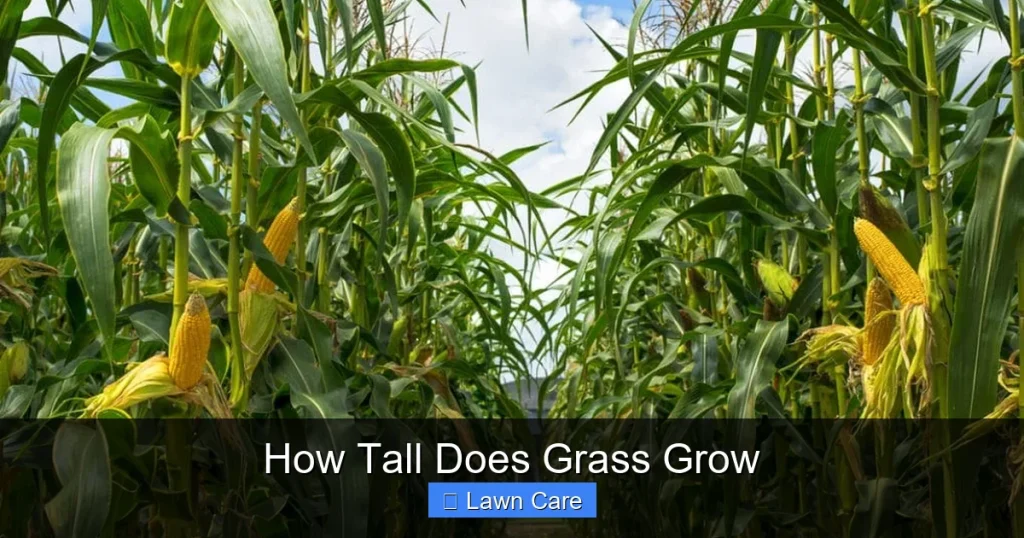
Understanding how tall grass grows is crucial for effective lawn care. This guide explores the numerous factors that influence grass height, from genetics and species to environmental conditions like sunlight, water, and soil nutrients. We’ll also delve into how mowing practices and your specific goals for your lawn play a significant role. Learn to identify your grass type and adjust your care to achieve a healthy, vibrant lawn at the perfect height.
# How Tall Does Grass Grow? Your Comprehensive Guide to Lawn Height
Ever look at your lawn and wonder, “Just how tall is this grass supposed to get?” It’s a question that sparks curiosity, especially when you see wildly different lawn heights in your neighborhood or consider the vastness of natural grasslands. The truth is, there’s no single answer to “how tall does grass grow?” It’s a complex interplay of biology, environment, and human intervention.
This guide is here to demystify the process. We’ll explore the fascinating world of grass growth, breaking down all the factors that determine its height. Whether you’re a meticulous lawn enthusiast aiming for perfection or simply curious about the green carpet beneath your feet, you’ll gain a clear understanding of what influences your grass’s vertical journey. By the end of this guide, you’ll be equipped to better understand and manage your lawn’s height for optimal health and appearance.
## The Genetic Blueprint: It All Starts with the Species
The most significant factor determining how tall grass can grow is its inherent genetic makeup. Just like a towering oak tree grows differently from a delicate wildflower, different grass species have different growth potentials.
### Cool-Season vs. Warm-Season Grasses
Generally, grasses are divided into two main categories: cool-season and warm-season. This classification is based on the temperatures at which they thrive.
* **Cool-Season Grasses:** These grasses, like fescues, ryegrass, and bluegrass, are best suited for cooler climates. They typically have a growth spurt in the spring and fall. Their maximum height can vary, but many common lawn varieties are often kept shorter for aesthetic and functional reasons. For instance, perennial ryegrass, a popular cool-season choice, generally doesn’t grow excessively tall on its own, but its growth rate can be quite impressive. You can learn more about how tall specific types like perennial ryegrass grow in our guide on how tall perennial ryegrass grows.
* **Warm-Season Grasses:** These grasses, such as Bermuda, Zoysia, and St. Augustine, flourish in warmer climates and go dormant in cooler weather. Many warm-season grasses have a higher growth potential than cool-season varieties. Bermuda grass, for example, is known for its rapid growth and ability to form a dense turf. Understanding how fast Bermuda grass grows can give you insight into its growth habits.
### Specific Grass Varieties
Within these broad categories, individual species and even cultivars have their own unique growth characteristics. Some varieties are bred for specific purposes, like creeping bentgrass used on golf course greens, which is maintained at very low heights, or ornamental grasses that can reach several feet tall.
For example, if you have a lawn dominated by fine fescue, it will have a different maximum height potential than a lawn primarily composed of tall fescue. Similarly, if you’re wondering about the growth of a specific type, like how tall bentgrass grows, the answer will be specific to that variety.
## Environmental Influences: The External Factors
While genetics sets the stage, the environment plays a starring role in how tall grass actually gets. Think of it as providing the necessary ingredients for growth.
### Sunlight: The Engine of Photosynthesis
Grass, like all plants, needs sunlight to produce energy through photosynthesis. The amount and intensity of sunlight directly impact its growth rate and height.
* **Full Sun:** Lawns in full sun generally have more energy for growth and can reach their genetic potential more readily, assuming other conditions are favorable.
* **Partial Shade:** In areas with less direct sunlight, grass growth may be slower and the plants may appear less vigorous. Some grass species are more tolerant of shade than others.
* **Deep Shade:** Very dense shade can stunt grass growth significantly, making it appear thin and leggy as it stretches for light.
### Water: The Essential Nutrient Carrier
Water is vital for all plant life, and grass is no exception. Proper hydration is crucial for cell expansion, nutrient transport, and photosynthesis.
* **Adequate Watering:** Sufficient water allows grass to grow at its optimal rate, reaching its potential height.
* **Drought Stress:** When water is scarce, grass will conserve energy. It may stop growing, turn brown, or even go dormant to survive. Extended drought can severely limit how tall grass can grow.
* **Overwatering:** Too much water can be detrimental, leading to root rot, fungal diseases, and compacted soil, all of which can hinder healthy growth and limit height.
### Temperature: The Seasonal Clock
Temperature plays a critical role in grass growth, largely dictating whether it’s actively growing or dormant.
* **Optimal Ranges:** Each grass type has an ideal temperature range for growth. Cool-season grasses thrive in temperatures between 60-75°F (15-24°C), while warm-season grasses prefer 80-95°F (27-35°C).
* **Extreme Temperatures:** Both excessive heat and cold can stress grass, slowing or halting growth. In very hot summers, warm-season grasses will grow vigorously, while cool-season grasses may struggle. Conversely, in winter, cool-season grasses may continue to grow slowly, while warm-season grasses go dormant.
### Soil Health and Nutrients: The Foundation for Growth
Healthy soil provides the necessary nutrients, support, and aeration for robust grass growth.
* **Nutrient Availability:** Grass needs macronutrients (nitrogen, phosphorus, potassium) and micronutrients to grow strong and tall. Nitrogen, in particular, is crucial for leafy green growth.
* **Soil Structure:** Well-aerated, loamy soil allows roots to penetrate deeply, supporting taller, healthier grass. Compacted soil restricts root growth, limiting upward expansion.
* **Soil pH:** The pH of the soil affects nutrient availability. If the pH is too high or too low, grass may struggle to absorb essential nutrients, even if they are present in the soil.
## Human Intervention: How We Shape Our Lawns
What we do to our lawns, particularly mowing, has a profound impact on grass height. This is where your lawn care practices come into play.
### Mowing Height: A Delicate Balance
The height at which you mow your grass is one of the most direct ways you influence its overall height and density.
* **The “One-Third Rule”:** A fundamental principle of mowing is never to remove more than one-third of the grass blade in a single mowing. Cutting too much at once can shock the grass, weaken it, and stunt its growth.
* **Ideal Mowing Heights:** Different grass types have different ideal mowing heights.
* **Low-Mowing Grasses:** Some grasses, like fine fescues or certain Bermuda grass cultivars, can be mowed very short (e.g., 0.5 to 1.5 inches).
* **Medium-Mowing Grasses:** Many common lawn grasses, such as Kentucky bluegrass or perennial ryegrass, do well when mowed between 2 to 3 inches.
* **High-Mowing Grasses:** Some types, like St. Augustine grass or tall fescue, benefit from being mowed taller, typically between 3 to 4 inches or even higher for specific varieties. Mowing too low can stress these grasses. You can explore the specifics of how tall grass will grow and is it good to have long grass for more context on this.
* **Mowing Frequency:** The frequency of mowing is directly related to how tall the grass grows. If you mow infrequently, your grass will naturally grow taller. If you mow often, you’ll maintain a shorter height. For example, understanding how fast grass grows helps determine how often you need to mow.
### Fertilization and Soil Amendments
Applying fertilizers provides essential nutrients that fuel grass growth. The type and amount of fertilizer used can influence how tall grass grows.
* **Nitrogen:** Higher nitrogen levels generally promote more vigorous top growth, meaning taller blades.
* **Balanced Fertilizers:** A balanced fertilizer ensures that all essential nutrients are available, supporting overall plant health and contributing to optimal growth.
* **Soil Amendments:** Aeration, dethatching, and adding compost can improve soil structure and nutrient availability, indirectly promoting taller growth.
### Irrigation Practices
Your watering habits significantly impact how tall grass can grow.
* **Deep and Infrequent Watering:** Encourages deeper root growth, allowing the grass to access water more efficiently and grow taller and healthier.
* **Shallow and Frequent Watering:** Promotes shallow root systems, making the grass more susceptible to drought and limiting its potential height.
## Understanding Your Goals: What Do You Want Your Lawn to Be?
Ultimately, the desired height of your grass is often a matter of personal preference and the intended use of your lawn.
### Aesthetic Appeal
Some homeowners prefer a manicured, carpet-like lawn maintained at a relatively short height for a formal look. Others might opt for a slightly longer, more relaxed appearance.
### Functionality
* **Play Areas:** For lawns used for children’s play or sports, a slightly longer height can provide a softer landing and protect the grass from wear.
* **Drought Tolerance:** Longer grass blades shade the soil, reducing moisture evaporation and helping the lawn withstand dry periods better. This is why some people allow their grass to grow longer, as discussed in how tall grass will grow and is it good to have long grass.
* **Weed Suppression:** A dense, healthy lawn with slightly taller grass can often outcompete weeds for sunlight, water, and nutrients.
### Specific Lawn Types
* **Putting Greens:** These require specialized grass varieties maintained at extremely low heights (often less than 0.25 inches) through frequent mowing and meticulous care.
* **Meadows and Natural Areas:** In contrast, some areas are intentionally left to grow tall, supporting biodiversity and a more natural aesthetic.
## Troubleshooting Common Grass Height Issues
Sometimes, your grass might not grow as tall as you expect, or it might grow unevenly. Here are a few common problems and solutions.
### Grass Isn’t Growing Tall Enough
* **Problem:** Insufficient sunlight, poor soil fertility, lack of water, or consistently mowing too short.
* **Solution:** Assess your lawn’s sun exposure. Test your soil and fertilize as needed. Ensure you are watering deeply and infrequently. Adjust your mowing height according to your grass type’s recommendations. If you’re working with a new lawn, understanding how long does it take for grass seed to grow or how long does it take for new grass to grow can set realistic expectations.
### Grass is Growing Too Tall, Too Fast
* **Problem:** This is often a sign of healthy growth, but can be unmanageable. It might be due to ideal growing conditions (spring growth spurt) or a grass type known for rapid growth.
* **Solution:** Increase mowing frequency. Ensure you are following the one-third rule to avoid stressing the grass by removing too much at once. Certain grasses, like Bermuda, grow very fast. If you’re curious about its speed, research how fast Bermuda grass grows.
### Uneven Growth
* **Problem:** Varied soil conditions across the lawn, different grass types intermingled, or differences in sunlight.
* **Solution:** Improve soil consistency through topdressing or aeration. Identify and manage different grass species according to their needs. Ensure consistent sunlight exposure where possible, or adjust mowing to accommodate variations.
### Grass is Folding Over Prematurely
* **Problem:** This can happen when grass blades become too heavy or lack structural integrity. It can also be a sign of certain growth inhibitors or environmental stress.
* **Solution:** Check your mowing height. Sometimes, mowing slightly higher can provide better support. Ensure proper fertilization and watering. For more information, refer to our guide on how tall grass grows before folding over.
## Conclusion: The Art and Science of Grass Height
So, how tall does grass grow? The answer is as varied as the lawns themselves. It’s a dynamic height, influenced by a fascinating blend of genetics, environmental forces, and your own lawn care decisions. By understanding the species of grass you have, the conditions it experiences, and your personal goals, you can effectively manage its height to achieve a beautiful, healthy, and functional lawn.
Embrace the complexity, and remember that consistent observation and tailored care are the keys to unlocking your lawn’s full potential, whatever its ideal height may be.
Key Takeaways
- Grass height is not a fixed number: It varies significantly based on species, genetics, and environmental factors.
- Species matters greatly: Different types of grass have inherent growth ceilings and preferences.
- Environmental conditions are key: Sunlight, water availability, temperature, and soil health directly impact how tall grass can grow.
- Mowing height influences growth: Regular mowing, especially at the correct height for the grass type, impacts its overall growth potential and density.
- Lawn goals dictate management: Whether you desire a putting green or a more natural look, your objectives will determine how you manage grass height.
- Understanding your grass type is foundational: Knowing whether you have cool-season or warm-season grass, and its specific variety, is essential for proper care and height management.