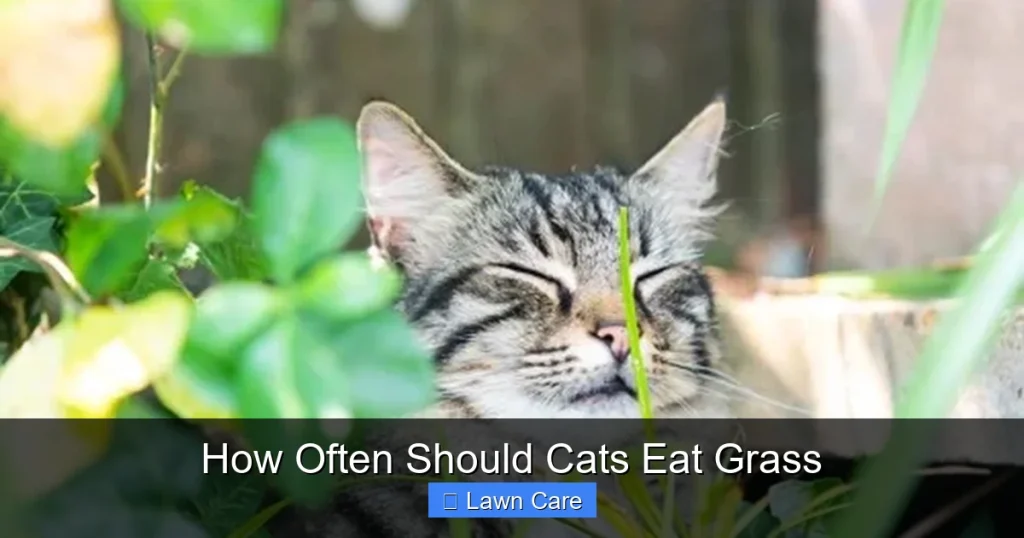
Understanding how often cats should eat grass involves recognizing their natural instincts and digestive needs. While not essential for all cats, grass can aid digestion and help them vomit hairballs. Generally, offering grass a few times a week or as needed is sufficient, but it’s crucial to ensure the grass is safe and pesticide-free.
# How Often Should Cats Eat Grass?
It’s a common sight for cat owners: your feline friend nibbling on a houseplant, a blade of grass in the garden, or even a specially grown pot of cat grass. This behavior might seem strange, but it’s perfectly normal for cats and has several potential benefits. But how often *should* cats eat grass? This guide will delve into the reasons behind this instinctual behavior, explore its benefits and potential risks, and provide you with the knowledge to offer grass safely and appropriately to your beloved pet.
We’ll cover everything from the natural drives behind grass consumption to practical tips for providing it. You’ll learn what to look for, what to avoid, and how to tell if your cat is getting what they need from their grassy snacks.
## Understanding Why Cats Eat Grass
Before we talk about frequency, let’s understand the ‘why’ behind this feline behavior. It’s not just a random act; there are several theories and observed benefits that explain why cats are drawn to munching on grass.
### The Instinctual Drive
For many animals, including cats, eating grass is an ancestral behavior. Wild cats and their ancestors consumed whole prey, including the stomach contents of their prey, which often contained grass. This suggests an inherent biological drive to ingest plant matter. Even though our domestic cats are far removed from their wild cousins, some of these primal instincts remain.
### Digestive Aid
One of the most widely accepted reasons for cats eating grass is its role in digestion. Grass acts as a natural laxative. The fiber in grass can help move food through the digestive tract, particularly for cats that might be experiencing constipation. If your cat seems to be having trouble with their bowel movements, a bit of grass might help things along.
### Hairball Relief
This is perhaps the most well-known benefit of cats eating grass. Cats are meticulous groomers, and as they lick their fur, they ingest a significant amount of hair. While their digestive systems can usually handle small amounts of hair, sometimes it accumulates and forms hairballs. These hairballs can be uncomfortable and may lead to vomiting. Grass, particularly when eaten in larger quantities, can irritate the stomach lining and induce vomiting, helping the cat to expel the hairball. It’s essentially a natural way for them to clear their system.
### Nutritional Supplement
While cats are carnivores and get most of their nutrients from meat, grass does contain certain beneficial elements. It’s a source of folic acid, a B vitamin that plays a vital role in cell growth and repair, and also aids in the production of hemoglobin, which is essential for carrying oxygen in the blood. Grass also contains trace amounts of other vitamins and minerals that might be lacking in a strictly meat-based diet.
## How Often Should Cats Eat Grass?
So, the big question: how often should your cat be indulging in their grassy habit? The simple answer is: it varies. There’s no one-size-fits-all rule, and it depends heavily on your individual cat’s needs and behavior.
### Listen to Your Cat’s Cues
The best indicator of how often your cat should eat grass is your cat itself. Most cats will self-regulate. They’ll eat grass when they feel they need it. This might be daily for some, a few times a week for others, or even only occasionally. If you notice your cat consistently seeking out grass, it’s usually a sign they’re benefiting from it.
### A General Guideline: A Few Times a Week
As a general guideline, offering your cat access to safe grass a few times a week is a good starting point. This allows them to satisfy their natural urge without overdoing it. If you provide them with a potted cat grass plant, they will likely nibble on it as needed.
### When to Be More Concerned (and Offer Grass)
You might notice your cat eating grass more frequently if they are:
* **Experiencing digestive upset:** If your cat seems constipated or is having trouble passing stool, they might turn to grass for relief.
* **Struggling with hairballs:** An increased urge to eat grass could indicate they are forming hairballs and are trying to vomit them up.
* **Showing signs of stress or boredom:** Sometimes, cats may eat grass as a way to cope with stress or boredom. In these cases, ensure they have plenty of enrichment and playtime.
### When to Be More Cautious
If your cat is eating grass obsessively, or if they are eating grass and then vomiting repeatedly without expelling a hairball, it might be a sign of a more serious underlying health issue. In such cases, it’s important to consult your veterinarian.
## Providing Safe Grass for Your Cat
The most crucial aspect of letting your cat eat grass is ensuring that the grass is safe for them to consume. Not all grass is created equal, and some can be harmful.
### What Grass is Safe?
* **Cat Grass:** This is specifically grown for cats and is typically a mix of wheat, barley, oat, or rye grasses. It’s readily available in pet stores or can be grown from seed kits. This is the safest and most recommended option.
* **Untreated Lawn Grass:** If you have a lawn that you know for certain has *never* been treated with pesticides, herbicides, or synthetic fertilizers, then your cat might be able to safely nibble on it. However, this can be tricky to guarantee, especially if you live in a neighborhood or your lawn is near areas that might be treated.
### What Grass to Avoid
* **Pesticide/Herbicide Treated Grass:** Any grass that has been treated with chemicals for pest control or weed removal is extremely dangerous for cats. These toxins can cause severe poisoning.
* **Ornamental Grasses:** Some ornamental grasses, especially those with sharp blades or specific chemical compositions, can be harmful. It’s best to stick to the known safe varieties.
* **Certain Houseplants:** Many common houseplants are toxic to cats. Even if they look like grass, they may contain compounds that are dangerous. Always research houseplants before bringing them into a home with cats.
### How to Provide Grass Safely
#### Growing Your Own Cat Grass
This is the best way to ensure safety and availability.
##### Step 1: Choose Your Seeds
Purchase a cat grass seed mix from a reputable pet store or garden center. Common mixes include wheat, oat, barley, and rye.
##### Step 2: Select a Pot
Choose a shallow, sturdy pot with drainage holes. This prevents overwatering and keeps the pot stable.
##### Step 3: Use Appropriate Soil
Use a good quality potting mix. Avoid using garden soil, as it can compact easily and may contain pests or diseases.
##### Step 4: Planting the Seeds
Fill the pot with about 2-3 inches of potting soil. Spread the seeds evenly over the soil surface. Cover the seeds with a thin layer of soil (about 1/4 inch).
##### Step 5: Watering
Water the soil gently. You want it to be moist but not waterlogged. A spray bottle is excellent for this initial watering to avoid disturbing the seeds.
##### Step 6: Germination and Growth
Place the pot in a location that receives indirect sunlight. Keep the soil consistently moist. Seeds typically germinate within 3-10 days. Once the grass is about an inch or two tall, it’s ready for your cat to nibble.
##### Step 7: Maintenance
Continue to water regularly. Trim the grass with scissors if it gets too long or starts to look scraggly. You can harvest it by snipping off blades. New growth will emerge. Eventually, the plant will stop producing well and will need to be replanted.
#### Buying Cat Grass Kits
These kits come with everything you need – seeds, soil, and a container. They are a convenient option for those who don’t want to source individual components. Follow the instructions provided with the kit.
#### Supervised Outdoor Access
If you have a safe, pesticide-free outdoor space, you can allow your cat supervised access to graze. Always supervise your cat to ensure they don’t ingest anything harmful and to prevent them from wandering off. This is especially important if your lawn is near areas where chemicals might be used, such as public parks or neighbors’ yards. Remember that keeping your lawn healthy can involve various practices, and understanding something like [how often should you water your bermuda grass] can be key to a vibrant, but potentially treated, lawn.
## What if My Cat Doesn’t Eat Grass?
It’s important to remember that not all cats have the urge to eat grass. Some cats simply aren’t interested, and that’s perfectly okay. If your cat doesn’t show any interest in cat grass, don’t force it.
### Natural Alternatives
If your cat isn’t keen on grass, there are other safe plants that cats can enjoy:
* **Catnip:** While not for consumption, many cats enjoy the scent and playful effects of catnip.
* **Valerian:** Similar to catnip, valerian can be stimulating for some cats.
* **Spider Plants:** These are generally safe for cats to nibble on, though large quantities can cause mild stomach upset.
* **Certain Herbs:** Some herbs like rosemary or parsley (in very small amounts) are considered safe, but always verify with a vet.
### When to Seek Veterinary Advice
If your cat is showing signs of digestive distress, hairball issues, or behavioral changes, and they are not eating grass, it’s crucial to consult your veterinarian. They can help diagnose any underlying medical conditions and recommend appropriate solutions, which might include dietary changes or specific supplements. They can also advise on lawn care practices if you’re considering letting your cat graze outdoors, like understanding [how often should you fertilize lawn in summer] to ensure it’s safe.
## Common Concerns and Troubleshooting
Even with the best intentions, you might encounter a few issues when providing grass for your cat.
### Troubleshooting: My Cat is Vomiting Too Much
If your cat eats grass and then vomits excessively without expelling a hairball, or if they seem distressed after vomiting, this could indicate a problem.
* **Cause:** They might be eating too much grass too quickly, or they might have an underlying issue that the grass isn’t solving.
* **Solution:** Temporarily remove the grass and observe your cat. If the vomiting continues or they show other signs of illness, contact your veterinarian immediately. You might need to limit their access to grass or explore other methods for hairball management.
### Troubleshooting: My Cat Isn’t Interested in the Cat Grass
You’ve grown beautiful, fresh cat grass, but your feline friend walks right past it.
* **Cause:** Not all cats are attracted to cat grass. Some might prefer a different texture or aroma, or they may simply not have the urge.
* **Solution:** Try different types of cat grass (wheat, oat, barley). Ensure the grass is fresh and hasn’t dried out. You can also try placing a small amount of catnip on the grass to pique their interest. If they remain uninterested after several attempts, don’t worry. They might be getting everything they need from their diet.
### Troubleshooting: My Cat is Eating Other Plants (Potentially Toxic)
This is a serious concern. If your cat is indiscriminately munching on houseplants or outdoor plants, it’s a sign they might be seeking something from them.
* **Cause:** Nutritional deficiency, boredom, or simply curiosity.
* **Solution:** **Immediately remove toxic plants from your home.** Ensure you have plenty of safe cat grass or other approved cat-safe plants available. Increase environmental enrichment with toys and climbing structures. If the behavior persists, consult your vet to rule out any medical issues and discuss behavioral strategies. This is a critical safety issue, so pay close attention to what your cat might be eating, especially if you’re also managing your outdoor plants. Understanding, for example, [how often should you aerate st augustine grass] is important for lawn health, but so is knowing what’s growing there is safe for your pets.
## Conclusion
Understanding how often cats should eat grass is about observing your individual pet and providing them with safe options. While there’s no strict schedule, offering access a few times a week is generally sufficient for most cats to benefit from grass as a digestive aid and for hairball relief. Always prioritize safety by providing untreated, cat-specific grass. If your cat shows no interest, don’t be concerned; it’s a natural behavior, not a requirement for all felines. By paying attention to your cat’s cues and ensuring a safe environment, you can support their natural instincts and well-being.
- Cats eat grass naturally: Many cats have an innate desire to consume grass, which is a common behavior observed in both domestic and wild felines.
- Grass aids digestion: For many cats, eating grass can help to move food through their digestive system and relieve constipation.
- Hairball relief: Ingested grass can act as a natural emetic, helping cats to vomit up uncomfortable hairballs.
- Nutritional supplement: Grass contains folic acid and other trace nutrients that can be beneficial for feline health.
- Frequency varies: There isn’t a strict schedule; cats typically eat grass when they feel the need, often a few times a week.
- Safety is paramount: Only offer cats grass that is free from pesticides, herbicides, and fertilizers to prevent poisoning.
- Alternatives exist: If natural grass is unavailable or unsafe, cat grass kits or specific cat-safe plants can be a good substitute.