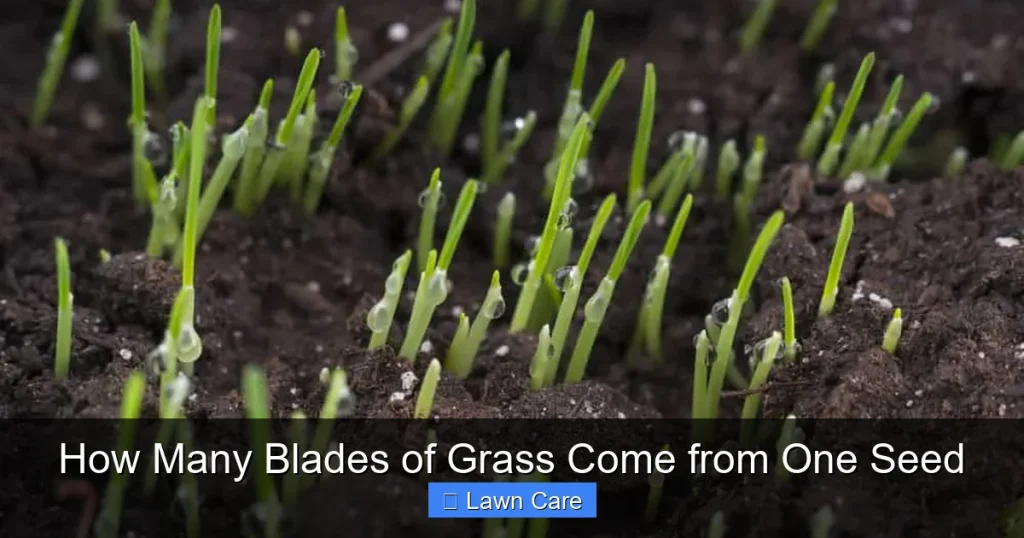
Ever wondered how many blades of grass come from one seed? The answer is fascinating and depends on the grass type and growing conditions. While a single seed typically produces one main shoot, this shoot can branch out, and planting multiple seeds creates the lush lawn we desire. Understanding this is key to achieving a dense, healthy turf.
# How Many Blades of Grass Come from One Seed
Welcome, lawn enthusiasts! Have you ever looked out at your beautiful, green lawn and wondered about the tiny miracles happening beneath the surface? Specifically, you might have pondered: “How many blades of grass come from one seed?” It’s a common question that gets to the heart of understanding how lawns grow and thrive.
In this comprehensive guide, we’re going to dive deep into this fascinating topic. We’ll explore the journey of a single grass seed from germination to becoming part of a lush, green carpet. You’ll learn about the biological processes involved, the factors that influence the number of blades, and why planting multiple seeds is the secret to a dense and healthy lawn.
By the end of this guide, you’ll have a clear understanding of:
* What happens when a grass seed germinates.
* The concept of tillering and how it creates multiple blades.
* The role of genetics and environmental conditions in blade production.
* Why the number of blades from a single seed isn’t the whole story for lawn density.
* Practical tips for encouraging a thicker lawn based on this knowledge.
Let’s get started on unraveling the mystery of the humble grass seed!
## The Journey of a Single Grass Seed: Germination
Everything begins with a single, small grass seed. When conditions are right – meaning there’s adequate moisture, warmth, and oxygen – the seed will begin its life cycle. This initial stage is called germination.
### H3: The First Sprout: Coleoptile and Radicle
When a grass seed germinates, two primary structures emerge first:
* The Coleoptile: This is a protective sheath that covers the emerging shoot (the future stem and leaves). Think of it as a tiny spearhead pushing through the soil.
* The Radicle: This is the embryonic root that anchors the seedling and begins to absorb water and nutrients.
At this initial stage, what emerges from the seed is a single shoot protected by the coleoptile. So, in its very first moments of life, one seed gives rise to one emerging shoot.
### H3: Emerging into the Light
Once the coleoptile pushes through the soil surface, it opens up. Inside, the first true leaf, the initial blade of grass, unfurls. At this point, it’s still a single blade, emerging from what was once a single seed. This is the very beginning of a new grass plant.
## Beyond the First Blade: The Magic of Tillering
This is where the answer to “how many blades of grass come from one seed” gets really interesting. While the seed itself directly produces only one initial shoot and leaf, that single grass plant can, and often does, produce many more blades. This process is called **tillering**.
### H3: What is Tillering?
Tillering is a natural growth habit in most grasses. It’s the development of new shoots, called “tillers,” from the base of the parent shoot. These tillers arise from buds located at the crown of the plant, just at or below the soil line.
Each tiller develops its own stem and leaves, essentially becoming a new grass plant that is genetically identical to the original. These new tillers grow outwards from the parent plant, creating a clump.
### H3: How Tillering Creates Multiple Blades
Imagine the first blade of grass emerging from the seed. Within weeks, new buds at its base will sprout. Each of these buds will grow into a new shoot, and each new shoot will produce its own leaves. So, what started as one blade from one seed can quickly become a small clump with multiple blades.
The number of tillers a grass plant can produce varies greatly. Some grasses are known for their prolific tillering, quickly forming a dense turf. Others tiller less, and might spread more by rhizomes or stolons (underground or above-ground runners) instead.
## Factors Influencing Tillering and Blade Count
The number of blades that ultimately sprout from the area of a single seed is not a fixed number. It’s a dynamic outcome influenced by a variety of factors:
### H3: Grass Type and Genetics
Different species and varieties of grass have different genetic predispositions for tillering.
* High-Tillerers: Many cool-season grasses, like Fescues and Ryegrasses, are excellent tillers. When planted, a single seed can lead to a plant with a dozen or more blades relatively quickly. This is why they are often used for creating dense, attractive lawns.
* Lower-Tillerers (but good spreaders): Some grasses, like certain types of Bermuda grass, might tiller less aggressively from a single seed but spread rapidly via underground rhizomes. This still contributes to a dense lawn, but through a different mechanism.
When you’re choosing grass seed, understanding the characteristics of different types is important. For example, knowing how many types of grass are there can help you select the best fit for your climate and desired lawn appearance.
### H3: Environmental Conditions
The environment plays a crucial role in how well a grass plant tillers.
* Sunlight: Adequate sunlight is essential for photosynthesis, the process by which plants create energy. More energy means more growth, including the energy to produce tillers. If a grass plant is shaded, it will likely produce fewer tillers. This is especially relevant for grasses like Bermuda, which have specific light requirements, as discussed in how many hours of sun does Bermuda grass need.
* Water: Consistent moisture is vital for healthy growth. Drought stress can shut down tillering as the plant focuses its energy on survival.
* Nutrients: A well-balanced fertility program, providing essential nutrients like nitrogen, is a major driver of tillering. Nitrogen, in particular, promotes leafy growth and the development of new shoots.
* Temperature: Different grass types have optimal temperature ranges for growth. When temperatures are ideal, tillering will be more vigorous. For example, understanding how long does it take for Bermuda grass to grow from seed also gives clues about its active growing periods where tillering would occur.
* Soil Health: Healthy soil provides the foundation for strong root systems and robust plant growth, supporting better tillering.
### H3: Mowing Practices
Believe it or not, how you mow your lawn can significantly influence tillering.
* Mowing Height: Mowing too short can stress the grass and reduce its ability to tiller. It can remove too much of the plant’s photosynthetic capacity. Maintaining a slightly higher mowing height, especially during establishment and active growth, can encourage more tillering.
* Sharp Mower Blades: Dull mower blades tear grass, causing stress and potential disease. Sharp blades make clean cuts, allowing the grass to recover more quickly and continue its growth processes, including tillering.
## Why One Seed Isn’t Enough for a Lush Lawn
Given that a single grass seed can produce multiple blades through tillering, you might wonder why we don’t just plant one seed per square foot. The answer lies in combining the science of tillering with the practical reality of lawn establishment.
### H3: Germination Rates
Not every single seed you plant will germinate. Factors like seed viability, storage conditions, soil contact, and environmental fluctuations mean that some seeds won’t sprout. It’s common for germination rates to be anywhere from 70% to over 90%, but rarely 100%.
### H3: The Need for Density
Even with prolific tillering, a single grass plant takes time to develop into a dense clump. If you only planted one seed per square foot, you would have a very sparse lawn for a considerable period, possibly even for its entire life if tillering is slow or conditions are poor.
The goal of seeding a lawn is to achieve a thick, uniform carpet of grass that crowds out weeds and provides an aesthetically pleasing appearance. This requires planting seeds at a rate that accounts for germination failures and ensures sufficient plants to create density. This is why understanding how many pounds of grass seed per square foot are recommended is so important; it’s about achieving that desired density.
### H3: Competition and Spreading
While tillering creates density from a single plant, some grasses also spread via underground rhizomes or above-ground stolons. These spreading mechanisms help fill in gaps and contribute to a dense turf over time, even if the initial tillering from a single seed isn’t extremely rapid.
## Estimating the Number of Blades from One Seed
So, let’s try to put a number on it. While it’s impossible to give an exact figure, we can provide a reasonable estimate.
* Initial Stage: 1 blade.
* Within a few weeks (with good conditions): 3-7 blades from tillering.
* Several months later (optimal conditions, good grass type): A single grass plant originating from one seed could potentially have 10-20 or even more blades.
However, remember that this is a single plant. To get the dense appearance of a lawn, you’re typically planting hundreds or thousands of seeds per square foot, each of which could potentially develop multiple blades.
## Practical Tips for a Denser Lawn
Understanding how many blades of grass come from one seed can help you implement better lawn care practices to encourage density:
### H3: Choose the Right Seed
Select a grass seed variety known for good tillering or strong spreading capabilities that is suitable for your climate.
### H3: Prepare Your Soil
Ensure your soil is well-drained, has adequate nutrients, and is properly pH-balanced. This creates the ideal environment for germination and tillering.
### H3: Water Wisely
Provide consistent moisture, especially during the germination and establishment phases. Avoid overwatering, which can lead to disease.
### H3: Fertilize Appropriately
A regular fertilization schedule, tailored to your grass type, will provide the necessary nutrients to promote vigorous growth and tillering.
### H3: Mow Correctly
Mow at the recommended height for your grass type, and always use a sharp mower blade. Avoid removing more than one-third of the blade height at a time.
### H3: Overseed Annually
Consider overseeding your lawn annually, especially in the fall, to fill in any thin spots and introduce new, healthy grass plants. This is a great way to maintain density. You might also be interested in how to keep birds from eating grass seed if you’re concerned about losing your valuable seed to hungry visitors.
## Troubleshooting: What If My Lawn is Still Thin?
If you’ve followed best practices and your lawn still seems thin, here are a few things to consider:
### H3: Poor Seed Quality
Were the seeds old? Were they stored properly? Low-quality or old seed can have poor germination rates and weak seedlings.
### H3: Inadequate Soil Contact
Did the seeds have good contact with the soil? If seeds lie on top of thatch or debris, they may not germinate well.
### H3: Pests or Diseases
Are birds eating your seed? Or are pests or diseases damaging your new grass? Look for signs of trouble and address them promptly. For example, if birds are a persistent problem, resources on 15 tips on how to keep birds from eating grass seed can be very helpful.
### H3: Incorrect Planting Time
Did you plant your seed at the right time of year for your grass type and climate? Planting too late or too early can significantly impact success.
### H3: Competition from Weeds
Are weeds taking over before the grass can establish? Proper weed control is crucial for a healthy, dense lawn.
## Conclusion
So, how many blades of grass come from one seed? The simple answer is that one seed primarily germinates into one shoot, which then develops into a plant that can produce many blades through tillering. However, the real story is that for a lush, dense lawn, the number of blades from a single seed is just one piece of the puzzle.
It’s the combination of genetics, favorable environmental conditions, proper lawn care, and planting enough seeds to account for germination rates that ultimately creates the beautiful green expanse we all desire. By understanding the biological processes at play, you’re better equipped to nurture your lawn and achieve that sought-after density. Happy gardening!
Key Takeaways
- A single grass seed primarily germinates into one main shoot. This shoot is the beginning of a new grass plant.
- Tillering is the process where a single grass plant produces multiple blades. This branching from the base of the plant significantly increases the number of blades.
- Environmental factors greatly influence tillering. Conditions like sunlight, water, nutrients, and mowing practices can encourage or inhibit branching.
- Grass seed varieties differ in their tillering ability. Some grass types naturally produce more tillers than others, leading to denser lawns.
- Planting multiple seeds is essential for a thick lawn. While one seed *can* produce multiple blades, you need many plants to achieve density.
- Germination rates impact the final number of grass plants. Not all seeds will sprout, so understanding germination rates helps predict lawn density.