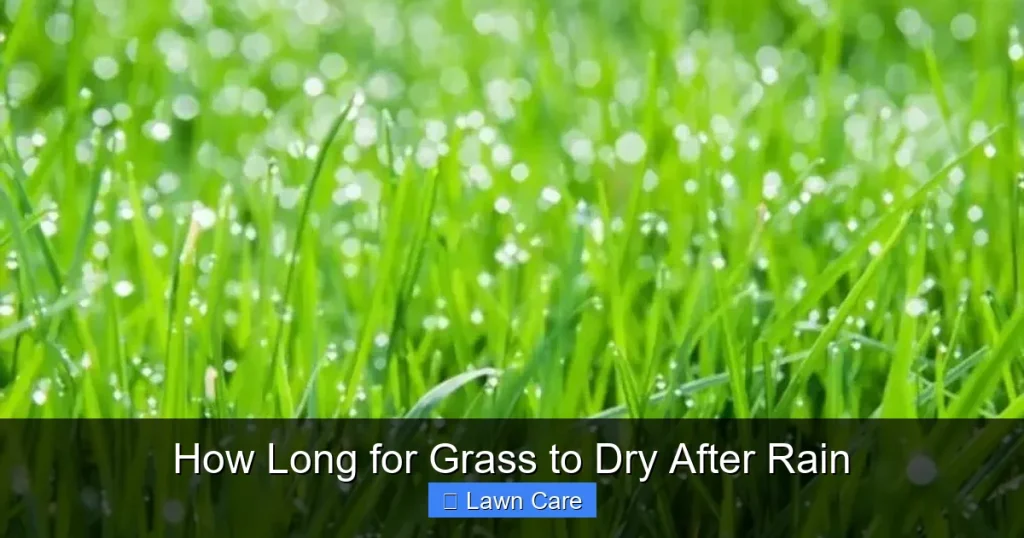
Understanding how long grass takes to dry after rain is crucial for lawn maintenance and safety. Factors like sunshine, wind, and grass type significantly influence this drying time. Generally, it can take anywhere from a few hours to a full day or more. Knowing when your lawn is dry enough prevents potential issues like fungal diseases and allows for activities like mowing and playing without damaging the grass.
# How Long for Grass to Dry After Rain
Rain is essential for a healthy lawn, but it also brings a common question: “How long does it take for grass to dry after the rain stops?” This is more than just a matter of convenience; knowing when your lawn is dry enough impacts its health, your ability to maintain it, and even your enjoyment of your yard. You don’t want to walk on wet grass too soon, and you certainly don’t want to mow it when it’s still dripping.
In this comprehensive guide, we’ll break down all the factors that influence how long your grass stays wet after a rainfall. We’ll explore the variables at play, provide practical tips for assessing dryness, and explain why it’s important to wait for your lawn to dry. By the end of this guide, you’ll have a much clearer understanding of how long to wait for grass to dry and what to do in different scenarios.
## Understanding the Factors Affecting Grass Drying Time
The time it takes for grass to dry after a rain shower isn’t a fixed number. It’s a dynamic process influenced by a combination of environmental conditions, grass characteristics, and soil properties. Let’s delve into each of these key players.
### Environmental Conditions
These are the external forces that directly impact how quickly water evaporates from your lawn.
#### Sunlight Intensity and Duration
Sunlight is a powerful drying agent. The more intense the sun, the faster water will evaporate from the grass blades and the soil surface.
* Full Sun: On a clear, sunny day, even after a heavy downpour, your grass might dry out within a few hours. The sun’s rays heat the grass and the ground, accelerating the evaporation process.
* Partial Sun/Cloudy: If the sky remains overcast, drying will take considerably longer. Without direct sunlight, the rate of evaporation is significantly reduced.
* Duration: Even if the sun comes out after the rain, if it’s only for a short period before clouds roll back in, the grass may not fully dry. Consistent sunshine is needed for rapid drying.
#### Wind Speed and Air Movement
Wind plays a crucial role in removing humid air from the surface of your lawn and replacing it with drier air. This circulation is vital for evaporation.
* Breezy Conditions: A gentle breeze can dramatically speed up drying. It whisks away the moist air that sits close to the grass blades, allowing more water to evaporate.
* Still Air: If there’s no wind, the air around the grass becomes saturated with moisture. This high humidity slows down or even halts the evaporation process, leaving your grass damp for much longer.
#### Temperature
Temperature is directly linked to the rate of evaporation. Warmer air can hold more moisture, and higher temperatures provide more energy for water to turn into vapor.
* Warm Weather: In hot temperatures, even with moderate sunlight, grass will dry much faster than in cooler weather.
* Cool Weather: During cooler periods, especially if combined with cloud cover, drying can take a very long time, potentially extending to a full day or more.
#### Humidity Levels
Humidity refers to the amount of water vapor already present in the air. High humidity means the air is already holding a lot of moisture, making it harder for more water to evaporate.
* Low Humidity: Dry air readily absorbs moisture, so your grass will dry quickly.
* High Humidity: In humid conditions, especially after a rain, the air is saturated. This significantly slows down the evaporation rate, meaning your grass will remain wet for a longer period. This is common in coastal areas or during certain weather patterns.
### Grass Characteristics
The type and condition of your grass also influence how long it takes to dry.
#### Grass Type and Blade Thickness
Different grass species have varying blade structures and densities.
* Thick, Broad-Leafed Grasses: Varieties like Fescue or some types of Ryegrass, which have broader blades and tend to grow densely, can trap more water. This means they might take longer to dry completely.
* Fine-Leafed Grasses: Thinner blades, such as those found in some fine fescues or certain Bermuda varieties, may shed water more easily and dry faster.
* Tall Grass: Longer grass blades create a denser canopy. This canopy can trap moisture, preventing sunlight and wind from reaching the lower parts of the grass and soil, thus slowing down drying. Keeping your grass at an optimal height is important.
#### Grass Health and Density
A healthy, dense lawn is often more resilient, but it can also hold more moisture.
* Dense Lawns: Very thick, healthy lawns, while beautiful, create a dense mat of foliage. This can act like a sponge, holding onto water.
* Thin or Sparse Lawns: Conversely, a lawn with less coverage might allow water to penetrate to the soil more quickly, and individual blades may dry faster due to better air circulation.
### Soil Properties
The ground beneath the grass plays a vital role in how quickly excess water disappears.
#### Soil Drainage
This is perhaps one of the most critical factors related to the soil. Good drainage means water can move away from the surface and seep down into the earth efficiently.
* Sandy Soils: These soils drain very quickly. Water runs through them easily, so the surface of the grass will dry out much faster once the rain stops.
* Clay Soils: Clay soils are dense and have small pore spaces. They drain slowly, meaning water can pool on the surface for longer periods, keeping the grass wet for an extended time.
* Compacted Soils: Over time, soil can become compacted, reducing its ability to absorb water. This can lead to surface water and slower drying, even if the soil type itself would normally drain well.
#### Soil Saturation
If the ground is already saturated from previous rain or excessive watering, it won’t be able to absorb much more water. This means excess water will remain on the surface, keeping the grass wet longer.
## How Long Does it Typically Take for Grass to Dry?
Given the myriad of influencing factors, providing a precise timeframe is impossible. However, we can offer general estimates based on common scenarios:
* **Light Shower (Sunny & Breezy):** 1-3 hours.
* **Moderate Rain (Sunny & Breezy):** 2-6 hours.
* **Heavy Rain (Sunny & Breezy):** 4-12 hours.
* **Light Shower (Cloudy & Still Air):** 4-8 hours.
* **Moderate Rain (Cloudy & Still Air):** 8-24 hours.
* **Heavy Rain (Cloudy & Still Air, Poor Drainage):** 24-48 hours or more.
These are rough guidelines. It’s always best to assess your lawn visually and by touch.
## Practical Steps to Determine if Your Grass is Dry
Don’t rely solely on general guidelines. Here’s how to check your lawn yourself:
### Visual Inspection
Walk around your lawn and look at the grass blades.
* Observe Droplets: Can you still see visible water droplets clinging to the blades of grass? If so, it’s still wet.
* Sheen on Blades: Sometimes, even without distinct droplets, the grass blades can have a shiny or wet sheen. This indicates moisture is still present.
* Color Change: While not always reliable, very wet grass can sometimes appear a darker shade of green.
### The “Touch Test”
The most definitive way to know is to physically touch the grass.
* Walk on a Small Area: Gently step onto a patch of grass. If your shoes or feet feel damp or wet, the grass is not dry enough.
* Rub Blades Between Fingers: Pinch a few grass blades between your fingers and rub them together. If you feel moisture, it’s still wet.
* Check Low Areas: Pay attention to any dips or low-lying areas in your lawn, as these tend to hold water longer.
## Why Waiting for Grass to Dry Matters
There are several important reasons why you should be patient and allow your lawn to dry before engaging in certain activities.
### Preventing Fungal Diseases
Wet grass is a breeding ground for fungal diseases. When grass stays wet for extended periods, fungi thrive.
* Spore Spread: Walking, mowing, or playing on wet grass can spread fungal spores, leading to infections like brown patch, dollar spot, or powdery mildew.
* Reduced Airflow: Activities on wet grass, especially mowing, can flatten the blades, further reducing airflow and creating an even more favorable environment for fungi.
### Avoiding Lawn Damage
Mowing or walking on damp grass can cause physical damage.
* Mower Damage: A wet lawn is more prone to ruts and unevenness if you mow it too soon. The mower’s weight can sink into the saturated soil.
* Blade Bruising: Mowing wet grass can tear or bruise the blades rather than cleanly cutting them. This makes the grass more susceptible to disease and pests. You can learn more about how long to wait after rain to mow lawn to ensure optimal conditions.
### Promoting Healthy Growth
Allowing grass to dry properly contributes to its overall health.
* Proper Respiration: Grass blades need to respire. If they are constantly matted down by water or activity, their ability to function optimally is hindered.
* Nutrient Uptake: While grass needs water, excessive saturation can sometimes interfere with nutrient uptake and root health.
## When Can You Safely Use Your Lawn?
Once you’ve determined your grass is dry, you can resume normal activities.
### Mowing Your Lawn
This is a common concern. It’s generally recommended to wait until the grass is completely dry before mowing. This ensures a clean cut, prevents the spread of diseases, and protects your mower from clogs and stress. For detailed guidance, consult articles on how long to wait to mow lawn after rain.
### Playing and Pets
Allowing children and pets to play on a dry lawn is safer and more enjoyable.
* Reduced Mud: Dry grass means less mud tracked into the house.
* Fewer Disease Risks: Less exposure to fungal spores and bacteria that thrive in damp conditions.
* Comfort: It’s simply more pleasant to play on dry grass!
### Applying Treatments
If you plan to apply any lawn treatments, such as fertilizers or herbicides, it’s crucial to ensure the grass is dry. Many treatments require specific conditions for effectiveness and safety, and applying them to wet grass can dilute them, reduce their efficacy, or even damage the lawn. For instance, if you’re wondering how long to keep dog off grass after fertilizing, drying time is a key consideration.
## Troubleshooting: What If My Grass Takes Forever to Dry?
If you consistently find your lawn taking an exceptionally long time to dry, it’s a sign that there might be underlying issues with your lawn care or soil.
### Poor Drainage Solutions
If your soil drains slowly, consider these options:
* **Aeration:** This process creates small holes in the soil, improving airflow and water penetration. This is a fantastic way to combat compaction and improve drainage. You might need to consider how long to wait to mow lawn after aerating before resuming regular mowing.
* **Topdressing:** Applying a layer of compost or soil can help improve the structure of compacted or clay-heavy soils over time.
* **French Drains or Drainage Systems:** For severe drainage problems, you might need to install a more permanent solution like a French drain.
### Dealing with Thatch Buildup
Excessive thatch (a layer of dead grass stems and roots) can act like a sponge.
* Dethatching: Regularly dethatch your lawn, especially in spring and fall, to remove this layer and improve water and air penetration.
### Overseeding for Density (with caution)
While a dense lawn can be good, an overly thick one can impede drying. If your lawn is sparse, consider overseeding with a suitable grass type. However, if your primary issue is slow drying, focus on drainage and thatch first. If you’re looking to reseed, understanding how long does it take for grass seed to grow is important for managing expectations.
## Conclusion
Understanding how long grass takes to dry after rain is a nuanced topic, but an important one for any homeowner. It’s a balance of nature’s forces – sun, wind, temperature, and humidity – interacting with your lawn’s unique characteristics and soil conditions. There’s no magic number, but by observing your lawn, performing simple tests, and considering the factors we’ve discussed, you can make informed decisions.
Waiting for your grass to dry is not just about preventing muddy footprints; it’s a key practice for maintaining a healthy, vibrant lawn, free from disease and damage. Be patient, observe your lawn’s needs, and you’ll be rewarded with a more resilient and beautiful outdoor space. Remember, a little bit of waiting can go a long way in protecting your lawn’s health and appearance.
Key Takeaways
- Drying Time Varies Greatly: There’s no single answer; grass drying time after rain depends on multiple environmental factors.
- Sunlight is Key: Sunny conditions speed up evaporation significantly, while cloudy skies prolong dampness.
- Wind Matters: A gentle breeze helps evaporate moisture, whereas still air traps humidity.
- Grass Type Influences Drying: Thicker, taller grass can hold more water and may take longer to dry than shorter, finer varieties.
- Soil Drainage Plays a Role: Well-draining soil allows water to seep away faster, aiding the drying process.
- Humidity Levels are Important: High humidity slows down evaporation, meaning your grass will stay wet longer.
- Timing is Crucial for Activities: Waiting until the grass is dry is important for mowing, playing, and preventing disease.