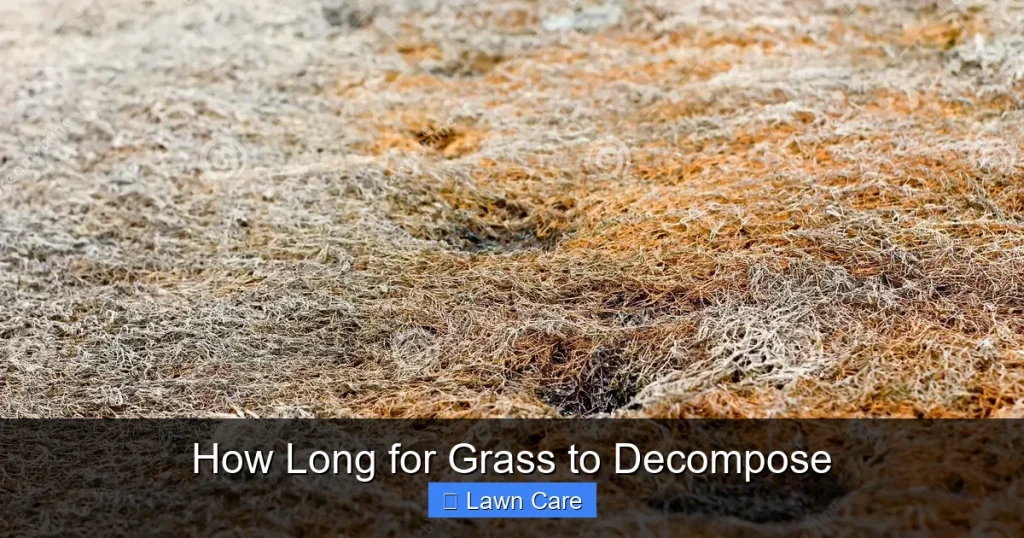
Understanding how long grass takes to decompose is key to effective lawn care. Factors like moisture, temperature, and grass type significantly influence the breakdown process. By managing these elements, you can ensure grass clippings enrich your soil rather than creating thatch. This guide will explore the science behind grass decomposition, offering practical tips to speed it up.
# How Long for Grass to Decompose
Tired of seeing those unsightly piles of grass clippings linger on your lawn after a mow? You might be wondering just how long it takes for grass to actually break down. It’s a common question among homeowners who want a healthy, vibrant lawn without the hassle of dealing with slow-decomposing organic matter. This guide will dive deep into the science behind grass decomposition, explain the factors that influence its speed, and provide actionable tips to help your grass break down faster, turning potential lawn nuisances into valuable soil enrichment.
When you mow your lawn, you’re essentially creating organic material that, under the right conditions, will decompose and return nutrients to the soil. This process is vital for a healthy ecosystem. However, sometimes this breakdown takes longer than we’d like, leading to thatch buildup and a less-than-pristine appearance. We’ll cover everything you need to know to understand and optimize this natural process.
## Understanding the Decomposition Process
Decomposition is the natural breakdown of organic materials into simpler inorganic matter. For grass, this means the complex compounds in plant cells are broken down by a variety of organisms, primarily microorganisms like bacteria and fungi. These tiny helpers consume the grass clippings, releasing carbon dioxide, water, and essential nutrients like nitrogen, phosphorus, and potassium back into the soil.
Think of it like a natural recycling system for your lawn. When grass decomposes effectively, it provides food for your soil and, in turn, for your grass. This is why mulching your grass clippings is often recommended as a sustainable and beneficial lawn care practice.
### The Role of Microorganisms
The unsung heroes of decomposition are the microscopic organisms that live in your soil. Bacteria are the workhorses, rapidly consuming softer, greener grass clippings. Fungi, on the other hand, are excellent at breaking down tougher, drier materials, like older grass or thatch.
In a healthy soil ecosystem, billions of these microorganisms are actively working. The more diverse and active your microbial population, the faster your grass will decompose. Factors like soil health, aeration, and moisture directly impact the activity of these tiny decomposers.
### What Happens During Decomposition?
The process involves several stages. Initially, when grass is freshly cut, it’s rich in moisture and nitrogen, making it easily digestible for bacteria. As it begins to break down, its structure changes, and it becomes more accessible to fungi. Over time, the organic matter is transformed into humus, a stable form of organic material that improves soil structure, water retention, and nutrient availability.
The goal is for this transformation to happen efficiently. When it doesn’t, you end up with a layer of partially decomposed grass, known as thatch, building up on your lawn.
## Factors Affecting Grass Decomposition Time
The question “how long for grass to decompose” doesn’t have a single, simple answer because numerous factors influence the speed of this natural process. Here are the most significant ones:
### Moisture Content
This is arguably the most crucial factor. Microorganisms need water to survive and thrive.
* **Too Dry:** If the grass clippings are too dry, the microorganisms can’t work effectively, and decomposition slows down considerably. This is why lawns in arid regions or during dry spells might see slower decomposition. If your lawn isn’t retaining moisture well, you might need to consider how long to run sprinklers for deep watering.
* **Too Wet:** Conversely, if the area is waterlogged, oxygen can be pushed out, creating anaerobic conditions. While some anaerobic decomposition occurs, it’s much slower and can produce unpleasant odors. It also favors different types of microbes that are less efficient at breaking down organic matter quickly. Maintaining the right soil moisture is key, and understanding how to maintain soil moisture for healthy grass is essential.
* **Just Right:** Ideal moisture levels allow for optimal microbial activity. The grass should feel damp, like a wrung-out sponge, but not soaking wet.
### Temperature
Like most biological processes, decomposition is highly dependent on temperature.
* **Warm Temperatures:** Decomposition happens fastest in warm weather, typically between 70°F and 90°F (21°C to 32°C). This is why you often see your lawn growing and decomposing more rapidly in the peak of summer.
* **Cool Temperatures:** As temperatures drop, microbial activity slows down significantly. In winter, decomposition almost grinds to a halt. Grass clippings left on the lawn during cold months will remain largely intact until warmer weather returns.
* **Freezing:** Frost and freezing temperatures will pause decomposition until the soil thaws.
### Aeration and Oxygen
Microorganisms involved in rapid, efficient decomposition are aerobic, meaning they need oxygen.
* **Good Aeration:** Well-aerated soil allows oxygen to penetrate, fueling the aerobic microbes. This is why aerating your lawn periodically can improve decomposition rates.
* **Poor Aeration:** Compacted soil, or thick layers of thatch, can limit oxygen supply. This can lead to slower, anaerobic decomposition, which is less efficient and can contribute to a pungent smell.
### Grass Type and Condition
Not all grass is created equal when it comes to decomposition.
* **Leafy and Green:** Freshly cut, leafy, and nitrogen-rich grass clippings decompose relatively quickly. These are like a fast-food meal for microbes.
* **Dry and Stiff:** Older, dry grass, or grass that has been left to mat on the lawn for too long, will take longer to break down. These materials are tougher and may require more fungal activity.
* **Thatch:** The layer of dead and living grass just above the soil surface, known as thatch, can be particularly slow to decompose if it becomes too thick.
### Particle Size
The smaller the pieces of grass, the more surface area is exposed to microorganisms, and the faster they can be broken down.
* **Finely Mulched:** When your mower blades are sharp and set to cut at an appropriate height, the clippings will be finer and scatter more easily, leading to faster decomposition. This is the benefit of using a mulching mower.
* **Large Clumps:** If you mow very long grass, or if your mower isn’t effectively breaking down clippings, large clumps can form. These take much longer to decompose and can smother the grass beneath them.
## How Long Does Grass Take to Decompose? A General Timeline
Given the many variables, it’s difficult to provide an exact timeframe. However, we can offer a general range:
* **Ideal Conditions (Warm, Moist, Aerated Soil):** Freshly cut grass clippings, mulched finely and left on the lawn during warm, moist weather, can decompose significantly within **1 to 4 weeks**.
* **Average Conditions:** In typical lawn conditions with moderate temperatures and moisture, decomposition might take anywhere from **4 to 8 weeks**.
* **Less Ideal Conditions (Cool, Dry, Compacted Soil):** If the weather is cool, the soil is dry, or aeration is poor, grass clippings can take **2 to 6 months or even longer** to fully decompose. In winter, they might essentially sit dormant until spring.
It’s important to note that this refers to the *visible* decomposition. The complete breakdown into stable humus can take longer.
## Benefits of Proper Grass Decomposition
When grass decomposes effectively, your lawn reaps several rewards:
### Natural Fertilization
Grass clippings are packed with nutrients that your lawn needs to thrive. Nitrogen, in particular, is released as the grass breaks down, acting as a natural fertilizer. This can reduce your need for synthetic fertilizers, saving you money and promoting a more sustainable lawn.
### Improved Soil Health
As organic matter decomposes, it improves the structure of your soil. It helps sandy soils retain moisture and nutrients, and it can improve drainage and aeration in clay soils. Healthy soil is the foundation of a healthy lawn.
### Reduced Waste
By allowing grass clippings to decompose on your lawn, you’re diverting yard waste from landfills, which is a more environmentally friendly approach to lawn care.
## How to Speed Up Grass Decomposition
If you find your grass clippings are taking too long to break down, or if you’re concerned about thatch buildup, here are several practical tips to encourage faster decomposition:
### 1. Mow Regularly and at the Right Height
* **Frequent Mowing:** Mowing more often, especially during peak growing seasons, means you’ll be cutting less grass each time. This results in finer clippings that are easier for microbes to break down. Avoid letting the grass get too long between mows.
* **Correct Mowing Height:** Don’t scalp your lawn. Maintaining an appropriate mowing height for your grass type ensures healthier growth and finer clippings. For most cool-season grasses, 2.5-3.5 inches is good, while warm-season grasses often prefer slightly shorter heights.
### 2. Use a Mulching Mower
* **Fine Mowing Action:** A mulching mower is designed to cut grass clippings into very small pieces and then recirculate them back onto the lawn. These tiny particles break down much faster than larger ones. If you’re not using one, consider upgrading or ensuring your current mower has a mulching function.
### 3. Keep Your Mower Blades Sharp
* **Clean Cuts:** Dull mower blades tear grass, creating ragged edges that are more prone to disease and take longer to decompose. Sharp blades make clean cuts, promoting healthier grass and faster breakdown of the clippings. It’s a simple step that makes a big difference in how well your mower functions and how your grass looks, impacting your ability to maintain a lawn mower for better grass cutting.
### 4. Water Wisely
* **Adequate Moisture:** Ensure your lawn is receiving adequate moisture. During dry periods, occasional deep watering can help keep the soil and grass clippings moist enough for decomposition. Overwatering should be avoided, as it can lead to anaerobic conditions. You can learn more about how long it takes for grass to absorb water to better understand its hydration needs.
### 5. Aerate Your Lawn
* **Improve Oxygen Flow:** Core aeration pulls plugs of soil out of the ground, creating holes that allow air, water, and nutrients to reach the root zone. This also helps break up thatch and improves the overall health of your soil, which in turn boosts microbial activity and decomposition rates.
### 6. Manage Thatch
* **Dethatch When Necessary:** If you notice a thick layer of thatch (more than half an inch), it’s time to dethatch. This process removes the matted layer of dead and living organic matter, allowing for better airflow and promoting decomposition.
### 7. Balance Soil Nutrients and pH
* **Healthy Soil Ecosystem:** Microorganisms need a balanced environment. Ensure your soil has the right pH levels for your grass type. Testing your soil and amending it as needed can create a more favorable environment for decomposition. For instance, balancing soil pH for better grass growth can indirectly improve decomposition.
### 8. Compost Large Piles (If Necessary)
* **Controlled Breakdown:** If you’ve had to collect large amounts of grass clippings (e.g., after a major cleanup or if you let the grass get too long), it’s often best to compost them. Adding them to a compost pile with other organic materials, like leaves and food scraps, allows for controlled decomposition and creates excellent fertilizer. How to mulch grass clippings for natural fertilizer is a great resource if you’re looking to utilize them effectively.
## Troubleshooting Slow Decomposition
Sometimes, despite your best efforts, grass decomposition seems exceptionally slow. Here are common issues and how to address them:
### Issue: Thick, Sticky Mats of Grass After Mowing
* **Cause:** Mowing very long grass, or mowing when the grass is wet, can lead to large clumps that smother the underlying lawn.
* **Solution:** Mow more frequently. If you must mow long grass, do so in multiple passes, removing some of the clippings between passes. Avoid mowing when the grass is wet, as it tends to clump.
### Issue: Persistent Thatch Layer
* **Cause:** The rate of thatch production exceeds the rate of decomposition. This can be due to over-fertilization with nitrogen, improper watering, or a lack of microbial activity in the soil.
* **Solution:** Aerate your lawn, dethatch if the layer is thick, and ensure you are not over-fertilizing. Review your watering habits to ensure they are appropriate for your lawn’s needs.
### Issue: Unpleasant Odors
* **Cause:** Anaerobic decomposition, often due to waterlogged soil or thick, matted grass preventing airflow.
* **Solution:** Improve soil aeration by dethatching and aerating. Adjust your watering schedule to prevent waterlogged conditions. Ensure grass clippings are spread out and not forming thick mats.
## Conclusion
Understanding how long grass takes to decompose is about more than just aesthetics; it’s about fostering a healthy, sustainable lawn ecosystem. While the exact timeframe is variable, influenced by moisture, temperature, aeration, and the grass itself, you can significantly influence the process. By implementing practices like regular mowing with sharp blades, using a mulching mower, watering wisely, and aerating your soil, you can encourage faster decomposition. This not only keeps your lawn looking tidy but also turns those grass clippings into a valuable source of nutrients, enriching your soil and promoting robust grass growth. Embrace the natural cycle, and you’ll be well on your way to a healthier, more vibrant lawn.
Key Takeaways
- Grass decomposition is a natural process driven by microorganisms that break down organic matter.
- The time it takes for grass to decompose varies greatly, typically ranging from a few weeks to several months.
- Key factors influencing decomposition speed include moisture, temperature, aeration, grass type, and particle size.
- Properly managed grass clippings can act as a natural fertilizer, returning valuable nutrients to the soil.
- Avoiding excessive thatch buildup is crucial, as it indicates slow decomposition.
- Understanding these elements helps in making informed lawn care decisions.