Understanding how long it takes grass to dry is crucial for lawn maintenance and enjoyment. This guide explores the various factors that affect drying time, from weather conditions to grass type and density. By knowing what influences your lawn’s moisture levels, you can make informed decisions about activities like mowing and watering, ensuring a healthier and more vibrant turf. Learn to predict and manage grass drying times effectively for optimal lawn care.
# How Long Does It Take Grass to Dry?
Ever stepped outside after a rain shower or a morning dew, only to find your lawn still damp hours later? Or perhaps you’ve wondered how long you need to wait before mowing after watering? Understanding how long it takes grass to dry is a fundamental aspect of good lawn care. It impacts everything from the health of your grass to the enjoyment of your outdoor space.
This guide will walk you through the ins and outs of grass drying times. We’ll explore all the factors that influence how quickly your lawn sheds moisture. You’ll learn what to expect, how to speed up the process naturally, and why waiting for your grass to dry is often the best course of action. Let’s dive in and get your lawn back to its dry, beautiful state!
## Understanding the Drying Process
When we talk about grass drying, we’re essentially referring to the evaporation of water from the blades, stems, and the soil surface. This process is influenced by a complex interplay of natural elements and lawn characteristics. It’s not a one-size-fits-all answer, as your lawn’s drying time can change from day to day.
The primary goal of drying is to remove excess surface moisture. This is important for preventing fungal diseases, avoiding the spread of pathogens, and making your lawn more resilient. If your grass stays wet for too long, it can become a breeding ground for problems.
## Factors Affecting How Long Grass Takes to Dry
Several key elements determine how quickly your lawn will dry. Understanding these will help you predict drying times and manage your lawn more effectively.
### 1. Environmental Conditions: The Big Picture
The weather is arguably the biggest determinant of how long it takes grass to dry. Think of it as the engine driving evaporation.
Sunlight and Temperature
Direct sunlight is a powerful drying agent. The sun’s rays heat up the grass blades and the soil, encouraging water to evaporate into the air. On a bright, sunny day, you’ll notice your lawn dries much faster than on a cloudy, overcast day. Similarly, warmer temperatures accelerate evaporation. Hot, dry days are prime for quick drying, while cool, damp days prolong the process.
Wind
Wind acts like a natural fan, constantly moving moist air away from the grass and replacing it with drier air. This continuous air circulation significantly speeds up evaporation. A gentle breeze can make a noticeable difference, and strong winds can dry a lawn remarkably quickly, assuming other conditions are favorable.
Humidity
Humidity is the amount of moisture already present in the air. When humidity is high, the air is saturated with water vapor, meaning it can hold less additional moisture. This slows down evaporation. Conversely, low humidity means the air is dry and can readily absorb water, leading to faster drying. Think about trying to dry your clothes on a humid day versus a dry, breezy day – it’s the same principle for your lawn.
Cloud Cover
Clouds block direct sunlight. Without the sun’s radiant heat, the grass blades and soil will remain cooler, and evaporation will be significantly slower. Even if the temperature is warm, heavy cloud cover will hinder the drying process.
2. Grass Type and Density: The Lawn’s Own Characteristics
Not all lawns are created equal. The type of grass you have and how densely it’s growing plays a crucial role in how it retains and releases moisture.
Grass Species
Different grass species have different leaf structures and growth habits. For example, some grasses have finer, more upright blades that allow air to circulate more freely, promoting faster drying. Others might have broader, more horizontal blades that can hold water more readily. For instance, if you’re curious about how long it takes for specific types to recover or grow, understanding their inherent characteristics is key.
Grass Density and Height
A thick, dense lawn will naturally take longer to dry than a sparse one. The dense canopy of leaves traps moisture. Similarly, longer grass blades can hold more water and create a more humid microclimate at the soil level, slowing down evaporation. A well-maintained lawn with consistent mowing heights often dries more predictably than an overgrown one.
3. Watering Practices: How You Hydrate
The way you water your lawn can have a direct impact on how long it stays wet.
Amount of Water
Simply put, the more water you apply, the longer it will take for the grass to dry. Deep, infrequent watering is generally better for lawn health, but it means the grass will be wetter for longer after each watering session compared to a light sprinkle. You can learn more about how long it takes for grass to absorb water to better time your watering cycles.
Timing of Watering
Watering in the early morning is generally recommended. This allows the grass to dry throughout the day with the help of sunlight and wind. Watering in the evening, however, means the grass will remain wet overnight, significantly increasing the risk of fungal diseases. If you water late, expect longer drying times, especially if followed by cool, humid nights.
4. Soil Conditions: The Foundation of Your Lawn
The soil beneath your lawn is a critical component in moisture management.
Soil Type
Sandy soils drain quickly, meaning excess water will pass through them rapidly, and the grass will dry faster. Clay soils, on the other hand, are dense and hold onto moisture for much longer. This means grass growing in clay soil will take considerably longer to dry out.
Soil Compaction
Compacted soil has poor drainage. Water tends to pool on the surface or sit in the top layers of soil for extended periods. This keeps the grass roots and blades consistently moist, leading to longer drying times. Aerating your lawn can improve drainage and help it dry more efficiently.
## How Long Does It Typically Take for Grass to Dry?
So, you want a number. The truth is, it’s highly variable. However, we can provide some general estimates based on common scenarios.
After Rain
After a moderate rain shower, on a warm, sunny, and breezy day, your lawn might be dry enough to walk on or mow in as little as 2 to 4 hours. However, if it’s overcast, humid, and still, it could take 6 to 12 hours, or even longer, into the next day.
After Dew
Morning dew usually evaporates with the rising sun. On a typical spring or summer morning, dew might be gone by mid-morning, say around 9 AM to 11 AM. However, if temperatures are cool and it’s particularly humid, dew can linger much later.
After Watering
If you water your lawn deeply in the morning on a sunny, breezy day, the surface might feel dry within 2 to 5 hours. If you’ve applied a large amount of water or the conditions are less favorable for drying, it could take 6 to 10 hours or even until the evening.
It’s important to note that “dry enough” is subjective. For walking and playing, you might be fine with slightly damp grass. For mowing, it’s best to wait until it’s substantially dry to avoid clumping and potential damage. For more in-depth discussions on drying times, you can explore resources that detail how long grass takes to dry or specifically how long wet grass takes to dry.
## Why Waiting for Grass to Dry is Important
You might be tempted to walk on or mow your wet lawn, but there are good reasons to be patient.
1. Preventing Disease Spread
Many lawn diseases, particularly fungal ones, thrive in moist conditions. Walking or mowing on wet grass can spread fungal spores from infected areas to healthy ones. This can quickly turn a minor issue into a widespread problem.
2. Avoiding Soil Compaction
When the soil is saturated, it’s softer and more susceptible to compaction. Heavy foot traffic or the weight of a mower can press down on the soil, reducing air pockets and hindering drainage and root growth. This can lead to weaker grass over time.
3. Protecting the Mower
Mowing wet grass can be a messy and inefficient job. Wet clippings tend to clump together, clogging your mower’s deck and chute. This can stress the mower’s engine and result in an uneven, ragged cut. It can also pull up grass blades rather than cutting them cleanly, potentially damaging the grass.
4. Reducing Tire Tracks and Ruts
Walking or driving on a very wet lawn can leave unsightly tire tracks or even ruts, especially if the soil is soft. This can take a long time to recover and can damage the turf.
- Drying time varies significantly: Grass can take anywhere from a few hours to a full day or more to dry completely, depending on numerous factors.
- Environmental conditions are key: Sunshine, wind, temperature, and humidity play a major role in how quickly moisture evaporates from your lawn.
- Grass type and density matter: Different grass species have varying leaf structures and growth habits that affect water retention and evaporation rates. Denser lawns tend to dry slower.
- Watering practices impact drying: The amount and timing of watering can influence how long the grass stays wet, with overwatering leading to longer drying periods.
- Activity timing is important: Waiting for grass to dry before mowing or playing on it can prevent damage, disease spread, and water saturation into the soil.
- Soil conditions influence moisture: Compacted or heavy clay soils retain more moisture, leading to longer drying times compared to sandy, well-draining soils.
Tips for Faster Grass Drying
While you can’t control the weather, you can implement practices that help your lawn dry more efficiently.
Maintain Proper Mowing Height
Mowing your grass at the recommended height for your grass type ensures good air circulation. Avoid letting the grass get too long, as this creates a denser canopy that traps moisture. Regularly trimming your lawn prevents it from becoming overly thick.
Ensure Good Drainage
If your lawn consistently stays wet for too long, consider aerating the soil. This process creates small holes, allowing water, air, and nutrients to penetrate deeper, improving drainage and reducing compaction. For persistent drainage issues, you might need to explore more advanced solutions like installing a drainage system.
Avoid Overwatering
Water your lawn only when it needs it. Look for signs of drought stress, such as wilting or a bluish-gray tint. Water deeply but infrequently, and always aim to water in the early morning. Understanding how long it takes for grass to absorb water can help you refine your watering schedule.
Clear Debris
Remove fallen leaves, grass clippings, and other organic debris from your lawn regularly. This debris can trap moisture and create shaded, damp areas where diseases can flourish and drying is inhibited.
Improve Air Circulation
Trim back overgrown shrubs or trees that might be casting shade and preventing airflow to certain parts of your lawn. Good air circulation around your lawn’s perimeter can also help.
Troubleshooting Common Drying Issues
If you’re consistently struggling with your grass taking too long to dry, it’s worth investigating the root cause.
Persistent Wetness
Problem: Your lawn remains soggy for days after rain or watering, even when the weather seems favorable.
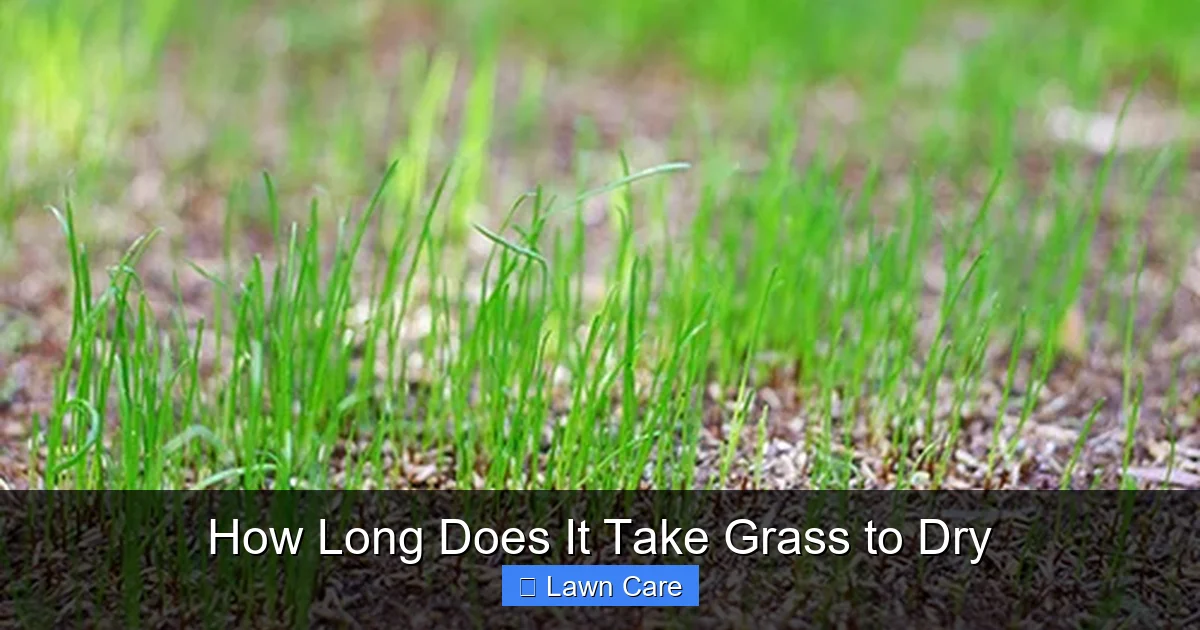
Visual guide about How Long Does It Take Grass to Dry
Image source: thegrassmaster.com
Possible Causes:
- Heavy clay soil with poor drainage.
- Soil compaction.
- Low spots where water collects.
- Overgrown surrounding vegetation blocking sunlight and airflow.
Solutions: Aeration, amending the soil with organic matter, improving grading to eliminate low spots, or trimming surrounding plants.
Disease Outbreaks After Wet Periods
Problem: You notice fungal spots or other diseases appearing on your grass after it stays wet for extended periods.
Possible Causes:
- Inadequate drying time allowing pathogens to thrive.
- Watering at the wrong time of day.
- Overwatering.
Solutions: Adjust watering schedules to early mornings, water only when necessary, ensure proper drying, and consider a fungicide if the problem is severe and persistent.
Remember, a healthy lawn is a resilient lawn. By understanding and managing drying times, you contribute to a robust turf that’s less prone to problems. For specific grass types, like Bermuda, understanding its growth cycle and germination can also be part of a comprehensive lawn care strategy. For example, knowing how long it takes for Bermuda grass seed to germinate helps in planning seasonal lawn care.
Conclusion

Visual guide about How Long Does It Take Grass to Dry
Image source: helpfulprofessor.com
The question of “how long does it take grass to dry” doesn’t have a single, simple answer. It’s a dynamic process influenced by a combination of weather, your lawn’s unique characteristics, and your own lawn care practices. By paying attention to sunlight, wind, humidity, temperature, grass type, soil health, and watering habits, you can gain a much better understanding of your lawn’s drying cycle.
Patience is often a virtue when it comes to your lawn. Waiting for grass to dry before engaging in activities like mowing or playing can prevent a host of potential problems, from disease spread to soil compaction. By implementing the tips for faster drying and understanding the factors at play, you’re well on your way to maintaining a healthier, more beautiful, and more enjoyable lawn.