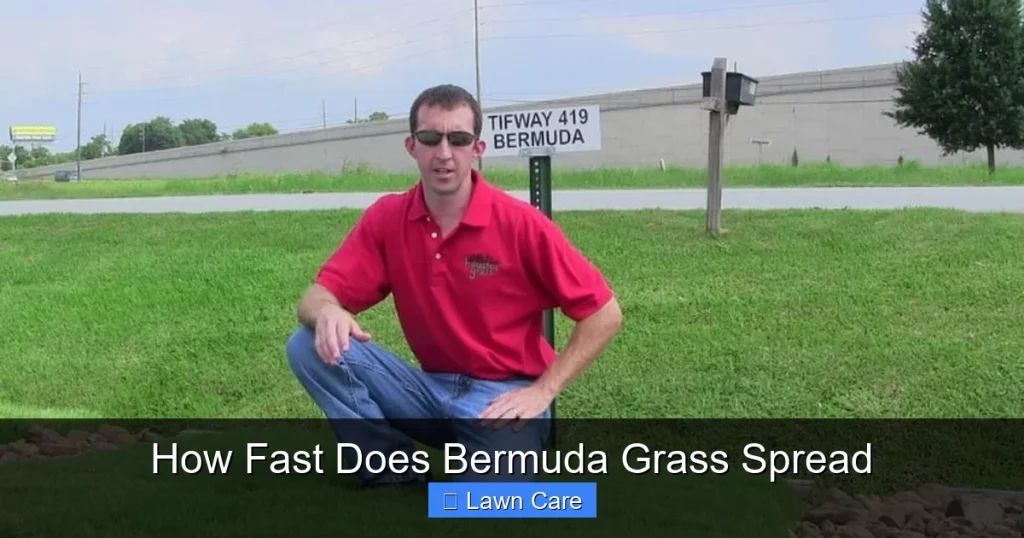
Bermuda grass is a fast-spreading, warm-season turf known for its resilience and ability to recover quickly. Its spread rate is influenced by factors like sunlight, water, and soil conditions, typically covering bare patches within weeks during its active growing season. Understanding these elements can help you cultivate a dense, beautiful lawn.
# How Fast Does Bermuda Grass Spread?
Imagine a lawn that can bounce back from wear and tear, fill in bare spots quickly, and give you that lush, green carpet you’ve always dreamed of. That’s the promise of Bermuda grass. If you’re considering this popular warm-season turf or already have it in your yard, you’re probably wondering, “How fast does Bermuda grass spread?” It’s a great question, and the answer can significantly impact your lawn care strategy.
Bermuda grass is renowned for its aggressive growth habit. It’s not just about growing tall; it’s about spreading wide and deep, creating a dense, resilient turf that can withstand heat, drought, and heavy foot traffic. This rapid spreading ability is one of its biggest selling points, making it a favorite for home lawns, sports fields, and golf courses across warmer climates. But how quickly can you expect it to fill in? Let’s dive into the factors that influence its spread.
## The Mechanics of Bermuda Grass Spread
Bermuda grass is a true workhorse when it comes to covering ground. Unlike some grasses that primarily spread by tillering (producing new shoots from the base of existing plants), Bermuda grass uses two powerful methods: stolons and rhizomes. Understanding these is key to grasping its speed.
### Stolons: The Above-Ground Express
Stolons are above-ground horizontal stems that creep along the surface of the soil. Think of them as little green highways for the grass. As a stolon grows, it can root at nodes (the points where leaves emerge) and produce new upright shoots, effectively creating a new plant. This process allows Bermuda grass to quickly cover bare patches and expand outwards. You can often see these runners snaking across your lawn, especially during peak growing season.
### Rhizomes: The Below-Ground Network
Rhizomes are similar to stolons but grow *beneath* the soil surface. These underground stems are equally important for Bermuda grass’s spread and resilience. Like stolons, rhizomes can root and produce new shoots, allowing the grass to fill in areas from below. This dual-action spreading mechanism is why Bermuda grass is so effective at filling in thin spots and recovering from damage. It’s a robust system that allows the grass to survive and thrive in challenging conditions.
## The Speed Factor: What Influences How Fast Bermuda Grass Spreads?
So, how fast do these stolons and rhizomes actually work? The truth is, there’s no single, definitive answer because several crucial factors dictate the speed at which Bermuda grass spreads. While it’s generally considered fast, “fast” can mean different things depending on your specific environment and lawn care practices.
### Sunlight: The Engine of Growth
Bermuda grass is a sun-worshipper. It absolutely thrives in full sun and requires at least 6-8 hours of direct sunlight per day to perform at its best. If your lawn is shaded by trees, buildings, or other structures, it will significantly slow down the spread of Bermuda grass. In shady areas, the grass will become weaker, its growth will be stunted, and it will struggle to fill in.
* **Practical Tip:** If you have shaded areas where Bermuda grass struggles, consider planting a shade-tolerant grass or creating a ground cover garden. For areas that get adequate sun, ensuring no new obstructions are blocking light is vital for its spread. For a deeper dive into its light needs, check out [how much sun does Bermuda grass need](https://lawnhelpful.com/how-much-sun-does-bermuda-grass-need/).
### Temperature: The Warm-Season Specialist
As a warm-season grass, Bermuda grass’s growth and spreading are directly tied to temperature. It becomes actively vegetative and begins to spread vigorously when soil temperatures consistently reach between 70°F and 85°F (21°C to 29°C). This typically occurs in late spring and throughout the summer months in its native climate zones.
* **Understanding the Seasons:** In cooler regions, Bermuda grass goes dormant in the fall and winter, turning brown. Its spreading activity completely ceases during this time. You’ll see its rapid spread begin again as temperatures warm up in the spring. If you’re asking [how long does it take to grow Bermuda grass](https://lawnhelpful.com/how-long-does-it-take-to-grow-bermuda-grass/) from seed, remember that warm soil temperatures are a critical prerequisite.
### Water: Fuel for Fast Growth
While Bermuda grass is known for its drought tolerance once established, consistent moisture is crucial for rapid spread, especially for new plantings or when trying to fill in bare spots. Adequate watering encourages root development and the growth of stolons and rhizomes.
* **Deep and Infrequent:** The best watering strategy for promoting spread is deep, infrequent watering. This encourages the grass to send its roots deeper into the soil, making it more resilient and promoting healthier above-ground growth. Aim for about 1 inch of water per week, including rainfall. During periods of active spread, you might need to water more frequently to keep the soil consistently moist. Don’t forget to consider [how much water does Bermuda grass need](https://lawnhelpful.com/how-much-water-does-bermuda-grass-need/) for optimal results.
### Soil Health and Fertility: The Nutritious Foundation
Healthy, fertile soil is the bedrock of any thriving lawn, and Bermuda grass is no exception. It needs essential nutrients to fuel its aggressive growth.
* **Nitrogen is Key:** Nitrogen is particularly important for promoting lush, green growth and encouraging the spreading action of Bermuda grass. Fertilizing during the active growing season, following recommended rates and schedules, can significantly boost its spread.
* **Soil pH Matters:** Bermuda grass prefers slightly acidic to neutral soil pH, ideally between 6.0 and 7.0. If your soil pH is too low or too high, it can inhibit nutrient uptake, slowing down growth and spread. A soil test can help you determine your pH and nutrient levels.
* **Aeration:** Compacted soil can suffocate grass roots and hinder spreading. Aerating your lawn annually or biennially can improve soil structure, allowing for better air, water, and nutrient penetration, which directly benefits Bermuda grass’s spread.
### Mowing Practices: The Right Height for Coverage
Your mowing habits play a surprising role in how fast Bermuda grass spreads. The ideal mowing height for most Bermuda grass varieties is quite low, typically between 0.5 and 1.5 inches.
* **Low Mowing Encourages Spread:** Mowing at a low height encourages the grass to spread horizontally via stolons and rhizomes, rather than growing tall and leggy. This low mowing also helps create that dense turf appearance.
* **Don’t Mow Too Short:** However, mowing too low can stress the grass and inhibit its growth and spread. Always ensure you’re not removing more than one-third of the grass blade at any given mowing.
## How Fast Can You Expect It? A Timeline of Spread
Given optimal conditions – plenty of sun, warmth, adequate water, good soil, and proper mowing – how fast does Bermuda grass spread in practice?
* **Active Growing Season:** During the peak of its growing season (summer), you can expect healthy Bermuda grass to spread several inches *per week*. This means that a small patch or a newly seeded area can fill in significantly over a few months.
* **Filling Bare Spots:** Small bare patches can often be covered within 2-4 weeks under ideal conditions. Larger areas or new sod installations will, of course, take longer to mature and fill in completely.
* **Establishment Time:** For a newly seeded Bermuda grass lawn, full establishment can take an entire growing season or even two. While it germinates and grows relatively quickly from seed (check out [how long does it take Bermuda grass seed to grow](https://lawnhelpful.com/how-long-does-it-take-bermuda-grass-seed-to-grow/)), achieving a dense, spread-out turf requires time and consistent care.
## Strategies to Encourage Faster Spread
If you’re looking to speed up the process or encourage your Bermuda grass to cover more ground, here are some proven strategies. These methods focus on creating the ideal environment for its vegetative growth.
### Starting from Seed vs. Sod vs. Plugs
The method you choose to establish your Bermuda grass will impact the initial speed of coverage.
* **Sod:** Offers the fastest initial coverage, giving you an instant lawn. However, the grass still needs time to establish its root system and spread.
* **Plugs:** Planting individual plugs of Bermuda grass is a common method for establishing a lawn or filling in spots. Each plug will begin to spread outwards, filling the space between them. With good care, these plugs can connect and cover an area within a single growing season. This is an excellent way to [get Bermuda grass to spread](https://lawnhelpful.com/how-to-get-bermuda-grass-to-spread/) in specific areas.
* **Seed:** While seeded lawns are cost-effective, they take the longest to establish and spread. Germination can take 1-4 weeks, and it will be several months before the grass has spread sufficiently to create a dense turf.
### Using Sprigs or Sod Strips
For accelerated spread, especially over large areas or to fill in extensive bare patches, using sprigs (small pieces of grass with roots and stems) or sod strips is highly effective. These provide a substantial “jump start” for the spreading process. When planted correctly and provided with optimal conditions, they can spread rapidly to cover the surrounding soil.
### Proper Nutrition and Watering
As discussed, consistent fertilization and adequate watering are paramount.
* **Fertilizing:** Apply a balanced fertilizer with a good amount of nitrogen during the spring, summer, and early fall. Look for a slow-release formula to provide a steady supply of nutrients.
* **Watering:** Ensure the soil remains consistently moist, but not waterlogged, during the establishment and active spreading phases.
### Aeration and Dethatching
* **Aeration:** As mentioned, regular aeration (once or twice a year) is vital for loosening compacted soil, allowing roots to grow deeper and stolons/rhizomes to spread more easily.
* **Dethatching:** Over time, a layer of thatch (dead grass stems and roots) can build up on your lawn. If this layer becomes too thick (over half an inch), it can impede water and nutrient penetration and hinder the grass’s ability to spread. Dethatching removes this excess thatch, opening up the surface for better growth.
### Overseeding for Bermuda Grass? Not Typically
It’s important to clarify that Bermuda grass doesn’t typically benefit from overseeding in the way cool-season grasses do. Overseeding involves sowing grass seed into an existing lawn. For Bermuda grass, the focus is on vegetative spread through its natural runners. While you *can* overseed Bermuda grass, it’s often done to introduce a specific variety or for temporary winter color, not to encourage its main spreading mechanism. If your goal is to fill in bare spots, promoting the growth of existing or planted Bermuda grass is far more effective.
## Common Challenges to Bermuda Grass Spread
Even with the best intentions, several factors can impede Bermuda grass’s spread:
* **Lack of Sunlight:** This is perhaps the most common reason for slow spread.
* **Inconsistent Watering:** Too little or too much water can both cause problems.
* **Poor Soil Conditions:** Compacted, nutrient-poor soil is a major hurdle.
* **Pests and Diseases:** Active infestations can weaken the grass and halt its progress.
* **Herbicides:** Accidental application of broadleaf or grass-killing herbicides can kill or damage young spreading grass.
## Conclusion: Patience and Care for Rapid Coverage
So, how fast does Bermuda grass spread? Under ideal conditions during its warm growing season, it can spread several inches per week, rapidly filling in bare patches and creating a dense, resilient turf. Its natural ability to spread via stolons and rhizomes makes it a highly effective grass for lawns that see a lot of activity or experience challenging weather.
However, “fast” is relative. Establishing a complete, mature Bermuda grass lawn from seed can take time, often a full growing season or more. The key to maximizing its spread rate lies in providing it with the perfect environment: abundant sunlight, consistent moisture, fertile soil, and proper maintenance. By understanding the factors that influence its growth and implementing the right care strategies, you can encourage your Bermuda grass to spread quickly and give you that beautiful, robust lawn you desire. For more on cultivating a thriving Bermuda lawn, explore resources like [how to make Bermuda grass spread](https://lawnhelpful.com/how-to-make-bermuda-grass-spread/) and [how to help Bermuda grass spread](https://lawnhelpful.com/how-to-help-bermuda-grass-spread/).
Key Takeaways
- Bermuda grass spreads rapidly through both stolons (above-ground runners) and rhizomes (below-ground stems), allowing it to quickly fill in gaps.
- Optimal conditions for fast spread include plenty of sunlight, adequate water, and fertile soil.
- During its active growing season (warm months), Bermuda grass can spread several inches per week.
- Factors like temperature, mowing height, and fertilization significantly impact how fast Bermuda grass spreads.
- Overseeding is not the primary method for Bermuda grass expansion; it relies on vegetative growth.
- Patience is key; while it spreads quickly under ideal conditions, establishing a dense turf takes time and consistent care.
Quick Answers to Common Questions
What are the main ways Bermuda grass spreads?
Bermuda grass primarily spreads through stolons (above-ground runners) and rhizomes (below-ground stems), which allow it to quickly cover bare areas and fill in gaps.
Does Bermuda grass spread faster in full sun or shade?
Bermuda grass spreads significantly faster in full sun, as it requires at least 6-8 hours of direct sunlight daily for optimal growth and spreading.
How quickly can Bermuda grass cover a bare spot?
Under ideal conditions (warm temperatures, sunlight, water), Bermuda grass can cover small bare spots within 2-4 weeks.
What role does temperature play in Bermuda grass spread?
Bermuda grass spreads vigorously when soil temperatures are consistently between 70°F and 85°F (21°C to 29°C), typical of late spring and summer months.
Is it better to plant Bermuda grass from seed or sod for faster spread?
Planting from sod provides the fastest initial coverage, but for filling in specific bare spots, plugs or sprigs are often more effective for encouraging rapid spread in those targeted areas.
Frequently Asked Questions
How much sunlight does Bermuda grass need to spread quickly?
Bermuda grass needs at least 6 to 8 hours of direct sunlight per day to spread quickly. Insufficient sunlight will significantly slow down its growth and spreading capabilities.
Will watering my Bermuda grass more often make it spread faster?
While consistent moisture is essential for spread, overwatering can be detrimental. Deep, infrequent watering is best to encourage root growth and horizontal spreading. Aim for about 1 inch of water per week.
What soil conditions are best for fast Bermuda grass spread?
Bermuda grass thrives in well-draining soil with a slightly acidic to neutral pH (6.0-7.0). Adequate fertility, especially nitrogen, is crucial for fueling its aggressive spread.
How does mowing height affect Bermuda grass spread?
Mowing Bermuda grass at a low height (0.5 to 1.5 inches) encourages it to spread horizontally via stolons and rhizomes. However, mowing too low can stress the grass and hinder its growth.
Can I speed up Bermuda grass spread by fertilizing?
Yes, regular fertilization during the active growing season, particularly with nitrogen-rich fertilizers, provides the nutrients Bermuda grass needs to grow and spread more rapidly.
What is the fastest way to establish a spreading Bermuda grass lawn?
The fastest way to achieve a spreading Bermuda grass lawn is typically by using sod. For filling in patches, plugs or sprigs planted in optimal conditions will spread relatively quickly over the season.