
Manual lawn aerators are a great, budget-friendly tool for improving soil health and aeration in smaller or moderately compacted lawns. While they require physical effort, they offer significant benefits like better water and nutrient penetration, leading to a healthier, more vibrant turf.
Are you dreaming of a lush, green lawn that’s the envy of your neighborhood? We all want that perfect turf, but sometimes, our soil needs a little help to get there. One of the unsung heroes in lawn care is the humble lawn aerator. Today, we’re diving deep into how effective manual lawn aerators really are. You might be wondering if all that pushing and pulling is worth it. Let’s find out!
Manual lawn aerators are designed to poke holes in your soil. Seems simple, right? But those little holes do a world of good for your grass. They help air, water, and nutrients reach the grass roots. This is super important, especially if your lawn gets a lot of foot traffic or has heavy, clay-like soil.
When soil gets packed down, it’s hard for anything to get through. Think of it like trying to drink through a straw that’s been squashed – nothing gets in! Aeration fixes this. And while there are fancy powered versions, many homeowners find success with manual lawn aerators. We’ll explore their strengths, weaknesses, and when they’re your best bet for a healthier lawn.
- Manual lawn aerators are effective for smaller lawns or specific problem areas where significant compaction exists.
- They require considerable physical exertion but are a cost-effective alternative to powered aerators.
- Regular use promotes better water and nutrient penetration into the soil, crucial for root health.
- Manual aeration helps reduce soil compaction, allowing grass roots to grow deeper and stronger.
- They are best suited for loosening soil and creating pathways for air and essential elements.
- The effectiveness depends on soil type, the degree of compaction, and consistent application.
- For large lawns or severe compaction, powered aerators might be more efficient, but manual tools still offer value.
Quick Answers to Common Questions
Are manual lawn aerators difficult to use?
Manual lawn aerators require physical effort, especially core aerators on compacted soil. However, they are generally simple to operate once you get the hang of the technique. It’s more about endurance than complex operation.
Can a manual aerator damage my lawn?
When used correctly, manual aerators do not damage your lawn; they improve it. However, using spike aerators on very hard soil might bend grass roots instead of creating proper aeration holes, which is less ideal but not typically damaging in the long run.
How often should I use a manual lawn aerator?
For most lawns, once a year is sufficient, typically during the active growing season. If you have heavily compacted soil or experience a lot of foot traffic, you might consider aerating twice a year (spring and fall).
What is the main difference between a spike aerator and a core aerator?
A core aerator removes small plugs of soil, which is generally more effective for relieving deep compaction. A spike aerator simply punches holes into the soil, which is less effective for severe compaction but easier to use on lighter soils.
Will using a manual aerator make my grass grow thicker?
While a manual aerator doesn’t directly stimulate grass growth, it creates an environment where grass can grow thicker and healthier. By improving air, water, and nutrient access to the roots, it supports stronger root development, which leads to a denser, more robust lawn.
📑 Table of Contents
- Understanding Soil Compaction and Aeration
- How Manual Lawn Aerators Work
- Effectiveness of Manual Aerators: The Pros
- Effectiveness of Manual Aerators: The Cons
- When Are Manual Aerators Most Effective?
- Tips for Maximizing the Effectiveness of Manual Aerators
- Manual vs. Powered Aerators: A Final Look
- Conclusion
Understanding Soil Compaction and Aeration
Before we talk about aerators, let’s chat about why soil compaction is such a big deal for your lawn. Imagine your soil as a packed gymnasium. When the seats are all full and there’s no space to move, it’s hard for fresh air or water to get around. That’s what happens to your lawn soil when it becomes compacted.
Compacted soil has very little air space. This means it’s difficult for water to soak in. Instead, water might just run off the surface, taking valuable topsoil with it. It also makes it tough for oxygen to reach the grass roots. Roots need oxygen to survive and grow. When they can’t get it, the grass becomes weak, thin, and more susceptible to problems like drought stress, disease, and even common lawn pests.
Think about areas of your lawn where people walk a lot, like pathways or around play areas. These spots often get the most compacted. Even heavy machinery, like riding lawn mowers on wet grass, can contribute to this. Over time, without intervention, your soil can become so dense that your grass struggles to thrive, no matter how much you water or fertilize it. This is where aeration comes into play.
Why Aeration is Crucial for Lawn Health
Aeration is the process of mechanically removing small plugs of soil and thatch from your lawn. This creates tiny holes that allow air, water, and nutrients to penetrate deeply into the soil. It’s like giving your lawn a breath of fresh air! This is essential for several reasons:
- Improved Water Penetration: With compacted soil, water tends to run off. Aeration creates channels for water to seep down to the root zone, ensuring your grass gets the hydration it needs.
- Enhanced Nutrient Uptake: Fertilizers and other soil amendments can also reach the roots more effectively through these channels, leading to healthier, more vibrant growth.
- Better Air Circulation: Roots need oxygen. Aeration increases the air pockets in the soil, allowing roots to breathe and grow stronger.
- Reduced Thatch Buildup: Thatch is a layer of dead grass and organic matter that can build up on your lawn. Excessive thatch can prevent water and nutrients from reaching the soil. Aeration helps break down this layer.
- Stronger Root Development: When roots can grow deeper into the soil without encountering dense resistance, your grass becomes more drought-tolerant and resilient.
Without aeration, your lawn is essentially suffocating. It’s like trying to grow plants in a brick. So, the goal of any aerator, manual or powered, is to create these essential pathways for your lawn’s survival and growth.
How Manual Lawn Aerators Work

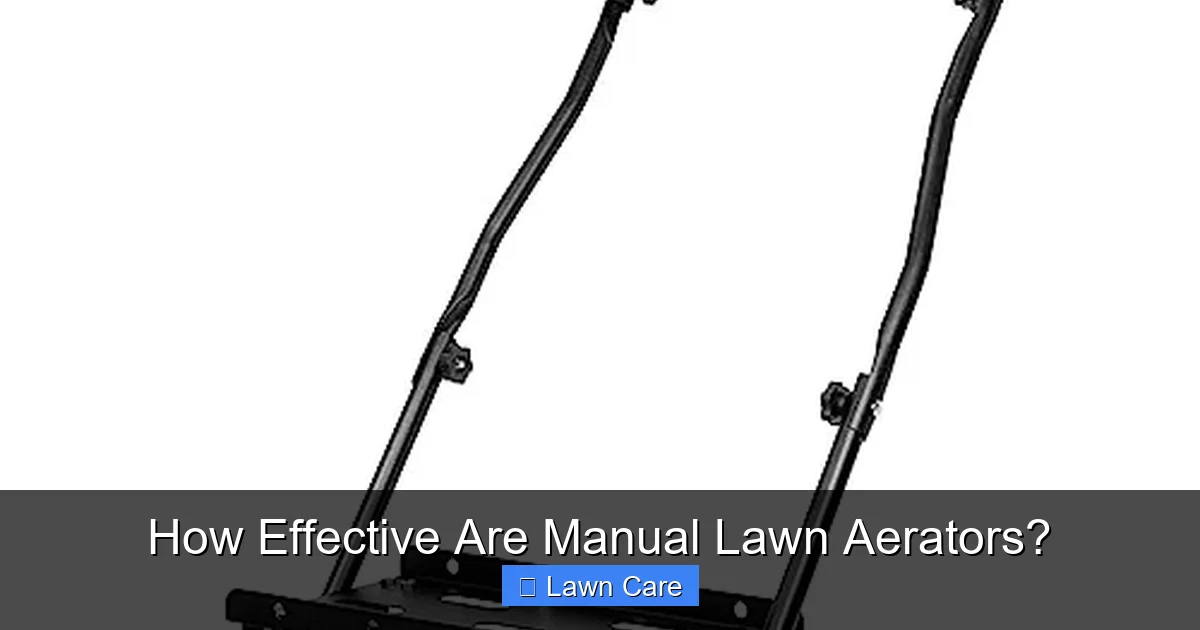
Visual guide about How Effective Are Manual Lawn Aerators?
Image source: images.squarespace-cdn.com
Manual lawn aerators are straightforward tools. They typically come in two main forms: core aerators and spike aerators. Both aim to create holes in the soil, but they do it slightly differently, and their effectiveness can vary.
Core Aerators: The Plug-Pulling Powerhouses
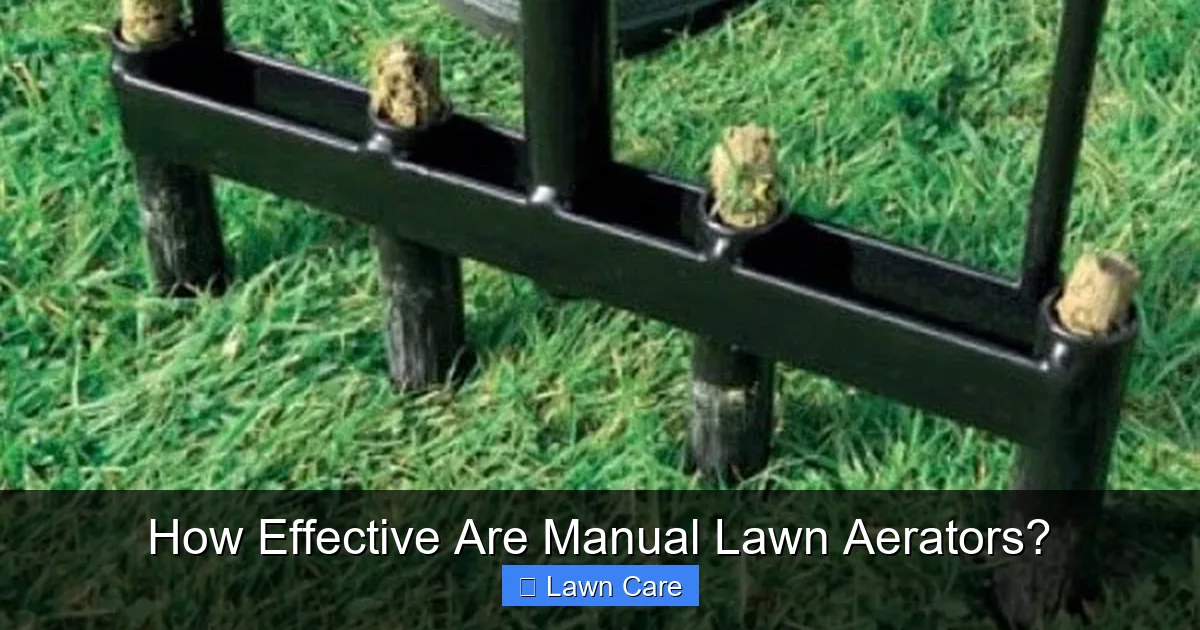
A core aerator is often shaped like a large, hollow spike or a series of tines. You push the tool into the ground, twist, and then pull out a small plug of soil. This is called “core aeration.” These plugs are usually about half an inch to three-quarters of an inch in diameter and can go several inches deep.
How they are used:
- Position the aerator over the spot you want to treat.
- Step on the footplate (if it has one) or push down firmly to insert the tines into the soil.
- Twist the handle or the aerator itself to loosen the soil plug.
- Lift the aerator out, leaving a small core of soil on the surface.
- Repeat this process across the entire lawn, overlapping slightly for best coverage.
The removed soil plugs are left on the surface to break down naturally, adding organic matter back into the soil. This method is generally considered more effective because it actually removes soil, creating a more significant opening.
Spike Aerators: The Simpler, Faster Approach
Spike aerators are simpler tools. They usually have hollow or solid tines that are pushed into the soil. Some are foot-powered, where you step on a pedal to drive the tines in. Others are hand-pushed devices with multiple spikes.
How they are used:
- Position the spike aerator over the area.
- Apply downward pressure (by stepping or pushing) to drive the spikes into the ground.
- Lift the aerator and move to the next spot.
The key difference here is that spike aerators don’t remove soil. They merely punch holes or create depressions. This can still help with surface-level compaction and water penetration, but it’s less effective at alleviating deeper compaction issues. For very dense soil, spike aerators might simply bend the grass roots rather than creating true aeration.
Effectiveness of Manual Aerators: The Pros
Visual guide about How Effective Are Manual Lawn Aerators?
Image source: m.media-amazon.com
So, how effective are manual lawn aerators? They have some fantastic benefits, especially for certain situations. Let’s break down the advantages.
Cost-Effectiveness: A Budget-Friendly Choice
One of the biggest draws of manual lawn aerators is their price. Compared to renting or buying powered aerators (which can easily cost hundreds of dollars), manual aerators are incredibly affordable. You can find good quality spike aerators for under $50, and even robust core aerators for around $100-$200. This makes them an accessible option for homeowners on a budget. If you’re looking to improve your lawn without breaking the bank, a manual aerator is definitely worth considering. For example, checking out how much lawn aerators cost will show you the significant savings with manual options.
Accessibility and Ease of Storage
Manual aerators don’t require fuel, electricity, or complicated maintenance. They are simple tools that are always ready to go. Storage is also a breeze. Most manual aerators are relatively compact and can be stored in a shed, garage, or even on a wall hook, taking up minimal space. This is a big plus for homeowners with limited storage solutions. Unlike bulky machines, they’re easy to grab and use whenever needed.
Great for Smaller Lawns and Targeted Areas
If you have a small lawn, say 1,000 square feet or less, a manual aerator can be perfectly adequate. You can cover the entire area in a reasonable amount of time. Even on larger lawns, manual aerators excel at spot-treating particularly compacted areas. Maybe your dog runs the same path every day, or a certain part of the yard gets waterlogged. You can use a manual aerator to tackle these specific problem zones without having to bring out a large, expensive machine.
Provides a Good Workout!
Let’s be honest, using a manual aerator is a physical activity. It involves pushing, stepping, and pulling. For those who enjoy a good garden workout, this can be seen as a significant benefit! It’s a great way to get some exercise while also improving your lawn. It’s a productive use of your energy that directly contributes to a healthier outdoor space.
Environmentally Friendly
Manual aerators are the most eco-friendly option available. They produce no emissions and consume no fossil fuels. They are quiet and have minimal impact on the environment. If you’re committed to a sustainable approach to lawn care, a manual aerator is the way to go.
Effectiveness of Manual Aerators: The Cons
Visual guide about How Effective Are Manual Lawn Aerators?
Image source: plantedwell.com
While manual aerators have their charms, they aren’t without their limitations. Understanding these drawbacks is key to setting realistic expectations.
Labor-Intensive and Time-Consuming
This is the biggest drawback. Aerating an entire lawn with a manual tool is hard work. It requires significant physical effort, especially on tough, clay soils or heavily compacted areas. What might take an hour or two with a powered aerator could take several hours and a lot of sweat with a manual one. This can be discouraging for some homeowners, making them less likely to aerate as often as their lawn needs.
Limited Depth and Efficacy on Severely Compacted Soil
Manual aerators, particularly spike aerators, may struggle to penetrate deeply into very hard, compacted soil. They might bend grass blades or only create shallow holes, which don’t provide the deep aeration that severely compacted soil needs. Core aerators are better, but even they can be challenged by extremely dense ground. For lawns with very challenging soil conditions, manual tools might not be sufficient on their own.
Not Ideal for Large Lawns
If you have a large lawn, say over 3,000 square feet, using a manual aerator is likely to be an overwhelming task. The time and effort involved would be immense, and the results might not justify the exhaustion. In these cases, renting or buying a powered aerator becomes a much more practical and efficient solution.
Potential for Inconsistent Results
Achieving perfectly consistent aeration coverage with a manual tool can be tricky. It’s easy to miss spots or not insert the aerator deep enough in certain areas, especially when you start to get tired. This inconsistency means that some parts of your lawn might not receive the full benefits of aeration.
When Are Manual Aerators Most Effective?
Considering the pros and cons, there are specific scenarios where manual lawn aerators shine.
For Small Lawns (Under 1,000 sq ft)
As mentioned, if your lawn is on the smaller side, a manual aerator is a practical and effective tool. You can aerate your entire lawn in a single afternoon without it feeling like an insurmountable chore.
For Light to Moderate Soil Compaction
Manual aerators are best suited for lawns that have light to moderate compaction. This typically includes lawns with sandy loam soils or those that experience occasional foot traffic but aren’t constantly trampled. They are excellent for routine maintenance to prevent severe compaction from developing.
For Targeted Spot Treatment
If you only have a few specific areas of your lawn that are problematic due to compaction (e.g., around a swing set, garden gate, or pet activity zone), a manual aerator is perfect. You can quickly address these spots without needing to use a larger, more cumbersome machine.
For Budget-Conscious Homeowners
If you’re on a tight budget but still want to improve your lawn’s health, a manual aerator is a fantastic investment. The initial cost is low, and the long-term benefits to your turf can be significant. You can see comparable benefits to more expensive methods, albeit with more effort.
When You Prefer a More Hands-On Approach
Some people genuinely enjoy the physical aspect of lawn care and prefer manual tools. If this sounds like you, a manual aerator will fit right into your routine and provide a satisfying way to care for your lawn.
Tips for Maximizing the Effectiveness of Manual Aerators
To get the most out of your manual lawn aerator, follow these tips:
Timing is Key
The best time to aerate is when your grass is actively growing. For cool-season grasses (like fescue and bluegrass), this is typically spring and fall. For warm-season grasses (like Bermuda and Zoysia), it’s late spring and summer. Avoid aerating when the grass is dormant or stressed by extreme heat or drought.
Water Your Lawn Before Aerating
Watering your lawn a day or two before aerating can make the process easier and more effective. Moist soil is softer and easier to penetrate. However, avoid aerating waterlogged soil, as this can cause more harm than good.
Choose the Right Type of Manual Aerator
For most situations, a **core aerator** will be more effective than a spike aerator, especially if you have clay soil. It removes soil, creating better pathways for air and water. Spike aerators are better for loosening very light surface compaction.
Use Proper Technique
When using a core aerator, ensure you are inserting it deep enough into the soil and twisting to loosen the plug. For spike aerators, push them in as far as possible. Overlapping your passes will help ensure good coverage.
Don’t Be Afraid to Go Over Areas Multiple Times
If you notice an area is still quite compacted, don’t hesitate to go over it again. Consistent effort will yield better results.
Follow Up Appropriately
After aerating, consider applying a light layer of compost or topdressing. This material can fill the aeration holes and further improve soil structure. If you’re overseeding, this is also an ideal time to do it, as the seed can get good contact with the soil. After aerating, it’s often recommended to wait a little while before mowing. You can learn more about how long to wait to mow lawn after aerating to ensure the best results.
Maintain Your Aerator
Just like other lawn tools, keeping your manual aerator clean and well-maintained will ensure it functions correctly and lasts longer. If it’s a core aerator, ensure the tines are sharp and not bent.
Manual vs. Powered Aerators: A Final Look
When deciding on an aerator, it’s helpful to compare manual tools with their powered counterparts. You can read more about comparing manual, electric, and gas lawn aerators to get a full picture.
Manual aerators are champions of affordability and accessibility. They are perfect for small-scale tasks and homeowners who don’t mind a bit of physical labor. Their effectiveness is undeniable for routine maintenance and targeted problem areas, but they require more time and effort for larger jobs or severe compaction.
Powered aerators, on the other hand, are significantly more efficient for large lawns or heavily compacted soil. They can aerate quickly and to a greater depth. However, they come with a higher cost, require maintenance, and take up more storage space. For many homeowners, the choice comes down to lawn size, budget, and personal preference for the amount of physical work they’re willing to do.
Ultimately, the “effectiveness” of a manual lawn aerator is relative. If your expectations are aligned with its capabilities – for smaller lawns, moderate compaction, and a willingness to put in the work – then manual aerators are highly effective tools for achieving a healthier, more vibrant lawn.
Conclusion
So, how effective are manual lawn aerators? The answer is: very effective, under the right conditions and with the right expectations. They are fantastic, budget-friendly tools for improving soil health, water penetration, and nutrient uptake, especially for smaller lawns or specific compacted areas. While they demand more physical effort than their powered counterparts, they offer a rewarding and sustainable way to care for your turf.
By understanding the benefits and limitations, choosing the right type of manual aerator, and using proper techniques, you can significantly enhance the health and appearance of your lawn. Don’t underestimate the power of a simple tool wielded with consistent effort. Your lawn will thank you for it with deeper roots, better color, and improved resilience.
Frequently Asked Questions
Are manual lawn aerators worth the investment?
Yes, manual lawn aerators are a worthwhile investment for homeowners with small to medium-sized lawns or specific compacted areas. Their low cost and effectiveness in improving soil health make them a great value compared to more expensive options.
How do I know if my lawn needs aerating?
You can tell your lawn needs aerating if water doesn’t penetrate well, runoff is common, or your grass looks thin and unhealthy, especially in high-traffic areas. A simple test is to poke a screwdriver into the soil; if it’s difficult to push in, your soil is likely compacted.
Can I aerate my lawn when it’s very dry?
It’s generally not recommended to aerate a very dry lawn. Dry soil is hard and resistant, making aeration difficult and less effective. It’s best to water your lawn a day or two before aerating to soften the soil.
What should I do after aerating my lawn with a manual tool?
After aerating, you can leave the soil plugs to break down naturally. It’s also an excellent time to overseed or apply a topdressing of compost to further improve soil quality and fill the aeration holes.
Will aerating help with weeds?
Aerating doesn’t directly kill weeds, but a healthier, denser lawn is more resistant to weed invasion. By improving soil conditions, your grass can outcompete weeds more effectively.
How long will it take to see results after using a manual aerator?
You might see immediate improvements in water absorption. However, the full benefits, such as thicker grass and deeper root growth, typically become noticeable over several weeks to a few months as the grass responds to the improved soil conditions.