You've probably flipped over a patch of dead turf, found a handful of C-shaped white grubs, and wondered how they got there. The short answer to how do grubs get into soil is that adult beetles lay eggs directly in your lawn during summer, and those eggs hatch into larvae that live underground feeding on roots. They don't crawl in from somewhere else.
They start right where you find them.
Here's what most people miss. The beetles that produce those grubs are already living in your neighborhood. Female Japanese beetles, European chafers, and June bugs actively seek out moist, well-watered lawns with healthy root systems.
They're not random visitors. They're choosing your yard specifically because it gives their offspring the best chance of survival. Once you understand that selection process, prevention gets a lot clearer.
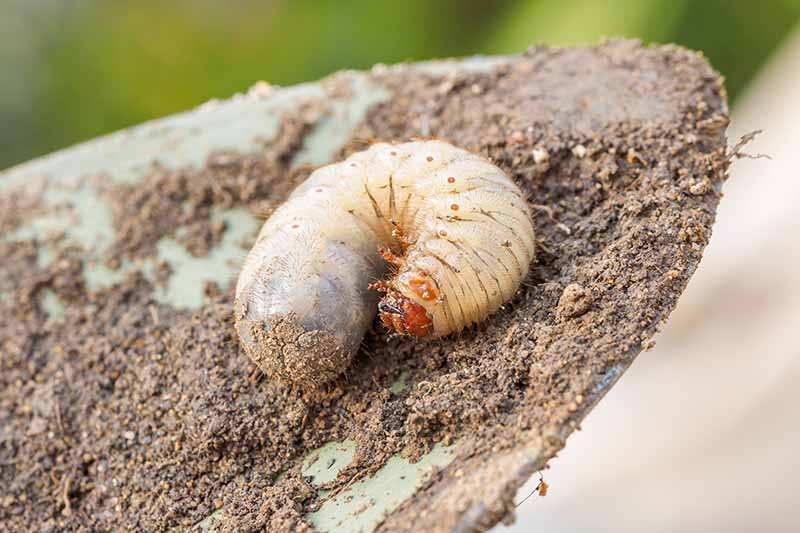
Image source: Bing (Web (fair-use with source credit))
Quick Answer
Grubs get into soil when adult scarab beetles lay eggs in your lawn during summer. Female beetles deposit 30 to 60 eggs about 2 to 4 inches deep in moist soil. The eggs hatch within 10 to 14 days into larvae that feed on grass roots.
The grubs don't migrate in from elsewhere. They develop right where the eggs were laid.
Why Getting This Wrong Costs You
The biggest mistake homeowners make is thinking grubs are something that "showed up" one day, like an invasion from a neighboring property. That misunderstanding leads to treating the symptom instead of the cycle. You might kill the grubs you see this fall, but if you don't address why beetles chose your lawn in the first place, you'll be doing it again next year.
Timing errors are expensive too. Most people don't notice grub damage until September or October, when brown patches appear and animals start digging. By then, the larvae are large, well-fed, and deeply entrenched.
Curative treatments at that stage are less effective and more costly than preventive approaches applied months earlier. Research from university extension programs consistently shows that preventive timing in late June through July delivers better results than waiting for visible damage.
There's also the risk of unnecessary treatment. Not every grub in your lawn signals a crisis. Healthy turf can tolerate a low population without visible harm.
Treating when you don't need to wastes money, disrupts beneficial soil organisms, and can create resistance issues with certain products over time.
What's Actually Happening Underground
White grubs are the larval stage of scarab beetles. They spend most of their lives below the surface, feeding on grass roots in the top few inches of soil. A grub's entire world is that narrow band of dirt, root tissue, and organic matter just beneath your lawn.
The damage happens because grubs sever roots as they feed. A small population might cause no visible stress. But once you cross roughly 10 grubs per square foot, the root loss outpaces the grass's ability to recover.
The turf starts thinning, then browning, and eventually you can roll it back like carpet because there's nothing anchoring it to the soil anymore.
What makes this tricky is that early damage looks exactly like drought stress. The grass fades to a dull bluish-gray before turning brown. If you grab a handful of affected turf and it lifts easily with little resistance, that's a strong indicator of root feeding below.
Pulling back a 1-foot square of sod and counting the grubs underneath is the only way to confirm what's actually going on.
The Full Grub Life Cycle: From Beetle to Soil
Understanding the full cycle is the key to knowing when and why grubs end up in your soil. It's not a random event. It's a predictable annual pattern driven by temperature, moisture, and beetle behavior.

Image source: Bing (Web (fair-use with source credit))
Adult emergence. Beetles that overwintered deep in the soil return to the surface in late spring or early summer, depending on species and region. Japanese beetles typically emerge in late June across the Northeast and Midwest. European chafers appear a few weeks earlier.
May beetles (June bugs) often show up in May, hence the name.
Mating and egg-laying. Within days of emerging, females mate and begin searching for egg-laying sites. This is the critical window. They fly during the day, land on grass, and burrow slightly into the soil to deposit eggs.
A single female can lay 30 to 60 eggs over her two-to-three-week lifespan, often spreading them across multiple spots in a lawn.
Egg stage. The eggs sit in the soil for 10 to 14 days before hatching. Moisture is essential here. Females actively avoid dry, compacted soil because eggs desiccate quickly without adequate humidity.
This is why well-irrigated lawns get hit hardest.
Larval feeding. Once hatched, the tiny first-instar grubs begin feeding on fine root hairs and organic matter. As they grow through two more instar stages over the following weeks, they move to larger roots. Feeding intensifies through August and September, which is when visible damage typically appears.
Overwintering. As soil temperatures drop in late fall, grubs burrow deeper, below the frost line, and enter a dormant state. They'll return to the root zone briefly in spring for a short feeding period before pupating.
Pupation and emergence. The grubs transform into pupae in late spring, then into adult beetles that emerge to restart the cycle. Most common lawn grub species complete one generation per year, though some, like certain May beetles, take two to three years.
How Adult Beetles Choose Where to Lay Eggs
Female beetles aren't dropping eggs randomly. They're evaluating your lawn the same way you'd evaluate a house before buying it. Several factors drive their site selection.
Soil moisture is the number one trigger. Females strongly prefer moist soil for egg deposition. Research from turfgrass science programs at land-grant universities shows that irrigated lawns consistently harbor higher grub populations than unirrigated ones in the same area. If you're watering your lawn regularly through summer, you're essentially rolling out a welcome mat.
Soil texture matters too. Sandy loam soils are easier for females to burrow into and retain moisture well. Heavy clay soils are less preferred because they're harder to penetrate and can either dry into hard crusts or stay waterlogged. That said, grubs show up in clay lawns too, especially if the soil has been amended with organic matter over time.
Root density and turf health attract egg-laying females. A thick, well-established lawn with abundant root growth signals a reliable food source for offspring. Ironically, the better your lawn looks in June, the more attractive it is to beetles looking for egg-laying sites.
Thatch layer plays a role. A moderate thatch layer (half an inch to an inch) provides a favorable microclimate for eggs and newly hatched grubs. It holds moisture near the soil surface and offers some protection. Excessive thatch, though, can actually deter egg-laying because females prefer to deposit eggs in soil, not in loose organic debris.
Time of day and temperature influence activity. Most scarab beetles that damage lawns are daytime fliers. They're most active when soil temperatures reach 60 to 70°F, which typically corresponds to late June through August across much of the US. This is the window when egg-laying peaks.
Soil Conditions That Invite Grubs In
Your lawn's soil conditions during summer directly influence whether beetles target it. Here's what creates the most inviting environment.
| Condition | Why It Attracts Egg-Laying | What You Can Adjust |
|---|---|---|
| Frequent irrigation | Keeps surface soil moist for egg survival | Reduce watering in late June through July if grubs are a known issue |
| Sandy loam texture | Easy burrowing, good moisture retention | Less controllable, but improving soil structure helps |
| Thick thatch layer | Holds moisture, protects young grubs | Dethatch if layer exceeds 1 inch |
| Healthy root density | Signals abundant food for larvae | Not something you'd sacrifice, but awareness helps timing |
| Warm soil (60-70°F) | Triggers beetle activity and egg development | Not adjustable, but helps you predict the window |
The irrigation connection is worth emphasizing. Many extension services note that lawns watered three or more times per week during summer consistently show higher grub pressure. Cutting back to deep, infrequent watering during the peak egg-laying window (late June through July) can reduce egg survival without harming your turf.
The soil surface dries enough to discourage females while deeper moisture keeps grass roots healthy.
Soil compaction is another factor people overlook. Compacted soil near driveways, walkways, and high-traffic areas tends to have fewer grubs because females avoid laying eggs in hard, dense ground. The tradeoff is that compacted areas often have thin, struggling turf for other reasons.
It's not a strategy worth pursuing.
Organic matter content in the top few inches of soil also feeds the equation. Grubs feed on decaying plant material in addition to live roots. Lawns built on rich topsoil or those regularly top-dressed with compost tend to support larger grub populations, simply because there's more food available at the soil level where larvae live.
Which Species Are in Your Region
Not every grub is the same, and the species in your area determines when adults fly, when eggs get laid, and how much damage to expect. Here's a breakdown of the most common culprits across the US.
Japanese beetles. These metallic green and copper beetles are the most widespread lawn pest in the Northeast, Mid-Atlantic, and upper Midwest. Adults emerge in late June, feed on ornamental plants and trees for a few weeks, then shift to egg-laying in lawns through July and August. Their grubs are the number one turf pest in many states within this range.
European chafers. Common across the Northeast and Great Lakes region, these tan-brown beetles emerge slightly earlier than Japanese beetles, often in mid-June. They're strong fliers and tend to lay eggs in a broader range of turf types, including drier sites. Their grubs cause significant damage in compacted urban lawns.
May beetles (June bugs). Found throughout the eastern and central US, these large, reddish-brown beetles appear in May and early June. They have a longer life cycle than Japanese beetles, sometimes taking two to three years to complete development. That means you can find multiple size classes of grubs in the same lawn at the same time.
Oriental beetles. More common in the mid-Atlantic and Southeast, these mottled brown and black beetles fly at night, unlike the daytime activity of Japanese beetles. Their egg-laying window extends into August, which can push the damage window later into fall.
Black turfgrass ataenius. This smaller species shows up frequently on golf courses and highly maintained lawns in the Northeast and Midwest. It can produce two generations per year, meaning two separate rounds of egg-laying and larval feeding in a single season.
Green June beetles. A warm-season species found across the Southeast and into Texas. These large, velvety green beetles are active in late summer, and their grubs are notable for crawling on the surface at night. They cause damage through both root feeding and surface tunneling that disrupts turf roots.
Knowing which species you're dealing with matters because timing your response depends on when that particular beetle lays eggs. State extension services typically publish regional pest alerts that track adult emergence each summer. Checking those reports in June gives you a heads-up on when to act.
What Grub Damage Actually Looks Like
Grub damage follows a progression, and catching it early makes a huge difference in how much turf you lose.
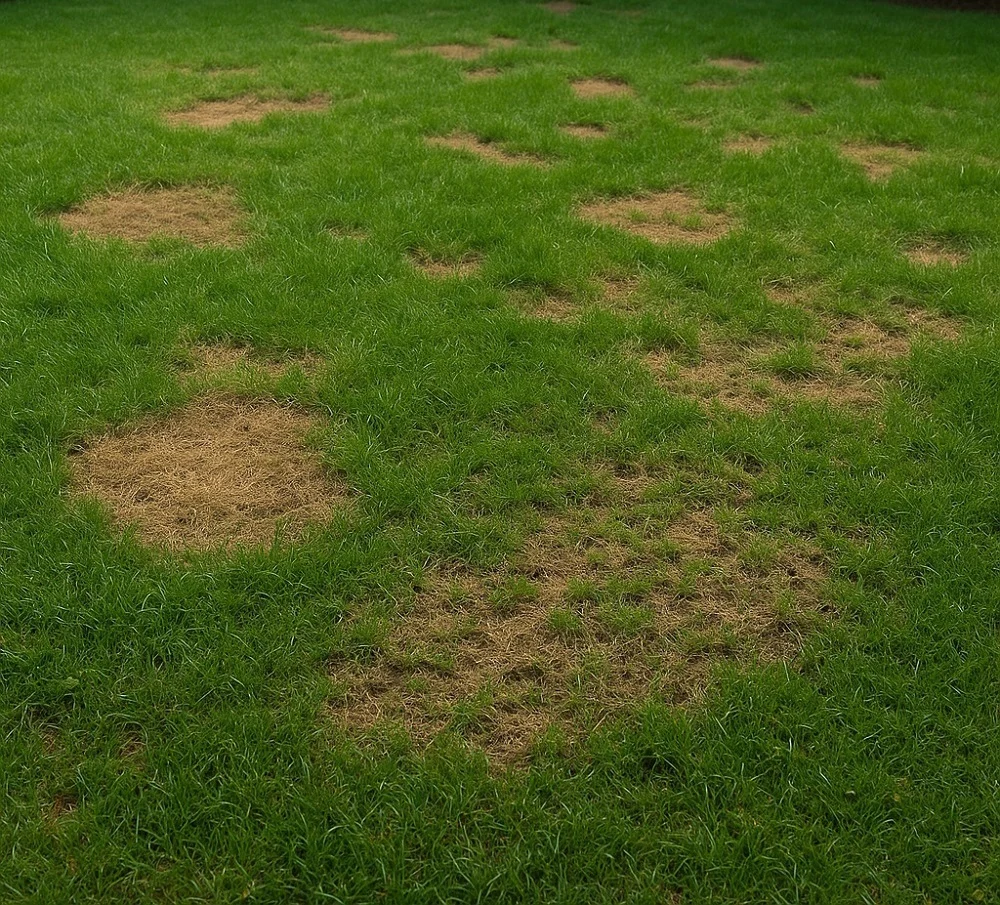
Image source: Bing (Web (fair-use with source credit))
Early stage. The first sign is often a subtle color change. Areas of lawn take on a dull, bluish-gray cast, especially noticeable in the afternoon. This happens because root feeding has reduced the grass's ability to take up water efficiently.
At this point, the turf still looks mostly intact, and many people mistake it for mild drought stress.
Mid stage. Irregular brown patches begin appearing, typically starting in sunnier, warmer areas of the lawn first. The patches expand over days to weeks. If you tug on the grass in these areas, it lifts easily because the root system has been chewed away.
The sod peels back like a loose carpet, and you'll find grubs in the exposed soil.
Late stage. Large sections of lawn die off completely. The dead turf is loose and can be rolled up by hand. At this point, secondary damage often shows up.
Skunks, raccoons, and armadillars dig overnight, tearing up the already weakened turf in search of grubs. Bird activity, particularly starlings and grackles, can also increase as they probe for larvae.
Key distinction. Grub damage differs from drought stress in one important way. Drought-stressed grass will recover after a deep watering. Grub-damaged grass won't, because the roots are gone.
If you water thoroughly and brown patches persist or worsen after a week, grubs are a likely cause.
Another clue is the pattern. Grub damage tends to start in isolated spots that gradually merge. Fungal diseases, by contrast, often produce more uniform patterns, circular patches, or distinct lesions on individual grass blades.
If you're seeing irregular brown areas with no leaf spotting or fungal signs, focus your investigation underground.
How to Check If You Have a Real Problem
Not every grub sighting means you need to act. Healthy lawns can tolerate a low population without any visible harm. The key is knowing your threshold and checking properly.

Image source: Bing (Web (fair-use with source credit))
When to check. Late August through September is the ideal window. By then, eggs have hatched and grubs are large enough to find easily, but they haven't yet caused maximum damage. Checking too early in summer means eggs may not have hatched yet, giving you a false negative.
How to check. Use a flat spade to cut a 1-foot square of sod in an affected area. Fold it back and examine the top 2 to 3 inches of soil. Count the grubs you find.
Repeat this in several spots, especially where brown patches meet healthy turf. That transition zone is where you'll get the most accurate picture.
Thresholds to know. Extension programs generally use these guidelines:
- 0 to 5 grubs per square foot. No treatment needed. Your lawn can handle this level.
- 5 to 10 grubs per square foot. Borderline. Monitor closely and consider treatment if other stress factors are present, like heat or drought.
- 10 or more grubs per square foot. Treatment is warranted. Damage is likely already occurring or will appear soon.
What else to look for. While you're inspecting, note the grub species if you can. Japanese beetle grubs have a distinctive V-shaped raster pattern (tiny spines) on the underside near the tail end. European chaefer grubs have a Y-shaped pattern.
You don't need to identify every grub, but knowing the dominant species helps with timing future prevention.
Also check for secondary pests. If you're finding grubs, you might also see billbug larvae, which are legless and more cylindrical. Billbugs are a separate problem that requires different management.
Mixing them up leads to ineffective treatment.
When to Treat (and When to Leave It Alone)
Timing is everything with grub control. Apply at the wrong moment and you're wasting product and money.
Preventive timing. The sweet spot for preventive insecticides is late June through July, when adult beetles are actively laying eggs and grubs are just hatching. Products containing chlorantraniliprole work well here because they target small, newly hatched larvae before they can do significant root damage. This approach makes sense if you've had grub problems in previous years or if your neighborhood has known beetle pressure.
Curative timing. If you discover grubs in August or September and they're above the damage threshold, curative products like trichlorfon or carbaryl can knock down an active infestation. These work best on smaller grubs. By late fall, when grubs are large and deeply feeding, curative options become less effective.
When to skip treatment. If your inspection finds fewer than 5 grubs per square foot and your lawn looks healthy, hold off. Beneficial organisms in the soil, including predatory beetles, parasitic wasps, and naturally occurring fungi, often keep grub populations in check without intervention. Over-treating disrupts that natural balance and can lead to rebound problems.
One important caveat. If you're seeing animal digging, that's a sign the grub population is high enough to attract predators. Animals alone cause significant turf damage, sometimes worse than the grubs themselves. In that case, treating the grubs removes the food source and stops the digging within a week or two.
Prevention That Actually Works
Long-term grub management is about making your lawn less attractive to egg-laying beetles and building soil health that tolerates minor feeding.
Adjust your watering. Cut back on frequent, light irrigation during the peak egg-laying window of late June through July. Let the soil surface dry between waterings. Deep, infrequent watering every five to seven days keeps grass healthy while making the surface less appealing to female beetles.
Manage thatch. Dethatch your lawn if the layer exceeds 1 inch. Thatch holds moisture near the surface and creates a favorable microclimate for eggs. Core aeration in fall also helps by improving soil structure and encouraging deeper root growth.
Choose resistant turf varieties. Some cool-season grasses show more tolerance to grub feeding than others. Tall fescue, with its deeper root system, often withstands moderate grub pressure better than Kentucky bluegrass or perennial ryegrass. If you're overseeding or renovating, consider blending in a higher percentage of tall fescue.
Encourage natural predators. Ground beetles, parasitic wasps, and certain nematode species prey on grubs. Broad-spectrum insecticides kill these beneficial organisms along with the target pests. Using targeted products only when needed preserves the predator community that provides free, ongoing control.
Consider milky spore for Japanese beetles. Milky spore disease (Paenibacillus popilliae) specifically targets Japanese beetle grubs and can persist in soil for years once established. It works best in warmer climates where soil temperatures stay above 70°F for extended periods. Results take one to three years to develop, so it's a long-term investment, not a quick fix.
Maintain overall lawn health. A thick, well-fed lawn with deep roots tolerates more grub feeding than a stressed one. Proper mowing height (3 to 4 inches for most cool-season grasses), adequate fertilization based on soil testing, and fall aeration all contribute to resilience. Healthy grass can lose some root mass and still recover without visible damage.
Treatment Options Compared
When grub pressure crosses the damage threshold, you have several approaches. Each has tradeoffs in timing, effectiveness, and environmental impact.
| Approach | Best Timing | Target Stage | Pros | Cons |
|---|---|---|---|---|
| Chlorantraniliprole (preventive) | Late June to July | Eggs and newly hatched grubs | Low toxicity to bees, long residual | Won't help if grubs are already large |
| Imidacloprid (preventive) | June to early July | Young grubs | Effective, widely available | Toxic to pollinators if applied to flowering plants |
| Trichlorfon (curative) | August to September | Active grubs | Fast-acting, works on larger grubs | Short window of effectiveness, toxic to birds |
| Carbaryl (curative) | August to September | Active grubs | Reliable knockdown | Broad-spectrum, kills beneficial insects |
| Beneficial nematodes | August to September | Young to mid-size grubs | Organic, targets grubs specifically | Requires moist soil, shorter shelf life |
| Milky spore | Any time (long-term) | Japanese beetle grubs only | Self-sustaining once established | Slow to work, limited to warm climates |
Beneficial nematodes deserve special mention for organic-minded homeowners. Heterorhabditis bacteriophora is the species most effective against grubs. These microscopic worms seek out grubs in the soil, enter their bodies, and release bacteria that kill the host within 48 hours.
They need moist soil and temperatures above 55°F to work, so evening application after watering gives them the best chance.
What doesn't work. Beer traps for adult beetles catch a lot of beetles but don't reduce grub populations in any meaningful way. Research from multiple university programs shows they may actually draw more beetles into your yard. Grub-targeted "home remedies" like soap solutions or garlic sprays have no demonstrated efficacy in controlled studies.
Mistakes That Make Grub Problems Worse
Even well-intentioned efforts backfire when the timing or method is off.
Treating too late. Applying preventive products in September is pointless. The eggs were laid months ago, and the grubs are already large. You've spent money on a product designed for a stage that's already passed.
Overwatering during egg-laying season. Keeping your lawn constantly moist in July is essentially advertising to female beetles. Let the surface dry between waterings during this window.
Using broad-spectrum insecticides preventively every year. This kills the predatory beetles and parasitic wasps that naturally suppress grub populations. Over time, you can create a dependency on chemical inputs because the natural control system has been wiped out.
Ignoring the threshold. Finding two or three grubs while gardening doesn't mean you have an infestation. Treat based on systematic sampling, not a casual observation.
Applying nematodes in hot, dry soil. Nematodes desiccate quickly in dry conditions. If you're going the biological route, water thoroughly before and after application, and apply in the evening.
When to Call a Pro
Some situations warrant professional help rather than a DIY approach.
If you're finding 15 or more grubs per square foot across large sections of lawn, the infestation is severe enough that product selection and application rates matter. Licensed applicators have access to professional-grade products and calibrated equipment that delivers more consistent coverage.
If you've tried curative treatment and the grubs persist, a pro can identify whether you're dealing with a species that requires a different approach, or whether application timing was off.
If animal damage is extensive and ongoing, a professional can implement a coordinated plan that addresses both the grubs and the secondary pest activity simultaneously.
Quick Reference Guide
Here's a simple seasonal timeline for grub management.
June. Watch for adult beetle activity. Reduce irrigation frequency if grubs have been a past problem. Apply preventive products in the last two weeks of the month if warranted.
July. Peak egg-laying for most species. Continue preventive applications through mid-month. Monitor soil moisture at the surface.
August. Begin inspecting for grubs in areas with a history of damage. If populations exceed 10 per square foot, apply curative treatment.
September. Damage becomes visible. Curative treatments still work on mid-size grubs. Address animal digging by treating the grub population.
October and beyond. Grubs move deeper. Treatment window closes. Focus on lawn repair, aeration, and overseeding damaged areas.
Frequently Asked Questions
How do grubs get into soil in the first place?
Adult scarab beetles lay eggs directly in your lawn during summer. The female burrows slightly into moist soil and deposits 30 to 60 eggs. Those eggs hatch into grubs that live underground feeding on roots.
They don't crawl in from elsewhere.
What time of year do beetles lay eggs in lawns?
Most species lay eggs from late June through August. Japanese beetles peak in July. European chafers start a few weeks earlier.
Oriental beetles can extend into late August.
Can I just water less to prevent grubs?
Reducing irrigation during the egg-laying window helps by making the soil surface less attractive to females. It's one piece of prevention, not a complete solution on its own.
How many grubs per square foot is too many?
Extension programs generally consider 10 or more grubs per square foot as the treatment threshold. Below 5 per square foot, healthy turf usually tolerates the feeding without visible damage.
Do grub treatments harm earthworms?
Some products, particularly broad-spectrum insecticides like carbaryl, can reduce earthworm populations. Chlorantraniliprole and beneficial nematodes have minimal impact on earthworms. Always check the product label for non-target organism warnings.
Will grubs come back next year if I treat this year?
Treatment kills the current generation but doesn't prevent adult beetles from returning to lay new eggs next summer. If your property has consistent beetle pressure, you may need to manage grubs annually or invest in long-term solutions like milky spore for Japanese beetles.