Those brown patches spreading across your lawn might look like a watering problem or a disease. But grubs hiding below the surface could actually be the cause. Here's how you can tell if your lawn has grubs.
The fastest way to find out is a quick tug test on your turf. If the grass lifts up easily like loose carpet, grubs have likely chewed through the roots. Let's walk through the full diagnostic process so you know exactly what's happening underground.
Most state cooperative extension services recommend sampling multiple spots and counting the grubs you find in a square-foot area before deciding on treatment.
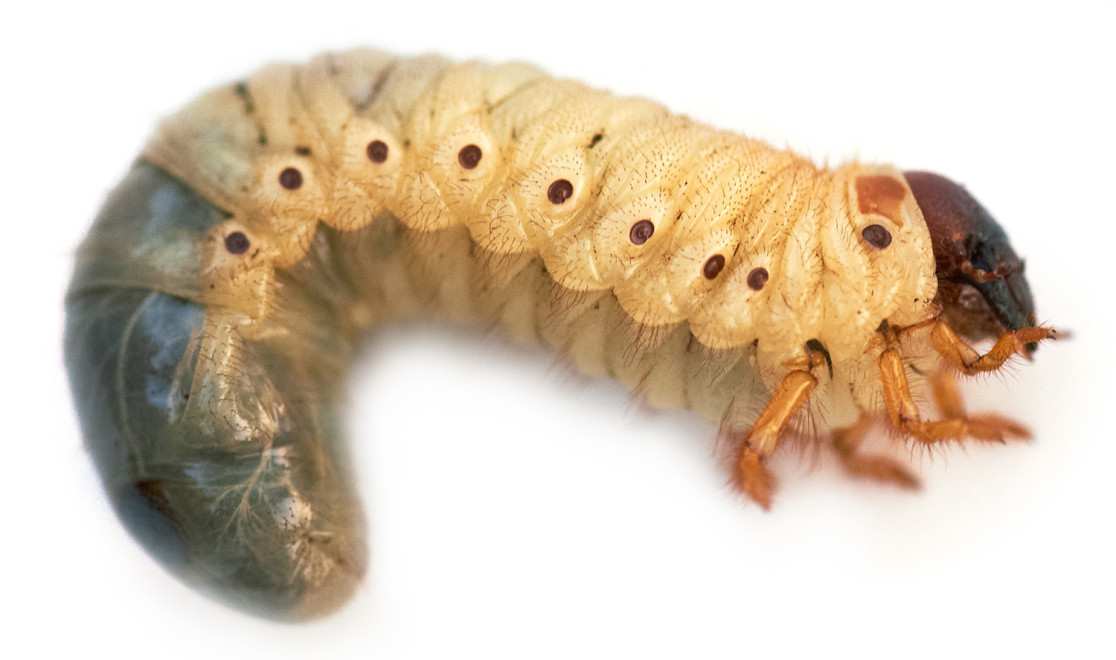
Image source: Bing (Web (fair-use with source credit))
The Sneaky Problem: Why Grub Damage Is So Often Misdiagnosed
Grub damage doesn't show the same way in every lawn. It depends on your grass type, soil moisture, the grub species present, and how long they've been feeding. That makes it one of the trickiest lawn problems to identify correctly.
Here's what trips most people up. The brown patches that show up look nearly identical to several other common lawn issues. You could be dealing with drought stress or a fungal disease instead.
Throwing the wrong treatment at the problem wastes money and lets the real culprit keep doing damage.
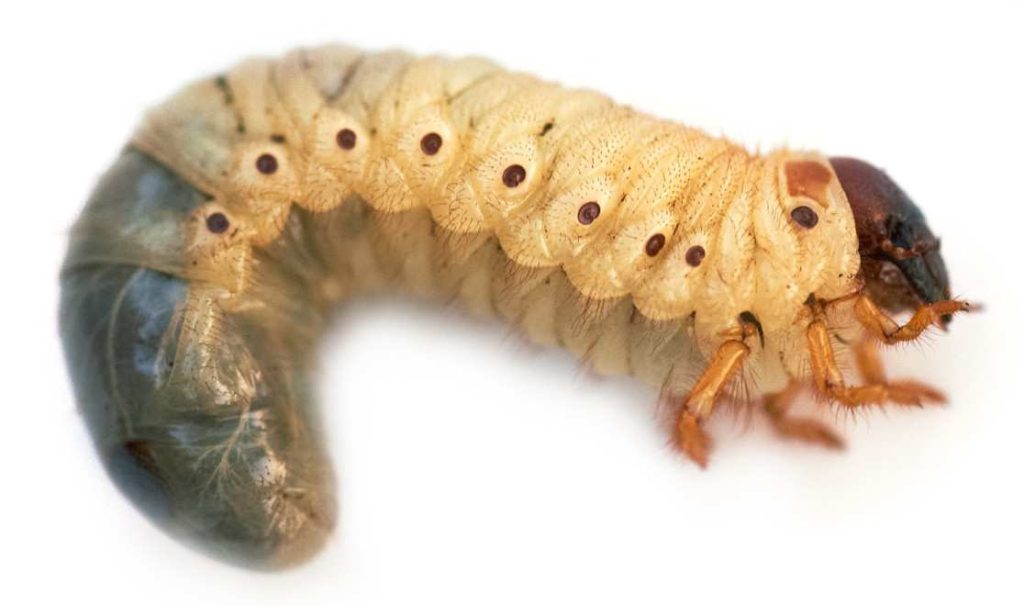
White grubs are the larval stage of scarab beetles. Japanese beetles, European chafers, June bugs, and May beetles all produce larvae that look similar. These C-shaped pests feed on grass roots just below the soil surface.
By the time you see visible damage above ground, the grubs have usually been active for several weeks.
The good news is that a systematic diagnostic approach clears up the confusion fast. Once you know what to look for and where to look for it, you'll reach a confident answer. Then you can decide whether treatment is actually necessary based on what you find.
Quick Check: The 30-Second Tug Test
You don't need any tools to do this first check. Just walk over to those suspect patches of your lawn and grab a handful of brown or dying grass.
Pull up gently. Here's what tells you grubs are the problem:
- The turf lifts up easily, almost like rolling back a carpet
- The grass separates from the soil with little resistance
- You can see the soil underneath is loose with no root structure holding the sod down
If the grass feels firm and resists lifting, grubs are less likely the cause. Healthy roots hold the turf tightly in place regardless of what else might be happening above ground.
This test works because grubs feed on the very roots that anchor your grass to the soil. Once enough roots are severed, the turf essentially floats on top. No other lawn problem produces this exact spongy, loose-feeling result.
Do the tug test in at least three or four different spots. Grub damage often starts in isolated patches. Testing multiple areas gives you a better picture of how widespread the problem actually is.
If your turf passes the tug test, come back and check again in a week or two. Early-stage grub damage might not show this sign yet. The feeding damage gets worse as grubs grow through late summer and into fall.

Image source: Bing (Web (fair-use with source credit))
What Grub Damage Actually Looks Like (And What It Doesn't)
Grub damage follows a pretty recognizable pattern once you know what to watch for. The key is understanding both the symptoms that point to grubs and the ones that point somewhere else entirely.
The Signs That Scream "Grubs"
These are the classic indicators that white grubs are feeding in your lawn:
- Irregular brown patches that start small and spread outward over weeks
- Spongy or soft turf when you walk across affected areas
- Turf that lifts easily because roots have been chewed away
- Increased animal activity from skunks, raccoons, or birds tearing up your lawn overnight to snack on the grubs
That last one is actually one of the most reliable signals. If you notice chunks of sod flipped over or small cone-shaped holes appearing, something is digging for a meal down below. Animals are excellent grub detectors.
When they show up consistently, there's usually a healthy grub population feeding in your soil.
What Grub Damage Doesn't Look Like
Here's where most homeowners get confused. Grub damage does not follow these patterns:
- Uniform browning across the entire lawn (that's usually drought or watering issues)
- Circular rings or distinct geometric patterns (more typical of fungal disease)
- Damage that greens up immediately after a good soaking (grub-damaged turf stays brown regardless of water)
- Browning only in shaded areas while sunny sections stay healthy
The timeline matters too. Grub damage typically appears in late summer and continues through fall. If your lawn went brown in late spring after a dry spell, grubs are probably not your problem.
Japanese beetle grubs start hatching in mid to late summer. The feeding damage lags behind by several weeks, so visible symptoms show up around August through October in most regions.
Pay attention to how the damage spreads. Grub patches expand gradually as larvae move outward and continue feeding. A sudden lawn-wide browning points to something else like heat stress or a fast-moving disease.
The Lookalikes: Ruling Out Other Common Lawn Problems
Before you commit to any grub treatment, rule out these four culprits. They cause symptoms nearly identical to grub damage, and treating for grubs when you actually have one of these won't help at all.
| Condition | How It Mimics Grubs | Key Differences |
|---|---|---|
| Drought stress | Irregular brown patches | Recovers after deep watering; tug test fails |
| Fungal disease (brown patch, dollar spot) | Circular brown areas | Often shows pattern lesions on grass blades; active in humid heat |
| Chinch bugs | Yellowing then browning in patches | Damage starts in sunny, hot areas first; tiny black insects visible at soil line |
| Dog urine | Brown or dead spots | Usually surrounded by dark green ring; very small and concentrated |
Drought Stress vs. Grub Damage
This is the most common misdiagnosis. Both produce irregular brown patches that spread if you don't fix the underlying problem. The difference comes down to one simple test: water deeply and consistently for about a week.
If the brown areas start greening back up, you had a watering problem, not an insect problem.
Grub-damaged turf never recovers with watering alone. The roots are gone. No amount of moisture brings that grass back once enough feeding has occurred.
If you've been watering consistently and the patches keep spreading regardless, that's your signal to investigate further.
Fungal Diseases That Fool People
Brown patch disease and dollar spot create circular dead areas that look a lot like grub damage at first glance. But fungal diseases leave telltale signs on the grass blades themselves. Look closely at the border between healthy and damaged turf.
If you see lesions, spots, or discolored blades with distinct patterns, a fungus is the more likely cause.
Grubs attack the roots and leave the blades looking relatively normal until the grass dies from below. The blades stay their original color as they dry out and turn brown uniformly. Fungal infections, on the other hand, show spotting and unusual patterns on the individual grass leaves before the lawn dies back.
Chinch Bugs and Other Insect Pests
Chinch bugs suck the sap out of grass blades, causing yellowing that turns brown. They thrive in hot, sunny areas. Chinch bug damage usually starts in the most exposed parts of your lawn and spreads inward.
Grubs, by favor stressed or thinning turf that already has less vigorous growth.
To check for chinch bugs, push a coffee can with both ends removed into the soil and fill it with water. Chinch bugs will float to the surface within about ten minutes. If you see tiny black or white insects, you've found your culprit.
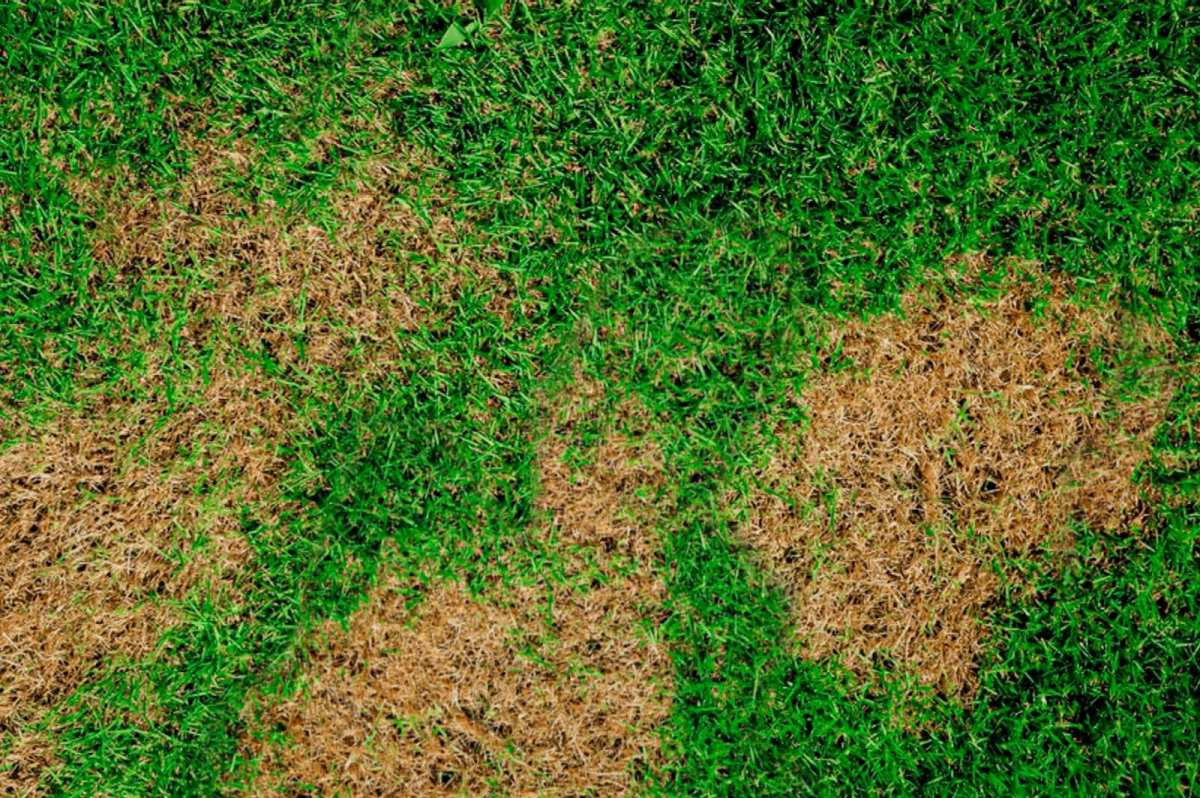
Image source: Bing (Web (fair-use with source credit))
The Definitive Test: How to Dig and Count Grubs
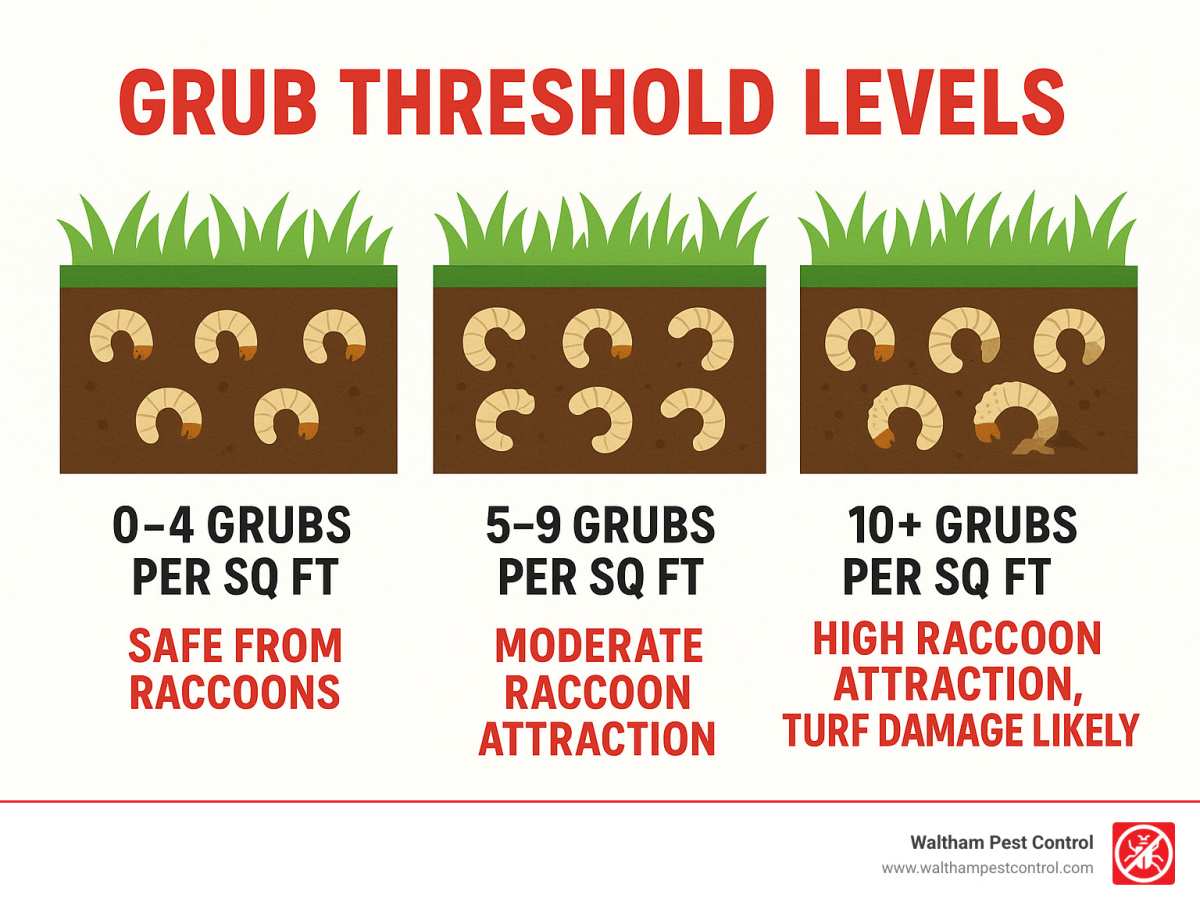
Image source: Bing (Web (fair-use with source credit))
If your tug test raised suspicions or the symptoms line up, this is the only way to confirm grubs with certainty. You're going to dig up a sample of your lawn and count what's actually living in the soil. It takes about five minutes and removes all the guesswork.
What You'll Need
No special equipment required. Round up these basics:
- A flat spade or sharp shovel
- A tray, piece of cardboard, or bucket to lay your sample on
- A ruler or tape measure
- A notepad to record counts from different areas
That's it. You're digging up one square foot of sod at a time and counting the white grubs you find in the top few inches of soil.
Step-by-Step Digging and Counting
Follow this process to get an accurate assessment of your grub population:
Pick your sample spots. Choose areas at the boundary between healthy grass and damaged patches. Grubs concentrate where damage is active, not in the center of already-dead zones.
Cut your square. Use the spade to cut a one-foot square about two to four inches deep around the edges.
Peel back the sod. Carefully lift the turf square and set it aside. Keep it intact so you can replace it afterward.
Examine the soil. Break apart the root zone and top two to three inches of soil. Look for C-shaped white or cream-colored larvae with brown heads and six small legs near the head.
Count what you find. Record the total number of grubs in that square foot. If they've already moved deeper (common in late fall or early spring), you may need to dig closer to four inches.
Check at least three locations. One sample isn't enough. Grubs cluster unevenly. Sample three to four spots across the affected area and average your counts.
Replace the sod. Tuck your samples back into place and water them down. The turf usually re-roots within a week or two if the roots are still healthy enough.
Image source: Bing (Web (fair-use with source credit))
The Treatment Threshold: How Many Is Too Many
Not every grub in your lawn requires a chemical response. Here's what the research from university extension programs shows:
Fewer than 5 grubs per square foot: Generally safe. Monitor the area but treatment usually isn't necessary. Most healthy turf handles a small population without lasting damage.
5 to 10 grubs per square foot: Moderate infestation. This range warrants attention, especially if you have a high-maintenance lawn or a grass species less tolerant of root damage. Consider treatment if damage is already visible.
More than 10 grubs per square foot: Severe infestation. Treatment is strongly recommended. At this density, grubs will continue spreading and killing your turf unless you intervene. The damage you see now will keep expanding rapidly.
These thresholds are standard recommendations used by extension entomologists across the Midwest and Northeast where Japanese beetles and European chafers are most prevalent. High-maintenance lawns like golf courses or showpiece properties sometimes use a lower threshold of five grubs per square foot.
White grubs are C-shaped with a brown head capsule and six legs near the head. They range from about a quarter inch when newly hatched to over one inch when fully grown. If you're finding larvae that look different from this description, such as long and straight rather than C-shaped, a different insect is likely responsible.
Take a photo to compare against identification guides from your local university extension website.
Timing Matters: When to Check and Why It Changes Everything
When you inspect for grubs directly affects whether you'll find them at all. Time it wrong and easily miss an active infestation. Time it right and get a clear picture.
The Best Window: Late Summer Through Early Fall
August through October represents the prime detection window in most of the United States. This is when Japanese beetle grubs are actively feeding at shallow soil depths and large enough to spot easily. They're in their most destructive phase during this period.
Spring inspections can be misleading. By the time temperatures warm up in April and May, many grubs have already moved deeper into the soil to pupate. You might find very few even if a large population was present the previous fall.
The damage from the previous year's feeding might still show, but confirming current grub pressure becomes much harder.
Regional Timing Differences
Your local climate shifts the window by several weeks. In the South and lower Midwest, grubs may appear as early as mid-July. In northern states and the Pacific Northwest, the peak feeding period often extends into October before grubs burrow down for winter.
Your state cooperative extension service publishes region-specific monitoring calendars. Checking their website gives you the most accurate local timing. Many extension offices also run beetle trapping networks that announce when Japanese beetles are emerging, which signals that egg laying and grub hatching will follow within a few weeks.
Why You Shouldn't Skip This Step
Skipping the confirmation step and jumping straight to treatment wastes money and adds unnecessary chemicals to your lawn. If you misdiagnosed the problem, you've spent time and products on something that doesn't address what's actually killing your grass. The ten minutes you spend digging and counting saves you from treating the wrong pest entirely.
It also tells you whether the population density justifies any treatment at all, which keeps your approach proportionate to the problem.
What to Do Next: Decision Guide Based on Your Findings
Your grub count determines everything that follows. Here's how to interpret your results and choose the right response.
If You Find Fewer Than 5 Grubs Per Square Foot
Relax. A small grub population rarely causes serious damage in a healthy lawn. Your grass can tolerate this level of root feeding without lasting harm.
Continue monitoring the area through fall. Keep an eye on whether the brown patches spread or stabilize. If things stay roughly the same, treat it as a background population that beneficial insects and natural predators will help manage over time.
Focus on lawn health instead of lawn chemicals. Proper watering, adequate fertilization, and good mowing practices help your turf outgrow minor root damage. Thick, vigorous grass handles a few grubs without breaking a sweat.
If You Find 5 to 10 Grubs Per Square Foot
This is the decision zone. You have enough grubs to cause problems but not so many that immediate treatment is mandatory. Several factors tip the scales.
Consider treating if:
- Visible brown patches are actively spreading
- You have a high-maintenance lawn where appearance matters
- Your turf is already stressed from drought, shade, or poor soil
- You want to prevent the population from growing before next season
Hold off on treatment if:
- The damage appears stable and isn't getting worse
- You have a tougher grass type like tall fescue or bermudagrass
- Natural predators like ground beetles and birds seem active in the area
If you decide to wait, check again in two to three weeks. A count in this range can change quickly as grubs continue feeding through September and October.
If You Find More Than 10 Grubs Per Square Foot
Act now. This density will cause expanding damage, and the grubs aren't going anywhere on their own. The feeding pressure is high enough to kill significant sections of turf if left untreated.
Your two main options are chemical insecticides or biological controls. Chemical products work fast and offer reliable knockdown of large populations. Biological controls take longer to establish but provide longer-term suppression without synthetic chemicals.
Either approach needs proper timing. Curative treatments work best when grubs are small and actively feeding. By late fall, mature grubs burrow deeper and become harder to reach with any product.
If you're reading this in September with counts above 10 per square foot, you're in the sweet spot for effective treatment.
If You Find No Grubs But Still Have Damage
Step back and reassess. The tug test results and your visual symptoms may point to a different problem entirely. Revisit the lookalike conditions covered earlier in this guide.
Consider sending a sample to your local university extension office. Many offer free or low-cost diagnostic services. They can identify fungal pathogens, nutrient deficiencies, and less common pests that homeowners often miss.
A proper diagnosis saves you from repeated failed treatments and gets you on the right track faster.
Treatment Options: Curative vs. Preventive Approaches
Once you've confirmed grubs and decided to act, you need to choose between two fundamentally different strategies. Curative treatments target the grubs currently in your soil. Preventive treatments stop next year's population before it starts.
Curative Treatments: Killing the Grubs You Have Now
Curative products work on existing grub populations. You apply them when damage is active and grubs are feeding near the soil surface. The key active ingredients to look for include:
- Trichlorfon: Works fast on larger grubs. It's one of the few products that can provide rescue treatment in spring or late fall when grubs are deeper. Most effective when soil temperatures are above 50°F.
- Chlorantraniliprole (GrubEx): Lower toxicity option that works well on small to medium grubs. Apply in early to mid-summer before damage becomes severe. It stops grubs from feeding within hours and has a longer residual in the soil.
Apply curative products in late summer or early fall when grubs are small and vulnerable. Water the product into the soil according to label directions. Most products need about a quarter inch of irrigation to move the active ingredient into the root zone where grubs are feeding.
Preventive Treatments: Stopping Next Year's Problem
Preventive products target newly hatched grubs before they cause visible damage. You apply them in early to mid-summer, typically June through July, before adult beetles lay their eggs.
- Imidacloprid: The most widely used preventive active ingredient. It's systemic, meaning the grass absorbs it and kills grubs when they start feeding on treated roots. Apply in late spring to early summer for best results.
- Chlorantraniliprole: Also works as a preventive when applied in late spring. Offers a lower environmental impact profile compared to older chemistries.
Preventive treatment makes sense if you've had confirmed grub damage in the past two years. It's also worth considering if adult beetle activity was heavy in your area the previous summer. However, applying preventive products without a history of problems wastes money and adds unnecessary material to your lawn.
Biological Controls: A Longer-Term Approach
Biological options take more patience but can provide multi-year suppression without synthetic chemicals.
- Milky spore (Paenibacillus popilliae): A bacterium that specifically targets Japanese beetle grubs. It takes one to three years to establish fully but can persist in the soil for over a decade once established. Best suited for regions where Japanese beetles are the primary grub species.
- Beneficial nematodes (Heterorhabditis bacteriophora): Microscopic roundworms that seek out and kill grubs in the soil. Apply in late summer or early fall when soil temperatures are between 60 and 85°F. Water the lawn before and after application. Nematodes need moist soil to survive and move effectively.
Biological controls work best as part of an integrated approach. Combine them with good cultural practices and targeted monitoring rather than expecting them to deliver instant results.
Common Mistakes People Make When Checking for Grubs
Even when homeowners follow the right general approach, several errors lead to wrong conclusions and wasted effort.
Testing only one spot. Grubs cluster unevenly across a lawn. A single sample might miss hotspots entirely. Always check at least three locations and average your results for an accurate picture.
Inspecting at the wrong time. Spring inspections often come up empty even when grubs caused damage the previous fall. The grubs have moved deeper or already pupated. Late summer through early fall gives you the most reliable results.
Confusing grub damage with drought. This is the number one misdiagnosis. If your brown patches don't respond to consistent watering within a week, move on to the tug test and soil inspection. Don't keep watering and hoping.
Treating without confirming. Applying insecticides based on symptoms alone risks treating the wrong problem entirely. The five minutes you spend digging and counting prevents wasted money and unnecessary chemical use.
Waiting too long to act. Once grub counts exceed 10 per square foot, damage accelerates. Delaying treatment by even two weeks in September can mean the difference between minor brown patches and sections of lawn that need complete renovation in spring.
Ignoring the threshold. Not every grub requires a response. A healthy lawn handles low populations without intervention. Treat based on confirmed counts, not anxiety.
When to Call in a Professional
Most homeowners can handle grub diagnosis and treatment on their own. Some situations benefit from bringing in a professional lawn care service.
Consider calling a professional if:
- Your inspection results are unclear and you can't confidently identify what you're finding
- The affected area is large, over 5,000 square feet, making thorough sampling time-consuming
- You've tried treatment and the damage continues spreading
- You need to coordinate grub control with other lawn treatments like aeration or overseeding
- You prefer not to handle pesticide applications yourself
Professional services have commercial-grade products and calibrated equipment that can cover large areas efficiently. They also bring experience distinguishing grub damage from less common issues like nematode damage or soil compaction problems.
Get quotes from at least two licensed applicators. Ask specifically about their grub control protocol, including which products they use and whether they perform confirmation sampling before treatment. A good service will count grubs before recommending any application, not just spray based on a visual inspection.
Frequently Asked Questions
What time of year are grubs most active?
Grubs feed most aggressively from late July through October in most regions. This is when they're large enough to cause visible damage but still near the soil surface. Spring feeding occurs but is usually less severe since grubs are maturing and preparing to pupate.
Can my lawn recover from grub damage on its own?
Minor damage often recovers by spring if the grub population was small and the grass has time to regrow roots. Severe damage where most roots are gone won't recover without reseeding or sodding. If large sections lifted easily during the tug test, plan on renovating those areas in early fall or the following spring.
How many grubs per square foot is considered bad?
University extension programs generally use 10 grubs per square foot as the threshold where treatment is strongly recommended. Between 5 and 10, treatment depends on your lawn's overall health and your tolerance for damage. Below five, most lawns handle the population without intervention.
Do I need to treat my whole lawn or just the damaged areas?
Spot-treating affected areas works when damage is isolated and your sampling confirmed grubs only in those zones. If multiple areas test positive across the lawn, a full-application approach makes more sense. Treating only the visible damage misses grubs that are feeding in areas not yet showing symptoms.
Will grub damage come back next year?
It can. The grubs you have this fall will pupate and emerge as adult beetles in early summer. Those beetles will lay new eggs in your lawn, starting the cycle again.
If you've had a significant infestation, preventive treatment in early to mid-summer breaks that cycle before the next generation of grubs hatches.
What is the best way to get rid of grubs?
The best approach depends on your situation. For active infestations with high counts, a curative insecticide applied in early fall provides the fastest results. For long-term management, preventive treatment combined with biological controls like milky spore or beneficial nematodes reduces future populations with less environmental impact.
Always confirm the problem before treating.
Frequently Asked Questions
What time of year are grubs most active?
Grubs feed most aggressively from late July through October in most regions. This is when they're large enough to cause visible damage but still near the soil surface. Spring feeding occurs but is usually less severe since grubs are maturing and preparing to pupate.
Can my lawn recover from grub damage on its own?
Minor damage often recovers by spring if the grub population was small and the grass has time to regrow roots. Severe damage where most roots are gone won't recover without reseeding or sodding. If large sections lifted easily during the tug test, plan on renovating those areas in early fall or the following spring.
How many grubs per square foot is considered bad?
University extension programs generally use 10 grubs per square foot as the threshold where treatment is strongly recommended. Between 5 and 10, treatment depends on your lawn's overall health and your tolerance for damage. Below five, most lawns handle the population without intervention.
Do I need to treat my whole lawn or just the damaged areas?
Spot-treating affected areas works when damage is isolated and your sampling confirmed grubs only in those zones. If multiple areas test positive across the lawn, a full-application approach makes more sense. Treating only the visible damage misses grubs that are feeding in areas not yet showing symptoms.
Will grub damage come back next year?
It can. The grubs you have this fall will pupate and emerge as adult beetles in early summer. Those beetles will lay new eggs in your lawn, starting the cycle again.
If you've had a significant infestation, preventive treatment in early to mid-summer breaks that cycle before the next generation of grubs hatches.
What is the best way to get rid of grubs?
The best approach depends on your situation. For active infestations with high counts, a curative insecticide applied in early fall provides the fastest results. For long-term management, preventive treatment combined with biological controls like milky spore or beneficial nematodes reduces future populations with less environmental impact.
Always confirm the problem before treating.