Yes, you can overseed Bermuda grass to improve its density and fill in bare spots, but the timing and method are key to success. Overseeding is a practical way to enhance your lawn’s appearance and health, especially during cooler months when Bermuda becomes dormant. It’s important to choose the right grass seed and prepare the soil properly to ensure good germination and growth.
In short, overseeding Bermuda grass is possible and beneficial, but it requires proper planning and timing—usually in the spring or fall—along with specific techniques to get the best results. This process can revitalize your lawn, making it lush and green all year round with the right approach. Understanding the best practices for overseeding Bermuda grass will help you achieve a vibrant, healthy yard that stands out.

Can You Overseed with Bermuda Grass?
Overseeding Bermuda grass is a common question among homeowners and landscapers. Many wonder if it is possible to improve their lawn’s appearance and health by overseeding Bermuda. The answer is yes, but there are specific steps and tips to ensure successful overseeding.
Understanding Bermuda Grass and Its Growing Season
Bermuda grass is a warm-season turfgrass that thrives in hot climates. It grows best during the summer months when temperatures are consistently high. In cooler seasons, Bermuda becomes dormant, turning brown and entering a state of rest.
Knowing the growing cycle of Bermuda helps determine the right time to overseed. Usually, overseeding is done in late spring or early summer when Bermuda is actively growing. This timing allows the new seeding to establish before winter dormancy begins.
Why Overseed Bermuda Grass?
Overseeding can serve multiple purposes for Bermuda lawns. It helps fill in bare patches and repairs thin areas. Overseeding also provides a greener appearance during the offseason when Bermuda turns brown. It can introduce cool-season grasses to maintain a lush look year-round.
Moreover, overseeding can help introduce new Bermuda grass varieties that are more resistant to drought, pests, or disease. This improves the overall resilience and beauty of your lawn.
Choosing the Right Grass Seed for Overseeding Bermuda
Cool-Season vs. Warm-Season Grasses
Most overseeding with Bermuda involves planting cool-season grasses such as annual ryegrass or perennial ryegrass because they stay green during winter. These grasses grow quickly and provide a vibrant look during dormancy.
Warm-season grasses like Zoysia or St. Augustine are not typically used for overseeding Bermuda because they grow at different rates and have different maintenance requirements.
Top Ryegrass Varieties for Overseeding
- Annual Ryegrass: Offers quick germination, lasts only one season, ideal for temporary cover.
- Perennial Ryegrass: More durable, can last multiple seasons, and provides a consistent green color.
Choosing the right seed depends on your climate, lawn usage, and aesthetic preferences. Always opt for high-quality seed for better germination and growth.
Preparing Your Bermuda Lawn for Overseeding
Timing Is Critical
The best time to overseed Bermuda is late spring or early summer when the turf is growing actively. Avoid overseeding during extreme heat or cold, as seed germination may be poor.
Steps to Prepare
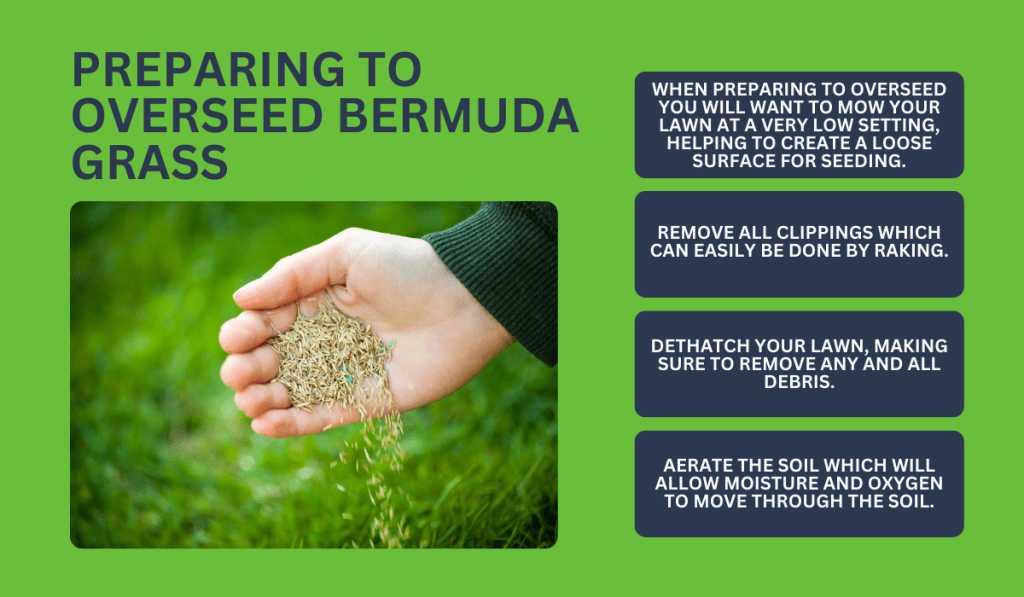
- Mow Bermuda grass very low, close to 0.5 inches, to expose soil and improve seed contact.
- Clean the lawn thoroughly by raking away debris, dead grass, and thatch that could prevent seed contact with soil.
- If thatch is thicker than half an inch, consider dethatching to promote better seed-to-soil contact.
- Address any bare patches by removing weeds or compacted soil.
Soil Preparation and Fertilization
Proper soil contact is essential for seed germination. Loosen the soil with aeration or lightly till the surface. Apply a starter fertilizer rich in phosphorus to promote root development.
Overseeding Process for Bermuda Grass
Choosing the Right Method
There are two common overseeding methods: broadcast seeding and slit/seeding. Broadcast seeding is easier and suitable for most lawns. Slit seeding involves cutting small slits into the soil to insert seeds directly, providing better seed-to-soil contact.
Executing Overseeding
- Spread the seed evenly across the prepared lawn using a broadcast spreader for efficiency.
- Apply seed at the recommended rate, usually about 8 to 10 pounds per 1000 square feet for ryegrass.
- Follow seed application with light raking or dragging to press seeds into the soil.
- Water immediately after overseeding to keep the soil moist, which is crucial for germination.
Watering and Maintenance During Germination
Consistent moisture is key during seed germination. Water lightly but frequently to keep the topsoil damp. Avoid overwatering, which can cause seed washout or disease.
Light grazing or foot traffic should be minimized during this period. As the grass begins to grow, gradually reduce watering frequency but increase the watering depth.
Post-Germination Care and Transition Back to Bermuda
Managing Cool-Season Grasses
Cool-season grasses like ryegrass will start to decline as temperatures rise. Leave them for about four to six weeks to allow the Bermuda grass to emerge. Gradually reduce watering and mowing the ryegrass.
Transitioning to Bermuda
To help Bermuda take over, raise the mowing height and reduce overseeding frequency. Once Bermuda is actively growing, you can stop overseeding altogether and focus on lawn maintenance.
Common Challenges and How to Address Them
Poor Germination
Usually caused by inadequate soil contact or improper watering. Ensure seed is pressed into moist soil and maintain consistent moisture.
Pest and Disease Issues
Overseeded lawns can be vulnerable to fungal diseases and pests. Use appropriate fungicides or insecticides if necessary, and maintain proper lawn hygiene.
Maintaining Color and Density
Overseeding improves lawn density temporarily. Regular fertilization and watering help sustain a healthy, green appearance.
Additional Tips for Successful Overseeding Bermuda Grass
- Always follow seed manufacturer instructions for application rates and timing.
- Perform overseeding during optimal weather conditions—avoid periods of drought or heavy rain.
- Use a high-quality seed for better establishment and color.
- Patience is important; it takes time for overseeded grass to fully establish and blend with existing Bermuda.
Related Topics to Consider
- Best fertilization practices for Bermuda and overseeded lawns
- How to control weeds in overseeded Bermuda grass
- Proper mowing techniques for overseeded lawns
- Understanding soil testing and amendments for optimal turf growth
By following these steps and tips, overseeding Bermuda grass can greatly improve your lawn’s appearance and health. With patience and proper care, you can enjoy a lush, green landscape throughout the year.
Overseeding Bermuda Lawn
Frequently Asked Questions
Is overseeding Bermuda grass beneficial for repairing bare spots?
Overseeding Bermuda grass can effectively fill in bare patches and improve lawn density. It introduces new grass seedlings that establish quickly, resulting in a fuller, more uniform appearance. Proper timing and preparation ensure the overseeding process successfully rejuvenates the lawn.
What is the optimal time to overseed Bermuda grass for best results?
The best time to overseed Bermuda grass is during the late spring or early summer when soil temperatures are warm enough for seed germination. This period allows the new grass to establish well before the cooler months, promoting a healthy and resilient lawn.
Are there specific types of grass seed recommended for overseeding Bermuda grass?
For overseeding Bermuda lawns, choose warm-season grass varieties such as Bermuda seed or other compatible grasses like zoysia or buffalo grass. These types blend well and tolerate similar environmental conditions, ensuring a seamless transition and a uniform look.
How should I prepare my Bermuda grass lawn before overseeding?
Start by mowing the existing grass shorter than usual, removing debris, and aerating the soil to improve seed contact and soil contact. Applying a light topdressing of soil or compost can also help create a favorable environment for seed germination and growth.
Can overseeding Bermuda grass help improve drought resistance and lawn health?
Yes, overseeding can improve the overall health and drought resistance of your Bermuda lawn. New grass growth helps create a denser turf that withstands dry conditions better, reducing water requirements and keeping the lawn lush during hot, dry periods.
Final Thoughts
You can overseed with Bermuda grass to improve your lawn’s density and health. Proper timing and soil preparation are essential for successful overseeding.
Bermuda grass responds well to overseeding in warm months, helping fill in bare spots. Keep the soil moist and avoid heavy traffic during establishment for best results.
In conclusion, can you overseed with Bermuda grass? Yes, you can, but ensure you follow proper steps for a thriving, lush lawn.