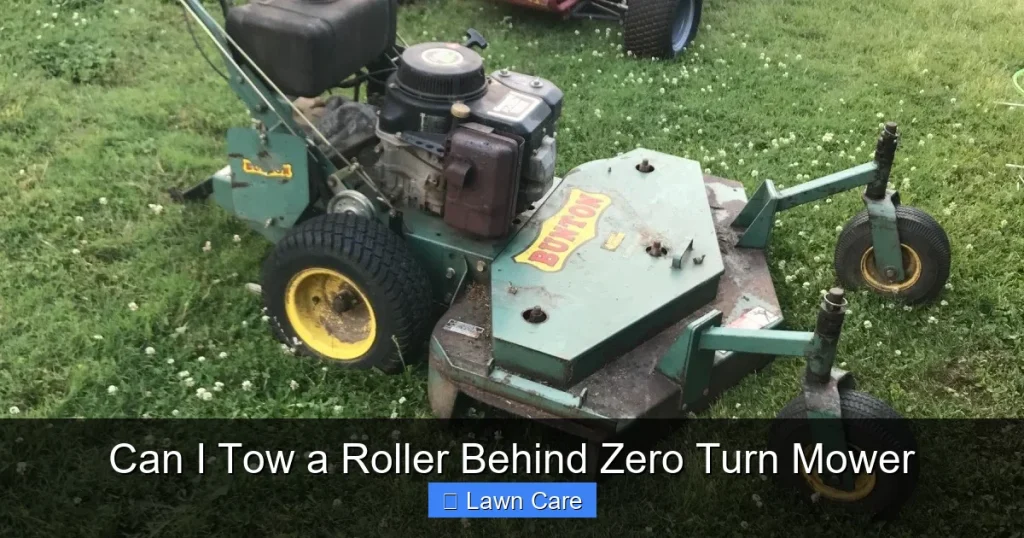
Yes, you can often tow a roller behind a zero-turn mower, but it’s crucial to do so safely. This guide details the necessary considerations, including attachment methods, weight limits, and proper operation. Ensuring your mower and roller are compatible is key to avoiding damage and achieving a smooth, professional-looking lawn.
Key Takeaways
- Zero-turn mowers can often tow small, lightweight rollers, but not all are designed for this purpose.
- Always check your mower’s operator manual for towing capacity and specific recommendations.
- Proper attachment is critical; use a designated hitch or a securely mounted ball hitch if compatible.
- Weight distribution and maneuverability are key considerations to avoid damage to the mower or turf.
- Towing a roller increases strain on the mower’s engine and drivetrain, potentially shortening its lifespan if done excessively.
- Start with a lightweight roller and gradually increase weight if your mower handles it well.
- Always operate at a slower speed when towing to maintain control and prevent accidents.
Can I Tow a Roller Behind a Zero Turn Mower
You’ve invested in a powerful zero-turn mower to make lawn care faster and more efficient. Now, you’re thinking about taking your lawn’s appearance to the next level by using a roller. The question naturally arises: can you tow a roller behind your zero-turn mower? The short answer is often yes, but it’s not a simple hook-up-and-go situation. There are important factors to consider to ensure safety, protect your equipment, and achieve the desired results for your lawn.
This comprehensive guide will walk you through everything you need to know about towing a roller behind your zero-turn mower. We’ll cover the crucial compatibility checks, safe attachment methods, best practices for operation, and potential pitfalls to avoid. By the end, you’ll have the knowledge to make an informed decision and tackle this task effectively.
Understanding the Basics: Why Roll Your Lawn?
Before diving into the “how,” let’s briefly touch on the “why.” Rolling your lawn offers several benefits:
- Flattening uneven surfaces: Rollers press down small bumps and divots, creating a smoother playing surface for sports or a more aesthetically pleasing look.
- Improving seed-to-soil contact: After overseeding, a roller can press the seeds into the soil, enhancing germination rates.
- Resettling turf after frost heave: In colder climates, frost can push grass roots upwards. Rolling helps push them back down.
- Enhancing aesthetics: The striped look often seen on golf courses is achieved with rollers, giving your lawn a professional finish.
However, it’s important to remember that rolling is a heavy task for your mower.
Assessing Your Zero Turn Mower’s Capabilities
Not all zero-turn mowers are created equal, and their ability to tow attachments varies significantly. This is the most critical step before you even think about buying a roller.
1. Consult Your Operator’s Manual
This is non-negotiable. Your mower’s manufacturer has provided specific guidelines for its intended use. Look for information regarding:
- Towing Capacity: This is the maximum weight your mower is rated to pull. It will usually be listed in pounds or kilograms.
- Hitch Attachments: Some mowers are designed with a rear hitch plate or a reinforced frame specifically for towing. Others are not.
- Recommended Attachments: The manual might explicitly state whether towing attachments like rollers is permitted.
If your manual is missing, try searching online for a PDF version using your mower’s make and model. For example, if you own a Husqvarna Z254F, you would search for “Husqvarna Z254F operator’s manual.”
2. Inspect the Mower’s Frame and Rear
Even if the manual doesn’t explicitly mention towing, a visual inspection can offer clues. Look for:
- A sturdy, reinforced rear frame: Does it look robust enough to handle the stress of towing?
- Pre-drilled holes or mounting points: These might be intended for accessory hitches.
- A lack of delicate components: Ensure there are no exposed fuel lines, hydraulic hoses, or electrical components in the path where a hitch might be installed.
Be wary of mowers with lightweight, flimsy frames. These are generally not designed for towing.
3. Understand Zero-Turn Mower Limitations
Zero-turn mowers are engineered for maneuverability and cutting efficiency, not heavy hauling. Their transmission systems are designed to drive independently for tight turns. Adding significant weight behind them puts extra strain on these delicate components, especially the transaxles.
For instance, using a zero-turn mower on hills requires careful consideration of its stability and traction. Towing an additional weight down a slope or up a hill amplifies these challenges. If you often find yourself navigating inclines, you might want to explore models specifically designed with hill-handling capabilities, or consider if towing is even feasible for your terrain. You can learn more about using a zero-turn mower on hills to understand the general limitations that towing will further exacerbate.
Choosing the Right Roller and Hitch System
Once you’ve determined your mower can handle towing, selecting the right roller and hitch is crucial.
1. Roller Weight and Size
This is paramount. You want a roller that is lightweight enough for your mower to comfortably pull without excessive strain.
- Empty weight: Consider the weight of the roller itself when it’s empty.
- Capacity: Many rollers can be filled with water or sand to add weight. You need to know the maximum weight it can hold.
- Type:
- Tow-behind rollers: These are specifically designed to be pulled by a tractor or mower. They usually have their own wheels for transport.
- Pull-behind dethatchers/aerators with roller options: Some of these attachments may have an integrated roller or a platform to add weight.
**General Rule of Thumb:** Start with the lightest roller you can find, perhaps one designed for smaller garden tractors. Avoid heavy-duty, industrial-sized rollers. A common recommendation for many residential zero-turns is a roller that weighs no more than 150-200 lbs when filled. Always err on the side of caution.
2. Hitch Types and Installation
The way you attach the roller to your mower is critical for safety and preventing damage.
- Manufacturer-Specific Hitch Kits: The safest option is a hitch kit designed by your mower’s manufacturer for that specific model. These are engineered to bolt directly onto the mower’s frame in reinforced locations.
- Universal Ball Hitch Adapters: Some mowers may be compatible with universal ball hitch adapters. These typically mount to the rear hitch plate. Ensure the adapter is rated for the weight you intend to tow and that it fits securely.
- DIY Hitches (Use with Extreme Caution): While possible, creating a custom hitch should only be attempted by those with significant fabrication skills and a thorough understanding of load-bearing. Improperly fabricated hitches can fail catastrophically, leading to severe damage or injury. It’s generally best to avoid this unless absolutely necessary and done by a professional.
**Installation Steps (General):**
- Read Instructions: Always follow the specific installation instructions for your hitch kit.
- Gather Tools: You’ll likely need wrenches, sockets, and possibly a torque wrench.
- Locate Mounting Points: Identify the designated mounting holes on your mower’s frame or hitch plate.
- Securely Fasten: Bolt the hitch firmly in place. Ensure all bolts are tightened to the manufacturer’s specifications. Do not overtighten or undertighten.
- Connect Roller: Attach the roller’s tongue or drawbar to the hitch. Use a pin and clip that are rated for the load.
Operating Safely with a Towed Roller
Once everything is attached, safe operation is paramount. Towing changes your mower’s handling characteristics.
1. Pre-Operation Checks
Before starting the engine and heading out:
- Hitch Security: Double-check that the hitch is securely fastened to the mower and the roller is securely attached to the hitch.
- Roller Pin: Ensure the pin and clip connecting the roller to the hitch are in place and secure.
- Tire Pressure: Check tire pressure on both the mower and the roller for optimal performance and stability.
- Obstructions: Clear the area of any debris that could interfere with the mower or roller.
2. Starting Slow and Gentle
The first few minutes are critical for getting a feel for how your mower handles with the added weight.
- Smooth Acceleration: Accelerate gently. Avoid sudden bursts of speed, which can cause the roller to sway or the mower to lose traction.
- Gradual Turns: Turn slowly and with a wider radius than usual. The roller will have a tendency to cut corners, especially on turns.
- Braking: Braking will take longer. Anticipate stops well in advance.
3. Maneuvering Considerations
The unique steering of a zero-turn mower combined with a towed roller requires extra awareness.
- Turning Radius: While zero-turns are known for tight turns, towing a roller will increase your effective turning radius. The roller will follow a wider path than the mower’s rear wheels.
- Wide Turns: Always plan your turns wide. Trying to turn too sharply can cause the roller to dig into the turf, damage the mower’s frame, or even flip.
- Avoid Obstacles: Be extra mindful of trees, garden beds, and other obstacles. The towed roller adds length to your overall vehicle.
- Terrain: Be cautious on uneven terrain or slopes. As mentioned earlier, using a zero-turn mower on hills requires skill; towing a roller adds another layer of complexity and risk. If you’re unsure about a slope, it’s best not to attempt it.
4. Rolling Technique
For the best results:
- Overlap Passes: Overlap each pass slightly to ensure even coverage and avoid missed strips.
- Straight Lines: Maintain as straight a line as possible for a professional look.
- Light Weight First: If you’re new to this, start with a lighter roller (e.g., filled with only water). As you gain confidence and assess your mower’s performance, you can gradually increase the weight if needed and if your mower can handle it.
Potential Pitfalls and How to Avoid Them
Towing a roller can lead to problems if not done correctly.
1. Damage to the Mower’s Drivetrain
* Problem: Overloading the mower with too heavy a roller, or frequent heavy towing, can stress and eventually damage the transmission, axles, or belts.
* Solution: Adhere strictly to your mower’s towing capacity. Use the lightest roller necessary for your task. Consider if your mower is truly suited for this kind of work, or if a dedicated garden tractor might be a better long-term solution for heavy attachments.
2. Turf Damage
* Problem: Turning too sharply, towing a roller that’s too heavy, or using a roller on wet turf can cause ruts, scuffing, and damage to the grass.
* Solution: Always turn wide. Never tow a roller on saturated ground. Ensure the roller is the appropriate weight for your grass type and conditions.
3. Loss of Control or Accidents
* Problem: Sudden stops, sharp turns, or operating on slopes can lead to the roller pushing the mower, loss of steering control, or even tipping.
* Solution: Operate at slow speeds. Always anticipate turns and stops. Never tow on steep slopes. If you feel the mower losing control, disengage the mower deck (if applicable) and slowly apply the brakes.
4. Strain on the Engine and Cooling System
* Problem: The added effort of pulling a load can cause the engine to work harder, potentially leading to overheating, especially in hot weather.
* Solution: Ensure your mower’s engine is properly maintained, including oil changes and air filter cleaning. Avoid towing during the hottest parts of the day. Take breaks if the mower feels like it’s struggling. You might want to check out our guide on cleaning the lawn mower air filter to ensure optimal engine performance.
When Not to Tow a Roller
There are situations where towing a roller behind a zero-turn mower is a bad idea:
- Mower Not Rated for Towing: If your operator’s manual explicitly states no towing, or if the mower’s frame appears flimsy, do not attempt it.
- Excessive Weight: If the roller’s maximum filled weight exceeds your mower’s towing capacity.
- Steep Slopes: Zero-turn mowers have limitations on hills, and towing a roller significantly amplifies these risks. For steep slopes, consider alternatives or a different type of equipment.
- Wet or Saturated Turf: Rolling wet turf can cause significant damage.
- Extremely Small Yards: For very small yards, the effort of attaching and maneuvering might outweigh the benefits, and a push roller could be more practical.
Conclusion
So, can you tow a roller behind a zero-turn mower? In many cases, the answer is yes, but with important caveats. It requires careful consideration of your mower’s capabilities, selecting an appropriately sized and weighted roller, using a secure hitch system, and operating with increased caution. Always prioritize safety and the longevity of your equipment. By following the guidelines in this comprehensive how-to, you can effectively use a roller with your zero-turn mower to achieve that coveted professional lawn finish. Remember, a little extra preparation goes a long way in ensuring a successful and damage-free lawn care experience.