Can grubs kill trees? Yes, the answer is straightforward, but the real picture depends on your tree's age, its overall health, and how many grubs are actually feeding in the root zone. Most homeowners don't realize that grubs, the fat white larvae of scarab beetles like Japanese beetles and June beetles, gnaw through fine tree roots just beneath the surface.
They often mistake the resulting decline for drought or disease.
The tipping point varies, but extension research consistently shows that grub densities above 10 to 15 per square foot can push a stressed or young tree into irreversible decline. A mature, healthy oak might shrug off moderate feeding. A two-year-old maple planted in compacted soil might not.
Let's walk through how to figure out which scenario you're dealing with, and what to do about it.

Image source: Wikimedia Commons / Сарапулов (CC BY)
Quick Answer
Yes, grubs can kill trees, especially young or already stressed ones. Grubs feed on fine tree roots below the soil surface, reducing the tree's ability to take up water and nutrients. The danger depends heavily on grub density, tree species, tree age, and overall growing conditions.
A count above 10 grubs per square foot near a tree's root zone generally warrants action.
Do Grubs Actually Kill Trees? What Most People Get Wrong
Most people associate grub damage with brown patches in the lawn, not dying trees. That disconnect is exactly why tree loss from grubs gets misdiagnosed so often. Here's what is really happening below ground.
White grubs feed on organic matter in the soil, which includes the tender, fibrous roots those trees rely on for water and nutrient uptake. A mature, well-established tree with a deep, sprawling root system can tolerate losing a significant portion of those fine roots without showing visible symptoms above ground. The tree simply reroutes resources and pushes out new feeder roots when conditions improve.
A young tree, a freshly transplanted tree, or one already dealing with drought, compaction, or poor soil does not have that reserve capacity. Its root system is concentrated and shallow, right where grub feeding is most intense. Lose a third of those roots and the crown starts to wilt.
Lose half and you are looking at permanent dieback, if not outright death, by the following season.
The second layer most people miss is what happens after the feeding. Fresh wounds on roots act as entry points for soil-borne fungi like Phytophthora and Armillaria. A grub problem can quietly become a root rot problem, and that is what finishes the tree off.
By the time you see canopy thinning in midsummer, the underground damage has been accumulating for at least a full growing season.
When Grubs Hurt Trees vs. When They Don't
Trees can recover from grub damage. Recovery depends on how much root mass was lost, whether secondary infections set in, and whether conditions improve going forward. A moderately damaged tree that receives proper watering, mulch, and a break from further feeding often bounces back within one to two growing seasons.
Trees that are dying from grub damage show specific patterns. Gradual thinning of the crown from the top down, smaller-than-normal leaves, early fall color, and branch dieback in the upper canopy are the classic signs. The key differentiator from drought stress is that these symptoms persist even when adequate water is applied.
If you have been watering regularly and the tree still looks progressively worse during the growing season, root damage from grubs is worth investigating.
The Real Threshold
Not every grub in your yard is a threat. Extension entomologists across the Midwest and Northeast have established treatment thresholds based on years of field data.
| Tree Situation | Action Threshold (grubs per sq ft) | Notes |
|---|---|---|
| Mature healthy tree | 15+ | Can tolerate more feeding before intervention needed |
| Mature stressed tree, poor site | 10–15 | Compounding stressors lower tolerance significantly |
| Young tree (<3 years planted) | 6–10 | Limited root volume means less room for damage |
| Recently transplanted tree | 5–8 | Newly establishing roots are especially vulnerable |
| Tree showing crown decline | Any confirmed + other stressors | Investigate immediately even at lower counts |
These numbers apply primarily to actively feeding grubs in the critical root zone, roughly the area from the trunk out to the drip line. A count of three grubs six feet from a mature tree's trunk, over by the fence line, is not the same as eight grubs concentrated near the root flare. Location matters as much as raw numbers.
The most reliable method to check your own situation is simple. Cut a one-foot square of sod two to three inches deep in the turf near the tree's drip line during late August through October, when grubs are closest to the surface and feeding most aggressively. Flip it over, examine the soil, and count what you find.
Repeat this in two or three spots around the tree and average the results.
How to Inspect Your Tree's Roots and Lawn for Grub Damage
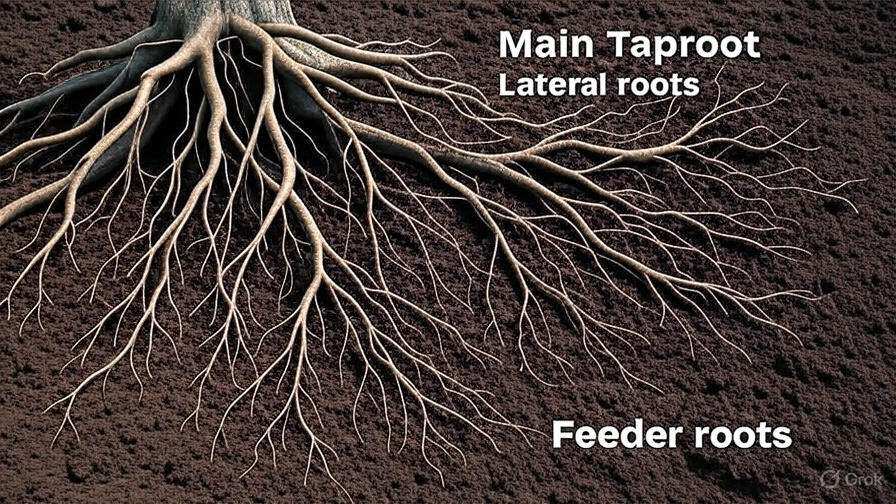
Image source: Bing (Web (fair-use with source credit))
If you are going to take action, or rule grubs out entirely, you need to look below ground. Start with the lawn symptoms, then move to direct root inspection.
In turf near a tree, grub damage appears as irregular brown patches that peel back easily because the root structure holding the sod together has been chewed away. Skunks and raccoons tearing up the lawn at night are a reliable secondary sign of grub presence, since they are digging for exactly the same larvae that threaten your tree's roots.
For the tree itself, look at the base of the trunk. Gently remove mulch and soil from within a few inches of the root flare and examine the surface roots you can see. Healthy roots are firm and white to light tan inside when you scratch the outer layer.
Damaged roots from grub feeding show chewed, brown, or hollowed sections, often with a rough, shredded texture near the injury point. Advanced cases reveal a sparse root zone where you would normally feel a dense network of fibrous roots just under the soil surface.
Pay attention to the tree's overall vigor indicators. Measure annual shoot growth by finding last year's growth tip on a branch and measuring back to the growth scar. Healthy young trees put on 12 to 18 inches of new growth per year.
Stressed trees fed on by grubs often drop below six inches, sometimes to just one or two inches of weak, thin growth. Small leaves, early fall color, and dieback in the upper canopy confirm the tree is losing the battle below ground.
A common mistake is to dig aggressively all around the tree inspecting for grubs or root damage. That just adds more root injury on top of what the grubs have already done. Limit your inspection to two or three small test spots, then backfill and water gently.
The goal is information, not excavation.
Stage 1: Count and Identify Your Grubs (Not All Are Equal)
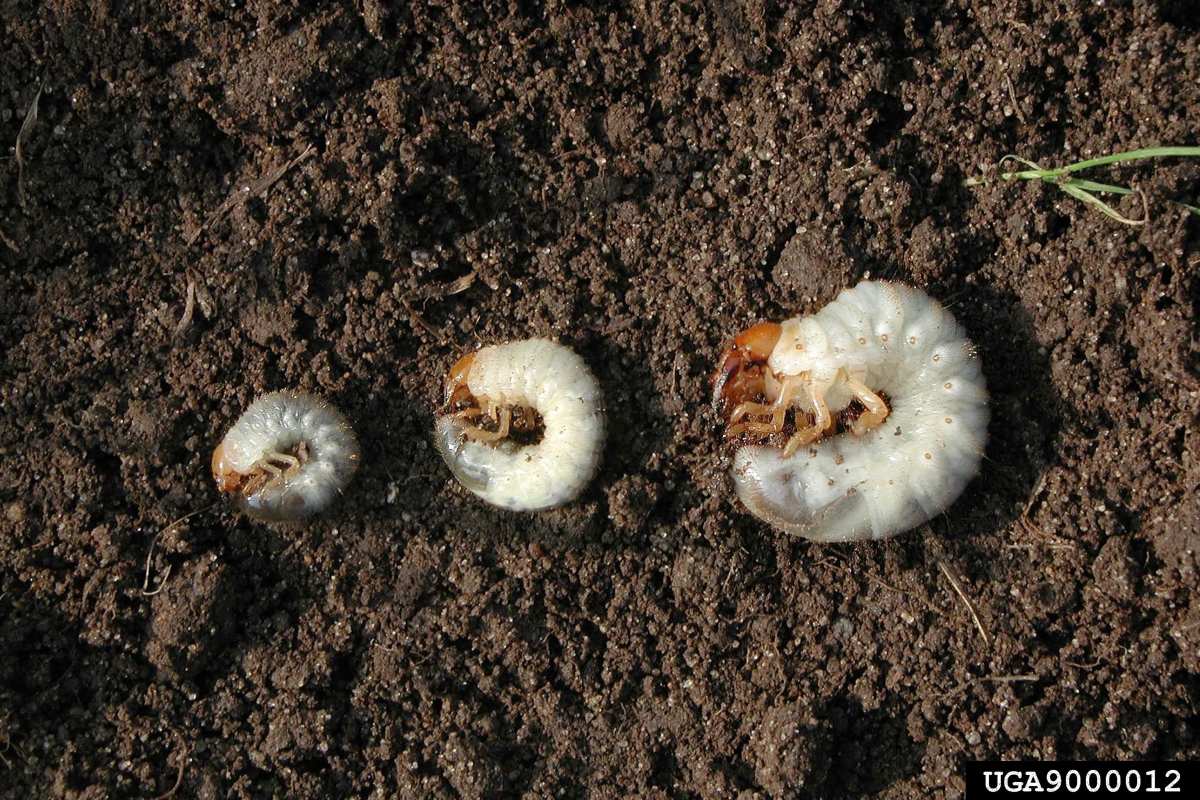
Image source: Bing (Web (fair-use with source credit))
Once you confirm grubs are present in your tree's root zone, the next step is identifying which species you are dealing with. Different species have different peak feeding windows, different damage potential, and different effective treatments.
The most common culprits are Japanese beetle grubs, European chafer grubs, and June beetle grubs. Japanese beetle larvae are the most damaging overall and also the easiest to target with biological controls like milky spore disease. European chafers tend to show up in heavier numbers in compacted urban soils and can reach densities that overwhelm young trees within a single season.
June beetle grubs have a longer life cycle, sometimes feeding for two to three years before pupating, which means chronic low-level damage that is harder to connect to the tree's decline.
To identify your grubs, examine the raster pattern, the arrangement of hairs and spines on the underside of the last abdominal segment near the rear end. This is the most reliable visual feature for species identification. Japanese beetle grubs have a distinctive V-shaped raster pattern.
European chafer grubs show a Y-shaped pattern with rows of scattered setae extending beyond a narrow opening. June beetle grubs present a less organized, more parallel pattern. Placing the grub on a white surface with a magnifying glass makes this much easier to see.
Size also tells you something. Grubs actively feeding and causing the most damage are typically mid to late stage larvae, roughly one-half to one and a half inches long. Tiny grubs just hatching in late summer have not done significant root feeding yet.
Very large grubs nearing pupation in late spring will have finished their most destructive feeding phase. If you are finding mature, fat grubs in late August through October, that is the window of maximum concern.
Tree Species and Ages Most at Risk from Grub Feeding
Knowing which trees are vulnerable helps you prioritize inspection and treatment. Some species absorb more punishment than others, largely because of how fast they can regenerate fine roots and how deep their root systems typically run.
Young trees under three years old are consistently at the highest risk across all species. Their root balls are still confined to a relatively small volume, often just a few feet from the trunk. Grubs concentrated in that zone can chew through a devastating percentage of the tree's total root mass in one season.
Newly planted ornamentals in subdivision landscapes where construction soil is poor are especially vulnerable, since root establishment is already a struggle before grubs enter the picture.
Among common landscape species, maples of all kinds tend to show grub damage symptoms sooner than most trees. Red maple, silver maple, and Japanese maple all have relatively shallow, fibrous root systems that overlap directly with the top two to four inches of soil where grubs feed. Fruit trees, particularly young apple and cherry trees, are also high on the list for the same reason.
Their root systems are naturally compact and they are often planted in maintained lawn that attracts egg-laying adult beetles.
In contrast, deeply tap-rooted species like oak, hickory, and black walnut tend to handle moderate grub feeding better once they are established. Their roots extend well below the primary feeding zone. That advantage disappears in the first few years after planting, when the root system is still developing and mostly confined to the upper soil layers.
Stressed trees of any species are more susceptible than healthy ones. Construction damage, drought the previous year, girdling roots, root rot, or heavy insect damage to the crown all reduce a tree's ability to compensate for root loss. If your tree was already struggling before grubs arrived, even a moderate population can tip it over the edge.
Stage 2: Evaluate Your Tree's Health and Root Loss
Before reaching for any treatment, take stock of where your tree actually stands. This determines whether treatment is even necessary and shapes what recovery support the tree will need.
Walk through the crown systematically. Look at the upper canopy first. Are leaves normal size and color, or stunted and pale?
Is there deadwood in the upper branches? Pick a random branch at eye level and measure the current year's growth back from the tip. Compare last year's growth to the year before.
A tree in recovery mode often shows a bounce-back in shoot length after damage, while a declining tree shows progressively shorter annual growth.
Next, look at the bark and trunk. Vertical cracks, oozing cankers, or fungal brackets on the trunk suggest secondary infection has already moved in. Trees showing crown dieback plus trunk fungal growth have a much more guarded prognosis.
They may survive with aggressive management, but the damage is compounding.
Examine the root collar area by carefully removing soil from a small section near the trunk base. Healthy root flare tissue should be firm and show no signs of decay. Mushy, discolored bark at the base signals root collar rot, often Phytophthora, that entered through grub wounds.
This is the scenario where grubs set off a chain reaction that kills the tree regardless of whether the grubs are still present.
Now match your findings to your grub count. A tree in strong health with eight grubs per square foot likely does not need chemical intervention, though monitoring is essential. A tree with measured dieback, declining shoot growth, and 12 grubs per square foot is in immediate danger and warrants prompt treatment.
The tree's condition at the time of assessment is just as important as the grub density number by itself.
Stage 3: Match Your Situation to the Right Treatment
Once you have counted grubs, identified the species, and assessed your tree's health, selecting treatment becomes a targeted decision rather than a guess.
If your grub count is below the threshold for your tree's situation, skip treatment entirely. Monitor periodically and manage the environment instead. Reduce irrigation in the root zone if chronically moist, since damp soil attracts egg-laying adult beetles.
Remove thatch if the lawn near the tree has built up thick organic matter, since thatch provides shelter for eggs and young larvae.
If treatment is warranted, the choice between biological and chemical options depends on the severity and the species involved.
Beneficial nematodes, specifically Heterorhabditis bacteriophora, are the strongest biological option for active grub problems near trees. These microscopic organisms enter grubs through natural body openings and release bacteria that kill the host within 24 to 48 hours. They work best when soil temperatures are between 60 and 85 degrees Fahrenheit, which in most regions means application in mid to late August.
Adequate soil moisture before and after application is essential, since nematodes move through water films in the soil and will desiccate in dry conditions.
Milky spore disease, caused by the bacterium Paenibacillus popilliae, is a longer-term strategy specific to Japanese beetle grubs. Once established in the soil, it can persist for 10 to 15 years and provides gradual, self-sustaining suppression. The downside is establishment time.
In northern climates, it can take three to five years to reach effective soil concentrations, so it rarely helps a tree in immediate danger.
Chemical insecticides fall into two categories. Preventative products like those containing chlorantraniliprole, applied in early summer before eggs hatch, have lower toxicity to non-target organisms and good soil safety profiles. Curative products like trichlorfon and carbaryl are applied when active feeding is already underway in late summer, act fast, but carry higher risks to beneficial soil organisms and pollinators if misapplied.
Choose preventative when you know you have a recurring problem and need to protect a valuable tree. Reserve curative treatments for situations where substantial active damage is confirmed and the threshold has been exceeded.
Biological and Natural Grub Control Options Near Trees

Image source: Bing (Web (fair-use with source credit))
Going with biological controls makes sense when you want long-term suppression without broad-spectrum disruption to soil life. Healthy soil biology around tree roots includes mycorrhizae, earthworms, and predatory beetle larvae that help cycle nutrients and improve soil structure. Spraying a harsh insecticide can set that underground ecosystem back significantly.
Biological options preserve those beneficial relationships while still reducing grub pressure.
Beneficial nematodes require careful handling to work. Purchase from a reputable supplier who maintains live cultures in refrigerated storage, and apply within the packaging date. Mix them with water per label directions and apply to moist soil in the evening or on an overcast day, since UV light kills them quickly on exposed surfaces.
Water thoroughly before application and again afterward to move them down into the root zone. Avoid applying to saturated, waterlogged soil, since drown nematodes cannot hunt effectively.
Milky spore application is simpler in terms of handling but requires patience. The standard approach is to place small plugs of milky spore powder in a grid pattern every four to five feet across the affected area. Soil temperatures must reach 68 degrees Fahrenheit for spore germination, which limits effective application to mid to late summer in northern regions.
Once established, the spores cycle through successive grub generations, building population naturally.
Cultural practices reduce future grub pressure without any product application. Allow the root zone to dry somewhat between waterings. Adult beetles prefer moist, well-watered turf for egg-laying.
Over-irrigated lawns beneath trees create an ideal nursery. Use drip irrigation instead of overhead sprinklers that saturate the entire root zone daily. Avoid high-phosphorus fertilizers near the tree base, since lush turf growth from excess phosphorus is highly attractive to egg-laying scarab beetles.
Chemical Insecticide Options
Seasoned professionals reserve chemical intervention for confirmed high-density infestations or high-value trees under immediate threat. Used correctly, these products deliver results quickly. Used carelessly, they create new problems.
Preventative neonicotinoid products have declined in use for grub management near trees over the past decade due to rising concern about pollinator exposure and soil persistence. Several products have been voluntarily restricted or reformulated. Chlorantraniliprole-based products have gained ground as a preventative option with a lower ecological footprint.
They target the ryanodine receptor in beetle larvae specifically, making them far less toxic to bees, birds, and mammals compared to older neonicotinoid chemistry.
When adults begin laying eggs in early to mid summer, apply a preventative product according to label directions to the turf and soil within the tree's drip line. Do not skip label instructions; they are a legal requirement, not a suggestion. Never apply any grub insecticide when flowers near or under the tree are in bloom.
Adult beetles and pollinators feed on pollen, and products that drift onto blossoms create unnecessary exposure even when not directly sprayed on bees.
Curative products like trichlorfon are applied when grubs are actively feeding in late summer, killing them within a few days. They have shorter residual but carry higher acute toxicity to beneficial insects. Never apply where runoff could reach adjacent flower beds, vegetable gardens, or waterways.
And curative products are generally a one-season fix, not a long-term management plan. Without addressing moisture levels, soil health, and adult beetle populations, the problem returns the following year.
Before considering any pesticide near a mature tree, verify whether local or state regulations apply. Several regions have enacted restrictions on neonicotinoid use in residential settings. Some municipalities require notification to adjacent property owners.
Check with your state's pesticide regulatory agency and local code enforcement before purchasing.
Common Mistakes That Make Grub Damage Worse for Trees
The fastest way to turn a manageable grub problem into a tree-killing event is to handle the situation in ways that add additional stress on top of the root injury.
Over-treating is the most common. Applying preventative grub insecticide and curative insecticide in the same season without confirming grub density first exposes soil organisms to unnecessary chemistry and adds nothing. If you followed cultural recommendations last year and tree health is improving, skip chemical treatment this year.
Monitor instead.
Failing to adjust irrigation after grub damage is equally problematic. Grubs eat roots. Fewer roots means the tree pulls water less efficiently from the soil.
Continuing the same watering schedule can lead to root rot in the remaining roots, particularly if drainage is poor. Shift to deep, infrequent soakings and check soil moisture a few inches down before adding more water. Let the surface dry between treatments.
Adding mulch volcanoes around the trunk is tempting since all the mulch advice online is positive. But piling wet mulch against the root flare traps moisture against bark, inviting fungal decay on top of the grub damage already underway. Apply two to four inches of organic mulch over the root zone in a wide, flat ring, keeping it several inches away from the trunk bark.
Another common misstep is pulling up the turf around the tree to inspect for grubs, then leaving the root zone exposed. Exposed soil dries out fast in summer, and surface roots in that zone desiccate. Always backfill test holes carefully and keep the root zone insulated with natural leaf litter, wood chips, or living ground cover rather than bare soil.
Supporting a Stressed Tree After Grub Feeding
Once you have reduced grub numbers through targeted treatment or cultural practices, the next phase is helping the tree rebuild what it lost. This recovery window is where most people give up too early or push too hard.
Start with the basics: water correctly. Trees recovering from grub damage need consistent moisture but not saturation. Water deeply once a week during dry spells rather than light daily sprinklings.
A slow soaker hose arranged in concentric circles outward from the trunk to the drip line does the job well. Check an inch or two below the surface before adding more, and adjust for natural rainfall.
Fertilization is a mixed bag during recovery. High-nitrogen lawn fertilizer pushed into the soil near the tree forces rapid top growth that the reduced root system cannot sustain. Instead, use a slow-release, balanced tree fertilizer at half the normal rate in early spring.
Alternatively, rely on arborist wood chips and natural leaf decomposition, which feed soil biology and rebuild organic matter without burning stressed roots.
Aeration helps in compacted soil where grub-damaged trees struggle to push out new roots. A hand-held core aerator or a small plug aerator pulled across the root zone in fall opens pathways for air and water. Do not aggressively roto-till near established roots.
That just creates a new round of damage on top of the old.
Watch for recovery signs starting the following spring. New leaf emergence should be normal in color, not yellowing. Terminal bud break should be full and vigorous across the canopy, not sparse.
New shoot growth of six inches or more on young trees suggests the root system is regenerating. If the tree is not showing meaningful improvement after two full growing seasons of proper care, consult a certified arborist to evaluate whether secondary root rot has become the primary problem.
Real Scenarios
Seeing how grub pressure plays out in actual yard situations can clarify the principles behind the thresholds and recommendations.
Scenario A: A Young Maple in a Subdivision Yard. A three-year-old red maple planted two years prior in construction-compacted soil begins showing leaf scorch and stunted growth in year two. Grub inspection reveals 14 European chafer grubs per square foot in the turf surrounding the tree, concentrated within three feet of the trunk. The root system shows moderate feeding damage and early signs of root collar discoloration.
This tree is in immediate danger because the combination of a small root volume, compacted soil, and heavy grub density exceeds its ability to recover on its own. Treatment with curative insecticide is warranted this season to stop active feeding, followed by soil aeration and transition to deep watering practices. Milky spore monitoring in future years helps, but it will not establish fast enough here to save this particular tree in the current season.
Scenario B: A Mature Oak with a Lawn History. A 40-year-old pin oak with a maintained turf understory shows gradual crown thinning over two years. Neighboring properties applied grub preventative annually, but the homeowner here did not. Grub counts average eight per square feet along the outer drip line.
Decline becomes noticeable only when comparing canopy photos from four years earlier.
This tree has enough reserve root capacity to survive moderate feeding. Treatment with a single application of beneficial nematodes in late August, combined with reduced irrigation frequency after recovery, brings populations down naturally over the next two seasons. Crown density returns partially by year three.
This is a case where moderate grub pressure on a large, healthy tree does not require chemical intervention, though it confirms the importance of monitoring before assuming a tree is healthy just because it is big.
Scenario C: An Overwatered Landscape with a Cherry Tree. A five-year-old flowering cherry in a low-lying part of the yard with heavy clay soil shows progressive wilting despite weekly watering. Inspection reveals 11 Japanese beetle grubs per square foot in saturated, poorly drained turf near the trunk. Roots at the collar show rot and discoloration alongside grub feeding damage.
Here grubs are part of the problem, but the primary stressor is chronic overwatering in poorly drained soil. The fungus colonized root wounds and now threatens the tree's structural roots. Treatment with nematodes addresses the grub population.
More critically, the irrigation must change immediately to allow the soil profile to dry between waterings, and drainage improvements like a dry well or French drain should become a priority. Without moisture control, the tree will continue declining regardless of how many grubs are eliminated.
When the Tree Can't Be Saved
Despite early detection and proper treatment, some trees cannot recover from the combined weight of grub damage and secondary stressors. Knowing when to stop investing effort and bring in a professional is as important as knowing when treatment will work.
Consider removal or professional evaluation if you observe more than 50 percent crown dieback, especially in the upper canopy. Extensive fungal fruiting bodies on the trunk or root flare indicate advanced decay that has moved beyond the reach of surface treatments. A tree that leans noticeably more than the previous season may have lost critical structural roots on one side.
Trees with these symptoms rarely recover, even with aggressive intervention, and become safety hazards as structural integrity declines.
A certified arborist can perform a formal risk assessment and may recommend removal, cabling, or targeted pruning to reduce hazard. If the tree is removed, address the grub population in the soil before replanting. Otherwise, the new tree faces the same pressure from day one.
Milky spore application or a single preventative treatment before replanting gives the next tree a cleaner start.
Your Decision Flowchart
Use this step-by-step framework to move from uncertainty to action.
- Inspect grub density. Cut one square foot of sod two to three inches deep near the tree's drip line in late summer. Count grubs. Repeat in two or three spots and average.
- Identify the species. Examine the raster pattern on the grub's underside to determine whether you are dealing with Japanese beetle, European chafer, June beetle, or another species.
- Assess tree health. Measure annual shoot growth, check crown density, examine the root collar for decay, and note any compounding stressors like drought or compaction.
- Compare to threshold. Match your grub count and tree condition to the action thresholds in the table above.
- Choose treatment if needed. Select biological, chemical, or cultural control based on severity, species, and your tolerance for chemical use near the tree.
- Adjust growing conditions. Reduce irrigation frequency, improve drainage, apply proper mulch, and avoid further. Monitor recovery. Track shoot growth, crown density, and grub density the following season. Reassess if improvement stalls.
Frequently Asked Questions
How do I know if grubs are killing my tree versus drought?
Grub damage and drought both cause wilting and yellowing, but drought symptoms improve with adequate watering while grub damage does not. If you have been watering consistently and the tree still declines, inspect the root zone for grubs and chewed roots.
Can a tree recover from grub damage on its own?
Yes, mature healthy trees with moderate grub pressure often recover without treatment. Young or stressed trees usually need intervention to survive significant root loss.
When is the best time to treat grubs near trees?
Late August through October is the most effective window for curative treatments, since grubs are actively feeding near the surface. Preventative products are applied in early to mid summer before eggs hatch.
Are grub treatments safe for my tree's roots?
Biological controls like beneficial nematodes are completely safe for tree roots. Chemical insecticides applied according to label directions generally do not harm roots directly, though they can disrupt beneficial soil organisms.
How many grubs per square foot is too many for a young tree?
For trees under three years old, six to 10 grubs per square foot in the root zone warrants action. For mature healthy trees, the threshold is typically 15 or more.
Will killing grubs save a tree that is already declining?
It depends on how much root mass remains and whether secondary infections have set in. Stopping active feeding gives the tree a chance to recover, but it cannot regrow roots that have already rotted away.
Biological and Natural Grub Control Options Near Trees
Beneficial nematodes are the standout biological option for homeowners who want to reduce grub pressure without broad-spectrum chemicals. Heterorhabditis bacteriophora is the species most widely available and most effective against soil-dwelling white grubs. These microscopic roundworms actively hunt grubs through moisture films in the soil, entering through natural body openings and releasing symbiotic bacteria that kill the host within a day or two. They are completely harmless to tree roots, earthworms, and humans.
Application timing matters more than most people realize. Nematodes need soil temperatures between 60 and 85 degrees Fahrenheit to remain active and mobile. In most of the Midwest and Northeast, that window falls between mid-August and late September.
Soil must be moist before application, and you need to water again afterward to help nematodes move down into the root zone where grubs are feeding. Apply in the evening or on heavily overcast days, since direct sunlight kills nematodes on the soil surface before they can burrow in.
Milky spore disease, caused by Paenibacillus popilliae, targets Japanese beetle grubs specifically. The bacteria germinate inside feeding grubs, multiply rapidly, and eventually kill the larva, releasing billions of new spores back into the soil. Once established, milky spore can persist for 10 to 15 years with no reapplication.
The tradeoff is speed. In northern climates where soil warms slowly, it takes a minimum of three to five years to build effective soil concentrations. In southern regions with warmer soils and overlapping Japanese beetle generations, establishment is faster.
Beneficial nematodes work against a wider range of grub species, including European chafers and June beetles, and they begin reducing populations within days of application. Milky spore is a long-term, single-species strategy best suited to properties with confirmed Japanese beetle problems and a homeowner willing to wait out the establishment period.
Chemical Insecticide Options: When They're Worth It and When They're Not
Chemical grub control divides cleanly into preventative and curative categories, and choosing the wrong one for your situation wastes money while potentially exposing soil organisms to unnecessary harm.
Preventative products, primarily those containing chlorantraniliprole, are applied in late spring and early summer before adult beetles lay eggs. They target newly hatched grubs in the earliest larval stage when they are most vulnerable. These products have relatively low toxicity to non-target organisms and break down at rates that minimize soil residue going into the following season.
They are the right choice when you have a documented history of grub problems near a high-value tree and want to keep populations below damaging levels before feeding starts.
Curative products like trichlorfon and carbaryl are designed to knock down actively feeding grubs during late summer and early fall. They work fast, usually within a few days, but they have broader effects on beneficial soil organisms and a shorter window of effectiveness. Reserve curative treatments for situations where you have confirmed grub density above the action threshold and a tree showing active decline.
Using curative chemicals as a routine annual practice is unnecessary and degrades soil biology around tree roots over time.
Several states and municipalities now restrict neonicotinoid use in residential landscapes. Before purchasing any chemical grub product, verify that the active ingredient is legal for use on your property and follow the label precisely. The label is a legal document, and misuse can result in fines even when the damage seems minor.
Store unused product securely away from water sources and never apply near storm drains or drainage swales.
Common Mistakes That Make Grub Damage Worse for Trees
Treating a grub problem without adjusting growing conditions above ground often delays recovery or causes fresh damage on top of what the grubs already did. Several missteps come up repeatedly.
Overwatering after grub damage is the most common. With fewer functional roots pulling moisture from the soil, the surrounding ground stays wetter longer. Continuing the same irrigation schedule saturates the remaining root zone, creating ideal conditions for root rot fungi to move into grub-wounded tissue.
Cut irrigation frequency by roughly a third during the recovery period and check soil moisture before adding more.
Mulching directly against the trunk is another frequent error. Piling wet wood chips against bark traps moisture and invites fungal decay, a problem known as collar rot. The resulting damage mimics grub decline symptoms and compounds the stress the tree is already under.
Keep mulch four to six inches away from the trunk and limit depth to two to four inches over the root zone. A wide, flat wood chip ring outperforms a narrow, tall volcano every time.
Applying turf fertilizer near a grub-damaged tree pushes rapid shoot growth that the reduced root system cannot support. High-nitrogen lawn treatments especially force top growth at the expense of root regeneration. Skip fertilization around recovering trees for at least one full growing season.
If soil tests show nutrient deficiencies, correct them with a slow-release, low-nitrogen organic amendment applied in early spring.
Relying solely on a single curative chemical application without repeat monitoring is another trap. Curative products reduce grub density but do not prevent the next generation of adult beetles from returning to lay eggs. Without follow-up monitoring or cultural changes to make the site less attractive to egg-laying beetles, populations rebound within one to two seasons and the cycle repeats.
Supporting a Stressed Tree After Grub Feeding
Reducing grub numbers is only half the equation. The tree needs the right conditions to regenerate the root mass it lost.
Deep, infrequent watering outperforms light daily sprinklings during recovery. A slow trickle from a hose or soaker ring over the root zone, applied once per week during dry periods, encourages roots to grow downward where moisture is more stable. Shallow daily watering keeps surface roots in the zone most likely to dry out or develop fungal problems.
Avoid mechanical root disturbance for at least two growing seasons. Do not trench, till, or drive heavy equipment over the root zone. The tree is already rebuilding fine roots in that area, and any new injury resets the recovery clock.
A light application of organic compost over the root zone in early spring feeds soil biology without forcing excessive top growth. Focus attention on the outer two-thirds of the root zone rather than near the trunk. The finest absorbing roots in that zone are the ones the grubs damaged and the ones the tree needs to replace.
Watch for specific recovery indicators. Starting the second spring after grub damage, measure shoot elongation on several branches and compare to the year before. Regrowth of six inches or more on young trees, and visible fullness returning to the canopy within one to two seasons on mature trees, suggests the underground recovery is taking hold.
Progress slower than that calls for professional evaluation.
Real Scenarios: A Young Maple, a Mature Oak, and an Overwatered Yard
Walking through specific situations ties the thresholds and methods together.
Young Maple in Construction Soil. A two-year-old red maple planted the prior fall in a subdivision lot shows leaf chlorosis and minimal shoot growth the following June. Grub inspection uncovers 12 European chafer grubs per square foot within three feet of the trunk. The surrounding soil is compacted clay from construction equipment traffic.
This scenario calls for immediate curative treatment, followed by core aeration in fall and transition to deep watering. The compacted soil limits both root recovery and nematode penetration, so physical aeration combined with biological control gives the best shot. Without intervention, this tree likely dies within two growing seasons.
Mature Oak with Preventative History. A 35-year-old white oak with sparse thinning in the upper canopy has eight grubs per square foot along the outer drip line. Historical records show grub counts were higher the previous season, but the tree overall looks stable.
The tree is large enough and healthy enough that moderate grub pressure is manageable. A single application of beneficial nematodes in August, combined with a return to deep watering after a history of frequent shallow irrigation, provides adequate control. The following year shows improved canopy density and counts drop to four grubs per square foot.
Overwatered Cherry in Low Ground. A flowering cherry struggles through summer despite weekly irrigation. Inspection shows 11 grubs per square feet in saturated soil around the root collar, and surface roots show rot adjacent to chewed sections.
Grubs initiated the issue, but the real threat now is root rot advancing into primary structural roots. Insecticide treatment only addresses part of the problem. Drainage corrections and reduced irrigation frequency are the critical steps here.
Without keeping waterlogging in check, any insecticide application fails to change the tree's trajectory. A certified arborist with a resistograph can determine whether structural root loss has progressed beyond recovery.
When the Tree Can't Be Saved
Despite proper detection and treatment, some trees cannot overcome the combined damage of grub feeding and secondary infection.
Removal or professional evaluation is warranted when crown dieback exceeds 50 percent, especially when it concentrates in the upper canopy. Visible fungal brackets on the trunk or root flare indicate internal decay has advanced past the point where surface treatments matter. A sudden lean or raised soil on one side of the trunk signals structural root failure on the opposite side.
Bringing in a certified arborist before conditions reach that point gives you the clearest diagnosis and realistic timeline for recovery. If removal comes as the recommendation, confirming grub control before replanting breaks the cycle for the next tree.
Your Decision Flowchart: Diagnose, Act, Monitor
Walk through these steps to move directly from uncertainty to action without over- or under-treating.
- Count grubs in late summer across multiple spots within the root zone. Average the results per square foot.
- Identify the species using the raster pattern to choose biological versus narrow-spectrum approaches.
- Assess crown and roots for dieback, shoot growth, and root collar condition.
- Compare to thresholds for age, species, and known stressors in your situation.
- Treat only when necessary, choosing biological options first and reserving chemicals for dense populations on high-value trees.
- Adjust irrigation and drainage to keep the root zone from staying chronically wet.
- Monitor the following season for population rebound and visible improvement in shoot growth and canopy density. Adjust treatment plans based on what you find.
Frequently Asked Questions
How long does it take a tree to recover from grub damage?
Mature trees with moderate damage often show visible improvement within one to two growing seasons. Young trees with heavy root loss may take three to five years, provided grub pressure stays low and cultural conditions support recovery.
Can I apply milky spore and beneficial nematodes at the same time?
Yes. Milky spore targets Japanese beetle grubs specifically over a multi-year period, while nematodes provide broader, short-term knockdown across grub species. Applying them in the same window during late summer can work as a layered management approach.
Will grub-killers hurt my tree's root system when applied correctly?
Applied to the soil around the tree, grub control products do not directly contact or damage tree roots. Overwatering after application, however, can stress regenerating roots. Adjust water schedules along with any treatment.
Do I need to treat grubs far from the tree if I only care about the tree?
Focus treatment within the canopy drip line where the most active fine roots concentrate. Grubs several yards beyond that zone pose little direct threat to the tree, though they can attract digging animals that create secondary physical damage.
Why is my tree getting worse after I applied grub control?
If treatment occurred after significant root loss, the tree may continue declining as secondary issues take hold, primarily root rot entering grub-induced wounds. Confirm drainage patterns and check the root collar for fungal activity when decline persists through a full post-treatment growing season.
Common Mistakes That Make Grub Damage Worse for Trees
We've covered this topic earlier in the article, but it's worth revisiting the most damaging errors homeowners make when they discover grubs near a tree. The fastest way to turn a recoverable situation into a dead tree is piling additional stress on top of existing root damage.
Overwatering right after grub treatment tops the list. With fewer functional roots, the soil stays wet longer. Continuing the same schedule suffocates the remaining root system and invites fungal infection.
Mulching against the trunk creates collar rot that compounds grub damage below ground. Keep mulch pulled back four to six inches from the flare.
Skipping follow-up monitoring is the silent killer. Curative treatments knock down current populations, but without checking the following season, rebound happens quietly while the tree continues declining.
Supporting a Stressed Tree After Grub Feeding
Recovery support boils down to three priorities: proper water management, root zone protection, and patience.
Switch to deep, infrequent watering. A slow soak once weekly during dry periods outperforms light daily sprinklings. This encourages roots to grow downward where moisture stays stable.
Keep all equipment and foot traffic off the root zone for at least two growing seasons. The tree is rebuilding fine roots in that exact area, and any compaction resets recovery progress.
Skip high-nitrogen fertilizers entirely during the first recovery season. If soil tests indicate deficiencies, correct them with slow-release organic amendments applied in early spring rather than quick-hit synthetics that force top growth the roots cannot support.
Watch for recovery signals starting the second spring. Shoot elongation of six inches or more on young trees, and visible canopy fill-in on mature ones, tells you the underground rebuilding is working. Stagnant growth after two full seasons warrants a professional evaluation for secondary root rot.
Real Scenarios: A Young Maple, a Mature Oak, and an Overwatered Yard
The scenarios covered earlier in this article illustrate how grub density, tree age, and growing conditions interact unpredictably. A two-year-old maple in compacted soil with 12 grubs per square foot needs immediate intervention. A mature oak with eight grubs at the outer drip line often recovers with nematodes and cultural adjustments alone.
An overwatered cherry with 11 grubs and root collar rot requires drainage corrections first, insect control second.
The common thread across all three situations: matching the response to the specific combination of tree health, grub pressure, and site conditions rather than applying a one-size-fits-all treatment.
When the Tree Can't Be Saved
Sometimes the damage runs too deep for recovery. Clear signs it is time to call a certified arborist include more than 50 percent crown dieback concentrated in the upper canopy, fungal brackets on the trunk or root flare indicating internal decay, and sudden leaning that signals structural root failure on the opposite side.
If removal becomes necessary, treat the soil for grubs before replanting. Otherwise the next tree walks into the same pressure from day one. Milky spore or a single preventative application ahead of new planting gives the replacement a cleaner start.
Your Decision Flowchart: Diagnose, Act, Monitor
Use the seven-step process outlined earlier in this article as your standing workflow each season. Count grubs in late summer. Identify species.
Assess crown and root health. Compare to thresholds for your tree's specific situation. Treat only when numbers justify it.
Adjust irrigation and drainage to support recovery. Monitor the following season for population rebound and visible improvement in growth.
This cycle repeats annually for properties with recurring grub pressure. Over time, consistent monitoring and targeted intervention keep populations manageable without unnecessary chemical use.
Common Mistakes That Make Grub Damage Worse for Trees
You've already encountered this section and the ones that followed earlier in the article. Rather than repeating that guidance, we encourage you to revisit those headings above for the full details on irrigation missteps, mulch volcanoes, over-fertilization, and the tendency to skip follow-up monitoring.
Supporting a Stressed Tree After Grub Feeding
The recovery principles were also covered earlier. Please refer back to that section for deep watering protocols, root zone protection timelines, fertilization precautions, and the specific recovery indicators to watch for across the first two growing seasons.
Real Scenarios: A Young Maple, a Mature Oak, and an Overwatered Yard
If you walked through those three scenarios earlier, you already saw how grub density interacts with tree age and site conditions. If you skipped them on your way down, scroll back up for the side-by-side breakdown of how the same pest pressure produces very different outcomes depending on what else the tree is dealing with.
When the Tree Can't Be Saved
The red flags for irreversible decline, covered earlier in the article, include severe upper-crown dieback, fungal fruiting bodies on the trunk or flare, and sudden structural leaning. Use that guidance to determine when professional removal becomes the responsible choice rather than continued treatment.
Your Decision Flowchart: Diagnose, Act, Monitor
The seven-step decision process was laid out earlier as a step-by-step treatment pathway. Refer back to that flowchart for the full sequence from grub inspection through follow-up evaluation.