Image source: Pixabay / ZenAga (Pixabay Content License)
If your cat has ever had an accident near your houseplants, you've probably wondered whether that little puddle could do real damage. The short answer is yes, cat pee can absolutely kill a plant, and it happens more often than most people realize. The chemistry behind it is straightforward once you understand what's actually in cat urine and how plants respond to it.
Cat urine contains roughly 2% urea by weight, along with concentrated ammonia and salts that create a toxic cocktail for plant roots. When that urine soaks into soil, it triggers a chain reaction of nitrogen burn, pH disruption, and osmotic stress that can kill a plant within days. As of 2026, university extension services consistently flag pet urine as one of the most common and misunderstood causes of sudden houseplant decline.
Quick Answer
Yes, cat pee can kill a plant. The urea in cat urine breaks down into ammonia, which spikes nitrogen levels in soil far beyond what roots can handle. This causes nitrogen burn, which damages or destroys root tissue.
The salts and ammonia also shift soil pH, making it harder for the plant to absorb water and nutrients. A single concentrated deposit in a small pot can kill a houseplant within a week.
What's in Cat Urine That Hurts Plants
Cat urine isn't just water with a bad smell. It's a chemically concentrated waste product that's evolved to be as efficient as possible, which is great for cats but terrible for plants.
Here's what matters most:
- Urea: Makes up about 2% of cat urine by weight. Once it hits soil, bacteria convert it into ammonia and then into nitrate, flooding roots with nitrogen.
- Ammonia: Directly toxic to root cells at high concentrations. It also raises soil pH, pushing it alkaline and locking out iron, manganese, and other micronutrients.
- Salts (sodium and chloride): Create osmotic stress, which means roots literally can't pull water into the plant even when the soil is wet. It's like the plant is surrounded by moisture but dying of thirst.
- Uric acid crystals: These don't dissolve easily and can persist in soil, continuing to release nitrogen slowly over time.
The reason cat urine is worse than dog urine comes down to concentration. Cats are desert-adapted animals. Their kidneys produce much more concentrated urine, meaning all those damaging compounds are packed into a smaller volume.
A tablespoon of cat urine in a 6-inch pot can deliver the same nitrogen load as a full cup of dog urine spread across a garden bed.
How Cat Urine Damages Plants Step by Step
Image source: iNaturalist / Irene
Understanding the damage process helps you figure out whether your plant can be saved. Here's what happens after cat urine soaks into soil.
Step 1: Urea conversion (hours 0 to 24)
Bacteria in the soil immediately start breaking down urea into ammonia. This is the same process that makes a litter box smell worse the longer it sits. In soil, that ammonia begins raising the pH around the roots.
Step 2: Nitrogen burn begins (hours 24 to 48)
As ammonia converts to nitrate, the nitrogen concentration in the soil solution spikes. Roots absorb nitrogen passively with water, so they can't avoid taking in a toxic dose. Root cell membranes start breaking down, especially the fine root hairs responsible for most water and nutrient uptake.
Step 3: Osmotic stress compounds the damage (hours 48 to 72)
The high salt concentration in the soil solution makes it harder for remaining healthy roots to absorb water. The plant starts showing drought symptoms, wilting and yellowing, even though the soil is moist. This is the point where most owners think they're underwatering and actually make things worse by adding more water to already contaminated soil.
Step 4: Visible decline (days 3 to 7)
Leaves yellow from the edges inward. Stems soften. Growth stops.
In severe cases, the plant collapses entirely. At this stage, the root system may be too damaged to recover even if you fix the soil.
The speed of this process depends on the volume of urine, the size of the pot, and the plant species. A large, established potted ficus might survive a small accident that would kill a delicate fern in the same timeframe.
Which Plants Are Most at Risk
Not all plants respond to cat urine the same way. Some species tolerate nitrogen spikes and pH shifts far better than others.
Highly susceptible plants:
- Ferns (Boston fern, maidenhair fern)
- Calathea and maranta
- Peace lilies
- Spider plants
- Herbs like basil and cilantro
These plants prefer consistent, moderate nutrient levels and slightly acidic soil. A sudden ammonia spike hits them hard and fast.
Moderately tolerant plants:
- Pothos
- Snake plants
- ZZ plants
- Rubber plants
These species have tougher root systems and can handle some nutrient fluctuation. They're not immune, but they have a better chance of surviving a minor contamination event.
More resilient plants:
- Succulents and cacti (in well-draining soil)
- Established outdoor perennials with deep root systems
- Native grasses and groundcovers
The key factor isn't just the species. It's the root mass relative to the contamination. A large, well-rooted plant in a big pot has more buffer than a small plant in a tiny container.
The concentration of urine per volume of soil is what determines severity.
Indoor vs. Outdoor Damage: Why Location Changes Everything
Where the accident happens matters almost as much as how much urine is involved. Indoor and outdoor contamination play out very differently.
Indoor potted plants face the highest risk. There's no rain to dilute the urine, no natural soil ecosystem to buffer the pH shift, and the confined pot volume means concentration spikes fast. A single deposit from a cat in a 4-inch pot can push nitrogen levels past 400 ppm, well above the 200 ppm toxicity threshold for most houseplants.
Outdoor garden beds have more natural protection. Rainfall dilutes the urine. Soil volume is larger, so concentration stays lower. Earthworms and soil microbes process the nitrogen more efficiently.
That said, repeated visits from neighborhood cats to the same spot can overwhelm even outdoor soil, creating dead patches that look like drought stress.
Ground-level planters and raised beds fall somewhere in between. They get some dilution from rain but still concentrate urine in a limited soil volume. Raised beds with 12 inches or more of soil depth handle occasional contamination better than shallow planters.
Climate plays a role too. In arid regions with little rainfall, urine sits in soil longer and causes more damage. In humid climates with frequent rain, natural dilution reduces the risk significantly. If you're gardening in a dry area and dealing with stray cats, physical barriers become much more important.
What to Do Right After Cat Pee Hits a Plant
Speed matters. The faster you act, the better your plant's chances. Here's the immediate response protocol.
Remove the cat from the area. This sounds obvious, but cats often return to the same spot to re-mark territory. If your cat has discovered a particular plant, block access right away.
Assess the damage. Check how much urine was deposited and where. A small splash on the soil surface is very different from a full soak. If the urine hit the leaves or stem directly, wipe it off with a damp cloth to prevent foliar burn.
Start flushing immediately. Take the plant to a sink, bathtub, or outdoor hose. Run clean, room-temperature water through the soil slowly and continuously for at least 5 to 10 minutes. You want to push the dissolved salts and ammonia out through the drainage holes.
For a standard 6-inch pot, that's roughly 2 to 3 gallons of water.
Don't add fertilizer. This is the most common mistake. The plant is already drowning in nitrogen. Adding more nutrients will accelerate the damage.
Let the pot drain completely. After flushing, let the pot sit and drain for 30 minutes. Then flush again with another gallon of water. This second pass catches anything the first round missed.
If the plant is too large to move, water heavily in place and let it drain into a saucer. Empty the saucer immediately so the plant isn't sitting in contaminated runoff.
How to Flush Contaminated Soil and Save the Plant
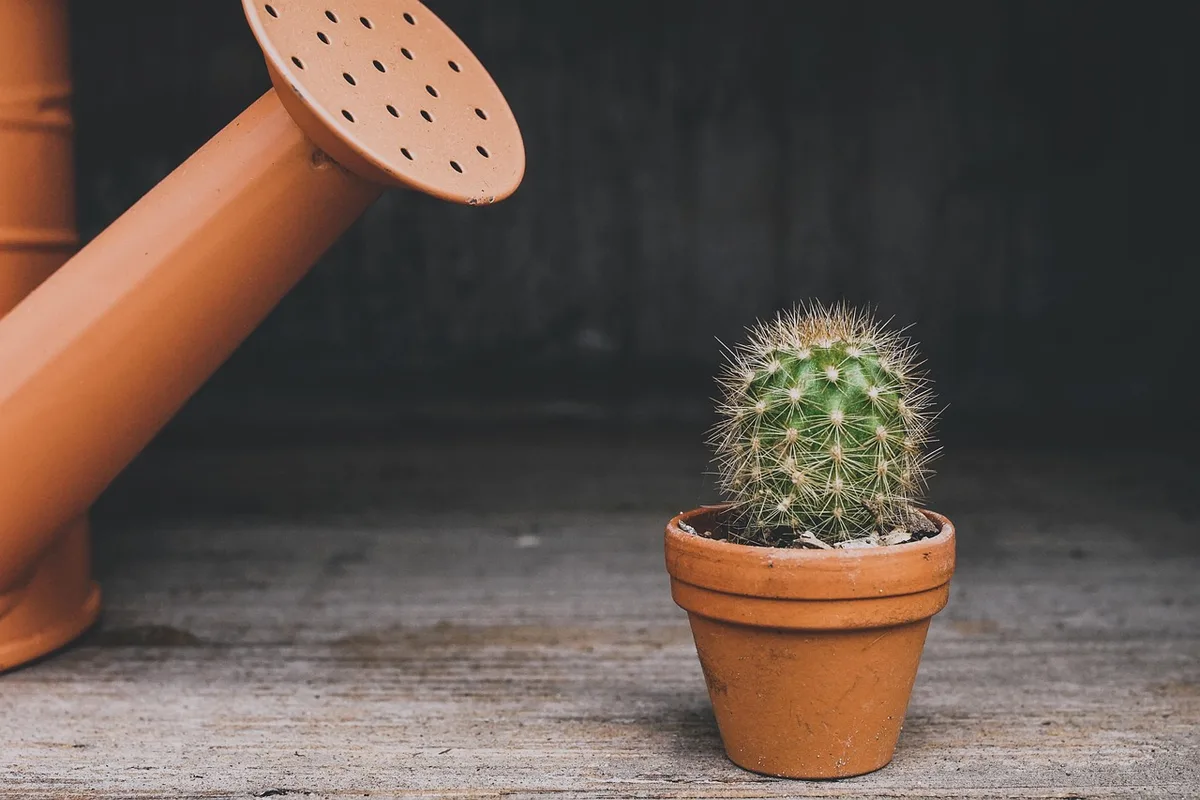
Image source: Pixabay / 165106 (Pixabay Content License)
Flushing is the single most effective rescue technique, but it has to be done right. Here's the full leaching protocol.
Step 1: Water volume
Run at least three times the pot's volume through the soil. For a 6-inch pot holding roughly 1.5 quarts of soil, that's about 1 gallon minimum. Bigger pots need proportionally more water.
Step 2: Flow rate
Use a slow, steady stream. A hard blast compacts soil and channels water around the root ball instead of through it. You want water percolating evenly through the entire soil mass.
Step 3: Check the runoff
If you can, collect some of the runoff water in a clear container. If it's yellow or smells strongly of ammonia, the soil is still contaminated and needs another flush.
Step 4: Let it rest
After flushing, don't water again until the top inch of soil dries out. The roots need oxygen to recover, and overwatering at this stage creates a secondary problem, root rot on top of nitrogen burn.
Step 5: Trim damaged foliage
Yellow or brown leaves won't recover. Trim them off so the plant can direct energy to new growth rather than trying to sustain dead tissue.
Step 6: Monitor for 2 to 3 weeks
New growth is the best sign of recovery. If the plant pushes out fresh leaves within two weeks, the root system survived. If nothing happens after three weeks and the soil smells off, the roots may be too damaged and repotting into fresh soil is your last option.
For severely contaminated soil, sometimes the best move is to remove the plant, wash the roots gently under lukewarm water, and repot entirely in fresh potting mix. It's stressful for the plant, but it removes the contamination source completely.
When the Plant Can't Be Saved
Sometimes the damage is too far gone. Knowing when to let go saves you time and prevents you from spreading contamination to other plants.
Signs the plant is beyond recovery:
- The entire root system is brown, mushy, and falls apart when you touch it
- The stem base is soft or hollow
- The soil smells strongly of ammonia even after multiple flushes
- No new growth appears after 3 to 4 weeks
- The plant collapses or the main stem snaps when gently moved
What to do with a dead plant and contaminated soil:
Don't compost contaminated soil. The uric acid crystals can persist and the nitrogen concentration is too high for most composting systems. Bag it and dispose of it with household waste.
Clean the pot thoroughly before reusing it. Scrub with a solution of one part white vinegar to nine parts water, then rinse well. This neutralizes residual ammonia and removes salt deposits.
For porous terracotta pots, soak the entire pot in clean water for 24 hours to draw out salts that have wicked into the clay.
Don't replant immediately. After a contamination event, let the cleaned pot sit empty for a week. If you notice any lingering odor, the pot may need a second cleaning or it may not be worth reusing, especially if it's unglazed terracotta that has absorbed urine deep into its structure.
Stopping Cats from Coming Back to the Same Spot

Image source: Pixabay / manfredrichter (Pixabay Content License)
Cats are territorial. Once they've marked a spot, they'll return to it. Breaking that cycle requires both physical barriers and scent disruption.
Physical barriers:
- Lay chicken wire or hardware cloth flat on the soil surface around plants. Cats hate walking on it and it's nearly invisible once soil settles over it.
- Place decorative stones or pine cones around the base of plants. They make the soil surface uncomfortable to stand on.
- Use raised planters or hanging baskets to keep plants completely out of reach.
- Install motion-activated sprinklers in garden beds. Brands like Orbit and Havahart make models designed specifically for deterring animals.
Scent deterrents:
- Cats dislike citrus. Scatter orange or lemon peels around affected plants. Replace them every few days as they dry out.
- Coffee grounds scattered on soil can deter some cats, though results vary by individual animal.
- Commercial cat repellent sprays containing methyl nonyl ketone are available at most garden centers. Reapply after rain or watering.
Address the root cause:
If it's your own cat, make sure the litter box is clean, accessible, and appealing. Cats often avoid dirty litter boxes and seek out soft soil instead. The general rule is one litter box per cat plus one extra.
If the problem is neighborhood cats, talk to your neighbors. Most pet owners don't realize their cat is causing problems in someone else's garden.
Cat Urine vs. Overfertilizing: Why the Symptoms Look So Similar
This is where a lot of plant owners get confused. Nitrogen burn from cat urine and nitrogen burn from too much fertilizer look almost identical. Both cause yellowing leaves, brown leaf tips, wilting, and stunted growth.
Here's how to tell them apart:
| Factor | Cat Urine Damage | Overfertilizer Damage |
|---|---|---|
| Onset speed | Symptoms appear within 2 to 4 days of exposure | Symptoms appear within 1 to 2 weeks of feeding |
| Smell | Soil may smell like ammonia, especially when wet | Soil usually smells normal |
| Pattern | Damage is localized to the area where urine was deposited | Damage is usually uniform across the whole plant |
| Salt crust | White or yellow crust on soil surface or pot rim | White crust on soil surface is common |
| Leaf pattern | Yellowing starts at leaf edges, often asymmetric | Yellowing typically starts at leaf tips and moves inward evenly |
The key differentiator is timing and smell. If your plant suddenly declines and the soil has an ammonia odor, think cat urine. If you recently fertilized and the decline is gradual, think nutrient overload.
The treatment is actually the same for both: flush the soil heavily and hold off on feeding. But identifying the cause matters because if you don't address the source, the problem will keep happening.
Choosing Cat-Resilient Plants for Pet Households
If you share your home with cats, picking tougher plants gives you a buffer against accidents. Some species genuinely handle nitrogen fluctuations better than others.
Best bets for homes with cats:
- Snake plant (Sansevieria trifasciata)
- ZZ plant (Zamioculcas zamiifolia)
- Pothos (Epipremnum aureum)
- Rubber plant (Ficus elastica)
- Aloe vera
These plants have thick, waxy root systems and can tolerate occasional nutrient spikes. They're also among the most forgiving houseplants in general.
Plants to keep off the floor:
- Ferns of any kind
- Calathea species
- Delicate herbs
Put these on high shelves or in rooms your cat can't access. Even with resilient species, prevention beats recovery every time.
Common Mistakes That Make the Damage Worse
The fastest way to kill a contaminated plant is to misdiagnose the problem. Here's what people get wrong.
Watering more because the plant looks wilted. Wilting after urine exposure is osmotic stress, not drought. Adding water to contaminated soil dilutes nothing, it just keeps the roots sitting in toxins.
Fertilizing to "help" the plant recover. The plant is already overloaded on nitrogen. More nutrients at this point push it over the edge.
Waiting to act. Every hour the ammonia sits in soil, more root tissue dies. Flush within the first few hours if you can.
Ignoring the ammonia smell. If the soil smells sharp and chemical after you water, the contamination is still active. Flush again.
Reusing contaminated soil. Even if the plant survives, the uric acid crystals remain. Start fresh whenever possible.
What the Research Actually Says About Nitrogen Toxicity in Plants
University extension programs consistently document nitrogen toxicity as one of the most common causes of ornamental plant decline in residential settings. The ASPCA and various cooperative extension services note that pet urine contamination is a frequently cited contributor.
The mechanism is well understood in agronomic science. When soil nitrogen exceeds a plant's uptake capacity, ammonium ions accumulate in root cells and disrupt cellular pH balance. This is the same process that causes "fertilizer burn" in crops, just delivered through a different source.
Research published in horticultural journals confirms that the threshold for visible damage in most ornamental species falls between 200 and 300 ppm available nitrogen in the soil solution.
What's less studied is urinary ammonia specifically, as most agricultural research focuses on synthetic fertilizer applications. The existing literature on residential soil contamination from animal waste supports the leaching protocol described above as the most effective remediation strategy.
Frequently Asked Questions
How long does it take for cat pee to kill a plant?
In a small pot with a concentrated deposit, visible damage can appear within 2 to 3 days. Death may follow within a week if the soil isn't flushed. Larger plants in bigger pots may take 2 to 3 weeks to show severe symptoms because the root mass provides more buffering capacity.
Can a plant recover from cat urine damage?
Yes, if you act quickly. Plants with strong root systems can bounce back within 1 to 3 weeks after thorough soil flushing. The key is catching it early, before permanent root tissue loss occurs.
Severely affected plants with fully browned root systems usually can't be saved.
Is cat urine worse than dog urine for plants?
Cat urine is significantly more concentrated. Cats produce urine with roughly twice the urea and salt content of dog urine because of their desert-adapted kidneys. A smaller volume of cat urine can cause the same damage as a much larger volume of dog urine.
How do I neutralize cat urine in garden soil?
For outdoor beds, flush the area with a hose for 10 to 15 minutes. The larger soil volume outdoors usually dilutes contamination faster than indoors. Adding organic mulch helps absorb residual ammonia and supports the soil microbes that break down nitrogen compounds.
Raised beds with fresh, uncontaminated soil mix are the most reliable long-term solution.
Does cat urine change soil pH?
Yes. As urea breaks down into ammonia, it temporarily raises soil pH, making it more alkaline. This shift can lock out iron and manganese, causing nutrient deficiency symptoms even after the nitrogen problem is resolved.
A simple soil pH test kit from any garden center can confirm whether your soil has shifted. If pH is above 7.5, a light application of elemental sulfur can bring it back down over a few weeks.
Will repotting save a plant after cat pee exposure?
Repotting into fresh, clean soil is the most reliable rescue method for severely affected plants. Remove the plant, gently wash the roots under lukewarm water to remove contaminated soil, trim any brown or mushy roots, and pot in fresh mix. It's stressful for the plant, but it eliminates the contamination source entirely.
The Bottom Line: Protecting Your Plants and Your Pets
Cat pee kills plants through a straightforward chemical process. Concentrated urea becomes ammonia, ammonia spikes nitrogen past what roots can handle, and salts prevent the plant from absorbing water. The damage can be fast and severe, especially in small pots.
But it's manageable. Flush contaminated soil immediately, keep cats away from vulnerable plants, and choose resilient species for pet households. If you act within the first few hours, most plants will recover.
The ones that don't teach you where to place the litter box next time.