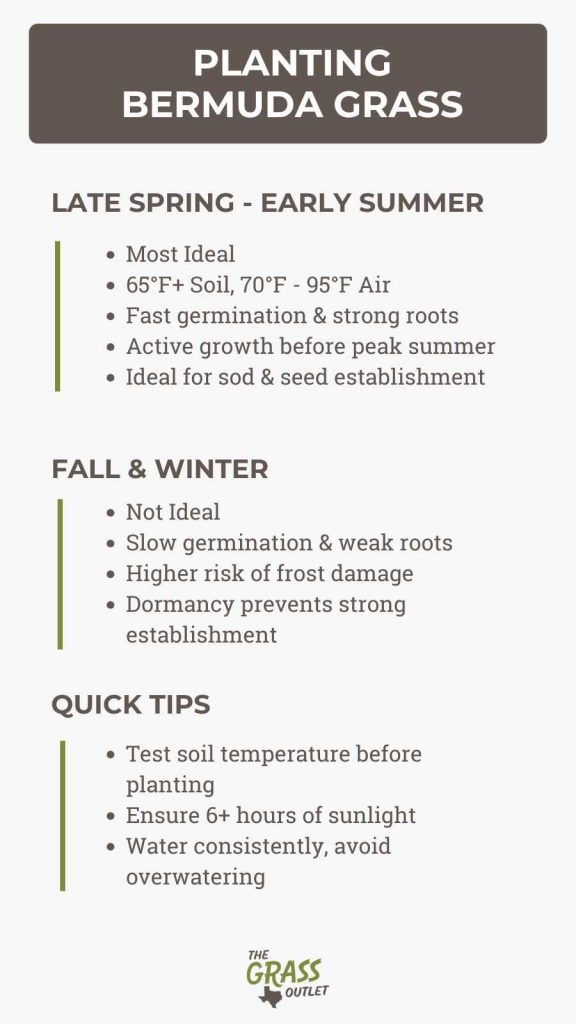
The best time to seed Bermuda grass is during late spring to early summer, when soil temperatures are consistently warm, typically between 65-70°F (18-21°C). This window ensures optimal germination and healthy growth, giving your lawn a vibrant, dense appearance.
For those eager to establish a lush Bermuda grass lawn, timing is everything. Seeding during the right season can make all the difference between a thriving, green carpet and a patchy, struggling yard. Generally, late spring through early summer is ideal because the soil warms up enough to promote quick germination, and the weather is conducive to healthy growth. Avoid seeding during colder months or when temperatures fluctuate wildly, as cooler soil temperatures can hinder germination and delay your lawn’s development. By planting your Bermuda grass at the perfect time, you set the stage for a resilient, beautiful turf that will stand up to heat, foot traffic, and weeds all season long.

Best Time to Seed Bermuda Grass
Understanding the Growing Cycle of Bermuda Grass
Bermuda grass is a warm-season grass that thrives in hot weather. It grows best when soil temperatures are consistently above 65°F. Knowing its growing cycle helps determine the optimal seeding time. This grass is very active in late spring and summer, making these periods ideal for seeding.
Why Timing Matters for Seeding Bermuda Grass
Planting at the right time ensures the grass establishes quickly and stays healthy. If you seed too early, cold temperatures can prevent germination. Seeding too late can expose young grass to early frosts or insufficient warmth for growth.
Best Time to Seed Bermuda Grass in Spring
Spring is a popular season for seeding Bermuda grass. Generally, you should aim to seed when soil temperatures reach at least 65°F. This typically occurs in late April or early May in most regions. Waiting until soil conditions are stable avoids early cold snaps.
Why Spring Seeding Works
Spring offers longer daylight hours and warmer weather, which helps grass grow quickly. The soil is moist from spring rains, providing ideal conditions for seed germination. It also gives the grass enough time to establish before the intense heat of summer.
Best Time to Seed Bermuda Grass in Summer
Summer can be an effective time for seeding if you plant early enough. The key is to do it before the peak summer heat. Aim to seed in late May or early June when soil temperatures are warm but before the weather becomes excessively hot.
Precautions During Summer Seeding
Seedlings need consistent watering during hot months, as dry heat can hinder their growth. Be prepared to water regularly to keep the soil moist but not waterlogged. This period is suitable if your area experiences mild summer heat rather than extreme temperatures.
Late Summer and Fall Seeding: Is It Effective?
Seeding Bermuda grass in late summer or fall is generally not recommended. Cooler temperatures and reduced daylight hours can delay germination and growth. However, in warmer climates, it might still be possible if the soil remains warm.
Challenges of Fall Seeding
Frost risk increases as fall progresses, which can damage young seedlings. Additionally, shorter days and cooler nights slow down growth, making establishment harder. If you choose fall seeding, do so early in the season and take measures to protect young grass.
Geographical Considerations for Timing
Your location greatly influences the best seeding time. Warmer southern regions allow for earlier seeding in spring. Conversely, northern areas may need to wait until soil temperatures are reliably above 65°F, often in late spring or early summer.
Regional Guidelines for Seeding Bermuda Grass
- Southern States (Florida, Texas, Arizona): Late March to early May
- Midwestern States (Kansas, Missouri): Mid-April to June
- Northern States (Illinois, Michigan): Late April to early June
Best Practices for Successful Seeding
Choosing the right time is only part of success. Proper soil preparation, seed selection, and watering are essential. Clear your lawn of debris and weeds before seeding. Use high-quality Bermuda grass seed suited to your climate.
Preparing Your Lawn for Seeding
– Loosen compacted soil for better seed contact.
– Remove dead grass and weeds.
– Level uneven terrain for even germination.
Seeding Tips for Better Results
- Spread seed evenly using a broadcast spreader.
- Follow recommended seeding rates on the seed package.
- Lightly rake the soil to cover seeds and improve soil contact.
- Apply a thin layer of mulch or straw to retain moisture.
Watering and Maintenance Post-Seeding
Consistent watering is crucial for seed germination. Keep the soil moist but not soaked, particularly during the first few weeks. Once established, Bermuda grass becomes drought tolerant but needs regular watering during the initial growth phase.
Watering Schedule for New Seeds
– Water lightly 2 to 3 times a day initially.
– Reduce frequency gradually as roots develop.
– Deep watering encourages strong root growth.
Monitoring Growth and Adjusting Timing
Keep an eye on weather patterns and soil conditions. If a warm spell occurs early in spring, you can seed slightly earlier. Conversely, postpone if cold weather or heavy rains threaten young seedlings.
Signs It’s the Right Time to Seed
– Soil temperatures consistently above 65°F.
– Clear, warm days with minimal frost risk.
– Moist soil conditions conducive to seed germination.
Summary of the Ideal Seeding Windows
| Region | Best Seeding Window | Temperature Range | Notes |
|———|———————-|———————|——-|
| South | Late March to Early May | Above 65°F soil temperature | Early planting for quick establishment |
| Midwest | Mid-April to June | 65°F to 75°F | Avoiding late frosts and summer heat |
| North | Late April to Early June | 65°F or higher | Longer wait for soil warming |
Final Thoughts on Timing
Choosing the best time to seed Bermuda grass depends on your local climate and soil conditions. Planning your seeding schedule around these factors increases the odds of a lush, healthy lawn. Always prepare your soil well and stay consistent with watering to ensure successful establishment of Bermuda grass.
When to Seed Bermuda Grass?
Frequently Asked Questions
What factors influence the ideal seeding season for Bermuda grass?
Several factors affect the best time to seed Bermuda grass, including soil temperature, air temperature, and rainfall. Bermuda grass thrives when soil temperatures reach around 65-70°F (18-21°C), which typically occurs late spring through early summer. Consistent rainfall and warm weather promote healthy germination and growth. Understanding local climate patterns helps determine the optimal window for planting to ensure the grass establishes well.
Why is late spring or early summer considered the prime time for seeding Bermuda grass?
Late spring and early summer provide warm soil and air temperatures necessary for Bermuda grass seed germination. During this period, the risk of frost diminishes, giving seedlings the best environment to develop a strong root system. Additionally, longer daylight hours and increased warmth support vigorous growth, helping the turf establish quickly and resist weeds and pests.
Can I seed Bermuda grass in late summer or early fall?
While it’s possible to seed Bermuda grass in late summer or early fall, success depends on your local climate. In regions with mild winters, planting during this period can work if soil temperatures remain warm. However, in cooler areas, seeding too late may lead to poor germination or inadequate establishment before colder weather sets in. Consider your local conditions and plan accordingly to maximize success.
Final Thoughts
The best time to seed Bermuda grass is during late spring to early summer when soil temperatures warm up. Consistent warmth encourages quick germination and healthy growth.
Planting at the right time ensures a lush, resilient lawn that can withstand seasonal changes.
In conclusion, timing is crucial for successful Bermuda grass seeding; the best time to seed Bermuda grass is during late spring to early summer for optimal results.