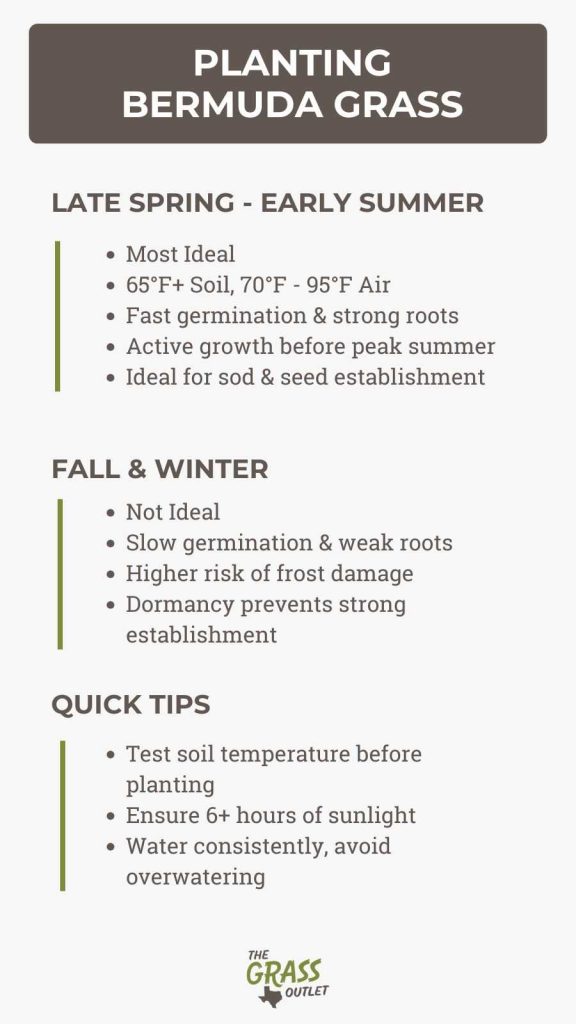
The best time to plant Bermuda grass seed is in late spring or early summer when soil temperatures are consistently warm. For optimal growth, aim to plant when daytime temperatures are between 75°F and 85°F, and the soil has warmed up adequately. Planting during this period ensures the grass establishes quickly and thrives throughout the season.
To sum up, the ideal time to sow Bermuda grass seed is late spring to early summer, typically from late April to early June, depending on your local climate. Ensuring the soil warmth and proper moisture levels during this window will give your lawn the best start.
Getting your Bermuda grass off to a strong start requires timing, as planting too early or too late can impact germination and growth. The key is waiting until the weather warms up and the soil reaches the right temperature. This period provides optimal conditions for seed germination, quick establishment, and a lush, green lawn that lasts all summer. Whether you’re revitalizing an existing lawn or starting fresh, planting at the right time makes all the difference in achieving a beautiful, durable Bermuda grass lawn.

Best Time to Plant Bermuda Grass Seed
Choosing the best time to plant Bermuda grass seed is essential for a lush, healthy lawn. Timing impacts seed germination, growth speed, and overall lawn quality. Knowing the right time helps your grass establish strong roots and thrive throughout the seasons.
Understanding Bermuda Grass Growing Season
Bermuda grass is a warm-season grass that flourishes in hot weather. It is most active when temperatures are consistently between 75°F and 95°F. Planting at the right time ensures the grass gets the warmth it needs for optimal growth.
Typically, Bermuda grass begins to grow vigorously during late spring and early summer. In areas with longer warm seasons, it can grow year-round. Recognizing these patterns helps determine the ideal planting window.
Optimal Soil Temperatures for Seeding
Soil temperature plays a major role in seed germination. Bermuda grass seeds generally germinate best when soil temperatures are between 65°F and 70°F. Cold soils can delay germination or prevent it altogether.
Using a soil thermometer can help you monitor conditions accurately. Planting when soil temperatures reach the optimal range improves the chances of quick sprouting and healthy seedling development.
Best Months to Plant Bermuda Grass Seed
In most regions, the ideal months to sow Bermuda grass seed are late spring through early summer. This period coincides with rising soil and air temperatures. A common planting window is from March to June, depending on your climate zone.
Planting too early in spring, when soils are still cold, can cause poor germination. Conversely, late summer planting may not give the grass enough time to establish before cooler weather arrives.
Regional Variations in Planting Times
Southern Regions
- In states like Florida, Texas, and Arizona, planting can occur as early as March or April. The warm climate allows for earlier seeding.
- Late spring to early summer (April to June) is optimal for establishing a healthy Bermuda lawn.
Mid-Atlantic and Northern Regions
- In areas with cooler springs, plantings should wait until soil and air temperatures regularly reach 65°F or higher. This often means planting from May to early June.
- Fall planting is usually less effective because of approaching cooler temperatures and shorter growing seasons.
Importance of Soil Preparation and Timing
Timing is not the only factor; properly preparing your soil can significantly influence germination success. Remove weeds, loosen compacted soil, and add nutrients if needed before planting.
Planting at the right time allows your Bermuda grass to benefit fully from soil preparation. Well-prepared soil combined with optimal timing promotes quicker germination and stronger root growth.
Signs That It’s the Right Time to Plant
- Consistent daytime temperatures above 75°F
- No immediate risk of frost in your region
- Soil temperatures are between 65°F and 70°F
- You have prepared your lawn area properly
Monitoring weather conditions and soil temperatures helps you decide the best moment to sow Bermuda grass seeds. Avoid planting during unexpected cold snaps or early cold seasons.
Additional Tips for Successful Planting
Timing for Seeding vs. Sodding
If you plan to seed, timing is vital for successful germination. In contrast, sodding allows for more flexible planting times because the grass is already established. Choosing between seed and sod depends on your schedule and budget.
Watering and Temperature Considerations
Water your soil lightly before planting if the weather is warm and dry. Regular watering after planting keeps the seedbed moist, which is critical during germination. Avoid overwatering, which can drown seeds or lead to disease.
Common Mistakes to Avoid When Planting Bermuda Grass
- Planting too early before soil conditions are suitable
- Ignoring soil temperature and moisture levels
- Seeding during periods of drought or extreme heat
- Failing to properly prepare the soil before planting
By paying attention to these factors, you can maximize germination rates and establish a vibrant Bermuda lawn that lasts for years.
Related Topics to Consider
- Seeding techniques for Bermuda grass
- Watering schedules for young Bermuda lawns
- Best fertilizers and nutrients for Bermuda grass
- Common pests and how to prevent them
Exploring these topics can help you refine your Bermuda grass planting plan and ensure a healthy, green lawn in your yard.
Seeding Bermuda Lawns and Zoysia Lawns
Frequently Asked Questions
What are the ideal soil temperatures for planting Bermuda grass seed?
Bermuda grass seeds germinate best when soil temperatures range between 65°F and 75°F (18°C to 24°C). Planting when the soil is within this temperature window ensures quick germination and healthy root development. Checking soil temperature with a soil thermometer before planting can help determine the best time to seed your lawn.
Is early spring a suitable time to sow Bermuda grass seed?
Early spring can be a good time to plant Bermuda grass if soil and air temperatures are consistently warm, typically above 65°F (18°C). Planning the seeding around the last frost date helps avoid cold damage and ensures the grass establishes well during the warm months ahead.
Can planting in late summer or early fall affect Bermuda grass growth?
Planting Bermuda grass in late summer or early fall can work if the soil remains warm, but it may pose risks due to reduced daylight and cooler night temperatures. It is better to seed during late spring or early summer when conditions favor rapid growth before the cooler months arrive.
How does climate influence the best planting time for Bermuda grass?
In warmer climates, you can plant Bermuda grass seeds earlier in the year, often in late spring. In cooler regions, waiting until late spring or early summer ensures the soil and air temperatures are suitable for germination and healthy growth. Adapting your planting schedule based on your regional climate helps achieve optimal results.
Can irrigation affect the timing of Bermuda grass seed planting?
Yes, proper soil moisture is essential for Bermuda grass seed germination. If you plan to water frequently, you can seed slightly earlier when soil is moist but temperatures are still warm. Consistent moisture around 65°F to 75°F(18°C to 24°C) encourages uniform germination and establishment.
Final Thoughts
The best time to plant bermuda grass seed is during late spring or early summer when soil temperatures are warm enough for germination. Planting during this period ensures healthy growth and a lush lawn.
Timing is crucial for successful seeding; avoid planting in cooler months when the grass struggles to establish.
In summary, planting bermuda grass seed at the right time maximizes growth potential. The best time to plant bermuda grass seed is typically late spring to early summer, aligning with warm soil conditions for optimal results.