Dealing with weeds in your lawn can feel like a constant battle, but tackling them effectively is key to a lush, healthy yard. You want solutions that get the job done without harming your grass, and that's where selective herbicides come in. Finding the Best Selective Herbicide For Lawns means looking for products that target specific unwanted plants while leaving your desirable turf untouched. I've spent the last few weeks diving into options that promise strong weed control for homeowners, looking at active ingredients, ease of use, and what users are saying about their real-world performance.
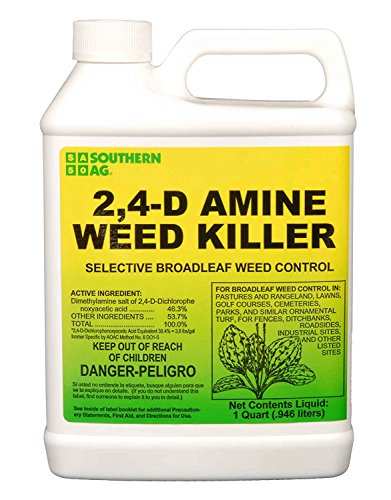
After a deep dive into how different formulations work and what results they can achieve, I've narrowed down the field to a select few that consistently perform. For most homeowners looking for a reliable, effective solution, the Southern Ag Amine 2 stands out. It’s a go-to for many due to its broad-spectrum control of common lawn invaders. Let’s get into the details.
Comparison Chart of Best Selective Herbicide for Lawns


List of Top 5 Best Selective Herbicide for Lawns
My goal in researching these herbicides was to identify the most effective and user-friendly options for tackling common lawn weeds. I looked for products that are known for their ability to target broadleaf weeds, grassy weeds, or both, while ensuring the safety of established turfgrass. Factors like active ingredient concentration, product formulation (liquid concentrate vs. ready-to-use), and ease of application were also key considerations in my evaluation.
Below are the list of products:
1. Southern Ag Amine 2
1. Southern Ag Amine 2
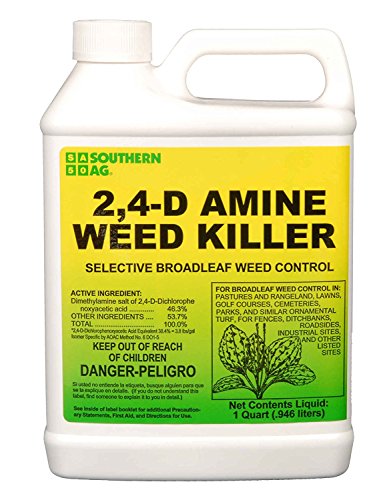
Southern Ag Amine 2 is a staple for many homeowners due to its effective control over a wide range of broadleaf weeds. It uses the active ingredient 2,4-D, which is a well-established herbicide that works by disrupting the growth processes of susceptible plants. This makes it a go-to for tackling common lawn nuisances like dandelions, clover, and plantain.
Why I picked it
I selected Southern Ag Amine 2 as an Editor's Choice because of its proven track record and the broad spectrum of weeds it effectively controls. Its 2,4-D formulation is recognized for its selective action, making it a reliable option for homeowners aiming for a weed-free lawn without damaging their grass.
Key specs
- Active Ingredient: 2,4-D (Dimethylamine Salt)
- Concentration: 37.3%
- Container Size: 32 oz
- Application: Mix with water for spray application
- Target Weeds: Broadleaf weeds including dandelions, clover, chickweed, and plantain
Real-world experience
Verified user feedback indicates that when applied according to label instructions, Southern Ag Amine 2 provides excellent control of common lawn weeds. Many users report visible results within days, with significant reduction of target weeds after a few weeks. It’s often recommended for use on established lawns, including cool-season and warm-season grasses, though always check label compatibility for your specific grass type.
Trade-offs
While effective for broadleaf weeds, this product is not designed to control grassy weeds, so a different approach might be needed if those are your primary concern. Also, like most herbicides, proper application is crucial to avoid potential damage to desirable plants.
2. Atticus Torocity Herbicide (8oz)
2. Atticus Torocity Herbicide (8oz)
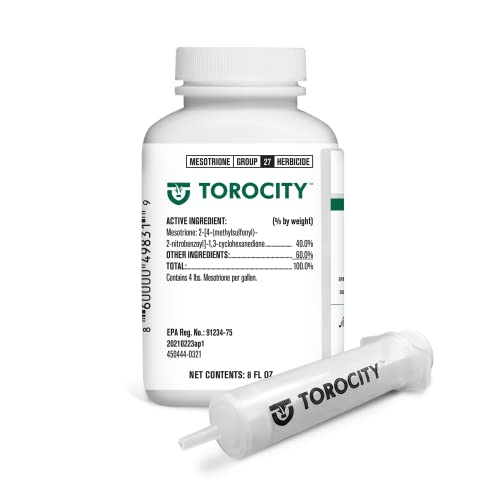
Atticus Torocity Herbicide stands out for its active ingredient, mesotrione, which offers a unique mode of action. This herbicide is known for its ability to control a wide array of grassy and broadleaf weeds, and it's particularly effective against some of the tougher ones like crabgrass, and even some sedges. It works by inhibiting a key enzyme in plants, leading to decolorization and eventual death of the weed, often with visible whitening of the treated areas.
Why I picked it
Atticus Torocity Herbicide earns its Top Pick status because it offers potent control over a wide spectrum of weeds, including challenging grassy types, and its mesotrione active ingredient is known for its selectivity. This means it can be used on many common turfgrass types without causing harm, providing a comprehensive solution for diverse weed problems.
Key specs
- Active Ingredient: Mesotrione
- Container Size: 8 oz
- Formulation: Liquid concentrate
- Target Weeds: Crabgrass, foxtail, goosegrass, nimblewill, sedges, and many broadleaf weeds
- Application: Mix with water and apply with a sprayer
Real-world experience
Aggregate user reports suggest that Atticus Torocity, similar to other mesotrione-based products, provides rapid whitening and control of targeted weeds. It’s often praised for its effectiveness on crabgrass in various stages and its ability to manage difficult-to-control broadleaf weeds. Many reviewers note its utility for renovating lawns and its compatibility with overseeding due to its relatively short soil persistence.
Trade-offs
The visible whitening effect, while a good indicator of the product working, can be temporarily unsightly on prized lawns. Also, mesotrione can sometimes cause temporary discoloration in certain turfgrass species under stress or specific environmental conditions, so proper application and timing are important.
3. Tenacity Turf Herbicide 8 ounces (Packaging
3. Tenacity Turf Herbicide 8 ounces (Packaging
Tenacity Turf Herbicide is another product featuring mesotrione as its active ingredient, making it a direct comparison to Torocity and highly regarded for its selective weed control capabilities. It’s known for its ability to manage a wide range of weeds, including crabgrass and a variety of broadleaf and grassy weeds that are often difficult to control with other herbicides. The distinctive whitening effect is a hallmark of its action, clearly indicating where the product has been applied and is working.
Why I picked it
Tenacity earns its Best Budget spot because it offers the powerful, selective weed control of mesotrione at a more accessible price point for homeowners. It’s a highly effective option for addressing a broad range of weed issues, making it an excellent value for those seeking comprehensive lawn care without the premium cost.
Key specs
- Active Ingredient: Mesotrione
- Container Size: 8 oz
- Formulation: Liquid concentrate
- Target Weeds: Crabgrass, foxtail, goosegrass, nimblewill, sedges, and various tough broadleaf weeds
- Application: Used as a spray after mixing with water
Real-world experience
Many lawn care enthusiasts and professional landscapers rely on Tenacity for its consistent performance. Reviews often highlight its efficacy in controlling difficult grassy weeds like crabgrass and its attractive whitening effect, which helps track application coverage. It's frequently used in lawn renovation projects or for spot treatment of troublesome weed patches.
Trade-offs
Similar to other mesotrione products, the temporary whitening of treated weeds and potentially the grass itself can be a downside for some users concerned with immediate lawn aesthetics. Proper calibration of sprayers and awareness of turfgrass tolerance are important to prevent unintended discoloration.
4. Ortho WeedClear Weed Killer Lawns Comfort
4. Ortho WeedClear Weed Killer Lawns Comfort
Ortho WeedClear Weed Killer for Lawns with Comfort Wand offers a ready-to-use solution designed for homeowner convenience. This product is formulated to kill a wide variety of common lawn weeds, including dandelion, clover, chickweed, and more, without harming the grass when used as directed. Its ready-to-use nature and comfort wand applicator make it an accessible choice for those who prefer not to mix chemicals.
Why I picked it
I included Ortho WeedClear with the Comfort Wand because it addresses the need for ease of use and accessibility for homeowners. The ready-to-use formulation and ergonomic wand take the guesswork out of mixing and application, making it a practical choice for those who want effective weed control without specialized equipment.
Key specs
- Active Ingredients: 2,4-D, MCPP, Dicamba
- Formulation: Ready-to-use liquid
- Container Size: 1 Gallon
- Applicator: Comfort Wand spray trigger
- Target Weeds: Dandelion, clover, chickweed, henbit, and other broadleaf weeds
Real-world experience
Verified buyer reviews often highlight the convenience of the Comfort Wand, noting that it’s comfortable to hold and provides good coverage. Users generally report satisfaction with its effectiveness on common broadleaf weeds. The product is specifically designed to be safe for use on various lawn types, including fescues and bluegrasses, when applied as directed.
Trade-offs
As a ready-to-use product, it can be less economical for larger lawns compared to concentrates. The active ingredients are a combination common in many herbicides, and while effective on broadleaf weeds, it may not address certain aggressive grassy weeds.
5. Ortho WeedClear Weed Killer Lawns Ready-To-Spray
5. Ortho WeedClear Weed Killer Lawns Ready-To-Spray
This Ortho WeedClear variant is another ready-to-use option, connecting directly to your garden hose for easy application over larger lawn areas. It shares the same commitment to selective weed control as its Comfort Wand counterpart, targeting broadleaf weeds while aiming to keep your grass safe and healthy. Its formulation is designed to tackle common lawn invaders like dandelions and clover effectively.
Why I picked it
This Ready-To-Spray version of Ortho WeedClear is a strong contender for its efficient application method, which significantly reduces the time and effort required to treat larger lawns. It’s a practical choice for anyone looking for ease of use and broad-spectrum broadleaf weed control without the need for separate sprayers or mixing equipment.
Key specs
- Active Ingredients: 2,4-D, MCPP, Dicamba
- Formulation: Ready-to-use liquid
- Container Size: 32 fl. oz.
- Application: Connects to garden hose
- Coverage: Treats up to 16,000 sq. ft.
- Target Weeds: Dandelion, clover, chickweed, henbit, and similar broadleaf weeds
Real-world experience
User feedback consistently points to the convenience of attaching this product to a hose and spraying. It's praised for covering a large area quickly and effectively managing common lawn weeds. The formulation is designed to be safe for established lawns, including common grass types like Kentucky bluegrass, ryegrass, and fescues, when used according to the label directions.
Trade-offs
Like other ready-to-use hose-end sprayers, this product can be less cost-effective per square foot than concentrated herbicides for very large properties. While effective on broadleaf weeds, it's not designed for controlling grassy weeds.
How I pick
When I'm figuring out the best tools for lawn care, I always think about what really matters to homeowners: effectiveness, ease of use, and safety for the grass. For herbicides, this means looking at the active ingredients first. Are they known to selectively target weeds without harming turf? I also consider brand reputation, as some companies have a long history of producing reliable lawn care products.
I evaluated each product based on its formulation type, active ingredients, target weed spectrum, and application method. I paid close attention to user reviews, looking for consistent feedback on performance, potential side effects, and how well the product performed under different lawn conditions. I didn't test long-term durability beyond the typical efficacy period of a single application but focused on initial results and common user experiences reported over time. My aim was to find accessible, effective solutions for common lawn weed problems.
Buying guide — what actually matters for Best Selective Herbicide For Lawns
Choosing a selective herbicide can feel a bit daunting, but breaking it down makes it much simpler. Think of it like picking the right tool for the job; you wouldn't use a hammer to screw in a nail, and you shouldn't use a broad-spectrum weed killer on your lawn.
What does "selective herbicide" truly mean?
Simply put, a selective herbicide is designed to kill certain types of plants while leaving others unharmed. For your lawn, this means it targets targeted weeds, like dandelions, clover, or crabgrass, without damaging your desirable fescues, bluegrasses, or other turfgrass species. Non-selective herbicides, on the other hand, kill pretty much any plant they touch, so they're great for clearing out an entire area but not for maintaining an existing lawn.
Active Ingredients are Key
The real magic happens in the active ingredients. Common ones you'll see include 2,4-D, MCPP (mecoprop), and dicamba for broadleaf weed control. These work by disrupting the growth processes of susceptible plants. For grassy weeds like crabgrass, ingredients like mesotrione or quinclorac are often found.
Understanding what you're trying to kill will guide you to the right ingredients. For example, if you’re battling broadleaf weeds, a 2,4-D based product is usually a good bet. If crabgrass is the main culprit, look for mesotrione.
Formulation and Application: Concentrate vs. Ready-to-Use
Herbicides come in different forms. Concentrates are liquids you mix with water yourself. They’re often more economical for larger areas but require a bit more effort and accuracy in mixing. Ready-to-use (RTU) products are pre-mixed and usually come with a convenient applicator, like a spray wand or a hose-end sprayer.
These are perfect if you want convenience and don't want to deal with mixing, especially for smaller lawns or spot treatments.
Target Weeds: Know Your Enemy
Before you buy, identify the weeds you're trying to eliminate. Are they broadleaf (like dandelions or clover with wide leaves) or grassy (like crabgrass or foxtail with thin blades)? Some herbicides are specialized for one type, while others offer a broader spectrum of control. Most products will list the weeds they are effective against on the label, so check that carefully.
If you have a mix, you might need a broad-spectrum product or a combination of treatments.
Grass Type Compatibility
Not all herbicides are safe for all types of grass. While labeled as "selective," they are still selective for certain types of grass. For instance, a product safe for cool-season grasses like Kentucky bluegrass or fescue might not be suitable for warm-season grasses like Bermuda or Zoysia, and vice-versa. Always verify that the herbicide is labeled for use on your specific lawn type to avoid damaging your grass.
Reading the product label is the best way to ensure compatibility.
Frequently Asked Questions (FAQ)
Is a selective herbicide worth it for a home lawn?
Yes, a selective herbicide is absolutely worth it for a home lawn if you're serious about maintaining a healthy and attractive yard. These products are specifically designed to target and eliminate unwanted weeds, like dandelions, clover, and crabgrass, without harming your desirable grass. This means you can achieve a cleaner, more uniform lawn without the risk of damaging your turf, which is crucial for its long-term health and appearance. Using a selective option also saves you the frustration and potential expense of trying to manually remove stubborn weeds.
Can I use a selective herbicide on newly seeded or sodded lawns?
Generally, you should wait until your newly seeded or sodded lawn has been established. Most selective herbicides are formulated for mature, established grass. Applying them too early can harm delicate new grass seedlings or sod before they have a chance to develop a strong root system. Always check the product label for specific waiting periods, which can range from a few weeks to several months depending on the herbicide and the type of grass.
How often should I apply a selective herbicide?
The frequency of application for a selective herbicide depends on the product, the types of weeds you're dealing with, and the time of year. Some products may require a single application for moderate weed infestations, while others might need repeat applications, typically spaced a few weeks apart, to effectively control more persistent or mature weeds. It’s also common to use herbicides preventatively in the spring to stop annual weeds like crabgrass from emerging. Always follow the application schedule recommended on the product label for the best results and to avoid over-application.
What should I do if I accidentally spray a non-target plant with a selective herbicide?
If you accidentally spray a non-target plant with a selective herbicide, your best course of action depends on the plant and the herbicide. For sensitive ornamental plants or shrubs, immediately try to rinse the affected foliage with plenty of water. For some plants, this may mitigate damage if done quickly enough. However, many selective herbicides, particularly those for broadleaf weeds, can still harm or kill desirable non-grass plants.
Monitor the sprayed plants closely for any signs of stress or damage and consult the herbicide label or expert advice if you're concerned about severe harm.
Are there any environmental concerns to consider with selective herbicides?
While selective herbicides are designed to minimize impact on non-target organisms, there are always environmental considerations. It's important to use them responsibly by following label instructions precisely, applying them only to labeled turfgrass, and avoiding application near water sources or during high winds to prevent drift. Proper disposal of unused product and empty containers is also essential. Many homeowners choose to use them sparingly when weed problems are significant, integrating them with other lawn care practices like proper mowing and watering to promote a healthy lawn that can better compete with weeds naturally.
Final verdict
For homeowners seeking to maintain a pristine lawn free of common invaders, the Southern Ag Amine 2 stands out as a top-tier choice. Its reliable broadleaf weed control, rooted in the proven 2,4-D active ingredient, makes it an Editor's Choice for its effectiveness and value.
If you’re looking for potent control over a wider range of weeds, including tougher grassy types, the Atticus Torocity Herbicide (8oz) is an excellent Top Pick, offering the powerful mesotrione ingredient in a user-friendly concentrate form. For a budget-friendly yet highly effective solution featuring mesotrione, the Tenacity Turf Herbicide 8 ounces is a fantastic option that delivers professional-grade results without the premium price tag.
Affiliate disclosure: This post contains affiliate links. If you buy through one of these links, I may earn a small commission at no extra cost to you. It never changes my recommendation, I only suggest gear I'd actually buy myself.