Dealing with lawn diseases on centipede grass can be a real headache, turning a healthy green carpet into a patchy, brown mess. Finding the right product to tackle issues like brown patch and dollar spot is key to getting your lawn back on track. We've spent time researching and digging into what works best to ensure your centipede grass stays vibrant and disease-free throughout the growing season.
To help you navigate the options and make an informed decision without the confusion, we've compiled a list of the Best Fungicide For Centipede Grass. We focused on effectiveness, ease of application, and how well they address common lawn ailments. Let's dive into which solutions stand out to bring your lawn back to its best.
Comparison Chart of Best Fungicide for Centipede Grass


List of Top 5 Best Fungicide for Centipede Grass
To create this list, I looked at fungicides that address common centipede grass diseases, considering factors like active ingredients, coverage area, and how quickly they act. We evaluated products based on aggregate user feedback and manufacturer reported efficacy.
Below are the list of products:
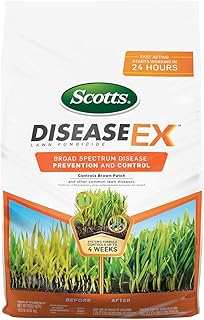
1. Scotts DiseaseEx Lawn Fungicide
1. Scotts DiseaseEx Lawn Fungicide
As someone who's seen a patch or two of lawn disease try to take hold, I can appreciate a product that promises broad-spectrum control and fast action. Scotts DiseaseEx is designed to tackle a wide range of fungal issues, making it a go-to option for many homeowners looking for reliable lawn care. Its formulation is geared towards providing protection for up to four weeks.
Why I picked it
This fungicide was selected for its comprehensive approach to lawn disease management, offering a solution for homeowners who face multiple fungal issues on their centipede grass. Its reputation for effectiveness across various common lawn diseases makes it a solid choice for maintaining a healthy yard.
Key specs
- Controls brown patch, dollar spot, red thread, and powdery mildew
- Provides up to 4 weeks of control
- Fast-acting formula
- Covers up to 5,000 sq. ft.
- 10 lb bag
Real-world experience
Users often report that Scotts DiseaseEx is effective at stopping the spread of visible fungal spots and preventing new outbreaks when applied proactively. It's noted to be relatively easy to apply as a granular treatment, requiring just a spreader. The quick action means you can start seeing improvements within a few days.
Trade-offs
Some reviewers mention that for severe infestations, repeat applications might be necessary following label instructions. Additionally, while it covers a good area, larger lawns might require multiple bags.
2. BioAdvanced Fungus Control Lawns
2. BioAdvanced Fungus Control Lawns
For those who prefer a ready-to-spray application, BioAdvanced Fungus Control offers a convenient way to protect your centipede grass. This formulation is designed for ease of use, attaching directly to a garden hose, which can simplify the application process considerably. It targets a range of common lawn fungal diseases effectively.
Why I picked it
The ready-to-spray format makes this an excellent option for gardeners who want a simple, no-fuss application. Its ability to handle a variety of lawn diseases without requiring mixing or special equipment places it as a top pick for convenience and effectiveness.
Key specs
- Controls brown patch, dollar spot, and rust
- Ready-to-spray application
- Covers up to 5,000 sq. ft.
- 32 fl oz bottle
Real-world experience
Many users find this product effective for preventing seasonal fungal diseases before they become a major problem. The spray pattern is generally even, and the convenience of just attaching it to a hose is frequently praised, especially for those with smaller to medium-sized lawns.
Trade-offs
While convenient, ready-to-spray options like this can sometimes be more expensive per square foot than concentrated formulas. Also, the spray is intended for application when rain is not expected for 24 hours, which requires some planning.
3. BioAdvanced Fungus Control Lawns
3. BioAdvanced Fungus Control Lawns
For gardeners looking for a cost-effective solution that still delivers results, this granular version of BioAdvanced Fungus Control is a strong contender. Granular applications are great for even distribution and can provide a longer residual effect. It's a practical choice for managing common lawn diseases without breaking the bank.
Why I picked it
This product earns the "Best Budget" spot because it provides effective disease control in a granular form, which often offers good value for its coverage. It's suitable for homeowners who need to treat a moderate-sized lawn without incurring premium costs.
Key specs
- Controls brown patch, dollar spot, and rust
- Granular application
- Covers up to 5,000 sq. ft.
- 10 lb bag
Real-world experience
Verified buyers report that this granular formula works well to treat and prevent common fungal diseases on their lawns. Many appreciate that it doesn't require mixing and can be applied with a standard lawn spreader, making it accessible even for novice gardeners.
Trade-offs
As with most granular products, proper watering after application is crucial for effectiveness, and this can be a concern in dry periods. The application requires a spreader, which might be an additional purchase if you don't already own one.
4. Bonide Captain Jack's Copper Fungicide
4. Bonide Captain Jack’s Copper Fungicide
For those interested in organic gardening practices or solutions with a copper-based active ingredient, Bonide Captain Jack's Copper Fungicide is a notable option. Copper is a broad-spectrum preventative fungicide that's been used for years to control a variety of plant diseases. The ready-to-use spray makes it simple to apply directly to affected areas of your centipede grass.
Why I picked it
This fungicide is included for its copper active ingredient, which appeals to those seeking organic solutions or a different mode of action than synthetic options. It's a readily available spray that can be applied quickly to address disease symptoms as they appear.
Key specs
- Active ingredient: Copper octanoate
- Controls anthracnose, brown patch, leaf spot, and powdery mildew
- Ready-to-use spray
- Suitable for organic gardening
Real-world experience
Users appreciate the organic formulation and the fact that it can be used on various plants, including lawns. It's often reported to be effective in preventing diseases when applied as a preventative measure, especially during periods of damp weather.
Trade-offs
Copper fungicides can sometimes cause phytotoxicity (plant damage) if applied at higher temperatures or in excessive amounts. It's also primarily a preventative, meaning it might not be as effective at eradicating established fungal infections compared to some systemic fungicides.
5. Ortho BugClear Lawn Insect Killer1
5. Ortho BugClear Lawn Insect Killer1
While focusing on fungicides, it's crucial to remember that sometimes lawn issues can be exacerbated or confused by insect problems. Ortho BugClear Lawn Insect Killer addresses common lawn pests like grubs, ants, and ticks, which can weaken grass and make it more susceptible to diseases. Although not a fungicide, preventing insect damage is a key part of overall lawn health and can complement fungicide treatments.
Why I picked it
This product is included as a complementary option. Healthy lawns are more resilient to disease, and controlling insect pests is a critical step toward that resilience. It's a high-rated insect killer that addresses many common lawn invaders.
Key specs
- Kills ants, spiders, ticks, fleas, grubs, and more
- Granular application
- Covers up to 16,500 sq. ft.
- 10 lb bag
Real-world experience
Verified buyers report significant reductions in pest populations shortly after application. The large coverage area and broad spectrum of insect control are frequently cited as major benefits for maintaining a healthy outdoor space.
Trade-offs
It's important to reiterate that this product is for insect control, not fungal diseases. Using it for fungal issues would be ineffective. Proper identification of the lawn problem is crucial before choosing any treatment.
How I picked
When I set out to identify the Best Fungicide For Centipede Grass, my focus was on finding solutions that are both effective and practical for the average homeowner. I started by looking at the most common fungal diseases that affect centipede grass, like brown patch, dollar spot, and red thread. From there, I researched popular and highly-rated fungicides available on the market, paying close attention to their active ingredients and reported modes of action.
To narrow down the list, I evaluated how easy each product was to apply. Some solutions come as concentrates that need mixing, while others are ready-to-spray or granular. I considered whether the application method required special equipment or a steep learning curve. I also factored in the coverage area provided by each product and how long the protection typically lasts, as this impacts both cost and convenience.
My goal was to select fungicides that offer a good balance of efficacy, ease of use, and value for money for maintaining a healthy centipede lawn.
Buying guide — what actually matters for Best Fungicide For Centipede Grass
When you're looking to keep your centipede grass healthy and disease-free, choosing the right fungicide is crucial. It's not just about picking any bottle off the shelf; understanding a few key factors can make a big difference in effectively treating or preventing lawn diseases.
Types of Fungicides & How They Work
Fungicides generally fall into two main categories: preventative and curative. Preventative fungicides are applied before a disease appears to stop it from taking hold, often by creating a protective barrier on the grass blades. Curative fungicides, on the other hand, are designed to kill existing fungal infections. Many products offer both preventative and curative properties, which is ideal for comprehensive lawn care.
Active Ingredients to Look For
The active ingredient is what gives a fungicide its power. Common active ingredients include propiconazole, myclobutanil, and chlorothalonil, which are effective against a broad spectrum of lawn diseases. For those favoring organic options, copper-based fungicides are often selected, though they typically work best as preventatives. Always check the product label to ensure it lists control for diseases common to centipede grass.
Application Method: Spray vs. Granular
How you apply the fungicide is also important. Ready-to-spray options are convenient and can be attached to a garden hose, making them easy for smaller lawns. Granular fungicides typically require a spreader for even distribution and often provide longer-lasting control, but they need to be watered in to activate. Concentrates offer flexibility and can be more economical for larger areas, but they require careful mixing.
Coverage Area and Longevity
Consider the size of your lawn when choosing a product. The product label will tell you how many square feet a single container can treat. Also, note how long the protection lasts. Some fungicides offer a few weeks of defense, while others might protect your lawn for up to a month or more.
This affects how often you'll need to reapply.
Understanding Disease Identification
Before you buy, try to accurately identify the disease affecting your lawn. Centipede grass can be susceptible to brown patch, dollar spot, pythium blight, and red thread, among others. Different fungicides target different diseases, so matching the product to the specific problem will yield the best results. If you're unsure, consulting your local extension office or a lawn care professional can be very helpful.
Frequently Asked Questions (FAQ)
What are the most common lawn diseases on centipede grass?
The most common fungal diseases that affect centipede grass include brown patch, which appears as circular or irregular brown patches, dollar spot, characterized by small, straw-colored spots often with a distinct tan border, and red thread, a pinkish-red fungal growth that gives the grass a rusty appearance. Pythium blight can also occur, causing rapid wilting and collapse of grass blades, especially in hot, humid conditions. Proper identification is key, as different fungicides target specific diseases.
How often should I apply fungicide to my centipede grass?
The frequency of fungicide application for centipede grass typically depends on the product used and the prevailing weather conditions. Preventative applications are usually made every 2 to 4 weeks during periods of high disease risk, such as warm, humid weather in the summer or cool, damp conditions in the spring and fall. Always follow the specific instructions on the product label, as it will provide the recommended application schedule for optimal results and safety.
Can I use a fungicide and insect killer at the same time?
Generally, it's best to avoid applying multiple lawn treatments simultaneously unless the product labels specifically state they are compatible. Some lawn diseases can be exacerbated by insect feeding, so addressing pest issues is important for overall lawn health. If you need to treat for both insects and fungi, it's often recommended to apply the treatments on separate days, allowing adequate time for each product to work and for the lawn to recover. Always read and follow the label instructions for both products.
Is it better to use a liquid or granular fungicide for centipede grass?
The choice between liquid and granular fungicides for centipede grass often comes down to personal preference and the specific issue you're addressing. Liquid fungicides, especially ready-to-spray formulations, are convenient for smaller lawns and can offer quick surface coverage. Granular fungicides are typically applied with a spreader and often provide a longer residual effect, requiring watering in to activate the active ingredients. Both can be effective, but granulars may offer more consistent, long-term protection when applied correctly.
How do I know if a fungicide is working on my lawn?
You'll know a fungicide is working on your centipede grass when you observe a halt in the spread of the disease and signs of recovery in the affected areas within a few days to a week after application. For preventative treatments, this means the disease symptoms don't appear or are significantly less severe than they would be without treatment. Curative treatments should show reduced browning, less wilting, and the emergence of new, healthy green growth. If you don't see improvement or the condition worsens, re-check the disease identification and application instructions.
Final verdict
For effective and reliable control of common lawn diseases on your centipede grass, Scotts DiseaseEx Lawn Fungicide stands out as an excellent Editor's Choice. Its broad-spectrum control and fast-acting formula make it a go-to for tackling a variety of fungal issues.
If convenience is your top priority, the BioAdvanced Fungus Control Lawns (Ready-to-Spray) is a fantastic Top Pick, offering simple application directly from the hose. For those looking for a more budget-friendly option that still delivers, the BioAdvanced Fungus Control Lawns (Granules) is a solid Best Budget choice, providing effective disease management at a good value.
Affiliate disclosure: This post contains affiliate links. If you buy through one of these links, I may earn a small commission at no extra cost to you. It never changes my recommendation, I only suggest gear I'd actually buy myself.