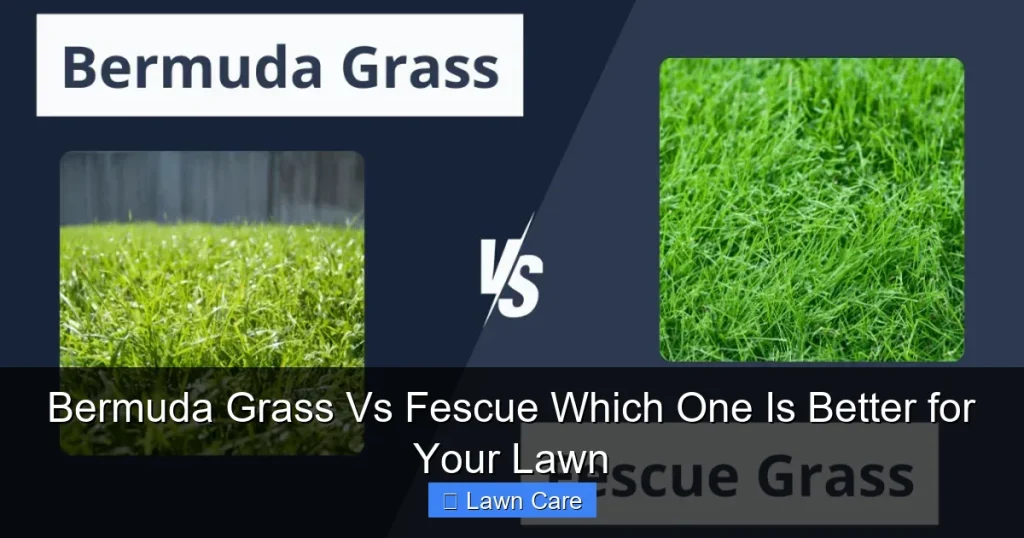
Choosing between Bermuda grass and fescue for your lawn involves understanding their distinct needs and benefits. Bermuda grass thrives in heat and full sun, offering a dense, fine-textured turf, but goes dormant in winter. Fescue, especially tall fescue, is a cool-season grass that tolerates shade and cooler temperatures, providing a lush green appearance year-round, but struggles in extreme heat.
## Bermuda Grass Vs Fescue: Which One Is Better for Your Lawn?
When it comes to achieving that perfectly green, lush lawn, one of the first big decisions you’ll make is choosing the right type of grass. Two of the most popular contenders you’ll encounter are Bermuda grass and fescue. They both offer a beautiful carpet of green, but they are very different in their needs and how they perform. Picking the wrong one can lead to a lawn that struggles, looks patchy, and costs you more time and money. So, let’s dive deep into the Bermuda grass versus fescue debate to help you figure out which one is the champion for your specific yard.
Understanding the fundamental differences between these grass types is the first step to a thriving lawn. It’s not just about aesthetics; it’s about matching the grass to your local climate, the amount of sun your yard gets, and how you plan to use your outdoor space. We’ll break down everything from their ideal growing conditions to their maintenance requirements, so you can make an informed decision that will leave you with the lawn of your dreams.
## Understanding the Grass Types: Warm-Season vs. Cool-Season
The most crucial distinction between Bermuda grass and fescue lies in their classification as warm-season and cool-season grasses, respectively. This difference dictates everything from their optimal growing temperatures to their behavior throughout the year.
### Bermuda Grass: The Sun-Loving Champion
Bermuda grass (Cynodon spp.) is a warm-season grass. This means it thrives in heat and grows most vigorously during the warm summer months. It originates from Africa and is incredibly well-adapted to hot, humid climates.
Key characteristics of Bermuda grass:
- Growth Period: Actively grows from late spring through early fall.
- Temperature Preference: Prefers soil temperatures between 80-95°F (27-35°C).
- Sunlight Needs: Requires full sun, at least 6-8 hours of direct sunlight per day, to maintain density and color. It struggles in shaded areas.
- Dormancy: Becomes dormant and turns brown when temperatures drop significantly, typically with the first frost. It will green up again in the spring as temperatures rise.
- Spread: Spreads aggressively via both above-ground runners (stolons) and underground roots (rhizomes), creating a very dense and resilient turf.
- Texture: Generally has a fine to medium leaf texture.
Bermuda grass is a fantastic choice for regions experiencing hot summers. Its ability to spread quickly makes it excellent for covering bare spots and forming a thick, weed-resistant carpet. If you live in the southern United States, parts of California, or other areas with prolonged hot weather, Bermuda grass is likely a strong contender.
### Fescue Grass: The Cool-Season Star
Fescue grasses (Festuca spp.), particularly tall fescue (Festuca arundinacea), are cool-season grasses. They prefer cooler temperatures and are best suited for regions with milder summers and colder winters.
Key characteristics of Fescue grass:
- Growth Period: Actively grows during the spring and fall. It still grows to some extent during cooler summer days and milder winter periods.
- Temperature Preference: Prefers soil temperatures between 60-75°F (15-24°C).
- Sunlight Needs: Tall fescue is relatively adaptable and can tolerate partial shade, making it more versatile for lawns with varying sun exposure. Fine fescues can handle even shadier conditions.
- Dormancy: Does not go dormant in winter and remains green year-round in its preferred climate zones. It can go dormant during extreme summer heat and drought, turning straw-colored, but will usually recover when conditions improve.
- Spread: Primarily grows in clumps (bunch-type grass). It does not spread aggressively via rhizomes or stolons, meaning bare spots may not fill in on their own.
- Texture: Generally has a medium to coarse leaf texture, which can feel a bit stiff.
Fescue is a popular choice for much of the northern United States, the Pacific Northwest, and higher elevations in warmer climates where summers are not excessively hot. Its ability to stay green through cooler months and tolerate some shade makes it a practical option for many homeowners.
## Climate and Location: Where Do They Thrive?
Your geographic location and local climate are the most significant factors in determining whether Bermuda grass or fescue is the better choice.
### Bermuda Grass’s Ideal Zone: The Sunny South
Bermuda grass truly shines in **USDA Hardiness Zones 7 through 10**. This range generally encompasses the southern United States, parts of the Southwest, and coastal areas with mild winters and hot summers.
* **Hot Summers:** This grass thrives in temperatures consistently above 80°F. It can handle the scorching heat that would stress out most cool-season grasses.
* **Mild Winters:** While it goes dormant in winter, it needs winters that aren’t brutally cold for extended periods. Deep freezes can damage Bermuda grass, especially when it’s young or not well-established.
* **High Sunlight:** If your lawn receives at least 6-8 hours of direct sunlight daily, Bermuda grass will be happy. It’s not the best choice for heavily shaded yards.
Consider regions like Florida, Texas, Georgia, Arizona, and Southern California as prime Bermuda grass territory. If you live in these areas and want a dense, resilient lawn that can withstand intense heat, Bermuda grass is an excellent option. We have articles discussing whether Bermuda grass is better than St. Augustine, which shares similar climate needs.
### Fescue’s Sweet Spot: The Cooler Regions
Fescue, particularly tall fescue, is prevalent in **USDA Hardiness Zones 3 through 7**. This covers a broad swath of the country, including the Northeast, Mid-Atlantic, Midwest, and the Pacific Northwest.
* **Moderate Summers:** Fescue performs best when summer temperatures are not consistently soaring into the 90s°F. While it can survive warmer periods, prolonged extreme heat can cause stress and dormancy.
* **Cold Winters:** Fescue is built for cold weather. It can withstand freezing temperatures and snow cover, remaining a vibrant green throughout the winter months where winters are cold enough.
* **Adaptable to Sun and Shade:** While it prefers a mix of sun and shade, tall fescue can tolerate areas with less direct sunlight than Bermuda grass. This makes it a good choice for yards with mature trees or buildings that cast shadows.
If you live in states like New York, Pennsylvania, Ohio, Illinois, Oregon, or Washington, fescue is likely a more suitable choice. Its ability to handle cooler weather and provide consistent green color year-round is a major advantage.
## Performance and Durability: What Can Your Lawn Handle?
Beyond climate, how your lawn is used and what you expect from it plays a big role in choosing between Bermuda grass and fescue.
### Bermuda Grass: The King of Traffic and Recovery
Bermuda grass is renowned for its durability and ability to recover from abuse.
* **Wear Tolerance:** Its aggressive spreading habit via rhizomes and stolons means it can quickly fill in divots and repair damage. This makes it ideal for lawns with high foot traffic, children playing, or pets. Is Bermuda Grass Good For Dogs? Yes, it’s quite resilient, though some dogs might still dig!
* **Drought Tolerance:** Once established, Bermuda grass has excellent drought tolerance. Its deep root system allows it to seek out moisture even during dry spells, though it will benefit from supplemental watering during extreme drought.
* **Weed Resistance:** The dense turf that Bermuda grass forms makes it very effective at crowding out weeds. It’s harder for weeds to get a foothold in a well-maintained Bermuda lawn.
* **Pest and Disease Resistance:** Generally, Bermuda grass is quite resistant to many common lawn pests and diseases, especially when properly maintained.
If you have an active family, pets, or a demanding landscape, Bermuda grass’s resilience is a huge plus.
### Fescue: The Shade-Tolerant Green Keeper
Fescue offers different strengths, particularly in its ability to maintain a green appearance and tolerate less-than-ideal conditions.
* **Shade Tolerance:** As mentioned, tall fescue is much more forgiving in shady areas than Bermuda grass. This makes it a practical choice for yards that aren’t bathed in sunlight all day. If you have significant shade, you might want to look into which St. Augustine grass is best for shade, as some varieties also perform well in less sun.
* **Wear Tolerance (Less than Bermuda):** While tall fescue can handle moderate foot traffic, it’s not as robust as Bermuda grass. Because it grows in clumps, it can take longer to recover from heavy wear and tear. Bare spots might appear and require reseeding.
* **Drought Tolerance (Moderate):** Fescue’s drought tolerance is decent, especially newer varieties bred for deeper roots, but it generally won’t handle prolonged, severe drought as well as Bermuda grass. It may go dormant and turn brown during extreme heat and lack of water.
* **Weed Resistance (Moderate):** A healthy fescue lawn can compete with weeds, but its clumping growth habit means there can be more open space for weeds to invade compared to the dense mat of Bermuda grass.
Fescue is a good choice for homeowners who want a consistently green lawn in cooler climates and have areas of their yard that don’t get full sun.
## Maintenance: What to Expect
Both grass types require ongoing care, but their specific needs differ.
### Bermuda Grass Maintenance: Feeding the Beast
Bermuda grass is a heavy feeder and requires regular care to look its best.
* **Mowing:** Bermuda grass thrives when mowed relatively short. Many homeowners with Bermuda grass opt for reel mowers to achieve a low, manicured cut. It needs frequent mowing during its peak growing season (summer) to keep up with its rapid growth.
* **Fertilization:** Bermuda grass benefits from regular fertilization, especially during its active growing season. A fertilizer with a balanced N-P-K ratio is usually recommended, but specific needs can vary. Using the right fertilizer is crucial; for example, understanding what fertilizer is best for Bermuda grass can make a big difference. You might also wonder if is 10 10 10 fertilizer good for Bermuda grass, and the answer often depends on soil tests.
* **Watering:** While drought-tolerant once established, Bermuda grass needs consistent watering during prolonged hot and dry periods to maintain its lush appearance. It’s generally more thirsty than fescue in peak summer heat.
* **Aeration:** Like most grasses, Bermuda grass benefits from aeration, especially if your soil tends to compact. Understanding core vs. spike lawn aeration can help you choose the right method for your soil type.
* **Pest and Weed Control:** While naturally resistant, Bermuda grass can still fall prey to pests and weeds. Knowing what the best weed killer for Bermuda grass is, or if a weed and feed is appropriate, is important.
### Fescue Maintenance: Simpler, but Still Needs Care
Fescue is generally considered a bit easier to manage in its preferred climate, but still requires attention.
* **Mowing:** Fescue is typically mowed at a higher setting than Bermuda grass. A higher mowing height helps the grass develop deeper roots and provides shade for the soil, which can reduce water evaporation and weed germination.
* **Fertilization:** Fescue needs regular feeding, especially in the spring and fall when it’s actively growing. Fertilizing in summer should be done cautiously to avoid stressing the grass.
* **Watering:** Fescue needs consistent moisture, especially during dry spells. It benefits from deep, infrequent watering to encourage deep root growth.
* **Aeration:** Aeration is beneficial for fescue, particularly in compacted soils, to improve air and water penetration to the roots.
* **Overseeding:** Because fescue is a bunch-type grass, bare patches can appear over time due to wear or stress. Overseeding in the fall is a common practice to fill in these thinning areas and maintain a dense lawn. It’s also good to know what the best grass seed for lawn repair is.
## Aesthetic Qualities: What Does it Look Like?
Both grasses can produce a beautiful lawn, but they have distinct appearances.
### Bermuda Grass: Fine, Dense, and Vibrant
When well-maintained, Bermuda grass produces a dense, low-growing turf with a fine leaf texture.
* **Color:** It typically has a rich, dark green color during its active growing season.
* **Texture:** The fine blades create a very soft, almost carpet-like feel underfoot.
* **Thatch Buildup:** Due to its aggressive growth, Bermuda grass can develop a significant thatch layer, which is a dense layer of organic matter between the grass blades and the soil. This may require dethatching periodically.
* **Winter Appearance:** As mentioned, it turns brown and goes dormant in winter, creating a stark contrast with evergreen landscaping.
### Fescue: Lush, Robust, and Consistently Green
Fescue offers a different kind of beauty, especially tall fescue.
* **Color:** Tall fescue is known for its deep green color, which it maintains year-round in cooler climates.
* **Texture:** The leaf blades are generally wider and feel a bit coarser or stiffer than Bermuda grass.
* **Thatch Buildup:** Fescue typically produces less thatch than Bermuda grass, making it easier to manage in this regard.
* **Winter Appearance:** Its primary aesthetic advantage is its ability to stay green through the colder months, providing a continuous look of vitality to the landscape.
## Making the Final Decision: Bermuda Grass or Fescue?
Deciding between Bermuda grass and fescue comes down to prioritizing what matters most for your lawn and your environment.
### Choose Bermuda Grass If:
* You live in a hot climate with long, hot summers.
* Your yard receives full sun for most of the day.
* You have high foot traffic, pets, or children playing actively on the lawn.
* You want a very dense, resilient turf that crowds out weeds.
* You don’t mind your lawn going dormant and turning brown in the winter.
* You are prepared for more frequent mowing and potentially a higher fertilization schedule during the growing season.
### Choose Fescue If:
* You live in a region with cooler summers and cold winters.
* Your yard has areas that receive partial shade.
* You prefer a lawn that stays green year-round.
* You have moderate foot traffic but don’t require extreme resilience.
* You don’t want to deal with aggressive spreading or significant thatch buildup.
* You are okay with the possibility of overseeding in the fall to maintain density.
Ultimately, both Bermuda grass and fescue are excellent lawn grasses, but they are champions in different arenas. By understanding their unique characteristics and matching them to your specific conditions, you can ensure your lawn thrives and brings you joy for years to come. It’s also worth noting that there are many varieties within both Bermuda and fescue, so researching specific cultivars can further refine your choice. For instance, if you’re comparing with another popular choice, understanding which grass is better, St. Augustine or Bermuda, requires similar considerations regarding climate and sun exposure.
- Climate is Key: Bermuda grass is a warm-season grass best suited for hotter climates, while fescue is a cool-season grass ideal for cooler regions.
- Sun vs. Shade Tolerance: Bermuda grass needs full sun to thrive, whereas fescue, particularly tall fescue, can tolerate partial shade.
- Dormancy and Color: Bermuda grass turns brown and goes dormant in colder months, while fescue remains green year-round in appropriate climates.
- Texture and Growth Habit: Bermuda grass has a finer texture and spreads via rhizomes and stolons, creating a dense turf. Fescue has a coarser texture and grows in clumps.
- Drought Tolerance: Bermuda grass generally has better drought tolerance once established compared to fescue.
- Wear Tolerance: Bermuda grass typically recovers better from heavy foot traffic and wear than fescue.
- Maintenance Needs: Both require regular mowing, but Bermuda grass may need more frequent watering in extreme heat, and fescue might need overseeding in bare patches.
[FEATURED_IMAGE_PLACEHOLDER]
Quick Answers to Common Questions
What is the biggest difference between Bermuda grass and fescue?
The biggest difference is that Bermuda grass is a warm-season grass that thrives in heat and goes dormant in winter, while fescue is a cool-season grass that prefers cooler temperatures and stays green year-round in its ideal climate.
Can Bermuda grass grow in shade?
No, Bermuda grass requires full sun (at least 6-8 hours daily) to thrive and maintain its density and color. It performs poorly in shady conditions.
Can fescue tolerate heat?
Tall fescue can tolerate moderate summer heat but struggles in prolonged extreme heat (consistently above 90°F). It may go dormant during severe heat waves.
Which grass is better for high-traffic areas?
Bermuda grass is generally better for high-traffic areas due to its aggressive spreading habit, which allows it to recover quickly from wear and tear.
Which grass stays green in winter?
Fescue, being a cool-season grass, stays green year-round in its appropriate climate zones. Bermuda grass goes dormant and turns brown in winter.
Frequently Asked Questions
Which grass is easier to maintain?
Generally, fescue is considered slightly easier to maintain in its preferred cool-season climate because it doesn’t require as frequent mowing or as much intense fertilization as Bermuda grass during peak summer heat. However, Bermuda grass might require less effort in its warm-season climate if left to grow naturally.
Can I mix Bermuda grass and fescue in my lawn?
It is generally not recommended to mix warm-season grasses like Bermuda with cool-season grasses like fescue in the same lawn. They have opposing temperature requirements, leading to one grass thriving while the other struggles or goes dormant, resulting in a patchy and uneven lawn.
How long does it take for Bermuda grass to establish?
Bermuda grass can establish relatively quickly, especially when planted from sod or plugs, often showing good coverage within the first growing season. Seeded Bermuda grass takes longer, usually around 1-2 years to reach full maturity and density.
How do I deal with bare spots in my fescue lawn?
Bare spots in fescue lawns are often best addressed by overseeding in the fall. Ensure the soil is prepared, and use a quality fescue seed blend. Consistent watering after seeding is crucial for germination and establishment.
Is Bermuda grass good for sports fields?
Yes, Bermuda grass is an excellent choice for sports fields, golf courses, and other high-traffic areas due to its exceptional durability, rapid recovery from divots, and ability to withstand heavy use and hot weather.
When is the best time to plant Bermuda grass?
The best time to plant Bermuda grass is in late spring or early summer when soil temperatures are consistently warm (above 65°F or 18°C) and the risk of frost has passed. This allows the grass ample time to establish before cooler weather arrives.