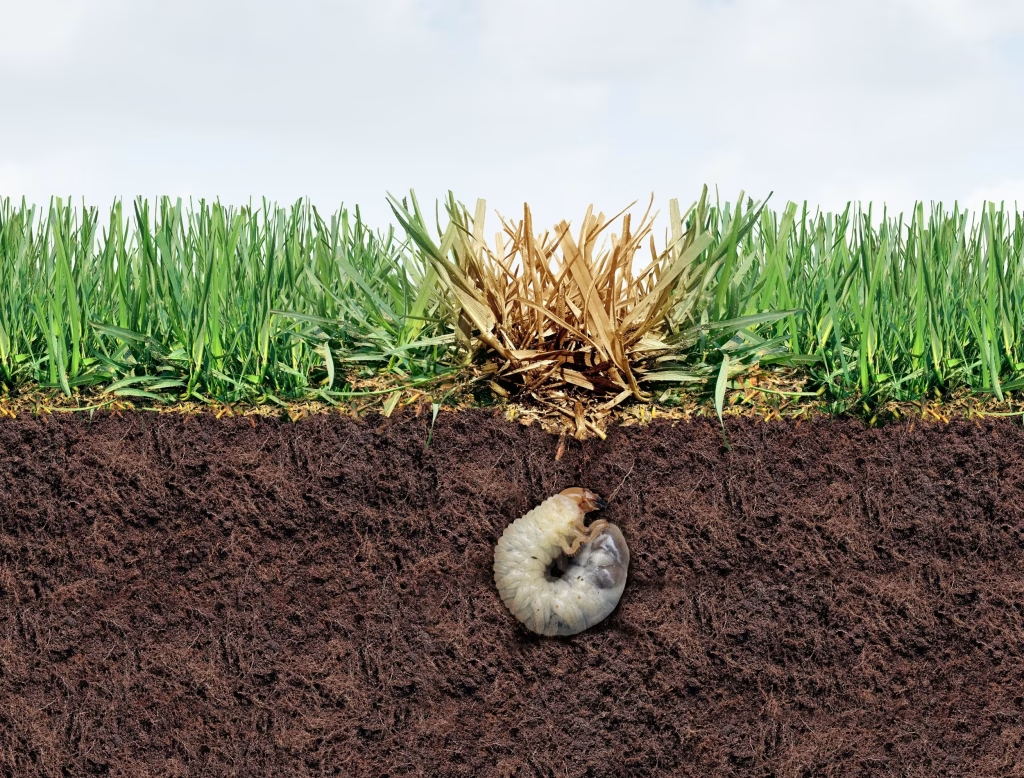
Figuring out when to apply grub control in Ohio trips up a lot of homeowners, and it's not hard to see why. The advice out there is all over the place, and getting the timing wrong means you've basically thrown money onto the lawn for nothing. The real answer depends on what you're trying to do, what's happening in your soil right now, and which product you've picked up.
Here's the thing most articles skip: there are two completely different timing windows for grub control, and they don't overlap. One window prevents grubs from ever becoming a problem. The other kills grubs that are already there and actively tearing up your turf.
Ohio State University Extension research on scarab beetle life cycles confirms that adult Japanese beetles typically begin emerging in late June, with egg-laying peaking through July and into early August. That biological clock is what drives every timing decision you'll make.
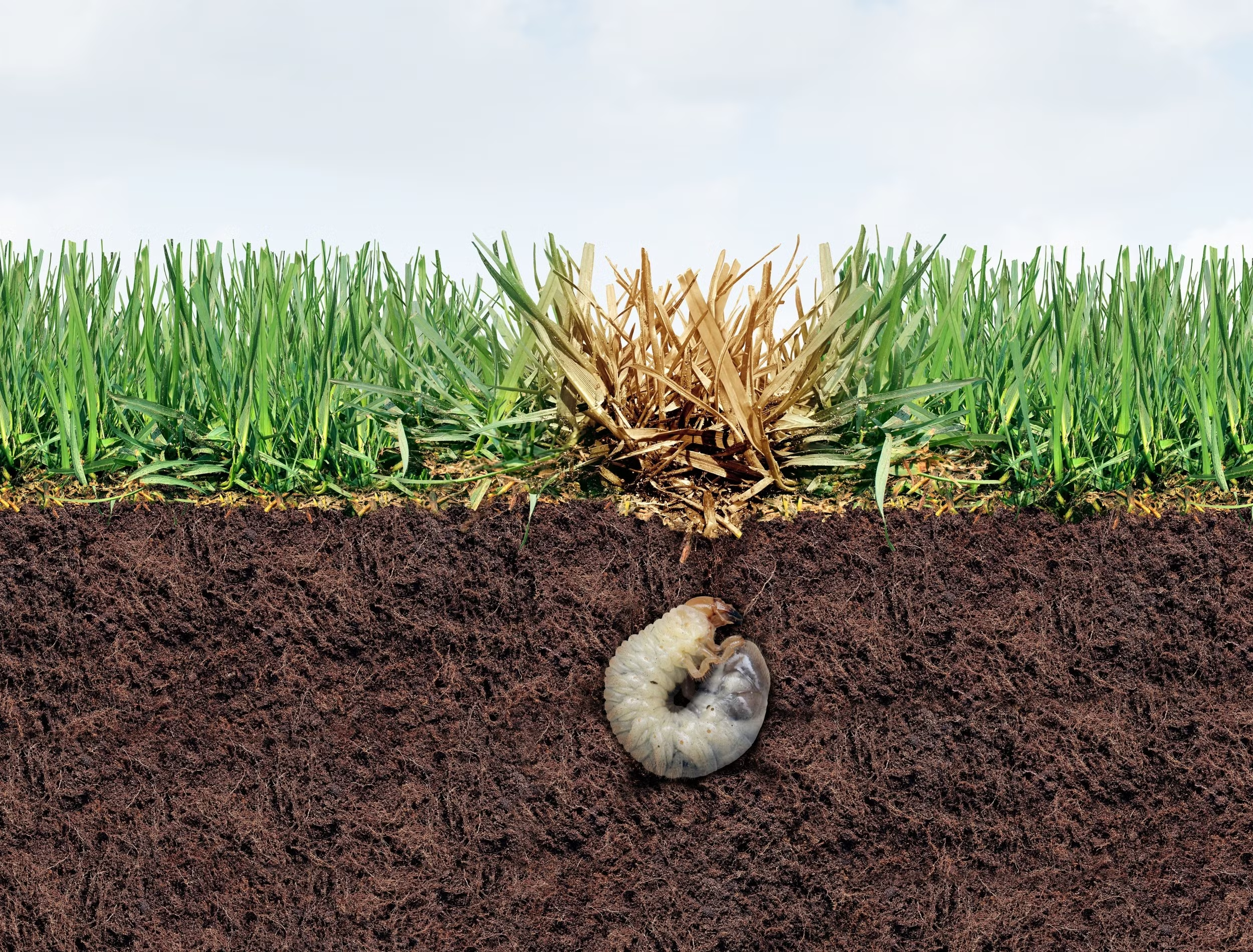
Image source: Bing (Web (fair-use with source credit))
Quick Answer
Apply preventive grub control in Ohio between late May and mid-July. This window covers adult beetle flight and egg-laying. Use curative products from July through early September if grubs are already present.
Curative treatments work best when grubs are small and actively feeding. Always water granular products into the soil after application.
The Two Windows That Actually Matter: Preventive vs. Curative
Grub control isn't one thing. It's two different strategies with two different calendars, and mixing them up is the single most common mistake Ohio homeowners make.
Preventive control means you're putting a long-residual insecticide into the soil before grubs hatch and start feeding. The product sits in the thatch and upper root zone, and when tiny larvae begin feeding on grass roots, they ingest the active ingredient and die. You're essentially setting a trap before the enemy shows up.
Curative control means grubs are already in your lawn, they're feeding, and you need to kill them before they do more damage. This requires a product with a shorter residual that acts fast on existing larvae. The window is tighter, and the grubs need to be small enough for the product to work effectively.
Here's a simple breakdown of how the two approaches compare:
| Factor | Preventive | Curative |
|---|---|---|
| Best application window | Late May to mid-July | July to early September (sometimes into October) |
| Grub stage at application | Before eggs hatch | Small to medium larvae actively feeding |
| Speed of kill | Slow (ingested during feeding) | Fast (hours to a few days) |
| Residual protection | Season-long (months) | Short (days to a couple weeks) |
| Typical active ingredients | Chlorantraniliprole, imidacloprid, clothianidin, thiamethoxam | Trichlorfon, carbaryl |
| Best for | Lawns with no current damage but history of grubs | Lawns with active grub feeding or visible damage |
| Watering requirement | Must be watered in to reach root zone | Must be watered in for soil contact |
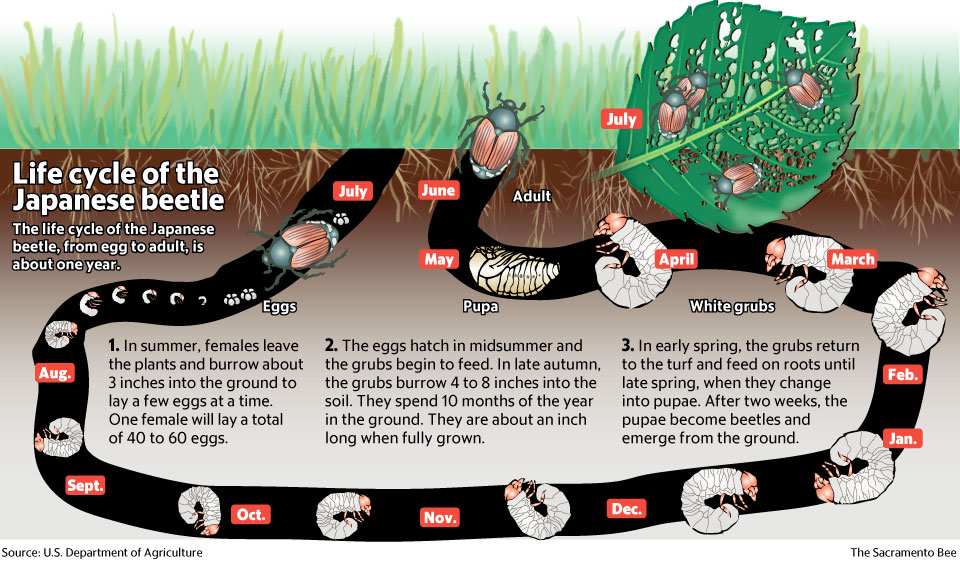
Understanding the grub life cycle is what makes these timing windows make sense. Adult beetles emerge from the soil in late spring and early summer. They feed on ornamental plants and trees, mate, and then females burrow back into turf to lay eggs.
Those eggs hatch within a couple of weeks, and the tiny larvae immediately start feeding on grass roots. They grow through three larval stages (called instars) over the summer and into fall, getting progressively larger and more damaging. By late fall, they burrow deep into the soil to overwinter, then move back up in spring to feed briefly before pupating.
The preventive window targets that egg-to-newly-hatched-larva transition. The curative window targets the small-to-medium larvae before they reach their most destructive late-instar stage.
How to Figure Out Which Window You're In Right Now
This is where most guides fail people. They give you a date and walk away. But you need to assess your actual situation before you buy anything or push a spreader across the yard.
Walk through these three questions.
Are You Trying to Prevent Grubs or Kill Existing Ones?
If your lawn looked fine last year and you've never had a grub problem, you're probably in prevention mode. Same goes if you had grubs last year and want to stop a repeat. You want a preventive product, and you need to get it down before eggs hatch.
If you're seeing brown patches that peel back like loose carpet, or if you've spotted skunks and raccoons digging at your lawn at night, you've got an active infestation. You need a curative product, and you need it soon.
What Time of Year Is It?
This is the simplest filter. If it's May, June, or early July, you can still use a preventive product effectively. Once you're into late July and beyond, most preventive products are a waste of money because the eggs have already hatched and grubs are feeding.
Switch to a curative approach.
If it's August or September and you're just now noticing damage, curative is your only option. Some curative products can be applied into October as long as the soil isn't frozen and grubs are still actively feeding near the surface.
What's Happening in Your Lawn Right Now?
Grab a knife and cut a one-square-foot section of turf in a damaged area. Peel it back and count the grubs in the root zone. Ohio State University Extension generally cites a treatment threshold of 6 to 10 grubs per square foot for cool-season turf, though some research suggests even lower counts warrant action if the lawn is stressed.
If you're above that threshold, treat. If you're below it and the lawn is otherwise healthy, you might be able to skip treatment this year and monitor instead.
Also consider your lawn's history. If you've had grub damage two years running, the beetle population in your area is established. Preventive treatment is almost certainly worth it.
The Preventive Window: Late May Through Mid-July
This is the sweet spot for long-residual grub preventives in Ohio. The goal is to have the product in the root zone before beetle egg-laying peaks, which typically runs from mid-July into early August depending on the species and local conditions.
Why This Timing Works
Preventive insecticides need time to move into the soil profile where eggs will hatch and larvae will begin feeding. Most products require watering after application to carry the active ingredient through the thatch layer and into the top half-inch to inch of soil. Applying in late spring or early summer gives the product time to establish in the root zone before the first eggs hatch.
Chlorantraniliprole-based products and neonicotinoid-based products (imidacloprid, clothianidin, thiamethoxam) all work well in this window. They have enough residual activity to protect the lawn through the entire egg-hatch period, which can stretch from late July well into September depending on beetle species and weather.
Which Products Fit This Window
Look for products containing one of these active ingredients for preventive control:
- Chlorantraniliprole (found in various professional and consumer formulations). Long residual, low toxicity to mammals, effective at low application rates.
- Imidacloprid ( Merit, Mallet, Criterion, and various generics). The old standby for preventive grub control. Still effective in most Ohio areas.
- Clothianidin (Arena, Aloft in combination products). Similar mode of action to imidacloprid with strong residual.
- Thiamethoxam (Meridian and generics). Another neonicotinoid option with good preventive performance.
All of these are systemic or locally systemic, meaning they're taken up by the grass roots or remain in the soil solution where feeding grubs encounter them.
How to Apply for Maximum Effectiveness
The application process matters as much as the timing. Here's the sequence that works:
- Mow the lawn first. You want the granules to reach the thatch layer, not get trapped in tall grass blades.
- Apply with a broadcast or drop spreader. Calibrate it according to the product label's rate per 1,000 square feet. Don't eyeball it.
- Water immediately after application. This is non-negotiable. Most labels specify 1/4 to 1/2 inch of irrigation to move the product into the root zone. If rain is forecast within 24 hours, you can let nature do the work, but don't count on it.
- Avoid applying before heavy rain. A downpour can wash granules off-target into storm drains or waterways. Check the forecast.
One more thing: if you're also planning to overseed, check the product label carefully. Some neonicotinoid products can affect germination rates if applied too close to seeding. Chlorantraniliprole products tend to be more forgiving in this regard, but always read the label.
The Curative Window: July Through Early September (Sometimes Into October)

Image source: Bing (Web (fair-use with source credit))
If you missed the preventive window or if a preventive application didn't hold up, curative treatment is your next move. This is rescue mode, and speed matters.
When Preventive Treatment Was Missed or Failed
Maybe you didn't realize you had a grub problem until August. Maybe you applied a preventive product but had an unusually heavy beetle flight that overwhelmed it. Maybe you just moved into a new house and inherited someone else's grub situation.
Whatever the reason, once grubs are actively feeding and causing damage, you need a product that kills fast.
Which Products Work as Curatives
Curative products have shorter residuals but faster knockdown. The two most common active ingredients for curative grub control are:
- Trichlorfon (Dylox). This is the go-to curative for turf professionals. It kills grubs on contact and through ingestion, and you can see results within 24 to 72 hours. It has a short residual, which is fine because you're targeting existing grubs, not preventing future ones.
- Carbaryl (Sevin, Bug B Gone, and various generics). Another contact and ingestion insecticide with decent curative performance. Works best when grubs are small.
Both of these need to be watered in after application, just like preventives. The difference is that you want the product to reach the grubs where they're feeding, which is typically in the top inch or two of soil during active feeding periods.
How Fast You'll See Results
With trichlorfon, grubs typically stop feeding within hours and die within one to three days. You won't see the lawn green up immediately, obviously. The existing damage is done.
But you'll prevent further destruction, and the turf can recover with proper fall care (overseeding, watering, fertilization).
Carbaryl works on a similar timeline, though some field observations suggest it can take slightly longer in cooler soil temperatures. If you're treating in early September when soil temps are still warm, performance should be solid.
One important note: curative products won't prevent next year's grubs. If you needed a curative this year, plan on a preventive application next spring to break the cycle.
How to Confirm You Actually Have a Grub Problem
Don't treat your lawn based on a hunch. Grub damage can look a lot like other issues, and applying insecticide when you don't need it is a waste of money and an unnecessary chemical load on your property.
The Square-Foot Test
This is the gold standard for confirming grub presence, and it takes about two minutes. Here's how to do it:
- Choose a damaged area, preferably near the border between healthy and stressed turf.
- Cut a square about 1 foot by 1 foot and 2 to 3 inches deep with a spade or knife.
- Peel back the turf like a flap and examine the root zone and top inch of soil.
- Count every grub you see.
- Replace the turf flap and water it back into place.
Repeat this in two or three spots around the lawn. Grubs aren't evenly distributed, so one sample might miss them entirely.
When Grub Counts Warrant Action
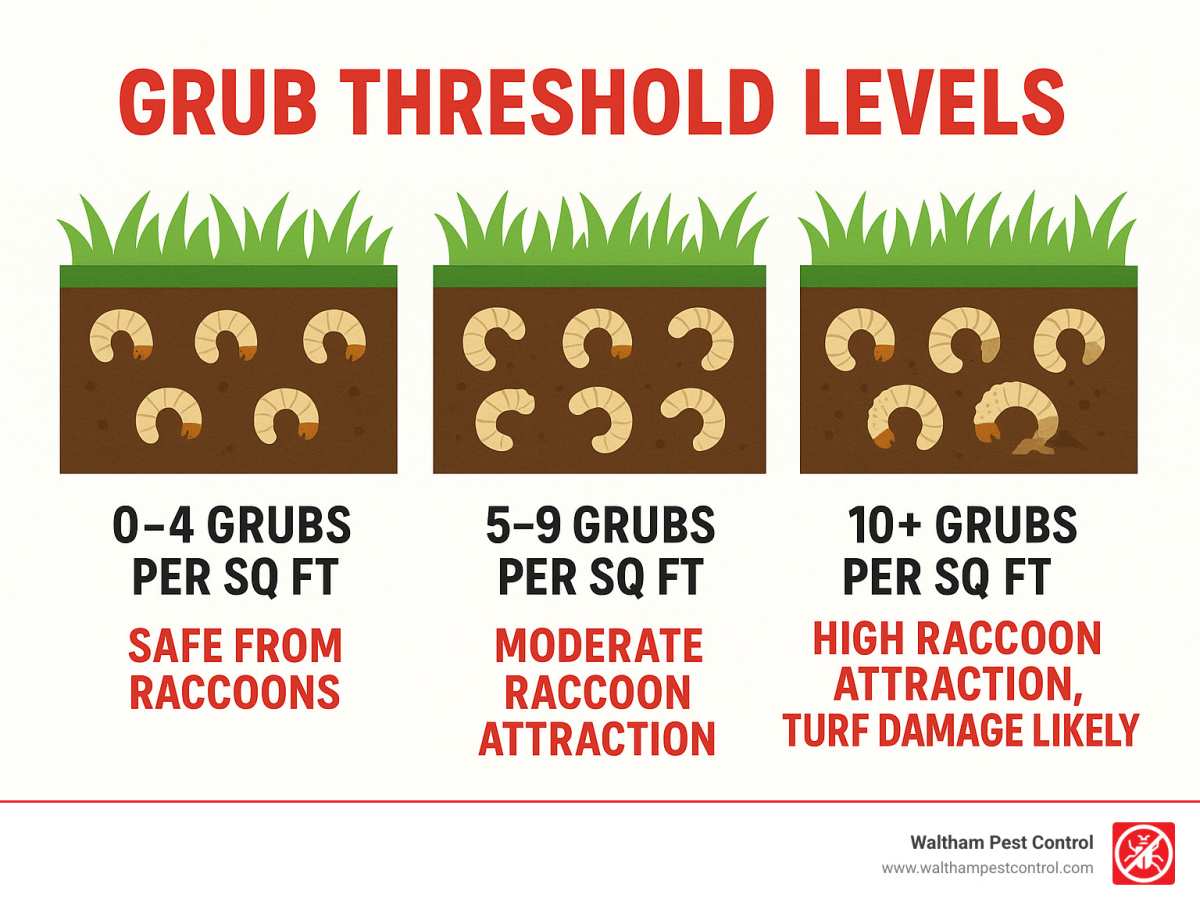
Ohio State University Extension research on scarab beetle management in turfgrass suggests a general treatment threshold of 6 to 10 grubs per square foot for cool-season lawns. That said, a stressed lawn (drought, poor soil, heavy shade) can show visible damage at lower counts. If your lawn is otherwise healthy and you're finding 4 or 5 grubs per square foot, you might be able to hold off and monitor.
If you're finding 10 or more per square foot, treat. That level of infestation will cause significant root damage, and the turf will likely die in those spots without intervention.
Telling Grub Damage Apart From Other Lawn Problems
Grub damage has a few telltale signs. The brown patches are irregular, not uniform. The affected turf feels spongy underfoot because the roots have been chewed away.
Most importantly, the damaged turf peels back easily from the soil, almost like lifting a loose carpet, because there's nothing anchoring it anymore.
Drought stress, by contrast, usually shows a more uniform pattern across sun-exposed areas, and the turf doesn't lift away cleanly. Fungal diseases like brown patch or dollar spot often have distinct patterns or lesions on the grass blades themselves. Pet urine damage tends to be circular with a dark green ring around the dead center.
If animals like skunks, raccoons, or birds are tearing up your lawn at night or early morning, that's a strong secondary indicator of grubs. They're digging for the larvae, and the secondary damage they cause can sometimes exceed the grub damage itself.
What Happens If You Apply at the Wrong Time
Timing mistakes with grub control are expensive. Here's what goes wrong in the most common scenarios.
Applying Preventive Products Too Late
This is the big one. If you put down a preventive product in August or September, the eggs have already hatched and the grubs are feeding. Preventive insecticides like imidacloprid and chlorantraniliprole work by being present in the root zone when tiny larvae begin feeding.
They're not designed to kill larger, actively feeding grubs quickly. You'll have spent your money, and the grubs will keep eating.
Applying Curative Products Too Early
Less common but still a mistake. If you apply a curative product in May or June before eggs have hatched, the active ingredient will have degraded by the time grubs actually appear. Trichlorfon in particular has a short soil half-life.
You'd need to reapply later anyway.
Wasting Money on Products That Won't Work
Some homeowners apply the same product every year without checking whether they actually have a grub problem. If your grub counts are below threshold and your lawn is healthy, skip the treatment. Save the money and the chemical input for a year when you actually need it.
Another waste scenario: applying granular product and not watering it in. Without water to move the active ingredient into the soil, the granules sit on the surface and degrade in sunlight. You might as well have left them in the bag.
Biological and Alternative Options: Where They Fit in the Timeline
Chemical insecticides aren't the only tools available. Biological options exist, but they have their own timing requirements and limitations.
Milky Spore Disease
Milky spore (Paenibacillus popilliae) is a bacterium that specifically targets Japanese beetle grubs. It's applied as a powder to the lawn, and when grubs ingest it during feeding, they die and release more bacterial spores into the soil. The catch is that it takes two to three years to establish in the soil and provide meaningful control.
It also works best in areas where soil temperatures stay above 70°F for extended periods, which limits its effectiveness in cooler parts of Ohio.
If you're going to use milky spore, apply it in late summer when grubs are actively feeding and soil temperatures are warm. Don't expect instant results. This is a long-term strategy, not a rescue treatment.
Beneficial Nematodes
Heterorhabditis bacteriophora is a species of entomopathogenic nematode that seeks out and kills grubs in the soil. You mix them with water and spray or sprinkle them onto the lawn. They need moist soil to move and survive, and they're most effective when soil temperatures are between 60 and 85°F.
The best application window in Ohio is typically mid to late summer when grubs are small and soil moisture is adequate. Apply in the evening or on an overcast day, since UV light kills nematodes quickly. Water before and after application to keep the soil moist.
Nematodes can provide decent curative control if applied correctly, but they're less reliable than chemical products. They're a good option for homeowners who want to avoid synthetic insecticides, as long as they understand the limitations.
When Alternatives Make Sense (and When They Don't)
Biological options work best as part of an integrated approach. If you have a low to moderate grub population and you're not dealing with active lawn destruction, nematodes or milky spore can be worth trying. If you've got 15 grubs per square foot and animals tearing up your yard every night, reach for a curative insecticide first.
You can always add biologicals later to help maintain control.
Ohio-Specific Factors That Shift Your Timing
Ohio isn't uniform, and your location within the state can shift your timing by a week or two in either direction.
Regional Differences Across the State
Southern Ohio, with its warmer climate and longer growing season, tends to see adult beetle emergence a bit earlier than northern Ohio counties near Lake Erie. The Ohio River valley areas may see Japanese beetle activity starting in early June, while Toledo or Cleveland might not see peak flight until late June or early July.
This means the preventive window might open a week earlier in Cincinnati than in Akron. Pay attention to what's happening in your specific area rather than relying on a statewide calendar date.
Soil Temperature as Your Real Trigger
Soil temperature is a more reliable indicator than the calendar. Egg-laying by adult beetles tends to ramp up when soil temperatures at a 2-inch depth consistently reach the mid to upper 60s (°F). Egg hatch follows within one to two weeks of laying.
If you have a soil thermometer, start checking in late spring. When you see sustained soil temperatures around 65°F, you're entering the window. Many university extension services and weather stations report soil temperatures online, which can save you the trouble of measuring yourself.
Cool-Season Turf Considerations
Most Ohio lawns are cool-season grasses: Kentucky bluegrass, perennial ryegrass, tall fescue, and fine fescue. These grasses are actively growing in spring and fall but can go semi-dormant during summer heat. Grub damage is most visible in late summer and early fall when the turf is already stressed from heat and drought.
This matters because a lawn that's already struggling from summer stress will show grub damage sooner and more severely than a well-watered, healthy lawn. If you're irrigating through summer, you might tolerate a slightly higher grub count without visible damage. If you let the lawn go dormant in summer, even a moderate grub population can cause significant harm.
Common Mistakes Ohio Homeowners Make With Grub Control
Even when people know the basics, a few recurring errors trip them up year after year.
Applying preventive products in August. By then, grubs are already feeding and growing. Preventive insecticides won't catch up. Switch to a curative product instead.
Not watering after granular application. The granules need to reach the root zone where grubs feed. Without irrigation, they sit on the surface and break down in sunlight. Always water within 24 hours of application.
Confusing grub damage with drought or disease. Brown patches in summer don't automatically mean grubs. Do the square-foot test before you treat. You might be dealing with fungus, compaction, or simple heat stress.
Using the same product every year without scouting. If grub counts are below threshold, skip the treatment. Save your money and reduce unnecessary chemical use.
Applying curative products too early. If you put down trichlorfon in June before eggs hatch, it'll be gone by the time grubs appear. Wait until you confirm active grubs, then treat.
Ignoring the label. Every product has specific application rates, watering requirements, and safety precautions. The label is a legal document. Follow it.
Your Ohio Grub Control Decision Guide: A Simple Flowchart
If you're still unsure what to do right now, walk through this:
Is it May, June, or early July?
- Yes, and you want to prevent grubs: Apply a preventive product (chlorantraniliprole, imidacloprid, clothianidin, or thiamethoxam). Water it in. You're done for the season.
- Yes, and you already see damage: Something went wrong last year. Apply a curative product now, then plan a preventive for next spring.
Is it late July, August, or September?
- Yes, and you see damage or count more than 6 grubs per square foot: Apply a curative product (trichlorfon or carbaryl). Water it in. Plan a preventive application for late spring next year.
- Yes, and your lawn looks fine: You might have gotten lucky, or your preventive from earlier this year held. Scout to confirm. If counts are low, no action needed.
Is it October or later?
- Grubs are still feeding and soil isn't frozen: A curative application can still work, especially with trichlorfon.
- Soil is frozen or near freezing: Wait until spring. Mark damaged areas for repair and plan your preventive timing accordingly.
Frequently Asked Questions
Can I apply grub control and fertilizer at the same time?
Yes, as long as both products are compatible and you follow each label's application instructions. Many homeowners combine a preventive grub control application with a late spring or early summer fertilizer. Just make sure you water everything in properly after spreading.
How long does preventive grub control last?
Most preventive products provide season-long control from a single application. Chlorantraniliprole and neonicotinoid-based products typically remain active in the root zone for four to six months under normal conditions. One well-timed application should cover the entire egg-hatch period.
Will grub control products harm my pets?
When applied according to the label and watered in properly, most grub control products pose minimal risk to pets once the treated area has dried. Keep pets off the lawn during application and until the granules have been watered in and the turf is dry. Always check the specific product label for pet safety instructions.
Do I need to treat my entire lawn or just damaged spots?
Grubs often cluster in certain areas, but adult beetles don't lay eggs uniformly. If you find damaging populations in one area, there are likely grubs elsewhere that haven't caused visible damage yet. Treating the entire lawn gives you more complete control and prevents next year's hot spots from popping up in new locations.
What if I miss the preventive window entirely?
You haven't lost the season. Switch to a curative product as soon as you confirm grubs are present. Trichlorfon-based products can be applied through early fall and still provide effective knockdown.
Just understand that curative treatment stops current damage, it doesn't prevent next year's problem. Plan a preventive application for the following spring.
Can I use grub control on a newly seeded lawn?
Check the product label carefully. Some neonicotinoid-based products can affect germination or stress young grass seedlings. Chlorantraniliprole products tend to be safer around new seedings, but always verify on the specific label.
If you've just overseeded, it's often better to wait until the new grass has been mowed a few times before applying any insecticide.