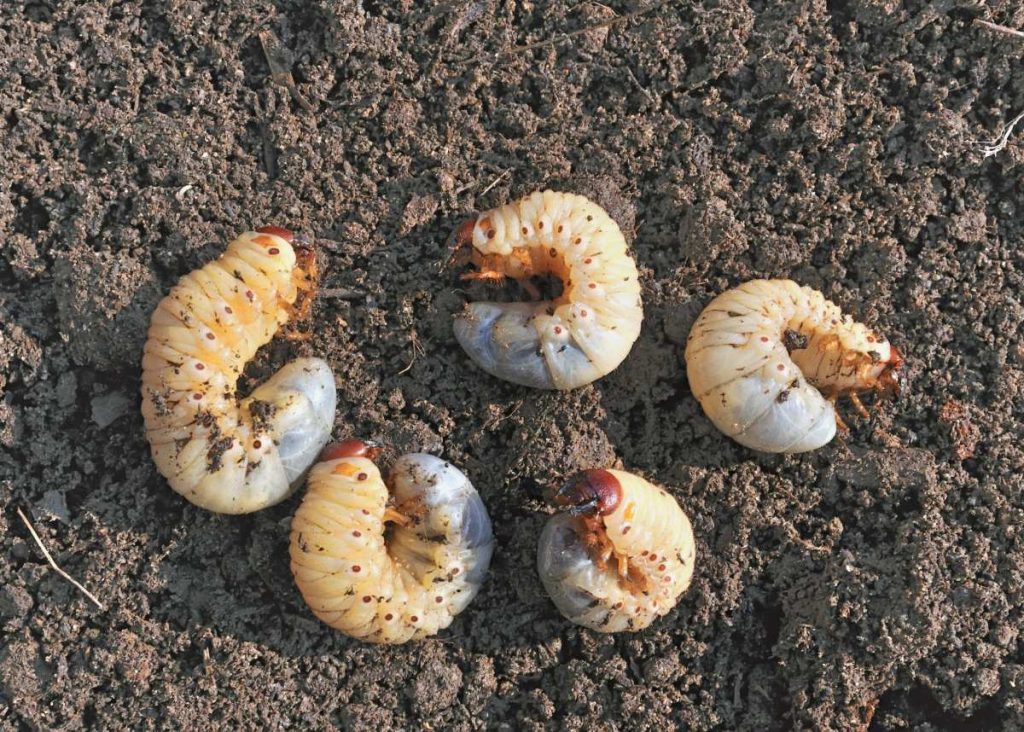
Figuring out when to apply grub control is the single most important decision you'll make for your lawn this year, and getting it wrong means the product won't work no matter what you buy. The timing window isn't a single date on the calendar. It shifts depending on where you live, what grub species you're dealing with, and whether you're trying to prevent damage or stop an active infestation.
Preventive products like those containing imidacloprid or chlorantraniliprole need to go down before eggs hatch, typically when soil temperatures hit 50 to 60°F. Curative products like trichlorfon work best when grubs are small and actively feeding, usually in late summer to early fall.
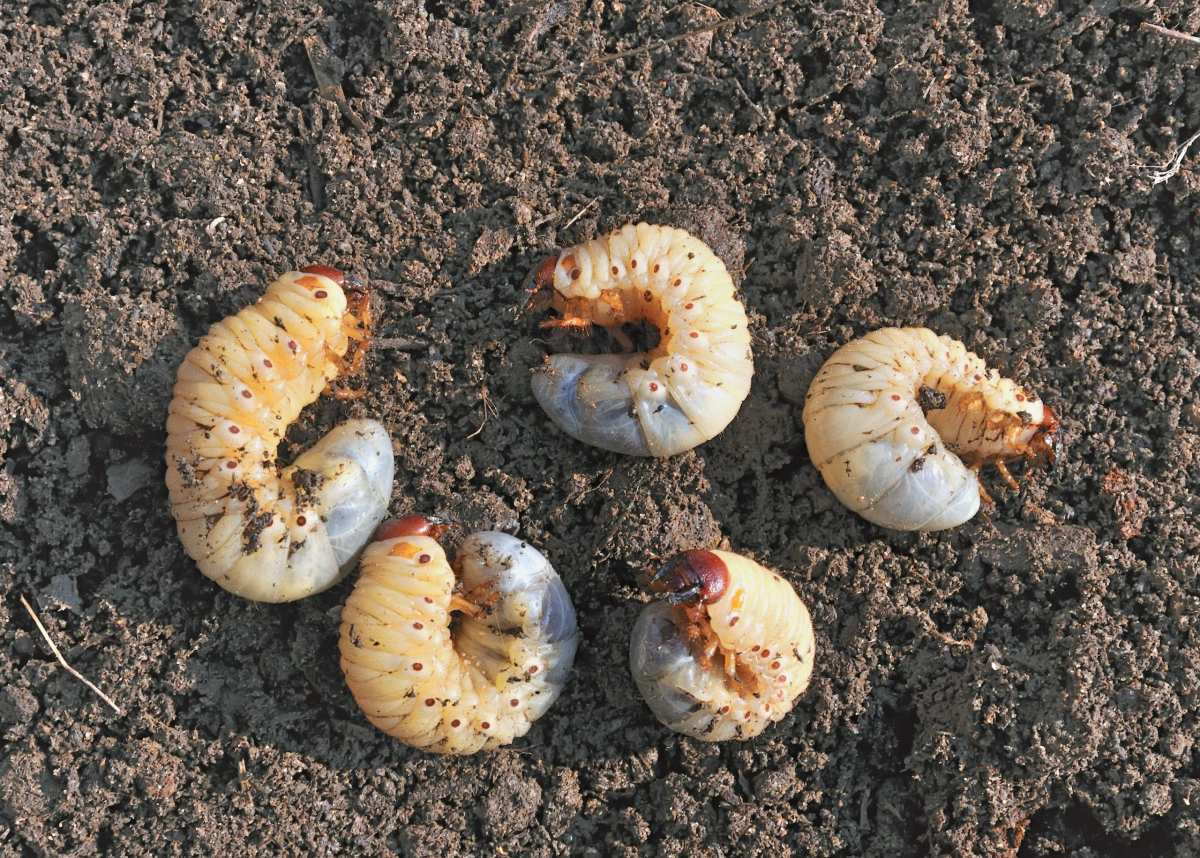
Image source: Bing (Web (fair-use with source credit))
The Quick Answer: When to Apply Based on Your Situation
When to apply grub control depends on your goal. Apply preventive products in late spring to early summer, usually May through July depending on your region. The soil should be between 50 and 60°F at a 2-inch depth.
Apply curative products from late July through September when grubs are small and feeding near the surface. Always check your local extension service for region-specific timing based on adult beetle flight data.
How the Grub Life Cycle Dictates Your Timing
You can't time grub control without understanding what's happening underground. Every grub species follows the same basic life cycle, but the calendar shifts depending on the species and your location.
Here's how it works. Adult beetles emerge from the soil in late spring or summer, depending on species. Japanese beetles typically fly from June through August across most of the US.
European chafers peak in June and June bugs in May. After mating, females burrow back into the turf and lay eggs.
Those eggs hatch within 2 to 3 weeks. The tiny larvae start feeding on grass roots almost immediately. This is the stage where they're most vulnerable to preventive insecticides because they're small, close to the surface, and haven't done much damage yet.
As fall progresses, the grubs grow larger and burrow deeper into the soil to overwinter. By the time you see brown patches in October, those grubs are mature, deep in the soil profile, and much harder to kill. They return to the root zone in spring for a final feeding period before pupating and emerging as adults.
This entire cycle is what makes timing so critical. You need to match your product and your application window to the stage the grubs are actually in.
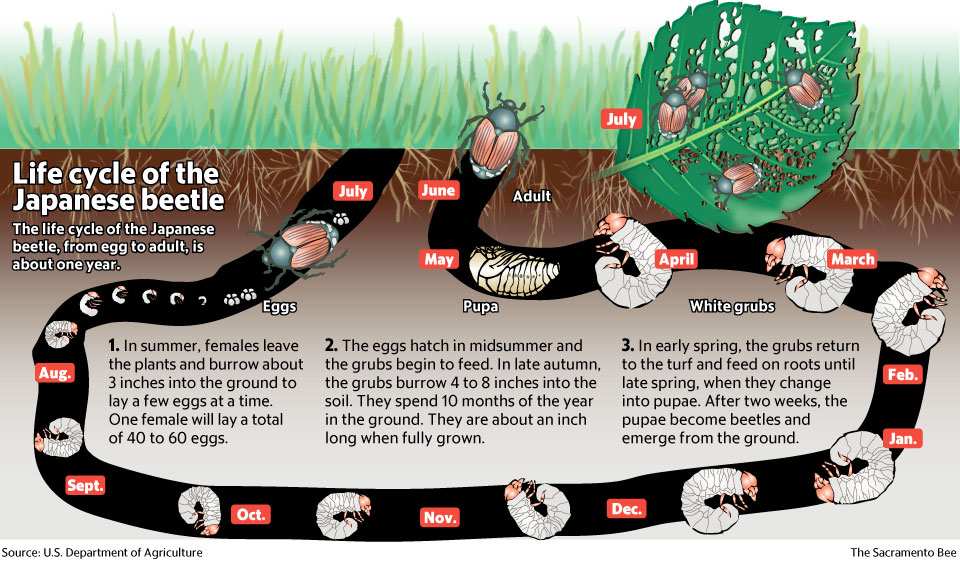
Image source: Bing (Web (fair-use with source credit))
Key Life Cycle Stages and Timing Windows
| Life Stage | Approximate Timing | Best Control Strategy |
|---|---|---|
| Adult beetle flight | May to August (species dependent) | Monitor, don't treat yet |
| Egg laying | 1 to 2 weeks after peak flight | Apply preventive product |
| Egg hatch | 2 to 3 weeks after laying | Preventive product still effective |
| Early instar feeding | 3 to 6 weeks after hatch | Ideal curative treatment window |
| Late instar feeding | Fall into spring | Harder to control, use curative if necessary |
| Pupation | Late spring | No control needed |
Adult beetles emerge first. You'll often see them on roses, lindens, or other host plants before they head to the lawn.
- Egg laying: Females burrow into moist soil and deposit eggs, typically 15 to 20 per visit. They return multiple times.
- Egg hatch: This is your preventive window. The larvae are tiny but the product needs to be in the soil and activated before they start feeding.
- First and second instar: The grubs are small but actively feeding on roots. This is the sweet spot for curative products.
- Third instar: Large grubs, extensive root damage. They start migrating downward as soil temperatures drop in fall.
Preventive vs. Curative: Two Completely Different Timelines
This is where most people go wrong. They grab whatever's on the shelf at the hardware store without understanding that preventive and curative products have completely different timing requirements. Use one at the wrong time and you're pouring money into the ground.
How Preventive Grub Control Timing Works
Preventive insecticides like imidacloprid (found in products like Scotts GrubEx with the active ingredient chlorantraniliprole, or older Merit formulations) work by creating a toxic zone in the root zone. When young grubs start feeding on treated roots, they ingest the active ingredient and die.
For this to work, the product needs to be in the soil and distributed through the root zone before the eggs hatch. That means your application window is typically 2 to 6 weeks before you'd expect egg hatch based on soil temperature and adult beetle activity.
In most of the US, that lands somewhere between early May and mid-July for cool-season lawns and late April through June for warm-season grasses in the South. University extension services often track growing degree days to give more precise local forecasts.
Key characteristics of preventive timing:
- Apply when soil temperatures reach 50°F at a 2 to 4 inch depth
- Target application 2 to 4 weeks before peak adult beetle flight
- Water in with 0.25 to 0.5 inch of irrigation after granular application
- Provides 8 to 12 weeks of protection from a single application
- Works best when applied to actively growing turf with good soil moisture
You need moisture to move the active ingredient into the root zone. If you apply to bone-dry soil and don't water it in, the product just sits on the surface doing nothing.
How Curative Grub Control Timing Works
Curative products like trichlorfon (Dylox) or carbaryl (Sevin) work on contact and through ingestion by existing grubs. They're your go-to when you've already discovered an infestation or you've missed the preventive window.
The timing challenge here is different. You need the grubs to be small enough and feeding actively near the surface for the product to reach them. That window is typically from late July through September in most regions, when grubs are in their first or second instar stage.
By late fall, grubs burrow several inches deep as soil temperatures drop below 50°F. Curative products can't reliably reach them at that depth. That's why you shouldn't wait until you see dead patches in October to reach for a curative product.
Key characteristics of curative timing:
- Apply when you confirm 5 to 10 grubs per square foot in cool-season turf
- Works best when soil temperatures are above 70°F
- Trichlorfon provides rapid kill, often within 24 to 72 hours
- Water in lightly after application, but don't saturate the soil
- Best applied when grubs are within the top 2 inches of soil
If grubs have already done significant damage by the time you treat, the curative product will stop further destruction but won't repair the dead turf. You'll still need to reseed or repair those areas in fall or the following spring.
What Your Region and Grass Type Change About Timing
Your zip code matters as much as the calendar when deciding when to apply grub control. The same product applied on the same date in Maine and Georgia would hit completely different points in the grub life cycle.
Timing by Geographic Region
Northeast and Upper Midwest (Zones 4 to 6):
You're typically dealing with Japanese beetles, European chafers, and June bugs. Adult flight peaks in late June through July. Preventive applications should go down in late May through early June.
Curative treatments work best from mid-August through September.
Southeast and Gulf Coast (Zones 7 to 9):
Warm-season grasses like Bermuda, St. Augustine, and zoysia face pressure from masked chafers, Japanese beetles, and sometimes green June beetles. The season starts earlier.
Preventive applications often go down in April or May. Watch for adult beetles as early as April for some species.
Pacific Northwest (Zones 6 to 8):
European chafer is the primary concern in places like Oregon and Washington. Timing mirrors the Northeast but can shift by 2 to 3 weeks depending on spring temperature patterns.
Transition Zone (Zones 6 to 7):
This is the tricky band from Virginia through Missouri and into parts of Kansas. You're dealing with mixed grub species and both cool and warm-season grass types. Check your local extension service for degree day models that track beetle flight specific to your county.
How Grass Type Affects Your Damage Threshold
Your grass type doesn't change when grubs are active, but it changes how much damage you can tolerate before the lawn suffers visible harm.
| Grass Type | Damage Threshold (grubs/sq ft) | Notes |
|---|---|---|
| Kentucky bluegrass | 5 to 8 | Moderate tolerance, recovers well with proper care |
| Perennial ryegrass | 3 to 5 | Thin root system, shows damage early |
| Tall fescue | 5 to 10 | Deep roots provide more buffer |
| Fine fescue | 2 to 4 | Low tolerance, thin turf structure |
| Bermuda grass | 3 to 6 | Spreads aggressively, can recover but still vulnerable |
| St. Augustine | 2 to 4 | Shallow roots, shows damage quickly |
| Zoysia | 3 to 6 | Slow to establish but reasonably tolerant once mature |
| Centipede | 2 to 5 | Low vigor grass, damage is hard to recover from |
Cool-season grasses like fescue and bluegrass are most vulnerable during the hot summer stress period when grub feeding coincides with drought pressure. Warm-season grasses like St. Augustine and centipede have shallow root systems that grubs can destroy quickly, even at relatively low grub counts.
Your local cooperative extension office is the best resource for species-specific timing. Most land-grant universities publish annual pest alerts that track adult beetle flight and predicted egg hatch windows based on degree day accumulations. That's far more reliable than a static calendar date.
The Soil Temperature Rule Most People Ignore
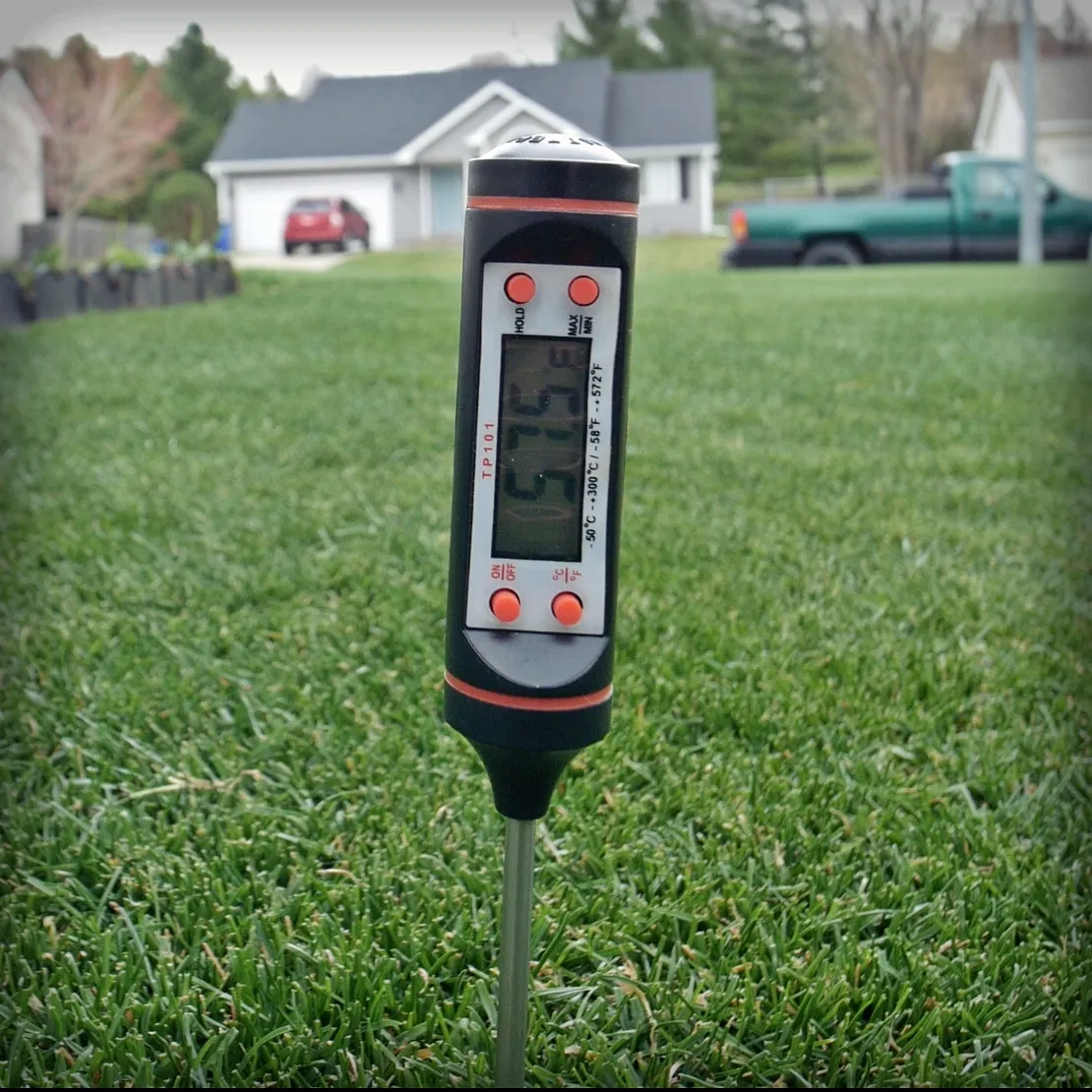
Image source: Bing (Web (fair-use with source credit))
Calendar dates are a decent starting point, but soil temperature is the real driver of grub activity. Egg hatch, grub movement, and feeding intensity all respond to how warm the soil actually is, not what month it says on your phone.
Most grub species begin egg hatch when soil temperatures at a 2 to 4 inch depth consistently reach 50 to 60°F. That's the threshold where adult beetles become active, lay eggs, and the next generation starts developing. It's also the signal that preventive products need to be in the soil and watered in.
Here's why this matters in practice. Spring warmth doesn't arrive on the same calendar date every year. A cool, wet spring in 2024 might push soil temps to the 50°F threshold two weeks later than in 2025.
If you applied your preventive product on June 1st based on habit, you might have missed the hatch by a full week during a warm spring.
Image source: Bing (Web (fair-use with source credit))
Grab a soil thermometer from any garden center. They cost under ten dollars and pay for themselves the first time you avoid a wasted application. Take readings in the morning at a bare or thinly turfed spot in your yard, pushing the probe 3 to 4 inches deep.
Track the trend over a few days rather than relying on a single snapshot.
For curative timing, soil temperature works in the opposite direction. Trichlorfon-based products perform best when soil temperatures are above 70°F and grubs are feeding actively near the surface. Once soil temps drop below 50°F in the fall, grubs head too deep for reliable contact with curative products.
If you're in a region with unpredictable spring warmups, your state university extension service likely publishes soil temperature maps updated weekly. These tools let you track actual field conditions in your area rather than guessing based on air temperature or the calendar.
Step-by-Step: How to Pinpoint Your Exact Application Window
Here's a repeatable process you can follow every year to nail the timing, regardless of where you live or what grub species are pressuring your lawn.
Step 1: Identify your primary grub species. Japanese beetles, European chafers, June bugs, masked chafers, and billbugs all have slightly different flight and hatch timings. Your local extension office can tell you which species are most common in your county. Some university programs offer free identification if you send in a sample.
Step 2: Track adult beetle activity. Start watching for adult beetles on host plants in late spring. Japanese beetles love roses, grapes, and lindens. European chafers are often seen flying at dusk near street lights.
Peak flight means egg laying is about to begin, and egg hatch follows 2 to 3 weeks later.
Step 3: Monitor soil temperature at 2 to 4 inch depth. Use a soil thermometer or check your local extension soil temperature reporting. When readings consistently hit 50 to 60°F, you're in the preventive window.
Step 4: Decide on preventive or curative strategy. If you've had grub problems in the past 2 to 3 years, go preventive. If you're treating for the first time and you've already found grubs, go curative.
Step 5: Choose the right product for your strategy. Preventive calls for chlorantraniliprole or imidacloprid. Curative calls for trichlorfon. Nematodes are an option for organic approaches but require their own timing considerations.
Step 6: Apply under the right conditions. Apply granular products to moist soil, not bone-dry or saturated. Water in with 0.25 to 0.5 inch of irrigation within 24 to 48 hours. Avoid application if heavy rain is forecast within 24 hours, as runoff reduces effectiveness.
Step 7: Mark your calendar and record conditions. Write down the date, soil temperature, product used, and weather conditions. Next year's timing decision will be much easier with real data from your own lawn.
Choosing the Right Product for Your Timing Strategy
Not all grub control products work the same way, and matching the product to your timing strategy is half the battle.
Best Products for Preventive Timing
Chlorantraniliprole (Acelepryn, GrubEx):
This is the current industry standard for preventive grub control. It works on contact and through ingestion by young grubs. University trials from Rutgers and Penn State have shown excellent control against Japanese beetle and European chafer grubs when applied 2 to 4 weeks before egg hatch.
It has a favorable environmental profile compared to older chemistries.
Imidacloprid (Merit, older formulations):
This neonicotinoid was the go-to preventive for years and still works well. Some states have restricted or banned neonicotinoid uses due to pollinator concerns, so check your local regulations. It provides 8 to 12 weeks of residual control when properly watered in.
Milky spore (Paenibacillus popilliae):
This biological option targets Japanese beetle grubs specifically. It takes 2 to 4 years to establish in the soil, but once established it can suppress grubs for 10 to 15 years or more. Best applied when soil temperatures are above 60°F and grubs are present to spread the spores.
Best Products for Curative Timing
Trichlorfon (Dylox):
This is the fastest-acting curative option. It kills grubs within 24 to 72 hours of application. It works best from mid-summer through early fall when grubs are small and near the surface.
Effectiveness drops once grubs move deep for winter.
Carbaryl (Sevin):
Another contact-based curative that works on larger grubs. It has a shorter soil residual than trichlorfon but can be effective when properly timed. Apply when soil temperatures are above 70°F for best results.
Entomopathogenic nematodes (Heterorhabditis bacteriophora):
These microscopic worms seek out and kill grubs in the soil. They require soil temperatures between 55 and 85°F and adequate soil moisture. Apply in the evening since UV light kills them.
Water before and after application. They work best as a curative when grubs are in the early instar stages.
Mistakes to Avoid
Product choice matters, but eliminating common mistakes matters just as much.
Applying preventive product after hatch. If you're using chlorantraniliprole in September, it's too late. The grubs are already large and doing damage. Preventive products don't work well on late-stage larvae.
Applying curative product too early. If you put down trichlorfon in May before eggs hatch, the active ingredient will degrade before the grubs are even present.
Skipping the water-in step. Granular products need irrigation to move the active ingredient into the root zone. Without water, granules sit on the surface and wash away in the next rainstorm.
Ignoring the weather forecast. Heavy rainfall within 24 hours of application can wash even properly applied products off target. Check the forecast before you spread.
One-and-done thinking. Preventive products work well for a season but grubs are an annual problem. Plan for yearly applications if you've had consistent pressure.
What to Do If You Missed the Window
Sometimes the preventive window closes before you get to the lawn. Maybe spring got busy, maybe you didn't realize the timing had shifted. You still have options.
Late preventive applications, even a few weeks past the ideal window, can still catch early instar grubs if they haven't grown too large. Check grub size. If they're still small and C-shaped and near the surface, treat immediately with whatever product you have.
If grubs are already large and you're seeing brown patches, switch to a curative product right away. Trichlorfon is your best bet for stopping active feeding damage. It won't repair the dead turf but it will kill the grubs before they destroy more roots.
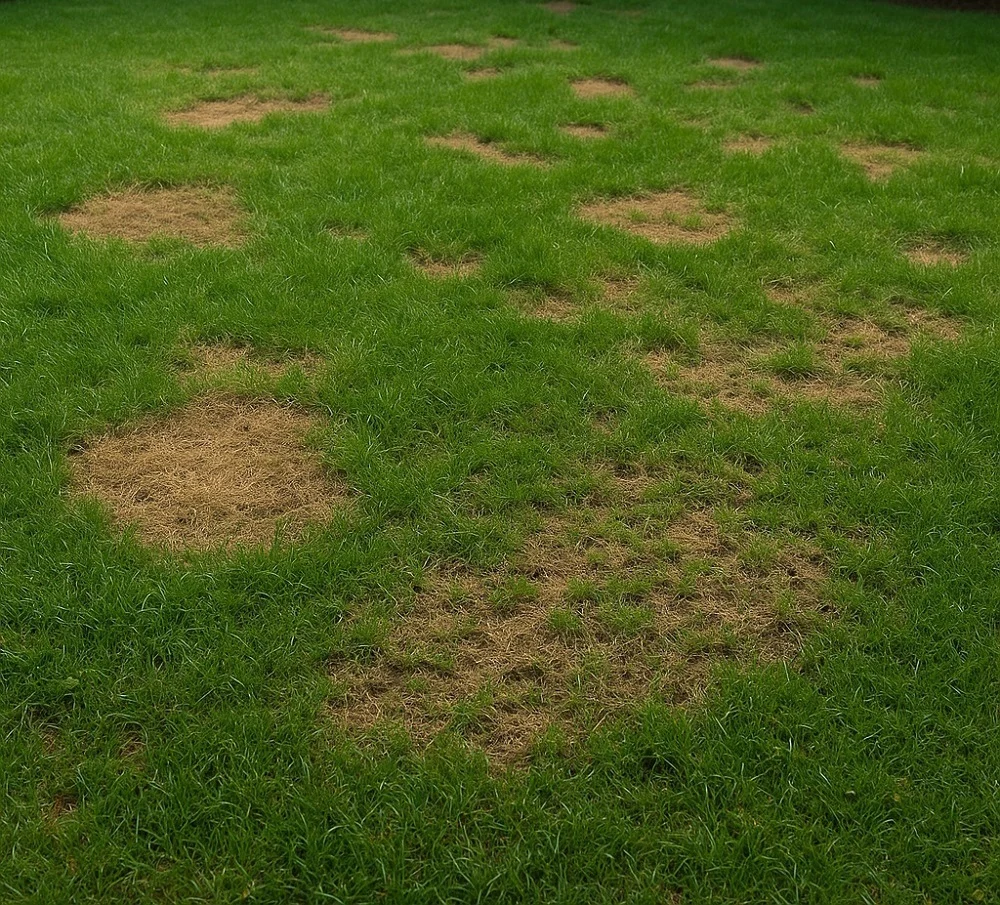
Image source: Bing (Web (fair-use with source credit))
If it's late October and grubs have already burrowed deep for winter, chemical control becomes very difficult. Your best move is to document the damage, plan a curative application for next summer, and focus on lawn recovery. Overseed damaged areas in early spring once the risk of hard frost has passed.
Secondary damage from animals like skunks, raccoons, and birds digging for grubs can sometimes be worse than the grubs themselves. If animals are tearing up your lawn, that's a strong indicator of a heavy grub infestation. Treat as soon as soil conditions allow and repair the digging damage afterward.
For lawns with recurring severe problems, consider a combined strategy. Apply a preventive product in late spring and schedule a curative follow-up in late summer if monitoring shows grubs are still present. This belt-and-sandals approach is common on golf courses and high-value turf where even minor damage is unacceptable.
Common Timing Mistakes That Waste Your Money
Even when you know the basics, a few recurring mistakes trip people up year after year.
Applying by calendar date alone. June 1st might be perfect one year and two weeks too late the next. Soil temperature and beetle activity are your real guides, not the date on your phone.
Confusing grub damage with drought stress. Brown patches in August could be grubs, fungus, or just heat stress. Cut a square of turf and peel it back. If you find more than 5 to 10 grubs per square foot, you've got a grub problem.
If not, look elsewhere.
Treating the whole lawn when only one area is affected. Grubs often cluster in sunny, south-facing slopes or near foundation walls. Spot-treat those areas rather than blanketing the entire property.
Applying to dry soil without watering in. This is probably the number one reason granular products fail. The active ingredient needs to reach the root zone where grubs are feeding. Without irrigation, it stays on the surface.
Waiting for visible damage before acting. By the time you see brown patches, the grubs have been feeding for weeks and significant root damage is already done. Preventive timing stops the problem before it starts.
Using the wrong product for the stage. Applying a preventive product in September when grubs are already large is a waste of money. Match the product chemistry to the grub's life stage, not just the season.
Real Scenarios: Timing Decisions by Region and Situation
Let's walk through a few common situations to see how timing plays out in practice.
Scenario 1: Homeowner in Ohio with a cool-season lawn and a history of Japanese beetle damage.
This person should apply a preventive product like chlorantraniliprole in late May to early June, when soil temperatures are approaching 50°F and adult beetles are just starting to emerge. A single application typically carries through the entire egg hatch period. If they've had severe damage in previous years, a curative follow-up in mid-August provides a safety net.
Scenario 2: Homeowner in Georgia with St. Augustine grass and first-time grub sightings in July.
St. Augustine has a low damage threshold, so even a handful of grubs can cause visible harm. This person missed the preventive window and should apply trichlorfon immediately upon confirming grubs.
They should also plan a preventive application for the following April or May, since warm-season lawns in the South face an earlier grub season.
Scenario 3: Homeowner in Oregon with an organic lawn care program and European chafer pressure.
This person can use Heterorhabditis bacteriophora nematodes applied in late August or early September when soil temperatures are still above 60°F and grubs are in early instar stages. Nematodes require careful handling, evening application, and thorough watering. Milky spore can also be applied for long-term Japanese beetle suppression, though it won't help with European chafers.
Scenario 4: New homeowner who just moved into a property with unknown grub history.
Start by inspecting the lawn in late summer. Cut several 1 square foot samples, 2 to 3 inches deep, in different areas of the yard. Count the grubs.
If you find more than 5 per square foot, apply a curative product immediately. Then set up a preventive program the following spring based on what you found.
Expert Tips for Getting Timing Right Year After Year
A few habits that separate people who consistently control grubs from those who fight the same battle every season.
Keep a lawn journal. Record the date you see adult beetles, the date you apply product, soil temperature at application, and the product used. After two or three years, you'll have a personalized timing guide that's more accurate than any generic recommendation.
Use degree day models from your state extension. Many land-grant universities publish growing degree day tracking tools that predict egg hatch based on accumulated heat units. This removes the guesswork and gives you a science-based window.
Don't skip the inspection step. Even if you applied preventive product, do a quick grub count in late August. Sometimes pressure is heavier than expected, or the product didn't distribute evenly. A quick check lets you catch problems before they become brown patches.
Coordinate with neighbors. Grubs don't respect property lines. If your neighbor's lawn is heavily infested, adult beetles will migrate to your turf next season. Community-wide timing is more effective than treating one yard at a time.
Factor in irrigation timing. If your lawn is under water restrictions during the peak application window, you may need to adjust. Products that require watering in won't perform well on drought-stressed turf. Consider liquid formulations or time your application to coincide with a rain event.
Plan for the long game. If you're dealing with a multi-year infestation, consider layering strategies. Milky spore for long-term Japanese beetle suppression, preventive chlorantraniliprole for annual protection, and spot curative treatments for any breakthrough. It takes a few years to break the cycle, but consistent timing gets you there.
Frequently Asked Questions
Can I apply grub control in the spring?
Yes, spring application works for preventive products. Apply when soil temperatures reach 50°F and adult beetles are beginning to emerge. This is typically April to June depending on your region.
Spring application of curative products is generally not effective since grubs from the previous year have already pupated and emerged as adults.
How late in the year can I treat for grubs?
Curative products work through early fall as long as grubs are still feeding near the surface. Once soil temperatures drop below 50°F consistently, grubs move too deep for reliable control. In most regions, that means your curative window closes by mid-October.
Do I need to treat for grubs every year?
If you've had grub problems in the past two to three years, annual preventive treatment is the most reliable approach. Grub populations can persist in soil for multiple seasons, and adult beetles from neighboring properties can reinfest your lawn. Once you've gone two consecutive years without finding grubs, you can consider skipping a year and monitoring instead.
What happens if I apply grub control too early?
Preventive products applied too early may degrade before egg hatch occurs, leaving your lawn unprotected during the critical window. Most preventive insecticides provide 8 to 12 weeks of residual activity. If you apply in April but eggs don't hatch until July, you could have a gap in coverage.
That's why soil temperature tracking matters more than the calendar.
Is it better to prevent grubs or treat them after they appear?
Prevention is almost always more effective and less expensive than curative treatment. Preventive products target small, vulnerable grubs before they cause visible damage. Curative treatments stop active feeding but can't repair roots that are already destroyed.
If you know you have grub pressure in your area, preventive timing is the smarter strategy.
Can I apply grub control and fertilizer at the same time?
Many homeowners combine grub control with a late spring or early summer fertilizer application. This is fine as long as you water in the grub control product properly. Just make sure the fertilizer doesn't interfere with the granular insecticide distribution, and check that both products are compatible if you're using a combined formulation.