If you've noticed brown patches spreading across your lawn or found yourself wondering when should I apply grub control to my lawn, you're dealing with one of the most common timing mistakes in lawn care. The answer isn't a single date on the calendar. It depends on what type of product you're using, what species of grub you're targeting, and whether you're trying to prevent damage or stop an active infestation.
Here's the core problem: most homeowners treat grubs when they see damage, but by that point the larvae have already chewed through the roots and the window for effective curative treatment is closing fast. The grub life cycle runs on a predictable schedule, and your application timing has to match the stage the insects are actually in. Get it right and you'll protect your lawn for the entire season.
Get it wrong and you've wasted money on product that can't do its job.
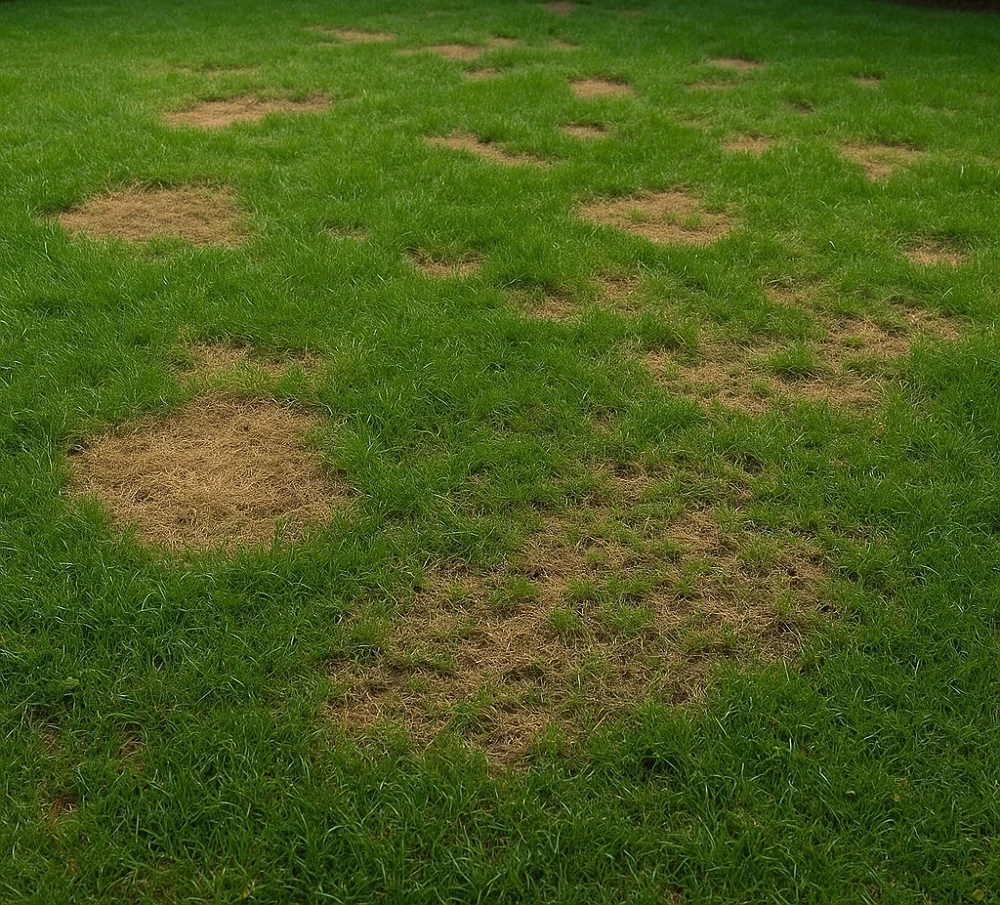
Image source: Bing (Web (fair-use with source credit))
Quick Answer
Apply preventive grub control in late spring to early summer, typically May through early July depending on your region. This targets eggs just before or as they hatch. Apply curative grub control in late summer through early fall, roughly August through October, when young grubs are small and actively feeding near the surface.
The product type you choose determines which window matters for your lawn.
How Grub Life Cycles Dictate Your Timing
Understanding the grub life cycle is the single most important piece of knowledge for getting your timing right. White grubs aren't a separate pest. They're the larval stage of several beetle species, including Japanese beetles, European chafers, June beetles, and black turfgrass ataenius.
Each follows roughly the same annual pattern, though the exact weeks shift by region.
Adult beetles emerge from the soil in late spring to early summer. Japanese beetles, for example, typically begin flying and mating in late June across much of the Northeast and Midwest. European chafers often emerge a few weeks earlier.
The adults feed on ornamental plants and trees for a short period, then females burrow back into turf to lay eggs.
Those eggs hatch within about two weeks. The tiny larvae, called first instars, begin feeding on grass roots in mid to late summer. This is when they're most vulnerable to curative treatments because they're small, close to the surface, and actively consuming turf roots.
As fall progresses, the grubs grow larger and burrow deeper into the soil to overwinter. By the following spring, they return to the root zone for one more feeding period before pupating and emerging as adults.
The critical takeaway is this: preventive products need to be in the soil before the eggs hatch. Curative products need to reach the grubs while they're still small and feeding near the surface. Miss either window and you're fighting an uphill battle.
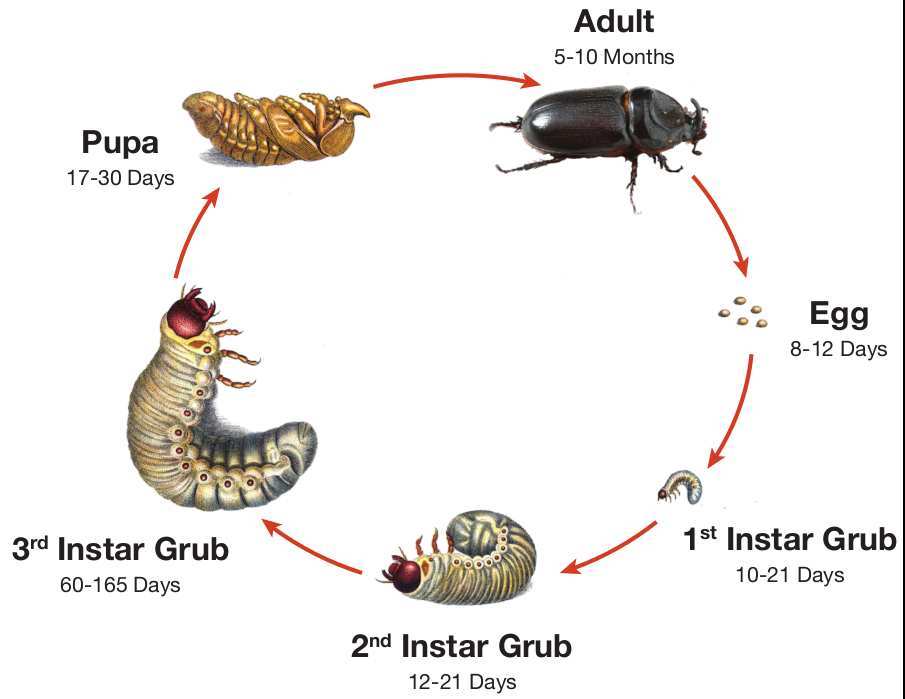
Image source: Bing (Web (fair-use with source credit))
The 2-Minute Test: Is It Time to Treat for Grubs?
Before you buy any product or mark a date on your calendar, you need to answer one question: do you actually have a grub problem right now, or are you trying to prevent one? The answer determines everything about your timing and product choice.
Here's how to find out. Go to the edge of a damaged area where brown turf meets green turf. Grab a handful of the brown grass and pull upward.
If the turf lifts up easily like a loose carpet, grubs have likely severed the roots underneath. That's a strong sign of active feeding.
For a more definitive answer, cut a one-square-foot section of turf at the margin of the damaged area, about two inches deep, and peel it back. Count the grubs you find in the soil and thatch layer. As a general threshold, five to ten grubs per square foot indicates enough activity to warrant treatment.
Below that number, most cool-season lawns can tolerate the damage without intervention.
If you find fewer than five grubs per square foot and the lawn is otherwise healthy, you might be better off skipping treatment this year and planning a preventive application next spring. If you're finding ten or more, you've got an active problem that needs a curative approach right away.
Preventive vs. Curative: Choosing the Right Approach
This is where most people get confused, and it's the single biggest factor in your timing decision. Preventive and curative grub products work in completely different ways, and using one when you need the other is a guaranteed waste of money.
Preventive grub control uses active ingredients like chlorantraniliprole (found in Acelepryn-based products) or imidacloprid (found in Merit-based products). These work systemically. They need to be applied to the soil before eggs hatch so that young larvae ingest the active ingredient the moment they begin feeding on treated roots.
Chlorantraniliprole provides residual protection for four months or more, which is why a single application in late spring can carry you through the entire egg-hatch period. Imidacloprid has been the industry standard for years, though some states have restricted neonicotinoid use due to bee toxicity concerns.
Curative grub control uses faster-acting ingredients like trichlorfon (Dylox) or carbaryl (Sevin). These work on contact and through ingestion by active grubs. They kill existing larvae within days but don't provide long residual protection.
That's fine, because the goal is to stop current damage, not prevent future generations. Curative products work best when grubs are small and feeding near the soil surface, which means late summer through early fall.
The decision tree is straightforward. If you're reading this in spring or early summer and you had grubs last year or your neighbor has a history of problems, go preventive. If it's late summer and you're finding damaged turf with active grubs, go curative.
If you're reading this in fall and you've already got significant damage, treat now with a curative product and plan a preventive application for next spring.
When to Apply Preventive Grub Control (The Spring–Early Summer Window)
The preventive window opens when adult beetles begin flying and closes shortly after eggs hatch. For most of the eastern and midwestern United States, that means applying preventive grub control sometime between mid-May and early July. The exact timing depends on your region and the dominant beetle species.
In the Northeast and Upper Midwest, Japanese beetle flight typically peaks in late June through mid-July. That means a preventive application in late May to mid-June gives the product time to establish in the soil before eggs are laid. In the Mid-Atlantic and transition zone, beetle activity often starts a few weeks earlier, so you'd want to apply in mid to late May.
In the Southeast, where warm-season grasses dominate and beetle species vary, the window can open as early as late April.
The key signal to watch for isn't a specific date. It's beetle activity. When you start seeing Japanese beetles feeding on roses, linden trees, or grape leaves in your neighborhood, the females are getting ready to lay eggs in nearby turf.
That's your cue to get preventive product down within the next one to two weeks.
For chlorantraniliprene-based products, a single application in late spring provides enough residual activity to cover the entire egg-hatch window. Imidacloprid-based products work similarly but may require more precise timing in regions with longer beetle flight periods. Either way, you need to water in the application with about half an inch of irrigation to move the active ingredient into the root zone where eggs and young larvae are located.
One important note: if you're planning to overseed your lawn in early fall, avoid using imidacloprid as your preventive product. Neonicotinoids can inhibit germination and root development in newly seeded turf. Chlorantraniliprole is generally considered safer for seeding timelines, but always check the specific product label for reseeding intervals.
When to Apply Curative Grub Control (The Late Summer–Fall Window)
The curative window opens when eggs have already hatched and young grubs are actively feeding near the soil surface. Across most of the country, that means August through October. This is your best shot at stopping an existing infestation before the larvae grow large and burrow deep for winter.
Timing matters even within this window. The earlier you treat in late summer, the better your results will be. First and second instar grubs are small, vulnerable, and feeding within the top inch or two of soil.
By October, many species have molted into their third instar, grown significantly larger, and started moving deeper. Trichlorfon-based products work fastest, often killing grubs within one to three days of application. Carbaryl acts quickly too but breaks down faster in warm soil.
If you're finding damaged turf in August or September with more than ten grubs per square foot, don't wait. Apply a curative product as soon as possible, water it in thoroughly, and keep foot traffic off the treated area for at least 48 hours. The grubs need to move through the treated soil zone for the product to work.
There's a common temptation to treat in early spring when you see last year's damage reappearing as the lawn greens up. Spring curative treatments are generally a poor choice. The grubs are large, nearly mature, and often too deep in the soil for contact products to reach them effectively.
You'll spend money on product and still face another summer of adult beetles laying eggs. If you missed the fall curative window, skip spring treatment entirely and plan a preventive application for the following late spring.
How Product Chemistry Changes Your Timing
Not all grub control products work the same way, and the chemistry directly determines when you need to apply. Here's a breakdown of the three main categories you'll encounter.
Chlorantraniliprole (Acelepryn and generic equivalents) is the current gold standard for preventive control. It's a systemic product with a unique mode of action that targets insect muscle receptors. It provides four or more months of residual activity in soil, which means a single late-spring application covers the entire egg-hatch period.
It's also significantly less toxic to bees than neonicotinoids, which matters if you have flowering clover or other blooming plants in your lawn. The tradeoff is cost. Chlorantraniliprole products tend to run higher per application than older chemistry.
Imidacloprid (Merit and generic equivalents) has been the workhorse preventive product for decades. It's a neonicotinoid that works systemically through the plant roots. It provides solid residual protection through the egg-hatch window when applied in late spring.
However, several states have restricted or banned neonicotinoid use in residential settings due to documented risks to pollinators. Check your state department of agriculture regulations before purchasing. Imidacloprid also carries reseeding restrictions that can complicate fall lawn renovation plans.
Trichlorfon (Dylox and generic equivalents) is the go-to curative product. It's an organophosphate that works through both contact and ingestion. It kills active grubs within days but breaks down relatively quickly in soil, providing only about two to three weeks of residual activity.
That's fine for curative use since you're targeting an existing population, not trying to prevent future ones. Trichlorfon is one of the few products effective against larger third instar grubs in late fall, which gives it a wider application window than most curative options.
| Product Type | Active Ingredient | Best Application Window | Residual Activity | Primary Use |
|---|---|---|---|---|
| Preventive | Chlorantraniliprole | Late May to early July | 4+ months | Before egg hatch |
| Preventive | Imidacloprid | Late May to early July | 3 to 4 months | Before egg hatch |
| Curative | Trichlorfon | August to October | 2 to 3 weeks | Active grubs present |
| Curative | Carbaryl | August to September | 1 to 2 weeks | Active grubs present |
Regional Timing: Where You Live Matters More Than You Think
The calendar dates I've given so far are general guidelines for the eastern half of the United States. Your actual timing window shifts based on your climate zone, grass type, and the dominant grub species in your area.
In the Northeast and Upper Midwest, Japanese beetles and European chafers are the primary targets. Beetle flight typically begins in mid to late June, with egg laying peaking in July. Preventive applications should go down in late May to early July.
Curative treatments work best from mid-August through early October.
In the Mid-Atlantic and transition zone, warmer spring temperatures push beetle activity earlier. You may see adult beetles by late May, which means preventive applications in mid to May through early June are appropriate. The curative window opens in early August and can extend into late October depending on fall temperatures.
In the Southeast, the picture gets more complicated. Warm-season grasses like Bermuda, zoysia, and St. Augustine face pressure from multiple grub species, including Japanese beetles, May beetles, and the sugarcane beetle.
Beetle flight can begin as early as April in southern Georgia and Florida. Preventive applications in the Deep South may need to go down in April or May. Curative treatments are most effective from July through September.
In the Pacific Northwest, European crane fly is the primary lawn pest rather than traditional beetle grubs. Crane fly adults emerge in late summer, with eggs laid in September and October. That flips the timing entirely.
Preventive applications for crane fly should go down in September, and curative treatments work best in late fall or early spring.
Your local cooperative extension service is the best resource for species-specific timing in your county. Many extension offices track beetle flight periods using pheromone traps and publish weekly updates during peak season.
The Squared-Foot Test: How to Count Grubs Before You Spend Money
Before you spend a dollar on grub control, you need to know whether your lawn actually has a problem worth treating. The squared-foot test takes about five minutes and gives you a definitive answer.
Start by selecting a spot at the edge of a damaged area where brown turf meets healthy green turf. Grubs tend to cause the most damage at the margins first. Using a flat shovel or knife, cut a square about one foot on each side and two inches deep.
Fold back the turf like a flap and examine the soil and thatch layer underneath.
Count every grub you see. Then press the turf back into place and water it well. The section will re-root within a week or two.
Repeat this process in two or three different locations around the lawn. Average your counts. Here's how to interpret the results:
- 0 to 4 grubs per square foot: Most healthy lawns can tolerate this level without visible damage. Skip treatment and monitor next year.
- 5 to 9 grubs per square foot: This is the borderline zone. If your lawn is well-watered and otherwise healthy, you might not see symptoms. If the lawn is stressed by drought, heat, or heavy use, damage is likely. Consider curative treatment if you're seeing brown patches.
- 10 or more grubs per square foot: Treat. This level of infestation will cause visible damage and attract wildlife that will tear up your lawn looking for larvae.

Image source: Bing (Web (fair-use with source credit))
This test also helps you evaluate whether a previous treatment worked. If you applied a curative product two weeks ago and you're still finding live grubs at high counts, you may need to reapply with a different active ingredient or investigate whether the product was watered in properly.
Products Compared: Chlorantraniliprole, Imidacloprid, Trichlorfon, and Biologicals
Choosing the right product starts with matching active ingredient to your situation. Chlorantraniliprole wins for preventive use in most cases. It lasts longer, targets the right life stage, and poses lower risk to non-target insects than older neonicotinoids.
If you're preventing grub damage and you're choosing one product to rely on year after year, this is it.
Imidacloprid remains effective for prevention and costs less per application. If you're in a state without neonicotinoid restrictions and you're not planning to overseed in the fall, it's a solid option. Just be aware that some grub populations in the Northeast have shown reduced susceptibility to imidacloprid after years of repeated use.
Trichlorfon is the product to reach for when you've already got active grubs and visible damage. It acts fast, typically killing larvae within 24 to 72 hours. The short residual lifespan is acceptable because you're solving an immediate problem, not trying to prevent future ones.
Biological options split into two categories. Milky spore (Paenibacillus popilliae) specifically targets Japanese beetle grubs and can persist in soil for years once established. However, it works slowly and is less effective in northern climates where soil temperatures stay cool.
Beneficial nematodes like Heterorhabditis bacteriophora hunt and kill a wide range of grub species but require careful handling, moist soil conditions, and precise timing to work. They're best applied in late summer when soil temperatures are warm and grubs are active.
The Cost of Getting Timing Wrong
Mistiming a grub application doesn't just waste the product cost. It can trigger a cascade of expenses you weren't planning on. A failed preventive application means you'll need a curative treatment later in the season, doubling your material costs.
Worse, if the curative treatment also fails or comes too late, you're looking at lawn renovation in the fall.
Sod replacement for a moderately damaged quarter-acre lawn can run several thousand dollars when you factor in materials, soil preparation, and labor. Even spot-repairing dead patches with seed and starter fertilizer adds up when you're doing it across multiple areas every spring.
There's also the secondary damage cost. Skunks, raccoons, and armadillars target grub-infested turf and can destroy in a single night what took weeks of larval feeding to create. Repairing animal digging damage often costs more than preventing the grub problem in the first place.
Wildlife Digging Up Your Lawn? That Changes Everything
Animal activity is often the first visible sign of a grub problem, appearing weeks before turf damage becomes obvious. Skunks dig small cone-shaped holes overnight. Raccoons peel back larger sections of sod.
In the southern United States, armadillars create deep, destructive excavations searching for larvae.
If wildlife is tearing up your lawn, you need to act fast regardless of where you fall on the normal timing calendar. The grubs are large enough to attract predators, which means they're mature and actively feeding. A curative application with trichlorfon is your best immediate option, even if it's earlier or later than the ideal window.
After treating, repair the damaged areas promptly and consider using motion-activated deterrents to discourage repeat visits. Animals that have learned your lawn contains food will return even after the grubs are gone, digging out of habit.
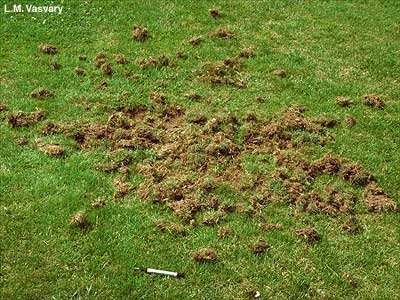
Image source: Bing (Web (fair-use with source credit))
Step-by-Step: Applying Grub Control Correctly
Proper application technique matters as much as timing. Even the perfect product at the right moment will fail if it doesn't reach the target zone.
First, mow your lawn one to two days before application. This allows granular product to reach the soil surface instead of catching in tall grass. Remove any clippings or debris that might block contact with the soil.
Next, calibrate your spreader according to the product label. Most granular grub controls specify an application rate between two and three pounds per 1,000 square feet. Over-applying wastes product and increases runoff risk.
Under-applying leaves gaps in protection.
Apply the product in two passes using a crisscross pattern. This gives more even coverage than a single pass. Start with the perimeter of the treatment area, then fill in the interior.
Water the lawn immediately after application with about half an inch of irrigation. This activates the granular product and moves the active ingredient into the root zone where grubs are feeding. For liquid or spray formulations, watering in is still important but follow the specific label directions, as some products require different irrigation timing.
Keep people and pets off the treated area until the product has been watered in and the foliage is dry. Check the specific product label for re-entry intervals, which typically range from immediate once dry to 24 hours depending on the chemistry used.
Common Mistakes That Make Grub Control Fail
The most frequent mistake is treating for the wrong reason. Brown patches in summer can stem from fungal disease, drought stress, compaction, or dog damage. Verify you actually have grubs before applying any insecticide.
Applying preventive product after eggs have already hatched is the second most common error. If you're applying in July and your neighbors have already been seeing Japanese beetles for two weeks, you may already be too late for chlorantraniprole to catch the first wave of hatching eggs. That doesn't mean you should skip treatment entirely, but you should pair it with monitoring and be prepared for a possible curative follow-up.
Not watering in the application is another frequent failure point. Granular products sitting on the soil surface cannot move down to the root zone where grubs are feeding. Without irrigation or rainfall within 48 hours of application, much of the product's effectiveness is lost.
Treating too early in the spring is a wasted application. Preventive products have a finite residual lifespan. If you apply in early April and beetles don't lay eggs until July, the active ingredient may have degraded below effective levels by the time it's needed.
Finally, using the same active ingredient year after year without rotation can contribute to reduced efficacy. If a product that used to work well seems less effective over time, switch to a different chemistry the following season.
Frequently Asked Questions
Can I apply grub control at the same time as fertilizer?
Most granular grub control products can be applied alongside fertilizer without issue. Check the label for any compatibility warnings, but in general there's no conflict. Some combination products pair grub preventer with weed control or fertilizer for a single-application approach.
How long does grub control take to work?
Curative products like trichlorfon begin killing grubs within 24 to 72 hours. Preventive products don't kill grubs immediately. They work systemically as larvae feed on treated roots over the first several weeks after hatching.
Is it too late to treat grubs in September?
September is still within the effective curative window for most regions. Grubs are feeding actively and haven't yet burrowed deep for winter. Apply a curative product as soon as possible and water it in well for the best results.
Will grub control hurt earthworms?
Most synthetic grub insecticides have low toxicity to earthworms at labeled application rates. Beneficial nematode products are earthworm-safe by design. Milky spore targets only Japanese beetle grubs and does not affect other soil organisms.
Do I need to treat every year?
Not necessarily. If your lawn grubs count was low and you see minimal damage, you might skip a year and monitor instead. Properties with recurring problems from neighboring beetle habitat benefit most from consistent annual prevention.
Organic and Biological Options: Do They Work, and When?
Biological controls work, but they demand more patience and precision than synthetic products. Beneficial nematodes (Heterorhabditis bacteriophora) are applied as a soil drench in late summer when grubs are active and soil temperatures are above 60°F. They require immediate watering in and moist soil for several weeks afterward to survive and hunt effectively.
Results typically appear within two to three weeks.
Milky spore (Paenibacillus popilliae) is a bacterium that specifically infects Japanese beetle grubs. It's applied as a granular product in late summer or early fall. Once established in the soil, it can persist for ten years or more.
However, establishment takes two to three years, and it's less effective in northern states where cool soil temperatures limit bacterial activity.
What to Do After You've Applied (and When to Expect Results)
After a curative application, stop watering for 48 hours to let the product bind to soil particles. Then resume normal irrigation. Dead grubs will appear within three to seven days.
If you're still finding live grubs after two weeks, a second application with a different active ingredient may be necessary.
For preventive applications, there's no visible result to watch for. The product is working underground as eggs hatch and larvae ingest treated roots. The real test comes in late summer when neighboring lawns show damage and yours doesn't.
Long-Term Grub Management: The Multi-Year Plan
Sustainable grub control combines annual monitoring with strategic treatment. In year one, identify your grub species and damage threshold. In year two, apply preventive control if warranted.
In year three, evaluate whether the preventive application reduced damage enough to justify continuing. Rotate active ingredients every two to three years to maintain efficacy. Maintain healthy turf through proper mowing, irrigation, and fertilization, as dense lawns tolerate more grub feeding before showing symptoms.
The Decision Guide: So When Should YOU Apply?
If it's May through June and you had grubs before, apply a preventive product now. If it's August through October and you're finding active grubs, apply a curative product immediately. If it's spring and you see last year's damage, skip treatment and plan for preventive application next late spring.
If wildlife is digging, treat now with a curative product regardless of season. When in doubt, do the squared-foot test first.
Quick Reference: Timing Table by Region and Product Type
| Region | Preventive Window | Curative Window | Primary Species |
|---|---|---|---|
| Northeast / Upper Midwest | Late May to late June | August to early October | Japanese beetle, European chafer |
| Mid-Atlantic / Transition | Mid-May to early June | August to late October | Japanese beetle, European chafer |
| Southeast | April to May | July to September | Japanese beetle, May beetle, sugarcane beetle |
| Pacific Northwest | September (crane fly) | November to March | European crane fly |