
Knowing when is the best time to seed Bermuda grass is crucial for a thriving lawn. The optimal window is late spring to early summer, typically when soil temperatures consistently reach 65-70°F. Proper timing, combined with diligent soil preparation and consistent watering, ensures successful germination and a robust, beautiful Bermuda grass turf ready to withstand summer heat.
When Is the Best Time to Seed Bermuda Grass
If you’re dreaming of a dense, vibrant green lawn that stands up to summer heat and heavy foot traffic, Bermuda grass is likely your ideal choice. This warm-season grass is a true champion in many climates, but getting it started right with seed can be a bit tricky if you don’t nail the timing. This comprehensive guide will walk you through exactly when is the best time to seed Bermuda grass, along with all the essential steps for success, ensuring your efforts result in a lush, healthy lawn.
You’ll learn about the critical environmental factors, the importance of meticulous soil preparation, the seeding process itself, and what to do in the weeks and months after you’ve put down your seed. By the end of this guide, you’ll be equipped with all the knowledge needed to give your Bermuda grass the absolute best start possible.
Key Takeaways
- Optimal Seeding Window: The absolute best time to seed Bermuda grass is during late spring to early summer, after all danger of frost has passed.
- Soil Temperature is King: Consistent soil temperatures between 65-70°F (18-21°C) are the most critical factor for successful Bermuda grass seed germination and establishment.
- Thorough Soil Preparation: Don’t skip soil testing, weed eradication, grading, and light tilling. A well-prepared seedbed provides the best environment for new growth.
- Consistent, Light Watering: The initial weeks post-seeding require frequent, light watering to keep the top inch of soil continuously moist, which is vital for germination.
- Patience is a Virtue: Bermuda grass can take 7-30 days to germinate and several weeks to fully establish. Don’t get discouraged by slow initial progress.
- Weed Management Strategy: Address existing weeds thoroughly before seeding. For new lawns, manual removal is often best until the grass is mature enough for selective herbicides.
- Starter Fertilizer Boost: Applying a high-phosphorus starter fertilizer at the time of seeding gives young Bermuda grass seedlings the nutrients they need for strong root development.
Understanding Bermuda Grass’s Needs
Bermuda grass (Cynodon dactylon) is a perennial warm-season turfgrass known for its exceptional heat and drought tolerance once established. It thrives in full sun and loves warm temperatures, making it a popular choice in the southern U.S. and transition zones. Unlike cool-season grasses that prefer spring or fall seeding, Bermuda grass requires specific conditions for its seeds to sprout and flourish. Its growth cycle is centered around summer, which directly impacts when you should sow its seeds.
The Golden Window: When Is the Best Time to Seed Bermuda Grass?
The single most important factor for successful Bermuda grass seeding is timing. Planting at the wrong time can lead to poor germination, weak establishment, and a disheartening amount of wasted effort and seed. So, when is the best time to seed Bermuda grass?
The optimal window is generally late spring to early summer. This period provides the consistent warmth that Bermuda grass seeds crave. Let’s break down the specific conditions to look for.
The Importance of Soil Temperature
For Bermuda grass, soil temperature is king. While air temperature gives you a general idea, it’s the temperature of the soil itself that directly influences seed germination.
- The Ideal Range: Bermuda grass seeds germinate best when soil temperatures are consistently between 65°F and 70°F (18°C to 21°C) at a depth of 2-4 inches.
- Why It Matters: Below this range, germination will be slow, spotty, or may not occur at all. The seeds might just sit dormant, becoming food for birds or getting washed away. Above this range, while germination can still occur, the extreme heat might stress tender new seedlings, making them more susceptible to drying out or disease.
- How to Measure: You can purchase a soil thermometer from most garden centers. Insert it into the soil early in the morning for several consecutive days to get an accurate reading. Wait until you see these temperatures consistently for at least 3-5 days before seeding.
Aligning with Air Temperatures and Frost Dates
While soil temperature is paramount, air temperatures also play a significant role, especially in predicting when soil temperatures will reach that sweet spot.
- After the Last Frost: Absolutely ensure that all danger of frost has passed in your area. Bermuda grass seedlings are very sensitive to cold and a late frost can easily kill young sprouts. This typically means waiting until at least late April or May in many warm-season regions, and sometimes even into June in cooler parts of the transition zone.
- Consistent Warm Days: Look for daytime air temperatures consistently above 80°F (27°C) and nighttime temperatures not dropping below 60°F (15°C). These conditions generally lead to the ideal soil temperatures for Bermuda grass to thrive.
- Extended Warm Period: Bermuda grass needs a long stretch of warm weather to germinate and establish deeply before cooler fall temperatures arrive. Seeding too late in the summer might allow germination but won’t give the young grass enough time to build a strong root system before winter dormancy.
Considering Your USDA Hardiness Zone and Local Climate
Your geographical location within the U.S. (or similar climate zones globally) greatly impacts when is the best time to seed Bermuda grass.
- Southern U.S. (Deep South): In areas like Florida, Georgia, and parts of Texas, you might be able to seed as early as late April and certainly through May and June. The warm season is longer here.
- Transition Zone: For states like Oklahoma, Arkansas, Tennessee, North Carolina, and parts of the Mid-Atlantic, waiting until late May or early June is often ideal. This ensures consistent warmth and sufficient time for establishment before fall.
- Coastal vs. Inland: Coastal areas might experience slightly moderated temperatures, while inland regions can have more extreme fluctuations. Always consult local extension offices for precise timing recommendations specific to your microclimate.
Step-by-Step Guide to Seeding Bermuda Grass Successfully
Once you’ve determined that the timing is right for seeding Bermuda grass, it’s time to get to work. Proper preparation and execution are just as crucial as the timing itself.
Step 1: Prepare Your Soil (The Foundation of Success)
This is not a step to rush. A well-prepared seedbed is the foundation for a healthy, thriving Bermuda lawn.
Conduct a Soil Test
Before doing anything else, take a soil sample and send it to your local university extension office. This test will tell you your soil’s pH and nutrient levels. Bermuda grass prefers a soil pH between 6.0 and 7.0. The results will guide your fertilization and amendment strategy.
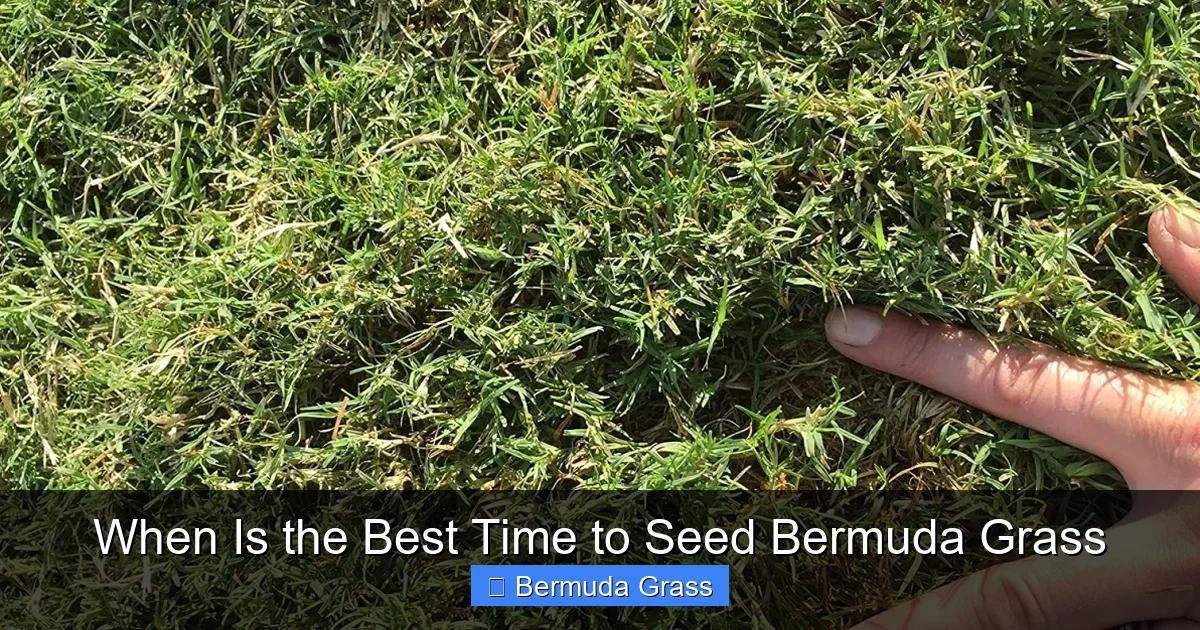
Visual guide about When Is the Best Time to Seed Bermuda Grass
Image source: bobvila.com
Eliminate Existing Weeds and Vegetation
Weeds are the biggest competitors for new Bermuda grass seedlings. They will choke out your young grass before it has a chance to establish.
- Non-Selective Herbicide: If you’re starting from scratch or renovating an existing lawn, apply a non-selective herbicide (like glyphosate) several weeks before you plan to seed. Follow product instructions carefully, ensuring enough time for the herbicide to work and dissipate from the soil before seeding.
- Manual Removal: For smaller areas or if you prefer not to use chemicals, manually pull weeds, ensuring you get the roots.
- Avoid Pre-Emergents: Do NOT apply any pre-emergent herbicides before seeding Bermuda grass. Pre-emergents prevent all seeds (including your Bermuda grass) from germinating. You’ll need to wait until your Bermuda grass is established before using these.
Grade and Level the Area
Ensure your lawn area is smooth and level. Fill in any low spots that could collect water and create drainage issues. This will also make mowing easier and result in a more uniform lawn.
Amend the Soil (If Necessary)
Based on your soil test results, incorporate any necessary amendments.
- For pH Adjustment: Add lime (to raise pH) or sulfur (to lower pH) according to test recommendations.
- For Nutrients: Work in compost or other organic matter to improve soil structure and nutrient content.
- For Drainage: If your soil is heavy clay, adding sand or compost can improve drainage, but be careful not to create a ‘bathtub effect’ by adding sand to clay without proper mixing.
Lightly Till the Topsoil
Once amendments are spread, lightly till the top 1-2 inches of soil. This creates a loose, friable seedbed that allows for good seed-to-soil contact and easy root penetration for new seedlings. Rake the tilled soil smooth to remove any remaining debris or large clumps.
Step 2: Choose and Apply Your Bermuda Grass Seed
With your seedbed ready, it’s time for the star of the show – the Bermuda grass seed!
Select the Right Bermuda Grass Seed
Not all Bermuda grass seeds are created equal.
- Hulled vs. Unhulled: Hulled seed has had its outer coating removed, which speeds up germination. Unhulled seed has a natural coating that can delay germination by several weeks but offers some protection. For faster results, hulled seed is generally preferred when you’re focusing on when is the best time to seed Bermuda grass for quick establishment.
- Improved Varieties: Look for improved or “common” Bermuda grass varieties that are often coated with fungicides to protect against early seedling diseases. Read reviews and choose a variety suited to your specific climate and desired lawn characteristics.
Calculate Seed Requirements
Check the seed package for the recommended seeding rate, usually expressed in pounds per 1,000 square feet. Use a tape measure to accurately determine your lawn area. Over-seeding can lead to weak, crowded plants, while under-seeding will result in a thin lawn.
Distribute the Seed Evenly
Use a broadcast spreader or a drop spreader for even distribution.
- Calibrate Your Spreader: Follow the instructions on your spreader to set it for the correct seeding rate.
- Crosshatch Pattern: To ensure even coverage, apply half of the seed in one direction (e.g., north to south) and the other half in a perpendicular direction (east to west). This crosshatch pattern minimizes skips and overlaps.
Step 3: Ensure Good Seed-to-Soil Contact
After spreading the seed, you need to make sure it’s nestled into the soil, not just sitting on top.
Lightly Rake or Roll
Gently rake the seeded area to lightly cover the seeds with about 1/8 inch of soil. You don’t want to bury them too deep, as Bermuda grass seeds need light to germinate. Alternatively, you can use a lawn roller (empty or lightly filled with water) to press the seeds into the soil surface, ensuring excellent seed-to-soil contact.
Apply a Starter Fertilizer
Apply a starter fertilizer that is high in phosphorus (the middle number in the N-P-K ratio, e.g., 10-20-10). Phosphorus promotes strong root development in young seedlings. Follow the product’s application rates carefully.
Consider a Light Mulch Layer (Optional but Recommended)
For best results, especially if you live in a windy area or struggle with keeping moisture consistent, apply a very thin layer of straw (weed-free, clean straw is key) or peat moss. This helps retain soil moisture, protects seeds from birds, and prevents washouts. Aim for a layer thin enough that you can still see about 50% of the soil surface through it.
Step 4: The Critical Phase – Watering for Germination
This is where many people falter. Consistent moisture is absolutely non-negotiable for successful Bermuda grass seed germination.
Frequent, Light Watering is Key
For the first 2-3 weeks (or until germination is complete), you must keep the top 1/2 to 1 inch of soil consistently moist, but not waterlogged.
- Multiple Short Sessions: This usually means watering 2-4 times a day, for 5-10 minutes each session, depending on your climate and soil type. The goal is to prevent the seedbed from drying out at any point.
- Avoid Puddling: Do not let water puddle or run off, as this can wash away your precious seeds. Gentle, fine sprays are best.
Monitor Soil Moisture Daily
Check the soil moisture every day by gently feeling the top layer. If it feels dry, it’s time to water. This is especially crucial during hot, sunny, or windy conditions.
Gradually Reduce Watering Frequency
Once the Bermuda grass seedlings have emerged and grown to about 1 inch tall, you can gradually reduce the watering frequency while increasing the duration. The goal is to encourage deeper root growth. Eventually, transition to watering less frequently but more deeply, mimicking the watering schedule for an established Bermuda lawn (e.g., 1 inch of water per week, applied in one or two deep sessions).
Step 5: Post-Germination Care for a Young Lawn
Your journey isn’t over once the grass sprouts. Ongoing care is vital for a robust, established lawn.
First Mowing
Wait until your new Bermuda grass blades reach about 2 inches tall before the first mowing. Use a sharp mower blade to avoid tearing the delicate young grass. Set your mower to its highest setting (typically 2-3 inches for Bermuda grass) and only remove the top 1/3 of the blade length. This encourages tillering and lateral growth, leading to a denser lawn. Do not bag clippings initially, as they return valuable nutrients to the soil.
Fertilization Schedule
About 4-6 weeks after germination, you can apply a balanced turf-builder fertilizer (e.g., 15-5-10 or 16-4-8) designed for established lawns. Continue with a regular fertilization program throughout the growing season, typically every 4-6 weeks, tapering off as fall approaches.
Weed Management in a Young Lawn
This is often the most challenging part of establishing a lawn from seed.
- Manual Removal: For the first 6-8 weeks, manual removal of weeds is generally the safest option to avoid damaging tender Bermuda seedlings.
- Post-Emergent Herbicides: Many selective post-emergent herbicides can damage young Bermuda grass. Always read the label carefully to ensure it’s safe for new Bermuda lawns and understand when it can be applied after germination (often after 2-3 mowings, or after the grass is well-established).
- Pre-Emergents: You generally need to wait until your Bermuda grass has gone through its first full summer season before applying pre-emergent herbicides, as they can still inhibit root development in young grass.
Be Patient!
Bermuda grass can take anywhere from 7 to 30 days to germinate, and often longer for complete coverage. Full establishment can take an entire growing season. Don’t get discouraged if results aren’t immediate. Consistency in watering and care will pay off.
Troubleshooting Common Seeding Issues
Even with the best intentions, issues can arise. Here are some common problems and solutions:
- Poor Germination or Patchy Growth:
- Issue: Seeds didn’t sprout, or only a few did.
- Possible Causes: Soil temperature too low, inconsistent watering (dried out), seeds buried too deep, poor quality seed, or pre-emergent herbicide was used.
- Solution: Recheck soil temperature. Ensure constant moisture. Reseed affected areas, ensuring proper depth. Check for herbicide residue.
- Weed Invasion:
- Issue: Weeds quickly overtake new Bermuda grass.
- Possible Causes: Inadequate weed control before seeding, not using mulch, or using contaminated soil/compost.
- Solution: Meticulously remove weeds by hand. Improve pre-seeding weed control next time. Use clean straw mulch. Be patient with post-emergent herbicides until grass is mature.
- Seed Washed Away:
- Issue: Seeds are gone from sloped areas or concentrated in low spots.
- Possible Causes: Heavy rainfall or overwatering too aggressively.
- Solution: Lightly roll the seedbed after spreading to ensure good contact. Use a fine mist for watering. Consider a thin layer of straw mulch on slopes. Re-seed affected areas.
Conclusion
Seeding Bermuda grass successfully requires a combination of precise timing, meticulous preparation, and consistent post-seeding care. By understanding when is the best time to seed Bermuda grass – specifically, late spring to early summer when soil temperatures are consistently between 65-70°F – you set the stage for success. Don’t underestimate the power of a well-prepared seedbed and the critical role of consistent moisture during germination. While it demands patience and effort, the reward is a beautiful, resilient, and lush Bermuda grass lawn that will be the envy of your neighborhood for years to come. Happy seeding!