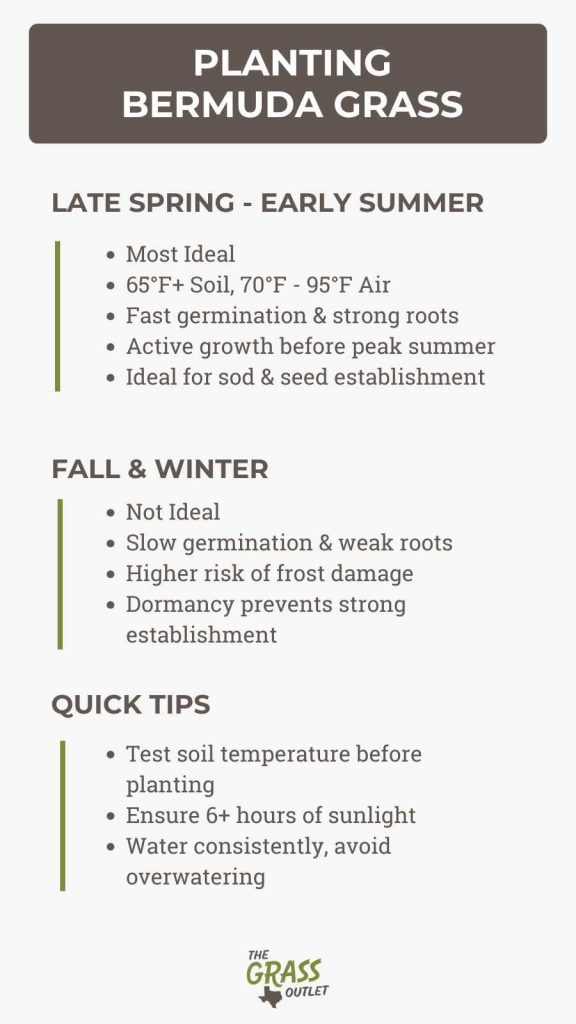
The best time to plant Bermuda grass seed is during late spring to early summer when soil temperatures are consistently warm. Planting at the right time ensures the grass establishes quickly and thrives throughout the season. Keep in mind, plant Bermuda grass when daytime temperatures are between 75°F and 95°F, usually around late spring or early summer after the danger of frost has passed.
If you want a lush, green lawn in the summer, planting Bermuda grass seed at the right time is crucial. The ideal window is when soil and air temperatures are warm enough to promote healthy germination and growth. Starting at the right moment ensures strong root development and a beautiful, durable lawn.
Bermuda grass is a popular choice for warm climates because of its durability and vibrant appearance. However, timing your planting correctly can make all the difference in achieving a thriving lawn. It’s best to wait until late spring or early summer, when the soil has warmed sufficiently, typically around May or June, depending on your location. Planting too early when it’s still cool or too late when the heat is intense can hinder germination and growth. Planning your planting schedule around local climate conditions will give your Bermuda grass the best start, leading to a healthy, lush green yard all season long.

When Do You Plant Bermuda Grass Seed? A Complete Guide
Understanding the Best Time to Plant Bermuda Grass
Bermuda grass is a popular choice for lawns in warm climates because of its durability and lush appearance. To grow a healthy, green lawn, planting at the right time is essential. The best time to plant Bermuda grass seed is during late spring and early summer when soil temperatures are consistently warm.
Planting too early in spring can result in poor germination because the soil might still be too cold. Conversely, planting too late in summer might not give the grass enough time to establish before cooler weather arrives.
Why Timing Is Important for Bermuda Grass Growth
Timing affects the germination rate and the overall health of your Bermuda grass. If you plant when soil temperatures are ideal, seeds will sprout faster and develop stronger roots. Proper timing also helps the grass resist pests and diseases better.
In addition, planting at the right time ensures that your grass has enough sunlight and warmth to grow vigorously. Bermuda grass thrives when daily temperatures stay above 65°F and ideally between 75°F and 95°F during the day.
Optimal Soil Temperature for Planting Bermuda Grass
Soil temperature plays a critical role in Bermuda grass seed germination. The ideal soil temperature for planting is between 65°F and 70°F. At this temperature range, seeds are more likely to germinate within 7 to 14 days.
If soil temperatures are below this range, germination may be delayed or unsuccessful. Using a soil thermometer helps you determine if the conditions are right, ensuring your seeds have the best start.
Best Seasons to Plant Bermuda Grass Seed
- Spring: Late April to May, when soil temperatures reach 65°F
- Early summer: June, when the weather stabilizes and stays warm
These periods provide enough warmth and sunlight for seeds to sprout and establish roots.
Avoid planting during fall or late winter as temperatures become too cool for germination and establishment. Planting during these seasons may lead to poor growth or seed failure.
Climatic Conditions for Successful Planting
Bermuda grass prefers warm, sunny, and well-drained environments. Check local weather forecasts to ensure no heavy rainstorms are predicted after planting.
Avoid planting during periods of drought or extreme heat, which can stress young seedlings. Consistent warmth and moisture are key to a successful Bermuda grass lawn.
Preparation Tips Before Planting Bermuda Grass Seed
Before sowing seeds, prepare your soil properly. Remove weeds, rocks, and debris to create a smooth, level surface. Loosen the soil to a depth of about 4 to 6 inches for better root penetration.
Test soil pH and amend if necessary. Bermuda grass grows best in soil with a pH between 5.8 and 7.0. Add compost or fertilizer to enrich the soil if needed.
Ensure the soil is moist but not waterlogged when planting. Proper preparation creates ideal conditions for seed germination and growth.
How to Plant Bermuda Grass Seed Effectively
Spread the seeds evenly across your prepared soil at a rate of about 1 to 2 pounds per 1000 square feet. Use a seed spreader for uniform distribution, especially for large areas.
Lightly rake the soil to cover the seeds with a thin layer of soil or compost, about 1/4 inch deep. Then, gently press the seeds into the soil using a roller or by walking over the area to improve seed-to-soil contact.
Water the area lightly but consistently to keep the soil moist. Frequent, shallow watering encourages germination without washing away the seeds.
Maintaining Your Bermuda Grass After Planting
Once the seeds germinate and seedlings appear, typically within 7 to 14 days, maintain proper watering. Keep the soil consistently moist, but avoid overwatering, which can cause disease.
Apply a balanced fertilizer after the grass reaches about 2 inches in height to promote healthy growth. Mowing should begin when the grass reaches around 2 to 3 inches, cutting it down to about 1 to 2 inches.
Limit foot traffic on the new lawn during the initial weeks to prevent damage to young seedlings. Regular maintenance such as watering, fertilizing, and mowing will keep your Bermuda grass healthy and dense.
Additional Tips for Growing Bermuda Grass Seamlessly
- Keep the soil moist during germination and early growth phases
- Use proper seed-spreading tools for even coverage
- Monitor weather forecasts and avoid planting before heavy rains or droughts
- Consider overseeding or patching damaged areas in late spring or early summer
Adding mulch lightly over the seeded area can help retain moisture and protect the seeds from birds or wind.
Common Mistakes to Avoid When Planting Bermuda Grass Seed
- Plantting when soil temperatures are too cold or too hot
- Applying too much seed at once, leading to overcrowding
- Not preparing the soil properly, which can hinder germination
- Failing to water consistently, causing seeds to dry out or wash away
- Overwatering, leading to mold or root rot
By paying attention to timing, soil conditions, and proper care, you can ensure your Bermuda grass will grow strong and lush.
Related Topics You Might Find Helpful
- Best fertilizers for Bermuda grass
- How to water Bermuda grass for optimal growth
- Common pests and diseases affecting Bermuda lawns
- Tips on mowing Bermuda grass for a healthy lawn
- How to overseed and patch Bermuda grass areas
Remember, planting Bermuda grass at the right time and following proper care practices will give you a beautiful, resilient lawn throughout the warm months. Whether you’re establishing new grass or maintaining an existing lawn, understanding these key details helps you succeed.
Seeding Bermuda Lawns and Zoysia Lawns
Frequently Asked Questions
What is the optimal season to sow Bermuda grass seeds?
The best time to plant Bermuda grass seeds is during late spring to early summer when soil temperatures reach between 65°F and 70°F. This period provides ideal conditions for germination and healthy growth. Planting during this time ensures the grass establishes well before the heat of summer or the cold of winter affects its development.
How does weather impact Bermuda grass seed planting timing?
Warm, consistently warm weather encourages rapid germination of Bermuda grass seeds. Avoid planting when nights are still cold or if there’s a high chance of frost. Moderate to warm daytime temperatures with low humidity create the ideal environment for seedlings to take root and thrive before the stress of extreme weather conditions.
Can I plant Bermuda grass seeds in the early fall?
Yes, you can plant Bermuda grass seeds in early fall if the soil remains warm and temperatures stay above 60°F. This allows the grass to establish roots before colder weather arrives. However, planting too late may limit growth and lead to less dense turf, especially if the region experiences early frosts.
Is it suitable to plant Bermuda grass seeds during the winter months?
No, it is generally not recommended to plant Bermuda grass seeds during winter in most climates. Cold temperatures hinder germination and can damage young seedlings. It’s best to wait until the ground warms up in spring or early summer for successful planting and growth.
How does soil preparation influence the timing of Bermuda grass seed planting?
Proper soil preparation before planting ensures better seed germination and growth. You should prepare the soil in well-drained areas and avoid planting during overly wet or cold conditions. Conduct soil tests and amend as needed to ensure optimal fertility and structure, which supports timely planting during suitable warm periods.
Final Thoughts
Lorsque vous plantez la graine de bermuda, il est essentiel de choisir le bon moment pour garantir une croissance optimale. La meilleure période pour planter bermuda grass seed est durant la fin du printemps ou le début de l’été, lorsque les températures du sol sont comprises entre 15°C et 24°C. Ces conditions favorisent une germination rapide.
Il est important d’éviter de planter lorsque le sol est trop froid ou trop chaud, car cela peut nuire à la croissance. En suivant ces conseils, vous assurez un tapis de gazon dense et sain.
En résumé, quand do you plant bermuda grass seed, il faut privilégier les périodes chaudes, généralement entre mai et juillet. Planifier votre plantation à ce moment précis garantit la réussite de votre projet de pelouse.