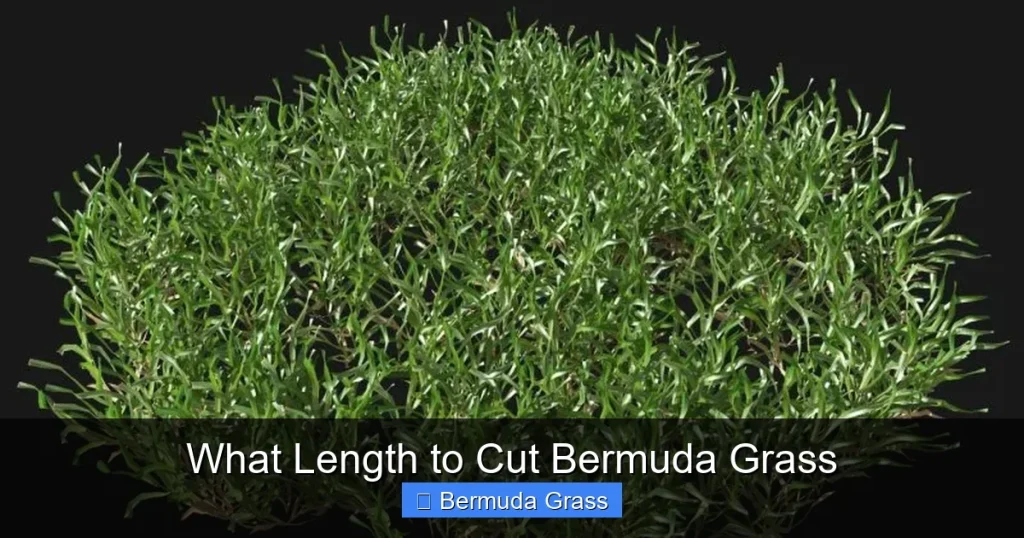
Achieving a beautiful Bermuda grass lawn hinges on mastering the correct cutting height. Generally, established Bermuda thrives when cut short, between 0.5 to 2.5 inches, promoting density and weed resistance. This guide will walk you through factors like grass type, lawn health, and equipment to help you determine the perfect mowing height for a vibrant, golf-course-like lawn or a healthy home turf, always adhering to the crucial one-third rule.
What Length to Cut Bermuda Grass
Welcome to the ultimate guide on achieving that perfectly manicured, vibrant Bermuda grass lawn! If you’ve ever admired a golf course green and wondered how they get their grass so short and dense, you’re likely looking at a well-maintained Bermuda grass variety. But it’s not just about looks; cutting your Bermuda grass to the right length is crucial for its health, resilience, and ability to ward off weeds.
Bermuda grass is a warm-season turfgrass renowned for its aggressive growth, drought tolerance, and ability to thrive in full sun. However, its unique growth habits mean it has specific mowing requirements that differ significantly from cool-season grasses. Cutting it too high can lead to a thin, scraggly lawn prone to weeds, while cutting it too low (scalping) can severely stress the grass.
In this comprehensive guide, we’ll walk you through everything you need to know about what length to cut Bermuda grass. We’ll cover the ideal height ranges, factors influencing your decision, a step-by-step mowing strategy, and practical tips to ensure your Bermuda grass is always looking its best. Get ready to transform your lawn into the envy of the neighborhood!
Key Takeaways
- Optimal Height Range: Established Bermuda grass generally performs best when cut between 0.5 to 2.5 inches, promoting density and weed suppression.
- Grass Type Matters: Hybrid Bermuda can tolerate and often prefers lower cuts (0.5-1.5 inches) than common Bermuda (1-2.5 inches).
- The One-Third Rule: Never remove more than one-third of the grass blade’s total height in a single mowing session to prevent stressing the lawn.
- Equipment and Blades: Reel mowers are ideal for very low cuts, while rotary mowers are suitable for higher ranges. Always use sharp blades for a clean, healthy cut.
- Seasonal Adjustments: Adjust cutting height slightly higher during periods of heat stress or drought, and gradually lower it in spring and early fall for optimal growth.
- Lawn Health First: Prioritize the health of newly established or stressed Bermuda grass by starting with a higher cut and gradually lowering it as the lawn strengthens.
- Consistency is Key: Frequent mowing at the correct height is crucial for maintaining the vigor, density, and weed resistance of your Bermuda grass lawn.
Understanding Bermuda Grass Growth Habits
Before we dive into specific cutting heights, let’s briefly understand what makes Bermuda grass tick. This amazing grass grows via stolons (above-ground runners) and rhizomes (underground runners), allowing it to spread aggressively and form a very dense turf. This aggressive growth is why it can tolerate and even *prefers* a shorter cut than many other grasses.
When cut short, Bermuda grass is stimulated to grow laterally, producing more stolons and rhizomes, leading to a thicker, more carpet-like lawn. This density is excellent for outcompeting weeds and creating that lush appearance. However, if cut too high, it tends to grow vertically, becoming less dense at the base and more susceptible to weeds and thatch buildup.
The Ideal Cutting Height Range for Bermuda Grass
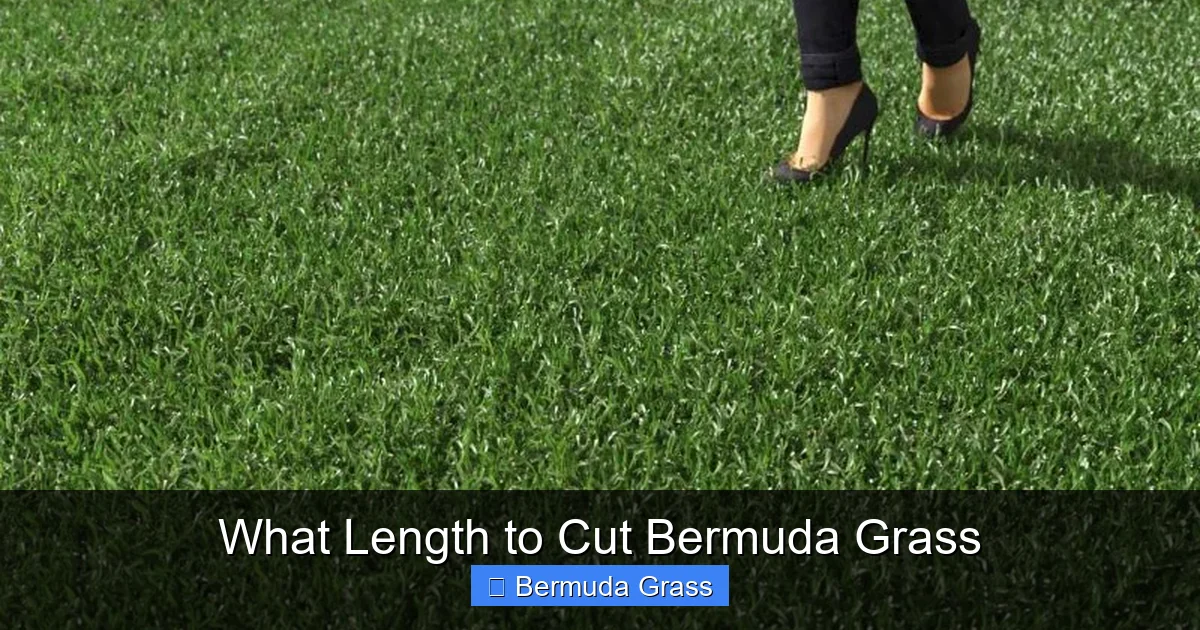
Visual guide about What Length to Cut Bermuda Grass
Image source: vizplants.com
The good news is there’s a general sweet spot for Bermuda grass, but it’s not a single number. Most lawn care experts agree that established Bermuda grass thrives when cut between 0.5 inches and 2.5 inches. Yes, that’s quite a range! The exact ideal length within this range depends on several factors we’ll explore shortly.
For those aiming for a golf-course aesthetic, hybrid Bermuda varieties can be maintained at incredibly low heights, sometimes as low as 0.25 to 0.5 inches, requiring specialized reel mowers and very frequent mowing. For the typical home lawn, a range of 1 to 2 inches is often more practical and equally beneficial for the health of your Bermuda grass.
Cutting Bermuda grass consistently within its optimal range encourages:
- Increased Density: Promotes lateral growth, creating a thicker turf.
- Weed Suppression: A dense canopy chokes out weeds by blocking sunlight.
- Enhanced Stress Tolerance: Healthier root systems develop.
- Aesthetically Pleasing Lawn: The classic, manicured Bermuda grass look.
Factors Influencing Your Bermuda Grass Cutting Height
Choosing the precise length to cut your Bermuda grass isn’t a one-size-fits-all situation. Several factors play a critical role in determining what’s best for your specific lawn.
Bermuda Grass Type/Cultivar
There are two main categories of Bermuda grass: common Bermuda and hybrid Bermuda.
- Common Bermuda Grass: This is what you often find in seed mixes. It’s hardy and tolerant but generally has a coarser texture. Common Bermuda typically performs best when cut between 1 inch and 2.5 inches.
- Hybrid Bermuda Grass: These varieties (like Tifway, Celebration, or Latitude 36) are often grown from sod or sprigs. They have a finer blade texture and denser growth habit, making them ideal for lower cuts. Hybrid Bermuda can be maintained between 0.5 inches and 1.5 inches, achieving that ultra-dense, golf-course look.
Desired Lawn Appearance
Are you aiming for a classic home lawn look, or do you dream of a lawn that rivals a putting green? Lower cuts provide a denser, more formal appearance but require more frequent mowing and specialized equipment. A slightly higher cut (e.g., 1.5-2 inches) still looks great and is more forgiving for homeowners.
Lawn Health and Establishment Stage
The health of your Bermuda grass is paramount.
- Newly Seeded/Sodded Bermuda: When your Bermuda grass is new, whether from seed or sod, it needs time to establish a strong root system. Start by cutting at a higher setting (around 2-2.5 inches) and gradually lower it over several weeks as the grass matures.
- Established, Healthy Bermuda: Once your Bermuda grass is robust and well-rooted, you can confidently maintain it at its ideal lower height.
- Stressed Bermuda: If your lawn is experiencing drought, disease, or extreme heat, it’s wise to raise the cutting height by half an inch or so. This leaves more leaf surface for photosynthesis, helping the grass recover.
Mowing Frequency
How often you can commit to mowing impacts your cutting height. To maintain a short Bermuda grass lawn, you might need to mow every 3-5 days during peak growing season. If you can only mow once a week, you’ll need to set your mower slightly higher to avoid removing too much blade at once (more on the “one-third rule” below).
Environmental Conditions
- Shade: Bermuda grass needs full sun. If parts of your lawn are shaded, the grass will struggle to thrive at very low cuts. In shaded areas, it’s best to raise the cutting height by at least half an inch to give the grass more surface area to capture limited light.
- Heat Stress/Drought: As mentioned, raise the height slightly during extreme heat or dry spells to reduce stress on the grass.
Weed Pressure
A consistently cut, dense Bermuda grass lawn is naturally resistant to weeds. If you’re struggling with weeds, ensuring your Bermuda grass is cut at an optimal, dense-promoting height can be part of your long-term weed management strategy.
Step-by-Step Guide: How to Determine and Maintain Your Bermuda Grass Cutting Height
Now that you understand the variables, let’s put it all together into a practical plan for your Bermuda grass lawn.
Step 1: Assess Your Bermuda Grass Type
First, determine if you have common Bermuda grass or a hybrid variety. If you planted from seed, it’s likely common. If you laid sod, check with your supplier for the specific cultivar. This will give you your primary reference point for the general cutting height range.
Step 2: Evaluate Your Lawn’s Health and Stage
Is your Bermuda grass newly established (less than a year old)? Is it fully mature and healthy? Is it currently under any stress (e.g., disease, drought, recent heavy foot traffic)? Be honest about your lawn’s condition, as this will influence your starting height.
Step 3: Consider Your Mowing Equipment
The type of mower you use significantly impacts the minimum height you can achieve.
- Reel Mowers: These are ideal for achieving very low cuts (0.25-1.5 inches), creating that pristine, golf-course look. They cut like scissors, providing a very clean cut.
- Rotary Mowers: Most home lawn mowers are rotary mowers. They use a horizontally spinning blade. While versatile, they are typically limited to cuts of 1 inch or higher, and often struggle to provide a clean cut below 1.5 inches without scalping.
Ensure your mower blades are always sharp, regardless of mower type. Dull blades tear the grass, leading to brown tips and increased susceptibility to disease.
Step 4: Choose Your Initial Cutting Height
Based on the above factors, select your starting height.
For Established Common Bermuda Grass (1-2.5 inches)
Start around 2 inches. If you desire a slightly shorter lawn and your grass responds well, you can gradually lower it to 1.5 inches over a few mowing sessions. Avoid going much lower than 1 inch with common Bermuda and a rotary mower.
For Established Hybrid Bermuda Grass (0.5-1.5 inches)
If you have a reel mower and a healthy hybrid Bermuda grass lawn, you can aim for 0.5 to 1 inch for a truly luxurious look. With a rotary mower, stick to 1 to 1.5 inches. Always lower the height gradually to see how your lawn reacts.
For Newly Seeded or Sodded Bermuda Grass (2-2.5 inches)
For the first few weeks, keep your mower at its highest setting, around 2 to 2.5 inches, to allow roots to establish. Once the grass is well-rooted and actively growing, you can slowly begin to lower the height by about half an inch per week until you reach your desired established height.
Step 5: Mow Regularly (The “One-Third Rule”)
This is perhaps the most crucial rule for maintaining healthy Bermuda grass. Never remove more than one-third of the grass blade’s total height in a single mowing session.
- For example, if you want your Bermuda grass lawn to be 1.5 inches tall, you should mow it when it reaches about 2.25 inches (1.5 inches x 1.5 = 2.25 inches). This means you’re only cutting off 0.75 inches (one-third).
Adhering to this rule prevents “scalping” (cutting into the brown stolons), which severely stresses the grass and can lead to brown patches. Because Bermuda grass grows so fast, especially in warm weather, this often means mowing every 3-5 days during its peak growing season (summer).
Step 6: Adjust for Seasonal Changes
Bermuda grass needs slight height adjustments throughout the year.
Spring Green-Up
As Bermuda grass emerges from dormancy in late spring, you can perform an initial “scalping” cut to remove dead leaf material and encourage vigorous new growth. This is the *only* time you’d intentionally cut lower than usual. Then, gradually work your way to your desired summer height.
Summer Heat Stress
During prolonged periods of extreme heat or drought, raise your cutting height by about half an inch. The slightly longer blades provide more shade for the soil, reduce moisture evaporation, and give the grass more leaf surface for photosynthesis to cope with stress.
Fall Dormancy Preparation
In early fall, continue to mow at your regular height. As temperatures cool and growth slows, you might find you can mow less frequently. Avoid cutting too short just before dormancy, as this can weaken the grass going into winter. Maintain a consistent height until the grass goes dormant.
Step 7: Monitor and Refine
Your lawn will tell you what it likes. After a few mowing cycles at your chosen height, observe your Bermuda grass closely.
- Is it thick and green? Great!
- Are you seeing brown patches or signs of stress? Consider raising the height slightly or mowing more frequently.
- Are weeds becoming an issue? A slightly lower, more frequent cut might increase density and help.
Don’t be afraid to make minor adjustments based on your lawn’s specific response.
Mowing Equipment Matters
As mentioned, your mower plays a big role.
- Reel Mowers: If you’re serious about a low-cut, dense Bermuda grass lawn, a reel mower is an investment worth considering. They provide the cleanest cut and are designed for very low heights.
- Rotary Mowers: For most homeowners, a rotary mower is sufficient. Just ensure it’s in good condition, and crucially, keep the blades razor sharp.
Always use sharp blades! Dull blades tear the grass blades, leaving ragged edges that turn brown and make your lawn susceptible to disease. Sharpen your blades every 20-25 hours of operation, or at least once a season.
Practical Tips for Optimal Bermuda Grass Mowing
Beyond just height, these tips will further enhance your Bermuda grass lawn’s health and appearance:
- Mow When Dry: Always mow your Bermuda grass when it’s dry. Wet grass clumps, clogs your mower, and can lead to an uneven cut.
- Vary Mowing Patterns: Don’t mow in the same direction every time. Varying your pattern (e.g., horizontal one week, vertical the next, diagonal the third) helps prevent rutting and encourages more upright growth.
- Leave Clippings (Mulch): Unless your clippings are excessively long and clumpy, leave them on the lawn. They return valuable nutrients and organic matter to the soil, acting as a natural fertilizer. A mulching mower attachment is great for this.
- Water Appropriately: A well-hydrated lawn is a healthy lawn. Water deeply and infrequently to encourage deep root growth. Adjust your watering schedule based on rainfall and temperatures.
- Fertilization Schedule: Bermuda grass is a heavy feeder. Follow a proper fertilization schedule to provide the nutrients it needs, especially when maintaining a short, dense cut.
- Monitor for Thatch: Bermuda grass can produce thatch (a layer of dead organic matter between the green blades and the soil). Regular mowing at the correct height helps, but occasional dethatching or aeration might be necessary, especially if you notice spongy turf or poor water penetration.
Troubleshooting Common Bermuda Grass Mowing Issues
Even with the best intentions, you might encounter some challenges.
Scalping Your Bermuda Grass
Problem: Brown, patchy areas appearing after mowing, especially on uneven terrain.
Cause: Cutting too low or removing too much blade at once (violating the one-third rule). Often happens on high spots.
Solution: Raise your mower height. If you have an uneven lawn, consider topdressing with sand to level it out. Mow more frequently to avoid removing too much growth at once.
Brown Tips After Mowing
Problem: The tips of the grass blades turn brown or white shortly after mowing.
Cause: Dull mower blades tearing the grass, rather than cleanly cutting it.
Solution: Sharpen or replace your mower blades immediately.
Weeds Appearing
Problem: Despite your best efforts, weeds are cropping up in your Bermuda grass.
Cause: Your Bermuda grass might not be dense enough to outcompete weeds, possibly due to improper cutting height (too high or inconsistent) or other cultural issues.
Solution: Ensure you are consistently cutting your Bermuda grass at its optimal lower height to promote density. Address any underlying issues like poor soil health or inadequate fertilization. Consider a pre-emergent herbicide in early spring.
Uneven Cut or “Mohawks”
Problem: Parts of the lawn are cut shorter than others, or stripes of uncut grass are left behind.
Cause: Dull blades, uneven mower deck, or mowing too fast.
Solution: Sharpen blades. Check your mower deck for proper leveling and tire pressure. Slow down your mowing speed to allow the blades to effectively cut all the grass.
Conclusion
Mastering what length to cut Bermuda grass is a cornerstone of maintaining a beautiful, healthy, and resilient lawn. By understanding the unique growth habits of Bermuda grass and applying the principles of ideal cutting heights, the one-third rule, and consistent care, you’ll be well on your way to achieving that lush, dense turf you’ve always wanted.
Remember to consider your specific Bermuda grass type, your lawn’s health, and your mowing equipment when setting your height. Be flexible with seasonal adjustments, and most importantly, listen to what your lawn tells you. With a little attention and the right mowing strategy, your Bermuda grass will flourish and become a true showcase of your home. Happy mowing!