Tired of Bermuda grass taking over your lawn? This guide reveals what kills Bermuda grass effectively, offering detailed strategies for eradication. You’ll learn about various methods, from manual removal and solarization to chemical herbicides, ensuring you can choose the best approach to reclaim your lawn. With patience and the right techniques, you can achieve a beautiful, Bermuda-free landscape.
What Kills Bermuda Grass in a Lawn
Bermuda grass. It sounds nice, doesn’t it? But if you’re battling it in your lawn, you know it’s a true garden nemesis. This aggressive, fast-spreading grass can quickly take over desirable turf, flowerbeds, and even paved areas. It’s tough, resilient, and seemingly impossible to get rid of.
If you’re reading this, you’re likely frustrated and ready to learn what kills Bermuda grass once and for all. You’re in the right place! This comprehensive guide will walk you through everything you need to know. We’ll explore various methods, from natural techniques to powerful chemical solutions. We’ll give you practical tips and a step-by-step plan to reclaim your lawn.
Killing Bermuda grass is not a quick fix. It takes patience, persistence, and the right approach. But with this guide, you’ll be well-equipped to win the fight and enjoy a beautiful, Bermuda-free landscape. Let’s get started!
Key Takeaways
- Bermuda Grass is Persistent: It spreads rapidly via rhizomes (underground stems) and stolons (above-ground runners), making it one of the toughest weeds to control.
- Multiple Eradication Methods Exist: You can choose between non-chemical approaches like manual removal, solarization, and smothering, or chemical options using non-selective herbicides.
- Non-Selective Herbicides are Powerful: Products containing glyphosate are highly effective at killing Bermuda grass, but they will also kill any other plant they touch, requiring careful application.
- Patience and Repetition are Crucial: Bermuda grass often requires multiple applications or sustained efforts over weeks or even months to kill it completely, as new shoots can emerge from dormant rhizomes or seeds.
- Preparation and Follow-Up are Key: Proper preparation of the area before treatment and diligent follow-up to eliminate new growth are essential for long-term success.
- Prevention After Eradication: Once Bermuda grass is gone, maintaining a healthy lawn, using pre-emergent herbicides, and regular spot treatments help prevent its return.
Understanding Your Enemy: Why Bermuda Grass is So Tough
Before we dive into what kills Bermuda grass, it helps to understand why it’s such a formidable opponent. Bermuda grass (Cynodon dactylon) is a warm-season grass known for its incredible vigor and resilience. Here’s what makes it so hard to eradicate:
- Rhizomes and Stolons: This is the secret to its success. Bermuda grass spreads rapidly in two ways. Rhizomes are underground stems that can travel far and deep, sending up new shoots. Stolons are above-ground runners that creep along the soil surface, rooting wherever a node touches the ground. If you miss even a tiny piece of a rhizome or stolon, the plant can regenerate.
- Deep Root System: It develops a deep, fibrous root system that helps it survive drought and other harsh conditions.
- Seed Production: Bermuda grass produces many seeds, which can remain viable in the soil for years, ready to sprout when conditions are right. This makes follow-up treatments very important.
- Fast Growth: It grows quickly, outcompeting many other grasses and plants for water, nutrients, and sunlight.
Because of these characteristics, simply pulling Bermuda grass or mowing it low usually won’t work. It needs a more strategic approach. Now, let’s explore what kills Bermuda grass effectively.
Choosing Your Weapon: What Kills Bermuda Grass Effectively
There are several methods for killing Bermuda grass. Your choice will depend on the size of the infested area, your tolerance for chemicals, and how much time and effort you’re willing to invest.
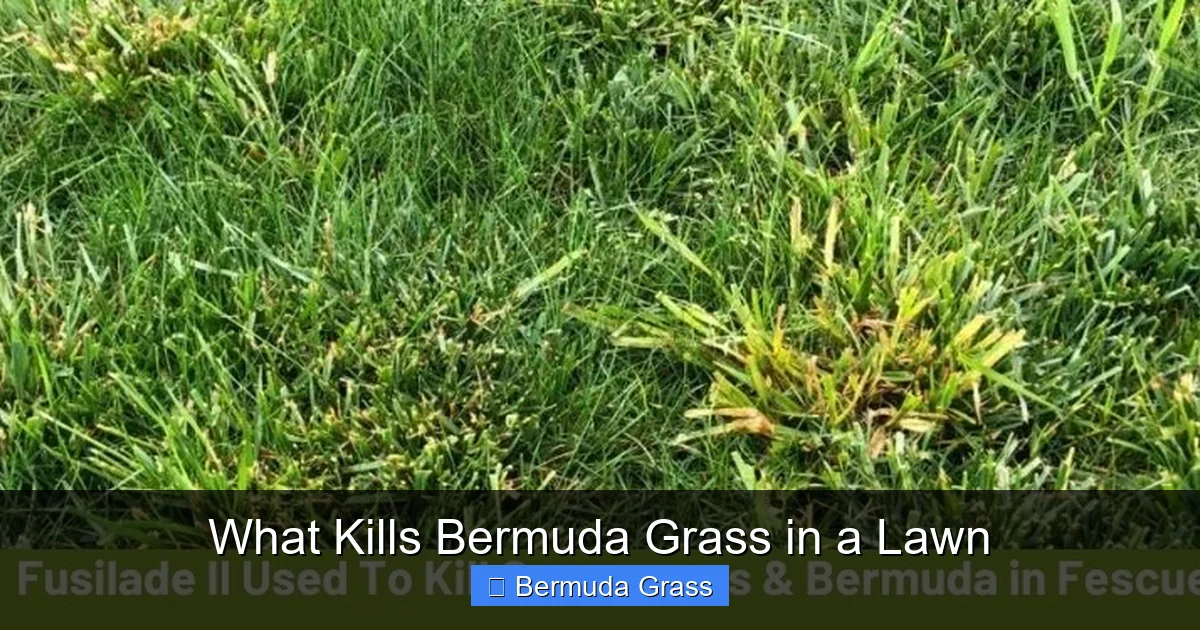
Visual guide about What Kills Bermuda Grass in a Lawn
Image source: crabgrasslawn.com
Non-Chemical Methods for Killing Bermuda Grass
If you prefer to avoid chemicals, these methods are for you. They often require more time and manual labor, but they can be very effective.
1. Manual Removal: Elbow Grease Required
This is the most direct method. It’s best for small patches or when Bermuda grass has just started to invade. It’s a very satisfying way to see what kills Bermuda grass without chemicals.
- How to do it: Use a shovel or hand trowel to dig out the Bermuda grass. Be sure to dig deeply to remove all rhizomes and stolons. Don’t just pull the tops; the plant will simply grow back from the remaining underground parts.
- Tips:
- Work when the soil is moist. This makes digging easier and helps ensure you get all the roots.
- Sift through the soil to find and remove every tiny piece of rhizome.
- Dispose of the removed grass and roots carefully. Don’t put them in your compost pile unless you’re sure your compost gets hot enough to kill them, or they might just re-root.
2. Solarization: Harnessing the Sun’s Power
Solarization uses the sun’s heat to “cook” the Bermuda grass and its seeds in the soil. This is a great way to see what kills Bermuda grass over a larger area naturally.
- How to do it:
- Mow Low: Cut the Bermuda grass as short as possible.
- Water Thoroughly: Water the area deeply. Moist soil conducts heat better.
- Cover with Plastic: Lay clear plastic sheeting (4-6 mil thick) directly over the entire infested area. Make sure it’s clear, not black, as clear plastic allows sunlight through to heat the soil beneath.
- Seal the Edges: Bury the edges of the plastic with soil, rocks, or bricks to trap the heat.
- Wait: Leave the plastic in place for at least 6-8 weeks, preferably during the hottest part of summer. The sun’s rays will heat the soil to temperatures lethal to Bermuda grass and its seeds.
- Tips:
- This method works best in full sun and hot climates.
- Monitor for any tears in the plastic and repair them immediately.
3. Smothering (Sheet Mulching): Block Out the Light
This method works by depriving the Bermuda grass of sunlight, effectively suffocating it. It’s also a great way to improve your soil.
- How to do it:
- Mow Low: Cut the Bermuda grass as short as possible.
- Layer Cardboard: Lay down a thick layer of cardboard directly over the grass. Overlap the edges significantly to prevent any light from getting through. Remove any tape or labels from the cardboard.
- Add Organic Matter: Top the cardboard with several inches of organic materials like compost, wood chips, leaves, or newspaper. This layer further blocks light and adds nutrients to the soil.
- Wait: It takes several months for the grass underneath to die completely, as the cardboard and organic matter slowly break down.
- Tips:
- This is excellent for converting a lawn area into a garden bed.
- You can plant directly into the organic matter layer once the Bermuda grass has died.
4. Boiling Water: For Small, Isolated Spots
Boiling water is a quick way to kill Bermuda grass in tiny, isolated spots, especially in cracks in pavement or between pavers.
- How to do it: Carefully pour boiling water directly onto the Bermuda grass.
- Caution: Boiling water will kill any plant it touches, including desirable ones. Use with extreme care. Not practical for large areas.
Chemical Methods: Targeted Solutions for Killing Bermuda Grass
For larger infestations or when non-chemical methods aren’t feasible, herbicides can be the most effective answer to what kills Bermuda grass.
1. Non-Selective Herbicides: The Heavy Artillery (Glyphosate)
Non-selective herbicides like those containing glyphosate are the most common and effective chemical solution for killing Bermuda grass. They kill almost any plant they come into contact with.
- How it works: Glyphosate is absorbed through the leaves of the plant and travels down to the roots, killing the entire plant.
- When to use: This is ideal when you want to clear an entire area to start a new lawn, garden, or flowerbed.
- Application steps:
- Read the Label: Always, always read and follow the product instructions carefully. This is crucial for safety and effectiveness.
- Timing is Key: Apply glyphosate when the Bermuda grass is actively growing. This means it should be green and healthy, not stressed by drought or cold. Spring and early fall are often good times.
- Prepare the Area: For best results, don’t mow for at least a week before application. This allows more leaf surface area to absorb the herbicide.
- Apply Carefully: Use a pump sprayer for precise application. Avoid spraying on windy days to prevent drift onto desirable plants.
- Wait and Observe: It can take 7-14 days for the grass to completely die. It will slowly turn yellow and then brown.
- Repeat Applications: Bermuda grass is incredibly tough. You will almost certainly need multiple applications. Wait for new shoots to emerge (usually 2-3 weeks after the first application) and then spray them again. It might take 2-4 rounds to truly eliminate it. This repetition is key to knowing what kills Bermuda grass permanently.
- Important Considerations:
- Glyphosate is non-selective, meaning it will kill your desired lawn grass, flowers, and shrubs if it touches them. Be very careful with application.
- Most glyphosate products recommend waiting a specific period (e.g., 7 days) before replanting or reseeding. Check your product label.
2. Selective Herbicides: Targeting Bermuda Grass in Other Lawns
Finding a truly effective selective herbicide to kill Bermuda grass *within an existing desirable lawn* (especially warm-season grasses like Zoysia or St. Augustine) without harming the desired grass is very challenging and often impossible without professional help. Most products that suppress Bermuda might also damage your desirable turf. However, there are some specific scenarios:
- Bermuda in Cool-Season Lawns (e.g., Fescue): Some specialized herbicides (often containing ingredients like fenoxaprop or fluazifop-P-butyl) are designed to suppress Bermuda grass in cool-season turf. These products are usually sold for professional use or specific lawn situations. They rarely offer complete eradication but can significantly reduce Bermuda grass presence over time with repeated applications.
- Bermuda in Flowerbeds: If Bermuda grass is invading flowerbeds, certain selective herbicides (e.g., Sethoxydim or Fusilade II) can kill Bermuda grass without harming broadleaf plants. Always confirm compatibility with your specific flowers before use.
- Important Note: These products require very careful application and often professional knowledge. If you’re considering a selective herbicide for your lawn, it’s highly recommended to consult with a local lawn care professional or extension office to ensure you choose the correct product for your specific turf type and situation. Misapplication can lead to significant damage to your desired lawn.
Step-by-Step Guide to Killing Bermuda Grass
Here’s a general sequence of steps to follow, regardless of the method you choose. This systematic approach greatly increases your chances of success in finding what kills Bermuda grass effectively.
Step 1: Assess Your Lawn and Choose Your Method
- Evaluate the Infestation: How large is the Bermuda grass area? Is it a small patch or has it taken over your entire lawn?
- Consider Your Goals: Do you want to reseed with new grass, create a garden bed, or just spot-treat?
- Time and Budget: Manual methods are labor-intensive but cheap. Chemicals can be faster but cost money. Solarization takes weeks but is relatively hands-off once set up.
- Environmental Concerns: If you’re trying to stay organic, non-chemical methods are your best bet.
Step 2: Prepare the Area
- Mow Low (for chemical or smothering): If using herbicides or smothering, mow the Bermuda grass to a short height. This encourages new, tender growth that absorbs chemicals better, or makes it easier to lay down cardboard.
- Water (for chemical or solarization): Water the area thoroughly a few days before applying herbicides or laying plastic for solarization. Actively growing, well-hydrated grass absorbs chemicals more effectively. Moist soil also heats up better during solarization.
- Clear Debris: Remove any rocks, sticks, or other debris that might tear plastic or cardboard.
Step 3: Apply Your Chosen Method
- Non-Chemical: Follow the specific instructions for manual removal, solarization, or smothering as detailed above.
- Chemical: Apply your chosen non-selective herbicide according to the product label. Ensure full coverage on actively growing Bermuda grass.
Step 4: Wait and Observe
- Patience is vital here. Bermuda grass doesn’t die overnight.
- For chemicals, watch for yellowing and browning over 7-14 days.
- For solarization, wait the full 6-8 weeks during hot weather.
- For smothering, be prepared to wait several months.
Step 5: Repeat Applications (Crucial!)
- This is perhaps the most critical step for killing Bermuda grass. It WILL try to come back.
- For Chemicals: After the first application, wait 2-3 weeks for any surviving rhizomes to send up new shoots. Once these new shoots appear (they might be small and weak), apply the herbicide again. You might need 2-4 applications to completely exhaust the plant’s energy reserves.
- For Manual Removal: Keep a close eye on the area and immediately dig out any new sprouts you see.
- For Solarization/Smothering: If you remove the cover and still see some green, you may need to reapply the method or spot treat with manual removal or chemicals.
Step 6: Prepare for Your New Lawn/Garden
- Once you are confident that the Bermuda grass is truly dead (no green shoots for several weeks), you can prepare the soil for your new lawn or garden.
- Add compost or other soil amendments to improve soil health.
- Plant your desired grass seed, lay sod, or begin planting your garden.
Tips for Success When Killing Bermuda Grass
- Be Patient: This is a long-term project. Don’t get discouraged if you see regrowth. It’s expected.
- Timing is Everything: For chemical control, apply when Bermuda grass is actively growing. For solarization, use the hottest months.
- Read Product Labels: If using herbicides, thoroughly understand and follow all instructions, warnings, and safety precautions.
- Protect Desirable Plants: Use cardboard or plastic shields when spraying herbicides near plants you want to keep.
- Wear Protective Gear: Gloves, long sleeves, eye protection, and closed-toe shoes are recommended when handling herbicides.
- Consider Professional Help: For very large, stubborn infestations, a professional lawn care company might be a cost-effective solution in the long run. They have access to stronger products and specialized equipment.
Troubleshooting Common Bermuda Grass Killing Challenges
Even with the best plan, you might run into issues when trying to figure out what kills Bermuda grass.
- “The Bermuda Grass Didn’t Die Completely!”
- Possible Reasons: You might not have applied enough herbicide, or the grass wasn’t actively growing (stressed by heat, cold, or drought) so it didn’t absorb the chemical well. You also might have missed spots during application.
- Solution: Wait for new growth to appear and reapply. Ensure the grass is healthy and well-watered before the next application.
- “It’s Growing Back After I Thought It Was Dead!”
- Possible Reasons: This is common! You likely missed some rhizomes or stolons, or dormant seeds in the soil have germinated.
- Solution: Continue to monitor the area vigilantly. Spot treat any new sprouts immediately, whether manually or with a targeted herbicide spray. Persistence is key to finding what kills Bermuda grass permanently.
- “My Desirable Plants Were Damaged!”
- Possible Reasons: Herbicide drift due to wind, or accidental overspray.
- Solution: Be more careful with application next time. Use a coarser spray nozzle (larger droplets are less likely to drift) and spray on calm days. Use physical barriers to protect nearby plants.
Maintaining a Bermuda-Free Lawn After Eradication
Once you’ve successfully killed the Bermuda grass, the fight isn’t over. You need a plan to prevent its return.
- Use Pre-Emergent Herbicides: These chemicals create a barrier in the soil that prevents seeds from germinating. Apply them in early spring and late summer/early fall, according to product directions, to stop new Bermuda grass from sprouting.
- Proper Lawn Care: A dense, healthy lawn is your best defense. Mow at the correct height for your desired grass type (often higher than Bermuda grass prefers). Water deeply and infrequently. Fertilize appropriately to promote strong growth of your preferred turf.
- Vigilant Spot Treatment: Keep an eye out for any stray Bermuda grass shoots. Address them immediately by digging them out or spot-spraying with a non-selective herbicide.
- Install Edging: If Bermuda grass is encroaching from a neighbor’s yard or an adjacent area, install a deep landscape edging (at least 6 inches deep) to create a physical barrier against its spreading rhizomes and stolons.
Conclusion
Killing Bermuda grass in a lawn is a significant undertaking, but it is absolutely achievable. By understanding its aggressive nature and employing the right methods, you can effectively eradicate this persistent weed. Whether you choose non-chemical solutions like solarization and smothering, or opt for the powerful punch of a non-selective herbicide, remember that patience and consistent follow-up are your greatest allies.
This guide has armed you with the knowledge of what kills Bermuda grass and how to apply these methods successfully. With dedication, you can reclaim your lawn and enjoy a lush, healthy landscape free from the clutches of Bermuda grass. Good luck!